
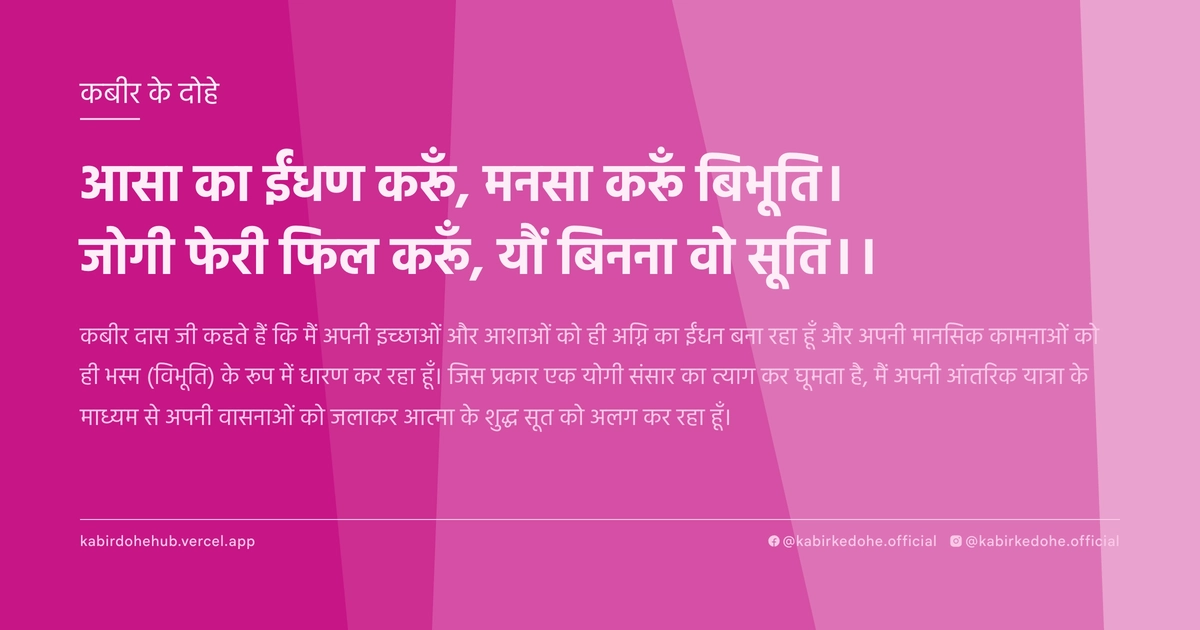
आसा का ईंधण करूँ, मनसा करूँ बिभूति।
जोगी फेरी फिल करूँ, यौं बिनना वो सूति।।
Aasa ka indhan karun, mansa karun bibhuti. Jogi pheri phil karun, yaun binna vo suti.
इस पृष्ठ पर इस कबीर दोहे का अर्थ (meaning), हिंदी व्याख्या और अंग्रेज़ी अनुवाद, दार्शनिक विश्लेषण और व्यावहारिक जीवन सीख दी गई है। यह दोहा मन नियंत्रण (Mind Control) विषय से जुड़ा है — Kabir doha meaning and explanation in Hindi and English.
अर्थ (Meaning):
कबीर दास जी कहते हैं कि मैं अपनी इच्छाओं और आशाओं को ही अग्नि का ईंधन बना रहा हूँ और अपनी मानसिक कामनाओं को ही भस्म (विभूति) के रूप में धारण कर रहा हूँ। जिस प्रकार एक योगी संसार का त्याग कर घूमता है, मैं अपनी आंतरिक यात्रा के माध्यम से अपनी वासनाओं को जलाकर आत्मा के शुद्ध सूत को अलग कर रहा हूँ।
Kabir declares that he uses his desires and hopes as fuel for the internal fire of consciousness, turning his mental cravings into sacred ash. Like a wandering yogi, he engages in a spiritual process of spinning and weaving, separating the pure thread of the soul from the coarse fabric of worldly attachment.
व्याख्या (Interpretation):
यह दोहा आंतरिक रूपांतरण की एक गहन प्रक्रिया का वर्णन करता है। 'ईंधन' और 'विभूति' यहाँ प्रतीकात्मक हैं; जहाँ इच्छाएँ वह लकड़ी हैं जिन्हें जलाया जाना है, और भस्म वह अवस्था है जहाँ अहंकार पूरी तरह नष्ट हो चुका है। यह निर्गुण भक्ति का सार है, जहाँ ईश्वर बाहर नहीं बल्कि भीतर की अग्नि में मिलता है। माया का पर्दा तभी हटता है जब मन की कामनाएँ भस्म हो जाती हैं। यह अद्वैत वेदांत के उस सिद्धांत को दर्शाता है जहाँ जीव और ब्रह्म के बीच का अंतर केवल अज्ञान और इच्छाओं के कारण है। जब यह 'सूत' या आत्मा शुद्ध हो जाती है, तो वह परमात्मा के साथ एकाकार हो जाती है।
This couplet describes a profound process of internal alchemy. 'Fuel' and 'Ash' are symbolic; desires are the wood to be burned, and ash is the state where the ego is completely annihilated. This is the essence of Nirgun Bhakti, where the Divine is found not in external rituals but in the internal fire of awareness. The veil of Maya only lifts when mental cravings are reduced to ash. It reflects the Advaita Vedanta principle that the separation between the Jiva (individual soul) and Brahman (Universal Soul) exists only due to ignorance and desire. Once this 'thread' or soul is purified, it merges seamlessly with the Absolute.
दार्शनिक विश्लेषण (Philosophical Analysis):
कबीर का यह दृष्टिकोण उनके युग के कर्मकांडीय धर्म के विरुद्ध एक सशक्त प्रहार था। उस समय धर्म केवल बाहरी दिखावे, जैसे भस्म लगाना या गेरुआ वस्त्र पहनना, तक सीमित था। कबीर ने 'जोगी' के बाहरी स्वरूप को आंतरिक मनोवैज्ञानिक प्रक्रिया में बदल दिया। वे कहते हैं कि असली वैराग्य जंगलों में जाने में नहीं, बल्कि मन की इच्छाओं को जलाने में है।
यह दर्शन सूफीवाद के 'फना' (अहंकार का विनाश) के करीब है, जहाँ साधक अपनी व्यक्तिगत पहचान को ईश्वर की इच्छा में विलीन कर देता है। कबीर यहाँ एक बुनकर की शब्दावली (सूत, बिनना) का उपयोग कर रहे हैं, जो यह दर्शाता है कि आध्यात्मिक साधना जीवन के साधारण कार्यों के बीच ही संभव है।
अद्वैत वेदांत के अनुसार, संसार एक भ्रम है, लेकिन यह भ्रम तब तक बना रहता है जब तक 'मैं' और 'मेरा' का भाव जीवित है। कबीर इस 'मैं' को ईंधन बनाकर जलाते हैं। वे तर्क देते हैं कि जब तक कामनाएँ जीवित हैं, आत्मा का शुद्ध स्वरूप ढका रहता है।
मनोवैज्ञानिक स्तर पर, यह दोहा इच्छाओं के दमन की बात नहीं करता, बल्कि उनके रूपांतरण की बात करता है। इच्छाओं को 'ईंधन' बनाना मतलब उन्हें जागरूकता की अग्नि में डालना, जिससे वे नष्ट न होकर प्रकाश में बदल जाएँ।
अंततः, कबीर यह संदेश देते हैं कि मुक्ति किसी बाहरी तीर्थ या गुरु के केवल आदेश से नहीं, बल्कि स्वयं के भीतर चलने वाले इस 'अग्नि-यज्ञ' से प्राप्त होती है, जहाँ वासनाएँ भस्म होती हैं और केवल सत्य शेष रहता है।
Kabir's perspective is a powerful critique of the ritualistic religion of his era. At that time, spirituality was often reduced to external displays, such as applying ash to the forehead or wearing saffron robes. Kabir transforms the external image of the 'Yogi' into an internal psychological process, asserting that true renunciation is not found in forests, but in the incineration of mental desires.
This philosophy closely aligns with the Sufi concept of 'Fana' (annihilation of the self), where the seeker dissolves their individual identity into the Divine Will. By using the vocabulary of a weaver (spinning, thread), Kabir emphasizes that spiritual realization is possible within the context of ordinary daily labor.
According to Advaita Vedanta, the world is an illusion (Maya), but this illusion persists as long as the sense of 'I' and 'Mine' remains. Kabir uses this 'I' as fuel. He argues that as long as cravings are alive, the pure nature of the Atman remains obscured.
On a psychological level, this couplet does not advocate for the suppression of desires, but for their transmutation. Turning desires into 'fuel' means placing them into the fire of mindfulness, so they are not merely extinguished but converted into light and awareness.
Ultimately, Kabir conveys that liberation is not achieved through external pilgrimages or mere adherence to dogma, but through this internal 'fire-sacrifice' where cravings are reduced to ash, leaving only the immutable Truth.
मूल संदेश (Core Message):
- इच्छाएँ बंधन हैं, लेकिन जागरूकता उन्हें मुक्ति का मार्ग बना सकती है।
- बाहरी वैराग्य केवल दिखावा है; असली वैराग्य मन की कामनाओं का अंत है।
- अहंकार का विनाश ही आत्मा की शुद्धता का एकमात्र मार्ग है।
- जब 'मैं' समाप्त होता है, तब 'वह' (परमात्मा) प्रकट होता है।
- जीवन का उद्देश्य अपनी पहचान को सार्वभौमिक सत्य में विलीन करना है।
- Desires are shackles, but awareness can transform them into a path of liberation.
- External renunciation is mere theater; true detachment is the end of mental cravings.
- The annihilation of the ego is the only gateway to the purity of the soul.
- When the 'I' vanishes, the 'Divine' manifests.
- The purpose of life is to dissolve individual identity into the Universal Truth.
व्यावहारिक उदाहरण (Practical Example):
एक समय की बात है, वाराणसी के घाटों पर माधव नाम का एक वृद्ध बुनकर रहता था। माधव अपनी कला में निपुण था, लेकिन उसका मन हमेशा इस बात से दुखी रहता था कि उसके बेटे उसे छोड़कर शहर चले गए और अब उसकी परवाह नहीं करते। वह दिन भर कपड़े बुनता, लेकिन उसके मन में यह आशा बनी रहती कि एक दिन उसके बेटे वापस आएंगे और उसे सम्मान देंगे। यह 'आशा' उसके लिए एक बोझ बन गई थी, जो उसे वर्तमान की शांति से दूर रखती थी।
एक दिन माधव की मुलाकात एक घुमक्कड़ फकीर से हुई। फकीर ने माधव की उदासी को देखा और उससे पूछा, 'तुम इस धागे को इतनी बारीकी से बुन रहे हो, लेकिन तुम्हारे मन का धागा उलझा हुआ है। तुम क्या खोज रहे हो?' माधव ने अपनी व्यथा सुनाई। फकीर मुस्कुराया और बोला, 'तुम अपनी आशाओं को एक बंधन की तरह ढो रहे हो। इसे ईंधन बनाओ। अपनी इस तड़प को ईश्वर की खोज की अग्नि में झोंक दो। जब तुम यह मान लोगे कि तुम्हारी संतानें भी उसी परमात्मा का अंश हैं और वे जहाँ हैं वहीं सही हैं, तब तुम्हारी यह आशा भस्म हो जाएगी और तुम मुक्त हो जाओगे।'
माधव ने पहले तो इस बात को नहीं समझा, लेकिन उसने प्रयास किया। जब भी उसे अपने बेटों की याद आती और वह उदास होता, वह खुद से कहता, 'यह उदासी मेरी अपनी इच्छा है, यह मेरा अहंकार है जो चाहता है कि मेरी इच्छा पूरी हो। मैं इस इच्छा को अपनी साधना की अग्नि में जलाता हूँ।'
धीरे-धीरे, माधव ने महसूस किया कि जैसे-जैसे उसकी उम्मीदें और शिकायतें कम हुईं, उसका मन हल्का होने लगा। वह अब केवल अपने बेटों के लिए नहीं, बल्कि पूरी दुनिया के लिए प्रेम महसूस करने लगा। उसने पाया कि जिस शांति को वह अपने बेटों की वापसी में खोज रहा था, वह उसके भीतर ही थी।
उसका काम अब केवल जीविका का साधन नहीं रहा, बल्कि एक ध्यान बन गया। वह कपड़े बुनते समय अब यह नहीं सोचता था कि उसे क्या मिलेगा, बल्कि वह उस प्रक्रिया में पूरी तरह लीन हो गया।
एक दिन उसके बेटे वास्तव में वापस आए, लेकिन इस बार माधव उनके आने पर विचलित नहीं हुआ। वह खुश था, पर उसकी खुशी अब उनकी उपस्थिति पर निर्भर नहीं थी।
उसके बेटों ने देखा कि उनके पिता के चेहरे पर एक ऐसा तेज था जो पहले कभी नहीं था। उन्होंने पूछा, 'पिताजी, आप इतने शांत कैसे हैं?'
माधव ने शांति से उत्तर दिया, 'मैंने अपनी आशाओं की लकड़ी जला दी है, और अब मेरे पास केवल प्रेम की भस्म बची है। अब मैं वास्तव में स्वतंत्र हूँ।'
इस प्रकार, माधव ने अपनी व्यक्तिगत कामनाओं को आध्यात्मिक ईंधन बनाकर अपने जीवन को एक नए अर्थ में बुन लिया।
Once, in the ghats of Varanasi, lived an elderly weaver named Madhav. Madhav was a master of his craft, but his heart was perpetually heavy because his sons had left for the city and rarely contacted him. He spent his days weaving cloth, but his mind was consumed by the hope that one day his sons would return and grant him the respect and care he craved. This 'hope' became a burden, distancing him from the peace of the present moment.
One day, Madhav met a wandering fakir. Seeing Madhav's melancholy, the fakir asked, 'You weave this thread with such precision, yet the thread of your mind is tangled. What are you searching for?' Madhav shared his grief. The fakir smiled and said, 'You are carrying your hopes like a shackle. Turn them into fuel. Throw this longing into the fire of Divine seeking. When you realize that your children are also sparks of the same Universal Soul and are exactly where they need to be, your hope will turn to ash, and you will be free.'
Madhav didn't understand at first, but he began to practice. Whenever he felt the pang of longing or resentment, he would tell himself, 'This sadness is my own desire; it is my ego wanting its will to be done. I offer this desire as fuel to the fire of my awareness.'
Gradually, Madhav noticed that as his expectations and complaints diminished, his heart grew lighter. He began to feel love not just for his sons, but for all of humanity. He discovered that the peace he sought in his sons' return was already residing within him.
His weaving ceased to be a mere means of livelihood and became a form of meditation. He no longer focused on the result or the reward, but became entirely absorbed in the process of creation.
One day, his sons actually returned, but this time, Madhav was not shaken by their arrival. He was happy, yet his happiness was no longer dependent on their presence.
His sons noticed a radiance on his face that had never been there before. They asked, 'Father, how are you so peaceful?'
Madhav replied calmly, 'I have burned the wood of my expectations, and now I have only the ash of pure love. I am finally free.'
Thus, by turning his personal cravings into spiritual fuel, Madhav wove his life into a new pattern of liberation.
अभ्यास मार्गदर्शन (Practice Guidance):
- दैनिक चिंतन: प्रतिदिन 20 मिनट मौन बैठें और अपने मन में उठने वाली तीव्र इच्छाओं को देखें। उन्हें दबाएँ नहीं, बल्कि उन्हें एक 'ईंधन' के रूप में देखें जो आपकी जागरूकता की अग्नि को बढ़ा सकता है।
- आत्म-पूछताछ जर्नल: एक डायरी लिखें जिसमें उन उम्मीदों की सूची हो जो आपको दुखी करती हैं। हर प्रविष्टि के सामने लिखें, 'मैं इस इच्छा को सत्य की अग्नि में समर्पित करता हूँ।'
- व्यवहारिक परिवर्तन: किसी ऐसे व्यक्ति की मदद करें जिससे आपको बदले में कुछ मिलने की उम्मीद न हो। यह 'निस्वार्थ कर्म' आपकी आशाओं को भस्म करने का सबसे तेज़ तरीका है।
- डायग्नोस्टिक चेकलिस्ट: क्या मैं किसी परिणाम के बिना कार्य कर पा रहा हूँ? क्या मेरी खुशी बाहरी परिस्थितियों पर निर्भर है? क्या मैं अपनी असफलताओं को भी आध्यात्मिक विकास के अवसर के रूप में देख रहा हूँ? यदि उत्तर 'नहीं' है, तो समझें कि ईंधन अभी भी जल रहा है, वह भस्म नहीं हुआ है।
- Daily Contemplation: Sit in silence for 20 minutes daily and observe the intense desires arising in your mind. Do not suppress them; instead, view them as 'fuel' that can intensify the fire of your awareness.
- Self-Inquiry Journal: Maintain a diary listing the expectations that cause you distress. Next to each entry, write: 'I surrender this desire into the fire of Truth.'
- Behavioral Shift: Perform an act of service for someone from whom you expect absolutely nothing in return. This 'selfless action' is the fastest way to incinerate the ego's hopes.
- Diagnostic Checklist: Am I able to act without attachment to the result? Is my happiness dependent on external circumstances? Do I view my failures as opportunities for spiritual growth? If the answer is 'no,' recognize that the fuel is still burning and has not yet turned to ash.
चिंतन प्रश्न (Reflection Questions):
- मेरे जीवन की वह कौन सी 'आशा' है जो वास्तव में एक अदृश्य जंजीर बनकर मुझे जकड़े हुए है?
- क्या मेरा आध्यात्मिक झुकाव केवल एक नया 'अहंकार' (spiritual ego) तो नहीं बन गया है?
- यदि मेरी सभी सामाजिक पहचानें और उपलब्धियाँ छीन ली जाएँ, तो मेरे भीतर क्या शेष रहेगा?
- मैं अपनी असफलताओं पर क्रोध करता हूँ या उन्हें अपनी वासनाओं को जलाने के अवसर के रूप में देखता हूँ?
- क्या मैं वास्तव में प्रेम करता हूँ, या मैं केवल अपनी इच्छाओं की पूर्ति के लिए दूसरों को चाहता हूँ?
- Which 'hope' in my life is actually an invisible chain keeping me bound?
- Has my spiritual inclination merely become a new form of 'spiritual ego'?
- If all my social identities and achievements were stripped away, what would remain within me?
- Do I react to my failures with anger, or do I see them as opportunities to burn my cravings?
- Do I truly love others, or do I only desire them for the fulfillment of my own needs?