
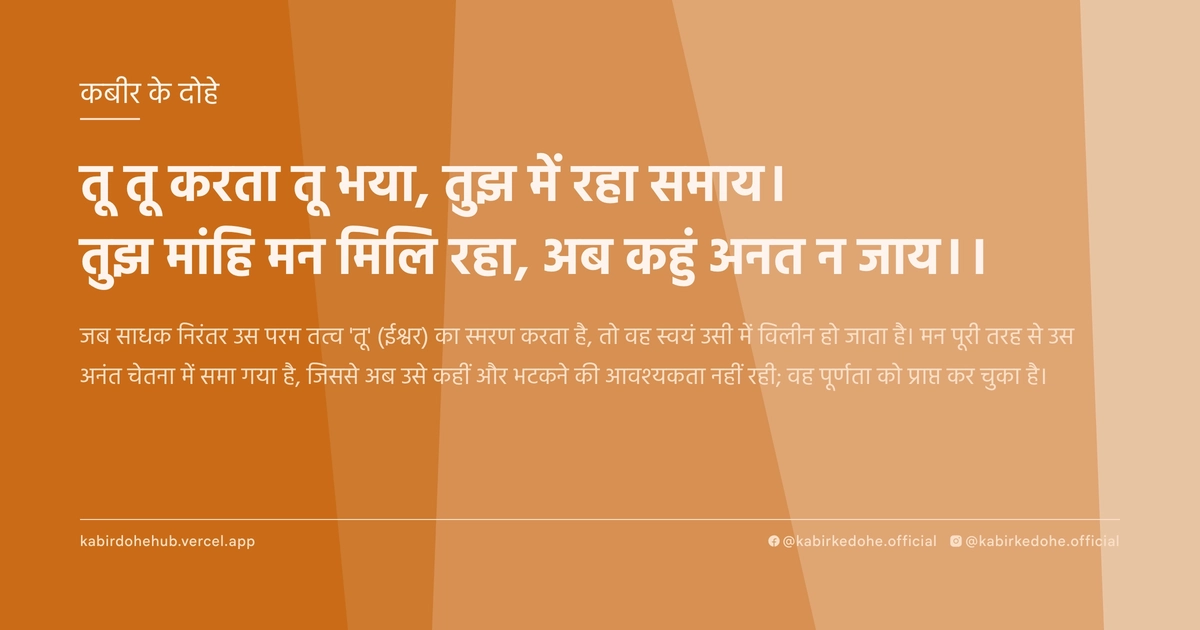
तू तू करता तू भया, तुझ में रहा समाय।
तुझ मांहि मन मिलि रहा, अब कहुं अनत न जाय।।
Tu tu karta tu bhaya, tujh me raha samaye. Tujh maahi man mili raha, ab kahun anat na jaaye.
इस पृष्ठ पर इस कबीर दोहे का अर्थ (meaning), हिंदी व्याख्या और अंग्रेज़ी अनुवाद, दार्शनिक विश्लेषण और व्यावहारिक जीवन सीख दी गई है। यह दोहा निर्गुण ब्रह्म (Nirguna Brahman) विषय से जुड़ा है — Kabir doha meaning and explanation in Hindi and English.
अर्थ (Meaning):
जब साधक निरंतर उस परम तत्व 'तू' (ईश्वर) का स्मरण करता है, तो वह स्वयं उसी में विलीन हो जाता है। मन पूरी तरह से उस अनंत चेतना में समा गया है, जिससे अब उसे कहीं और भटकने की आवश्यकता नहीं रही; वह पूर्णता को प्राप्त कर चुका है।
By incessantly chanting and contemplating the Divine 'Thou', the seeker eventually becomes that very Essence. The mind has merged completely into the Infinite, leaving no room for wandering or longing elsewhere, as the ultimate destination has been realized within.
व्याख्या (Interpretation):
यह दोहा द्वैत से अद्वैत की यात्रा का वर्णन करता है। प्रारंभ में 'तू' एक बाहरी संबोधन है, जहाँ भक्त और भगवान अलग हैं। लेकिन निरंतर अभ्यास से यह 'तू' आंतरिक हो जाता है। यह निर्गुण भक्ति का सार है जहाँ रूप और नाम ओझल हो जाते हैं और केवल शुद्ध अस्तित्व बचता है। माया का पर्दा गिर जाता है और आत्मा का ब्रह्म के साथ मिलन होता है। यहाँ 'समाय' शब्द विलीनीकरण की उस अवस्था को दर्शाता है जहाँ बूंद समुद्र में मिलकर समुद्र बन जाती है। यह विरोधाभास है कि जिसे हम बाहर खोज रहे थे, वह हमारे भीतर ही था, और अब वह खोज समाप्त हो गई है क्योंकि खोजने वाला और खोजा जाने वाला एक ही हो गए हैं।
This couplet describes the transition from duality (Dvaita) to non-duality (Advaita). Initially, 'Thou' is an external address, maintaining a separation between the devotee and the Divine. However, through relentless contemplation, this 'Thou' becomes internal. This is the essence of Nirgun Bhakti, where form and name dissolve, leaving only pure existence. The veil of Maya is lifted, revealing the non-duality of Atman and Brahman. The word 'samay' signifies the state of total absorption, akin to a drop of water merging into the ocean and becoming the ocean itself. It highlights the central paradox: the object of the search was the seeker all along, and the search ends when the seeker and the sought become one.
दार्शनिक विश्लेषण (Philosophical Analysis):
कबीर का यह दृष्टिकोण मध्यकालीन भारत के धार्मिक संघर्षों के बीच एक क्रांतिकारी सेतु था। उन्होंने कर्मकांडों, मूर्तियों और बाहरी आडंबरों का खंडन करते हुए 'सहज मार्ग' पर जोर दिया। यह दर्शन सूफीवाद के 'फना' (अहंकार का विनाश) और अद्वैत वेदांत के 'अहं ब्रह्मास्मि' का एक सुंदर संगम है। कबीर यहाँ यह समझा रहे हैं कि ईश्वर कोई व्यक्ति नहीं है जो स्वर्ग में रहता है, बल्कि वह एक सार्वभौमिक चेतना है जो हर कण में व्याप्त है।
ऐतिहासिक रूप से, कबीर ने जाति और धर्म की दीवारों को ढहाने के लिए इस आंतरिक अनुभव को प्रस्तुत किया। जब व्यक्ति यह अनुभव करता है कि वह स्वयं वह परम तत्व है, तो ऊंच-नीच और भेदभाव अर्थहीन हो जाते हैं। यह केवल बौद्धिक ज्ञान नहीं, बल्कि एक प्रयोगात्मक सत्य है जिसे 'अनुभव' के माध्यम से प्राप्त किया जाता है।
मनोवैज्ञानिक स्तर पर, यह 'अहं' (Ego) के विसर्जन की प्रक्रिया है। जब तक 'मैं' मौजूद है, तब तक 'तू' अलग है। लेकिन जब 'मैं' का विलोपन होता है, तो केवल वह शेष रहता है जो शाश्वत है। यह मानसिक शांति की वह पराकाष्ठा है जहाँ इच्छाओं का अंत हो जाता है क्योंकि पूर्णता प्राप्त हो चुकी है।
यहाँ कबीर यह चेतावनी भी देते हैं कि केवल शब्दों का जाप (तू-तू करना) पर्याप्त नहीं है; वह जाप व्यक्ति को रूपांतरित करना चाहिए। यदि जाप से अहंकार बढ़ता है, तो वह केवल एक मानसिक व्यायाम है। वास्तविक साधना वह है जो साधक को उसके मूल स्वरूप में विलीन कर दे।
अंततः, यह दोहा हमें सिखाता है कि मुक्ति किसी बाहरी स्थान की यात्रा नहीं है, बल्कि चेतना का एक विस्तार है। यह एक ऐसी स्थिति है जहाँ व्यक्ति संसार में रहते हुए भी संसार से ऊपर उठ जाता है, क्योंकि उसका केंद्र अब बाहरी दुनिया नहीं, बल्कि आंतरिक अनंतता है।
Kabir's perspective served as a revolutionary bridge amidst the religious conflicts of medieval India. By rejecting rituals, idols, and external pomposity, he emphasized the 'Sahaj Marg' (the Natural Path). This philosophy is a sublime convergence of the Sufi concept of 'Fana' (the annihilation of the ego) and the Advaita Vedanta realization of 'Aham Brahmasmi' (I am Brahman).
Historically, Kabir presented this internal experience to dismantle the walls of caste and creed. When an individual realizes they are that supreme Element, hierarchies and discrimination become meaningless. This is not mere intellectual knowledge but an experimental truth attained through direct 'Anubhava' (experience).
On a psychological level, this is the process of dissolving the 'Aham' (Ego). As long as the 'I' exists, the 'Thou' remains separate. But when the 'I' is obliterated, only that which is eternal remains. This is the pinnacle of mental peace where desires cease because totality has been achieved.
Kabir also cautions that the mere repetition of words (chanting 'Tu Tu') is insufficient; the chant must transform the practitioner. If chanting increases the ego, it is merely a mental exercise. True spiritual practice is that which merges the seeker into their original, divine nature.
Ultimately, this doha teaches that liberation is not a journey to an external place, but an expansion of consciousness. It is a state where one lives in the world yet transcends it, for their center is no longer the external environment, but the internal infinity.
मूल संदेश (Core Message):
- बाहरी खोज एक भ्रम है; सत्य केवल भीतर है।
- अहंकार का विसर्जन ही वास्तविक मिलन का द्वार है।
- जब 'मैं' मिटता है, तब 'वह' प्रकट होता है।
- भक्ति केवल शब्दों में नहीं, बल्कि पूर्ण विलीनीकरण में है।
- पूर्णता वह है जहाँ खोजने वाला स्वयं खोज बन जाए।
- External searching is an illusion; truth resides only within.
- The dissolution of ego is the only gateway to true union.
- When the 'I' vanishes, the 'Divine' manifests.
- Devotion is not in words, but in total absorption.
- Completeness is when the seeker becomes the search itself.
व्यावहारिक उदाहरण (Practical Example):
वाराणसी के एक पुराने घाट पर माधव नाम का एक वृद्ध बुनकर रहता था। माधव जीवन भर रेशमी साड़ियाँ बुनता रहा, लेकिन उसका मन हमेशा इस बात से अशांत रहता था कि वह अपनी गरीबी और सामाजिक स्थिति के कारण ईश्वर से दूर है। वह घंटों मंदिर की सीढ़ियों पर बैठकर दूसरों को पूजा करते देखता और सोचता कि शायद वह कभी उस पवित्रता को प्राप्त नहीं कर पाएगा।
एक दिन उसकी मुलाकात एक घुमक्कड़ फकीर से हुई, जिसने उसे कबीर का यह दोहा सुनाया। फकीर ने कहा, 'माधव, तू जिसे बाहर ढूंढ रहा है, वह तेरे करघे के धागों में, तेरी सांसों में और तेरे हाथों की कुशलता में ही छिपा है। तू बस उस एक तत्व को पहचान।'
माधव ने इसे एक प्रयोग की तरह लिया। उसने तय किया कि वह अब मंदिर जाने के बजाय, अपने काम को ही प्रार्थना बना लेगा। जब वह धागा खींचता, तो वह सोचता कि यह धागा उसी अनंत परमात्मा का विस्तार है। जब वह रंग घोलता, तो वह महसूस करता कि वह ईश्वर के रंगों से खेल रहा है।
धीरे-धीरे, माधव के भीतर एक बदलाव आने लगा। उसने पाया कि जब वह पूरी तरह से अपने काम में डूब जाता है, तो 'माधव' नाम का व्यक्ति गायब हो जाता है। केवल बुनाई की प्रक्रिया बचती है। उसे महसूस हुआ कि वह और उसका काम अलग नहीं हैं, और वह काम ही वास्तव में उस ईश्वर की अभिव्यक्ति है।
एक समय ऐसा आया जब माधव को अब मंदिर जाने की तड़प नहीं रही। वह घाट पर बैठा रहता और हर आने-जाने वाले व्यक्ति में उसी 'तू' को देखने लगा। उसने देखा कि जिस भिखारी को वह पहले तुच्छ समझता था, उसमें भी वही दिव्य प्रकाश है जो उसके भीतर है।
उसकी शांति देखकर लोग उसके पास आने लगे। एक दिन एक धनी व्यापारी ने उससे पूछा, 'तुम इतने गरीब होकर भी इतने संतुष्ट कैसे हो?' माधव मुस्कुराया और बोला, 'मैं गरीब नहीं हूँ, मैंने तो वह पा लिया है जिसमें पूरा ब्रह्मांड समाया है। अब मैं कहीं और क्या खोजूँ?'
माधव का अहंकार पूरी तरह समाप्त हो चुका था। वह अब केवल एक माध्यम था। उसकी साड़ियों में अब एक अजीब सी चमक थी, जिसे लोग 'ईश्वरीय स्पर्श' कहने लगे।
यह 'कबीर ट्विस्ट' था—बाहरी खोज का आंतरिक रूपांतरण में बदलना। माधव ने समझा कि ईश्वर कोई गंतव्य नहीं, बल्कि वह दृष्टि है जिससे हम दुनिया को देखते हैं। उसकी पूरी जीवनशैली बदल गई; वह अब सेवा और प्रेम का पर्याय बन गया था।
On an ancient ghat in Varanasi lived an elderly weaver named Madhav. All his life, Madhav wove silk sarees, but his mind was perpetually restless, believing that his poverty and social standing distanced him from God. He would spend hours on temple steps, watching others pray, thinking he would never achieve such purity.
One day, he met a wandering fakir who recited this doha of Kabir. The fakir told him, 'Madhav, the one you seek outside is hidden in the threads of your loom, in your breath, and in the skill of your hands. Just recognize that one Element.'
Madhav took this as an experiment. He decided that instead of visiting temples, he would make his work his prayer. As he pulled the thread, he thought of it as an extension of the Infinite. As he mixed dyes, he felt he was playing with the colors of the Divine.
Gradually, a change began to occur within Madhav. He found that when he became completely absorbed in his work, the person named 'Madhav' disappeared. Only the process of weaving remained. He realized that he and his work were not separate; the work itself was an expression of the Divine.
A time came when Madhav no longer craved the temple. He would sit on the ghat and begin to see that same 'Thou' in every passing stranger. He noticed that the beggar he once viewed as insignificant carried the same divine light that resided within him.
Seeing his peace, people began to flock to him. One day, a wealthy merchant asked, 'How can you be so content despite being so poor?' Madhav smiled and replied, 'I am not poor; I have found that in which the entire universe is contained. What else is there to seek?'
Madhav's ego had completely vanished. He was now merely a medium. His sarees acquired a strange radiance, which people began to call the 'Divine Touch.'
This was the 'Kabir Twist'—the transformation of an external search into an internal realization. Madhav understood that God is not a destination, but the vision through which we perceive the world. His entire lifestyle changed; he became a synonym for service and love.
अभ्यास मार्गदर्शन (Practice Guidance):
- प्रतिदिन 20 मिनट 'साक्षी भाव' का अभ्यास करें, जहाँ आप अपने विचारों को बिना किसी निर्णय के केवल देखें, यह महसूस करते हुए कि आप और आपके विचार अलग हैं।
- एक 'अद्वैत जर्नल' बनाएँ: दिन भर में ऐसी तीन स्थितियाँ लिखें जहाँ आपने अपना अहंकार महसूस किया और फिर विचार करें कि यदि 'मैं' नहीं होता, तो वह स्थिति कैसी होती।
- किसी भी कार्य (जैसे खाना बनाना या चलना) को करते समय यह भाव रखें कि आप वह कार्य नहीं कर रहे, बल्कि ब्रह्मांड आपके माध्यम से वह कार्य कर रहा है।
- निदान चेकलिस्ट: क्या मैं अभी भी दूसरों में दोष ढूँढ रहा हूँ? क्या मैं अपनी पहचान अपनी उपलब्धियों से जोड़ रहा हूँ? यदि हाँ, तो इसका अर्थ है कि 'तू' अभी भी बाहरी है और 'मैं' अभी भी जीवित है।
- Practice 'Witness Consciousness' (Sakshi Bhav) for 20 minutes daily, observing your thoughts without judgment, realizing that you are distinct from your mental chatter.
- Maintain an 'Advaita Journal': Record three instances during the day where you felt your ego flare up, then reflect on how that situation would change if the 'I' were absent.
- While performing any mundane task (like cooking or walking), cultivate the feeling that you are not the doer, but the Universe is acting through you.
- Diagnostic Checklist: Am I still finding faults in others? Am I still tying my identity to my achievements? If yes, it means the 'Thou' is still external and the 'I' is still alive.
चिंतन प्रश्न (Reflection Questions):
- मेरा वह कौन सा 'मुखौटा' है जिसे मैं दुनिया के सामने पहनता हूँ, और वह मेरे वास्तविक स्वरूप को कैसे छुपाता है?
- यदि मेरी सारी सामाजिक पहचान (नाम, पद, रिश्ता) छीन ली जाए, तो जो बचेगा, क्या वह 'मैं' हूँ या कुछ और?
- मैं ईश्वर को एक 'शक्ति' के रूप में देखता हूँ या एक 'अवस्था' के रूप में जिसे प्राप्त करना है?
- मेरे जीवन का वह कौन सा क्षेत्र है जहाँ मैं अभी भी 'मैं' और 'तुम' के द्वैत में फँसा हुआ हूँ?
- क्या मेरी आध्यात्मिक साधना मुझे विनम्र बना रही है, या यह मेरे आध्यात्मिक अहंकार को बढ़ा रही है?
- Which 'mask' do I wear before the world, and how does it obscure my true essence?
- If all my social identities (name, rank, relationships) were stripped away, would what remains be 'me' or something else?
- Do I perceive the Divine as a 'power' to be petitioned or as a 'state of being' to be realized?
- In which area of my life am I still trapped in the duality of 'I' and 'Thou'?
- Is my spiritual practice making me humble, or is it merely inflating my spiritual ego?