
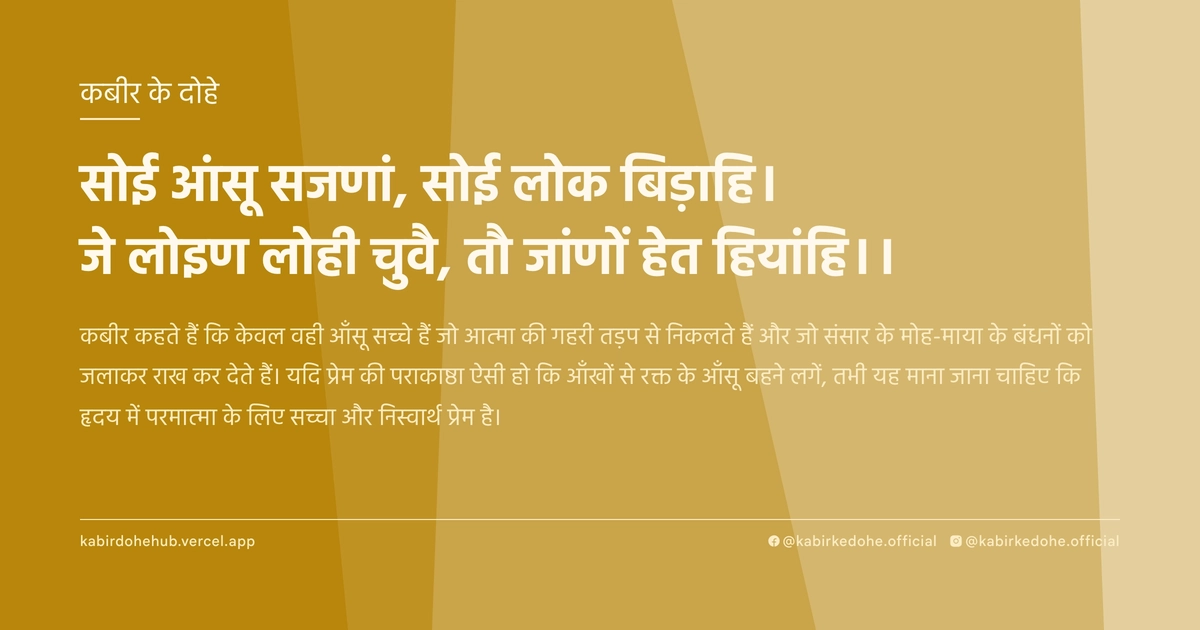
सोई आंसू सजणां, सोई लोक बिड़ाहि।
जे लोइण लोही चुवै, तौ जांणों हेत हियांहि।।
Soi aansu sajnan, soi lok bidahi. Je loin lohi chuvai, tau jaano het hiyanh.
इस पृष्ठ पर इस कबीर दोहे का अर्थ (meaning), हिंदी व्याख्या और अंग्रेज़ी अनुवाद, दार्शनिक विश्लेषण और व्यावहारिक जीवन सीख दी गई है। यह दोहा भक्ति (Bhakti) विषय से जुड़ा है — Kabir doha meaning and explanation in Hindi and English.
अर्थ (Meaning):
कबीर कहते हैं कि केवल वही आँसू सच्चे हैं जो आत्मा की गहरी तड़प से निकलते हैं और जो संसार के मोह-माया के बंधनों को जलाकर राख कर देते हैं। यदि प्रेम की पराकाष्ठा ऐसी हो कि आँखों से रक्त के आँसू बहने लगें, तभी यह माना जाना चाहिए कि हृदय में परमात्मा के लिए सच्चा और निस्वार्थ प्रेम है।
Kabir asserts that only those tears are authentic which spring from the profound longing of the soul and incinerate the illusory bonds of the worldly existence. If the intensity of love reaches such a peak that blood flows instead of water from the eyes, only then can it be acknowledged that true, selfless devotion resides within the heart.
व्याख्या (Interpretation):
इस दोहे का शाब्दिक अर्थ विरह की उस चरम अवस्था का वर्णन है जहाँ भौतिक शरीर की सीमाएं समाप्त हो जाती हैं। रूपक के स्तर पर, 'रक्त के आँसू' केवल शारीरिक पीड़ा नहीं, बल्कि अहंकार के पूर्ण विनाश का प्रतीक हैं। यह निर्गुण भक्ति की उस अवस्था को दर्शाता है जहाँ साधक अपनी पृथक पहचान को मिटाकर ब्रह्म में विलीन होना चाहता है। माया का पर्दा तब गिरता है जब हृदय की तड़प इतनी तीव्र हो कि वह सांसारिक सुखों को तुच्छ समझने लगे। यहाँ 'सजणां' (प्रियतम) वास्तव में वह निराकार परमात्मा है, जिसे पाने के लिए आत्मा अपनी पूरी सत्ता होम कर देती है। यह द्वैत से अद्वैत की ओर संक्रमण की एक दर्दनाक लेकिन आवश्यक प्रक्रिया है।
Literally, this couplet describes the zenith of separation where the boundaries of the physical body dissolve. Metaphorically, 'tears of blood' do not signify physical trauma but the total annihilation of the ego. This reflects the state of Nirgun Bhakti where the seeker desires to erase their separate identity to merge into the Formless Brahman. The veil of Maya falls only when the heart's longing becomes so intense that worldly pleasures appear trivial. Here, 'Sajnan' (the Beloved) is the formless Divine, for whom the soul sacrifices its entire existence. It is a painful yet necessary transition from duality (Dvaita) to non-duality (Advaita).
दार्शनिक विश्लेषण (Philosophical Analysis):
कबीर का यह दर्शन मध्यकालीन भारत के उस दौर का है जब धर्म केवल कर्मकांडों और बाहरी दिखावों तक सीमित हो गया था। उन्होंने मंदिर-मस्जिद के विवादों से ऊपर उठकर 'हृदय की शुद्धि' पर बल दिया। यह दोहा सूफी मत के 'इश्क-ए-हकीकी' (दिव्य प्रेम) और अद्वैत वेदांत के 'आत्म-साक्षात्कार' का एक अद्भुत संगम है। सूफीवाद में प्रेमी का अपने महबूब के लिए मिट जाना ही उसकी पूर्णता है, ठीक वैसे ही जैसे कबीर यहाँ रक्त के आँसुओं की बात कर रहे हैं।
यहाँ कबीर ritualism (कर्मकांड) का कड़ा विरोध कर रहे हैं। उनके अनुसार, माला जपना या तीर्थ यात्रा करना व्यर्थ है यदि हृदय में वह तड़प नहीं है जो अहंकार को जला दे। यह मनोवैज्ञानिक रूपांतरण की प्रक्रिया है जहाँ 'मैं' (ego) का विसर्जन होता है। जब तक साधक स्वयं को एक अलग इकाई मानता है, वह परमात्मा से दूर रहता है।
अद्वैत वेदांत के परिप्रेक्ष्य में, यह विरह वास्तव में एक भ्रम है, क्योंकि आत्मा और परमात्मा कभी अलग थे ही नहीं। लेकिन इस भ्रम को तोड़ने के लिए जिस 'आग' की आवश्यकता होती है, वही विरह की अग्नि है। यह अग्नि अज्ञानता के अंधकार को नष्ट करती है और साधक को यह बोध कराती है कि वह स्वयं ही वह सत्य है जिसे वह खोज रहा है।
कबीर का दृष्टिकोण अत्यंत क्रांतिकारी था क्योंकि उन्होंने भक्ति को किसी विशेष जाति या धर्म के दायरे से बाहर निकालकर उसे एक सार्वभौमिक मानवीय अनुभव बना दिया। उनके लिए प्रेम ही एकमात्र मार्ग है, क्योंकि प्रेम में कोई छोटा या बड़ा नहीं होता, केवल समर्पण होता है।
अंततः, यह दोहा हमें सिखाता है कि आध्यात्मिक प्रगति केवल बौद्धिक चर्चाओं से नहीं, बल्कि भावनात्मक गहराई और पूर्ण आत्म-समर्पण से आती है। जब तक हृदय पिघलकर बहता नहीं, तब तक सत्य का साक्षात्कार असंभव है।
Kabir's philosophy emerged during a medieval Indian era where religion had devolved into mere rituals and outward displays. He emphasized 'purity of heart' over the conflicts of temples and mosques. This couplet is a sublime synthesis of the Sufi concept of 'Ishq-e-Haqiqi' (Divine Love) and the Advaita Vedanta pursuit of 'Self-Realization'. In Sufism, the annihilation of the lover in the Beloved is the ultimate goal, mirrored here by Kabir's imagery of bleeding tears.
Kabir vehemently rejects ritualism. He posits that chanting beads or visiting pilgrimages is futile if the heart lacks the longing necessary to incinerate the ego. This is a process of psychological transformation where the 'I' (ego) is dissolved. As long as the seeker perceives themselves as a separate entity, they remain distant from the Divine.
From the lens of Advaita Vedanta, this separation is actually an illusion (Maya), for the Atman and Brahman were never separate. However, to shatter this illusion, the 'fire' of longing is required. This fire destroys the darkness of ignorance and awakens the realization that the seeker is the very Truth they seek.
Kabir's approach was revolutionary because he liberated devotion from the confines of caste and creed, transforming it into a universal human experience. For him, love is the only path, as love recognizes no hierarchy, only absolute surrender.
Ultimately, this couplet teaches us that spiritual progress does not stem from intellectual discourse but from emotional depth and total surrender. Until the heart melts and flows, the realization of Truth remains unattainable.
मूल संदेश (Core Message):
- बाहरी दिखावे के आँसू व्यर्थ हैं; केवल आत्मा की तड़प ही सत्य है।
- अहंकार का विसर्जन ही परमात्मा से मिलन की पहली शर्त है।
- सच्चा प्रेम वह है जो व्यक्ति को स्वयं से मुक्त कर दे।
- दुख जब वैश्विक करुणा में बदल जाता है, तब वह आध्यात्मिक मार्ग बन जाता है।
- परमात्मा को पाने के लिए स्वयं को पूरी तरह खोना आवश्यक है।
- Tears of outward display are futile; only the soul's longing is authentic.
- The dissolution of ego is the primary prerequisite for union with the Divine.
- True love is that which liberates the individual from the self.
- When personal sorrow transforms into universal compassion, it becomes a spiritual path.
- To find the Divine, one must first be willing to lose oneself completely.
व्यावहारिक उदाहरण (Practical Example):
वाराणसी के एक पुराने घाट पर रहने वाली एक वृद्ध विधवा, जानकी, का जीवन केवल एक ही उद्देश्य के इर्द-गिर्द घूमता था—अपने दिवंगत पति की यादों को संजोना। वह हर दिन गंगा किनारे बैठकर घंटों रोती थी, लेकिन उसके आँसू केवल शोक और मोह के थे। वह मानती थी कि उसका दुख दुनिया में सबसे बड़ा है और यही उसकी पहचान बन गया था।
एक दिन उसकी मुलाकात एक घुमक्कड़ फकीर से हुई, जिसने उसे कबीर का यह दोहा सुनाया। फकीर ने उससे पूछा, "तुम्हारे आँसू किसे पुकार रहे हैं? उस शरीर को जो मिट्टी बन गया, या उस चेतना को जो कभी मरती नहीं?"
जानकी को पहली बार यह अहसास हुआ कि उसका विरह वास्तव में एक 'अहंकार' था। वह अपने दुख पर गर्व कर रही थी। उसने महसूस किया कि वह अपने पति को नहीं, बल्कि अपनी 'खोई हुई स्थिति' को याद कर रही थी।
धीरे-धीरे, जानकी का शोक 'तड़प' में बदलने लगा। अब वह केवल अपने पति के लिए नहीं, बल्कि उस सार्वभौमिक प्रेम के लिए रोने लगी जिसने उसे और उसके पति को बनाया था।
उसने अपने घर के दरवाजे उन अनाथ बच्चों के लिए खोल दिए जिन्हें समाज ने ठुकरा दिया था। उसने पाया कि जब वह दूसरों के दुख में अपनी तड़प को मिलाती है, तो उसका व्यक्तिगत दर्द कम होने लगता है।
एक शाम, जब वह गंगा की लहरों को देख रही थी, उसे महसूस हुआ कि वह और वह नदी अलग नहीं हैं। उसका 'मैं' धीरे-धीरे मिट रहा था।
उसकी आँखों से अब दुख के आँसू नहीं, बल्कि कृतज्ञता और प्रेम की धारा बह रही थी। उसने पाया कि जब वह पूरी तरह टूट गई, तभी वह वास्तव में जुड़ पाई।
उसका जीवन अब एक प्रदर्शन नहीं, बल्कि एक मौन प्रार्थना बन गया था। वह अब शोकग्रस्त विधवा नहीं, बल्कि प्रेम की एक जीवित मूरत थी।
उसने सीखा कि सच्चा विरह वह नहीं जो हमें अकेला करे, बल्कि वह है जो हमें पूरी सृष्टि से जोड़ दे।
अंत में, जानकी ने पाया कि जिस परमात्मा को वह मंदिर और घाटों में खोज रही थी, वह उसकी अपनी तड़प के भीतर ही छिपा था।
Janaki, an elderly widow living on an ancient ghat in Varanasi, spent her life centered around one purpose—clinging to the memories of her deceased husband. She spent hours weeping by the Ganges, but her tears were born of grief and attachment. She believed her sorrow was the greatest in the world, and this grief became her primary identity.
One day, she encountered a wandering fakir who recited this couplet of Kabir. The fakir asked her, "Who are your tears calling? The body that has returned to dust, or the consciousness that never dies?"
For the first time, Janaki realized that her longing was actually a form of 'ego'. She was taking pride in her suffering. She recognized that she wasn't mourning her husband, but rather her own 'lost status'.
Gradually, Janaki's grief transformed into a spiritual longing. She began to weep not just for her husband, but for the Universal Love that had created both of them.
She opened the doors of her home to orphaned children rejected by society. She discovered that when she merged her longing with the suffering of others, her personal pain began to diminish.
One evening, watching the ripples of the Ganges, she felt that she and the river were not separate. Her 'I' was slowly eroding.
Tears of grief were replaced by a flow of gratitude and divine love. She found that only when she was completely broken could she truly be whole.
Her life ceased to be a performance of sorrow and became a silent prayer. She was no longer a bereaved widow, but a living embodiment of love.
She learned that true longing is not that which isolates us, but that which connects us to the entire creation.
Ultimately, Janaki discovered that the Divine she sought in temples and ghats was hidden within her own intense longing.
अभ्यास मार्गदर्शन (Practice Guidance):
- प्रतिदिन 20 मिनट मौन बैठें और अपने भीतर की उस 'कमी' या 'तड़प' को महसूस करें जिसे आप अक्सर बाहरी चीजों से भरने की कोशिश करते हैं।
- एक डायरी लिखें जिसमें आप अपने उन मुखौटों (Ego Masks) की सूची बनाएं जिन्हें आप दुनिया के सामने पहनते हैं और यह विश्लेषण करें कि वे आपको सत्य से कैसे दूर कर रहे हैं।
- सेवा का अभ्यास करें: किसी ऐसे व्यक्ति की मदद करें जिससे आपका कोई स्वार्थ न हो, और देखें कि क्या आप अपनी पहचान को पूरी तरह मिटाकर केवल एक 'निमित्त' बन सकते हैं।
- निदान चेकलिस्ट: क्या आप अभी भी अपने दुख का प्रदर्शन कर रहे हैं? क्या आप अपनी आध्यात्मिक यात्रा को दूसरों से श्रेष्ठ मानते हैं? यदि हाँ, तो आप अभी भी 'माया' के प्रभाव में हैं।
- Sit in silence for 20 minutes daily and feel the 'void' or 'longing' within you that you typically try to fill with external distractions.
- Maintain a journal listing the 'Ego Masks' you wear in public, analyzing how these identities distance you from the ultimate Truth.
- Practice selfless service: Help someone from whom you expect nothing in return, and observe if you can dissolve your identity to become a mere instrument of grace.
- Diagnostic Checklist: Are you still performing your sorrow for others? Do you consider your spiritual journey superior to others? If yes, you are still under the influence of Maya.
चिंतन प्रश्न (Reflection Questions):
- क्या मेरा दुख वास्तव में परमात्मा के लिए है, या यह केवल मेरे अहंकार को विशेष महसूस कराने का एक तरीका है?
- यदि मेरी सामाजिक पहचान (नाम, पद, प्रतिष्ठा) छीन ली जाए, तो मेरे भीतर क्या बचेगा?
- मैं किन चीजों से इतना चिपका हुआ हूँ कि उन्हें छोड़ने का विचार ही मुझे डरा देता है?
- क्या मैं धर्म का पालन कर रहा हूँ, या मैं केवल धार्मिक होने का अभिनय कर रहा हूँ?
- मेरे जीवन का वह कौन सा कोना है जहाँ मैं अभी भी 'मैं' और 'मेरा' के बीच संघर्ष कर रहा हूँ?
- Is my sorrow truly for the Divine, or is it merely a way to make my ego feel special?
- If my social identity (name, rank, prestige) were stripped away, what would remain within me?
- What am I clinging to so tightly that the mere thought of letting go terrifies me?
- Am I practicing spirituality, or am I merely performing the act of being spiritual?
- In which corner of my life am I still struggling between the concepts of 'I' and 'Mine'?