
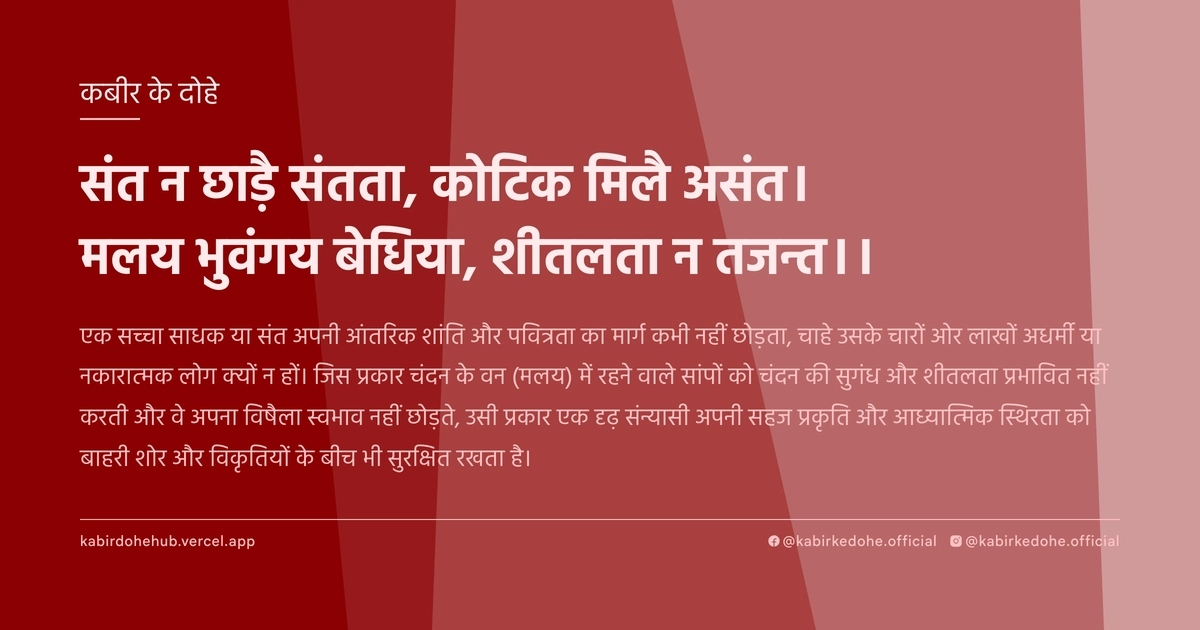
संत न छाड़ै संतता, कोटिक मिलै असंत।
मलय भुवंगय बेधिया, शीतलता न तजन्त।।
Sant na chhadai santta, kotik milai asant. Malay bhuvangay bedhiya, sheetalta na tajant.
इस पृष्ठ पर इस कबीर दोहे का अर्थ (meaning), हिंदी व्याख्या और अंग्रेज़ी अनुवाद, दार्शनिक विश्लेषण और व्यावहारिक जीवन सीख दी गई है। यह दोहा सत्संग (Satsang) विषय से जुड़ा है — Kabir doha meaning and explanation in Hindi and English.
अर्थ (Meaning):
एक सच्चा साधक या संत अपनी आंतरिक शांति और पवित्रता का मार्ग कभी नहीं छोड़ता, चाहे उसके चारों ओर लाखों अधर्मी या नकारात्मक लोग क्यों न हों। जिस प्रकार चंदन के वन (मलय) में रहने वाले सांपों को चंदन की सुगंध और शीतलता प्रभावित नहीं करती और वे अपना विषैला स्वभाव नहीं छोड़ते, उसी प्रकार एक दृढ़ संन्यासी अपनी सहज प्रकृति और आध्यात्मिक स्थिरता को बाहरी शोर और विकृतियों के बीच भी सुरक्षित रखता है।
A true seeker or saint never abandons their inner peace and spiritual integrity, even when surrounded by millions of the ignorant or malevolent. Just as the serpents dwelling in the sandalwood forests of Malaya are permeated by the fragrance and coolness of the wood yet never relinquish their innate venomous nature, a steadfast soul maintains their inherent spiritual stability and purity regardless of the chaotic or corrupting influences of the external world.
व्याख्या (Interpretation):
यह दोहा आत्मा की अडिगता और स्वभाव की स्थिरता का वर्णन करता है। शाब्दिक अर्थ में, कबीर चंदन के वन और सांपों का उदाहरण देते हैं ताकि यह समझाया जा सके कि बाहरी वातावरण आंतरिक स्वभाव को नहीं बदल सकता। आध्यात्मिक स्तर पर, 'सन्तता' का अर्थ है वह अवस्था जहाँ व्यक्ति ब्रह्म के साथ एकाकार हो चुका है। माया (भ्रम) और असंत (अज्ञानी लोग) बाहरी शोर की तरह हैं जो साधक को विचलित करने का प्रयास करते हैं। यहाँ विरोधाभास यह है कि शांति और विष एक ही स्थान पर सह-अस्तित्व में हैं, फिर भी वे एक-दूसरे को दूषित नहीं करते। यह निर्गुण भक्ति का सार है, जहाँ साधक संसार में रहते हुए भी संसार से ऊपर उठता है, ठीक वैसे ही जैसे कमल की पत्ती पानी में रहकर भी उससे अलग रहती है।
This couplet elucidates the concept of spiritual steadfastness and the immutability of the realized soul. Literally, Kabir employs the metaphor of serpents in the sandalwood forests of Malaya to demonstrate that external environments cannot alter an inherent nature. On a deeper metaphysical plane, 'Santata' refers to the state of being aligned with the Absolute Truth. Maya (illusion) and the 'asant' (the ignorant) represent the external noise attempting to destabilize the seeker. The central paradox lies in the coexistence of profound peace and lethal venom in the same space, yet neither corrupts the other. This is the essence of Nirgun Bhakti, where the practitioner exists within the world but remains untainted by it, mirroring the lotus leaf that resides in water yet remains dry.
दार्शनिक विश्लेषण (Philosophical Analysis):
कबीर का यह दर्शन मध्यकालीन भारत के उस दौर का है जब धार्मिक कट्टरता और बाहरी आडंबर चरम पर थे। वे कर्मकांडों और जातिगत श्रेष्ठता के बजाय आंतरिक अनुभव और सत्य की खोज पर जोर देते हैं। यह दोहा अद्वैत वेदांत के उस सिद्धांत से मेल खाता है जहाँ आत्मा को अपरिवर्तनीय और शुद्ध माना गया है। कबीर यह स्पष्ट करते हैं कि ज्ञान केवल ग्रंथों से नहीं आता, बल्कि वह एक आंतरिक रूपांतरण है जो व्यक्ति को बाहरी परिस्थितियों से स्वतंत्र कर देता है।
सूफीवाद के परिप्रेक्ष्य में, यह 'फना' (अहंकार का विनाश) की स्थिति है। जब व्यक्ति अपने 'मैं' को मिटा देता है, तो बाहरी दुनिया की प्रशंसा या निंदा उसे प्रभावित नहीं करती। वह एक ऐसी आंतरिक स्थिरता प्राप्त कर लेता है जिसे दुनिया की कोई भी ताकत हिला नहीं सकती। यहाँ 'असंत' केवल बुरे लोग नहीं हैं, बल्कि वे विचार और भावनाएँ भी हैं जो हमें हमारे केंद्र से दूर ले जाती हैं।
कबीर यहाँ एक मनोवैज्ञानिक सत्य को उजागर कर रहे हैं: हमारी प्रतिक्रियाएं बाहरी घटनाओं पर नहीं, बल्कि हमारी आंतरिक स्थिति पर निर्भर करती हैं। यदि भीतर शांति है, तो बाहर का युद्ध हमें विचलित नहीं करेगा। यह 'स्थितप्रज्ञ' होने की अवस्था है, जिसका वर्णन भगवद गीता में भी मिलता है।
अक्सर लोग इस दोहे का गलत अर्थ यह निकालते हैं कि उन्हें समाज से कट जाना चाहिए। लेकिन कबीर का संदेश अलगाव नहीं, बल्कि 'अनासक्ति' (Detachment) है। वे कहते हैं कि चंदन के वन में सांप भी रहते हैं; समस्या सांपों की उपस्थिति नहीं है, बल्कि यह है कि क्या आप अपनी शीतलता खो देते हैं।
अंततः, यह दोहा अहंकार के पूर्ण विसर्जन की बात करता है। जब तक 'मैं' जीवित है, तब तक बाहरी दुनिया हमें चोट पहुँचा सकती है। लेकिन जब साधक स्वयं को ब्रह्म या उस निराकार सत्ता में विलीन कर देता है, तो वह अजेय हो जाता है। वह संसार के बीच रहकर भी एक मौन साक्षी बन जाता है।
Kabir’s philosophy emerged during a period of intense religious dogmatism and ritualistic rigidity in medieval India. He prioritized internal realization and the pursuit of Truth over external ceremonies and caste hierarchies. This couplet resonates with the core tenets of Advaita Vedanta, which posits that the Atman (soul) is immutable, pure, and distinct from the fluctuating nature of the material world. Kabir asserts that true knowledge is not derived from scriptures but from a profound internal transformation that renders the individual independent of external circumstances.
From a Sufi perspective, this state mirrors 'Fana'—the annihilation of the ego. When the practitioner dissolves the 'I', the praises or condemnations of the world cease to have a foothold. They achieve an internal equilibrium that remains unshaken by the storms of existence. Here, the 'asant' (ignorant) are not merely malevolent people, but the intrusive thoughts and emotional turbulence that pull the seeker away from their center.
Kabir highlights a psychological truth: our reactions are not determined by external events, but by our internal state. If there is an inner sanctuary of peace, the external chaos cannot penetrate it. This is the state of the 'Sthitaprajna' (the one of steady wisdom), as described in the Bhagavad Gita, where the mind remains poised in equanimity.
Common literalist misconceptions suggest that this teaching advocates for social isolation. However, Kabir does not preach seclusion, but 'Anasakti' (non-attachment). He points out that serpents coexist with sandalwood; the issue is not the presence of the serpent, but whether the sandalwood loses its cooling essence. The goal is to be in the world, but not of it.
Ultimately, this discourse centers on the total dissolution of the ego. As long as the 'I' persists, the external world can inflict pain. But when the seeker merges their identity with the Formless Absolute (Nirgun Brahman), they become invincible. They transform into a silent witness, observing the play of existence without being swept away by its currents.
मूल संदेश (Core Message):
- बाहरी शोर आपकी आंतरिक शांति को नहीं छीन सकता यदि आप अनुमति न दें।
- सच्ची आध्यात्मिक शक्ति दूसरों को बदलने में नहीं, बल्कि स्वयं को स्थिर रखने में है।
- अनासक्ति का अर्थ पलायन नहीं, बल्कि संसार के बीच रहकर भी अछूता रहना है।
- अहंकार का विसर्जन ही वह कवच है जो हमें बाहरी विष से बचाता है।
- अपनी मूल प्रकृति (Swaroop) को पहचानना ही मोक्ष का प्रथम सोपान है।
- External noise cannot steal your inner peace unless you grant it permission.
- True spiritual power lies not in changing others, but in remaining steadfast within oneself.
- Detachment is not escape, but remaining untainted while dwelling in the world.
- The dissolution of ego is the only shield that protects us from external toxicity.
- Recognizing your primordial nature (Swaroop) is the first step toward liberation.
व्यावहारिक उदाहरण (Practical Example):
वाराणसी के एक पुराने घाट पर माधव नाम का एक वृद्ध नाविक रहता था। माधव अपनी सादगी और शांत स्वभाव के लिए जाना जाता था। वह हर दिन नाव चलाता और शहर के शोर-शराबे, पर्यटकों की आपाधापी और घाटों पर होने वाले झगड़ों को देखता।
माधव के साथ काम करने वाले अन्य नाविक अक्सर आपस में लड़ते थे, ग्राहकों को ठगते थे और एक-दूसरे की बुराई करते थे। वे माधव का मजाक उड़ाते थे कि वह इतना सीधा क्यों है और क्यों वह उनके जैसे 'चालाक' नहीं है।
एक बार घाट पर एक बड़ा विवाद छिड़ गया। दो शक्तिशाली समूहों के बीच वर्चस्व की लड़ाई शुरू हो गई। नाविकों के बीच तनाव इतना बढ़ गया कि वे एक-दूसरे पर हमला करने लगे। चारों ओर गालियाँ, चिल्लाहट और नफरत का माहौल था।
माधव उस समय भी अपनी नाव पर बैठा था। उसके चारों ओर लोग चिल्ला रहे थे, उसे उकसा रहे थे कि वह भी किसी एक पक्ष का साथ दे। कुछ ने उसे डराया, कुछ ने लालच दिया कि अगर वह उनका साथ देगा तो उसे ज्यादा पैसा मिलेगा।
लेकिन माधव के चेहरे पर एक अजीब सी शांति थी। वह बस मुस्कुराता और अपना काम करता रहता। उसे देखकर लोग और भी चिढ़ गए। एक नाविक ने चिल्लाकर कहा, 'अंधे हो क्या? देखो दुनिया जल रही है और तुम चुप बैठे हो!'
माधव ने धीरे से जवाब दिया, 'भैया, आग बाहर लगी है, मेरे भीतर नहीं। अगर मैं भी चिल्लाने लगूँ, तो शांति कहाँ बचेगी?'
उस नाविक को लगा कि माधव पागल है, लेकिन धीरे-धीरे लोगों ने गौर किया कि माधव की उपस्थिति मात्र से तनाव कम हो जाता था। वह किसी से लड़ता नहीं था, लेकिन किसी की बुराई में शामिल भी नहीं होता था।
उसकी यह 'शीतलता' एक ढाल की तरह थी। उसने कभी अपनी विनम्रता नहीं छोड़ी, चाहे उसके आसपास कितने ही 'विषैले' लोग क्यों न हों।
समय बीता और जब वह बड़ा विवाद शांत हुआ, तो उन सभी नाविकों ने महसूस किया कि जिन्होंने गुस्सा किया था, वे मानसिक रूप से टूट चुके थे, जबकि माधव अभी भी उतना ही ऊर्जावान और शांत था।
माधव ने साबित किया कि अपनी आंतरिक प्रकृति को बचाए रखना ही सबसे बड़ी जीत है। उसने बाहरी शोर को अपने भीतर प्रवेश नहीं करने दिया, ठीक उसी तरह जैसे चंदन की खुशबू सांप के जहर को नहीं बदलती, पर अपनी शुद्धता बनाए रखती है।
On an ancient ghat in Varanasi lived an elderly boatman named Madhav. Madhav was renowned for his profound simplicity and an unshakable sense of calm. Every day, he navigated the river, witnessing the cacophony of the city, the frantic rush of tourists, and the frequent disputes erupting on the riverbanks.
Other boatmen working alongside him were often embroiled in petty conflicts, cheating customers, and slandering one another. They mocked Madhav for his innocence, questioning why he wasn't 'clever' or opportunistic like them.
One day, a massive conflict erupted on the ghats. Two powerful factions began a struggle for dominance. The tension among the boatmen escalated to the point where they started physically attacking each other. The air was thick with insults, screams, and hatred.
Madhav remained seated in his boat. Around him, people were shouting, urging him to take a side. Some threatened him, while others tempted him with bribes, promising greater wealth if he joined their cause.
Yet, a strange, luminous peace resided on Madhav’s face. He simply smiled and continued his work. His composure infuriated the others. One boatman screamed, 'Are you blind? Look, the world is burning, and you sit there in silence!'
Madhav replied softly, 'Brother, the fire is outside; it is not within me. If I also begin to scream, where will the peace remain?'
The boatman dismissed him as a fool, but gradually, others noticed that Madhav’s mere presence seemed to dampen the tension. He never fought, yet he never participated in the toxicity of others.
His 'coolness' acted as a spiritual shield. He never abandoned his humility, regardless of how many 'venomous' personalities surrounded him.
As time passed and the conflict subsided, the other boatmen realized that those who had succumbed to rage were mentally exhausted and broken, while Madhav remained as energetic and serene as ever.
Madhav proved that preserving one's internal nature is the ultimate victory. He refused to let the external noise penetrate his inner sanctuary, just as the fragrance of sandalwood persists despite the presence of serpents.
His life became a living testament to the Doha: he lived amidst the 'asant' (the ignorant/toxic) but remained a 'sant' (a peaceful soul) in every breath.
अभ्यास मार्गदर्शन (Practice Guidance):
- प्रतिदिन 20 मिनट 'साक्षी भाव' का अभ्यास करें: अपने आस-पास के शोर और लोगों की प्रतिक्रियाओं को केवल एक दर्शक की तरह देखें, उनमें शामिल न हों।
- आत्म-पूछताछ जर्नल: जब भी आप किसी की नकारात्मकता से विचलित हों, तो लिखें—'क्या यह क्रोध मेरा है या मैं केवल दूसरे के क्रोध का प्रतिबिंब बन रहा हूँ?'
- व्यवहारिक परिवर्तन: विवादों के दौरान 'मौन अंतराल' (Silent Pause) का उपयोग करें। प्रतिक्रिया देने से पहले तीन गहरी सांसें लें और अपनी आंतरिक शीतलता को महसूस करें।
- निदान चेकलिस्ट: (1) क्या मैं दूसरों के मूड से प्रभावित होकर अपना दिन खराब करता हूँ? (2) क्या मैं अपनी शांति को दूसरों की मंजूरी (Approval) पर निर्भर रखता हूँ? (3) क्या मैं नकारात्मक माहौल में भी अपनी करुणा बनाए रख पाता हूँ?
- Practice 'Witness Consciousness' for 20 minutes daily: Observe the noise and reactions of people around you as a detached observer, without becoming entangled in them.
- Self-Inquiry Journaling: Whenever you are disturbed by someone's negativity, write—'Is this anger mine, or am I merely becoming a reflection of another's rage?'
- Behavioral Shift: Implement a 'Silent Pause' during conflicts. Take three deep breaths before responding, consciously reconnecting with your inner coolness.
- Diagnostic Checklist: (1) Do I allow others' moods to dictate my emotional state? (2) Is my peace dependent on external approval? (3) Can I maintain compassion even in a toxic environment?
चिंतन प्रश्न (Reflection Questions):
- क्या मेरी 'शांति' वास्तव में आंतरिक है, या यह केवल इसलिए है क्योंकि अभी तक मेरी परिस्थितियों की कठिन परीक्षा नहीं हुई है?
- मैं अपनी सार्वजनिक छवि (Public Image) को बनाए रखने के लिए अपने भीतर कितनी घुटन महसूस करता हूँ?
- मेरे जीवन में वे कौन से 'सांप' (नकारात्मक प्रभाव) हैं जिन्हें मैं हटाने की कोशिश कर रहा हूँ, जबकि मुझे अपनी 'शीतलता' बढ़ाने की जरूरत है?
- क्या मैं अपनी नैतिकता का पालन केवल तब करता हूँ जब लोग देख रहे होते हैं, या यह मेरी सहज प्रकृति बन चुकी है?
- डिजिटल युग में, जहाँ हर कोई अपनी राय थोप रहा है, मैं अपनी मानसिक स्वायत्तता (Mental Autonomy) को कैसे सुरक्षित रख सकता हूँ?
- Is my 'peace' truly internal, or is it merely because my circumstances have not yet been severely tested?
- How much internal suffocation do I endure just to maintain a curated public image?
- Who are the 'serpents' (negative influences) in my life that I am trying to remove, when I should instead be increasing my own 'coolness'?
- Do I adhere to my ethics only when observed, or has integrity become my spontaneous nature?
- In a digital age where everyone imposes their opinion, how can I safeguard my mental autonomy?