
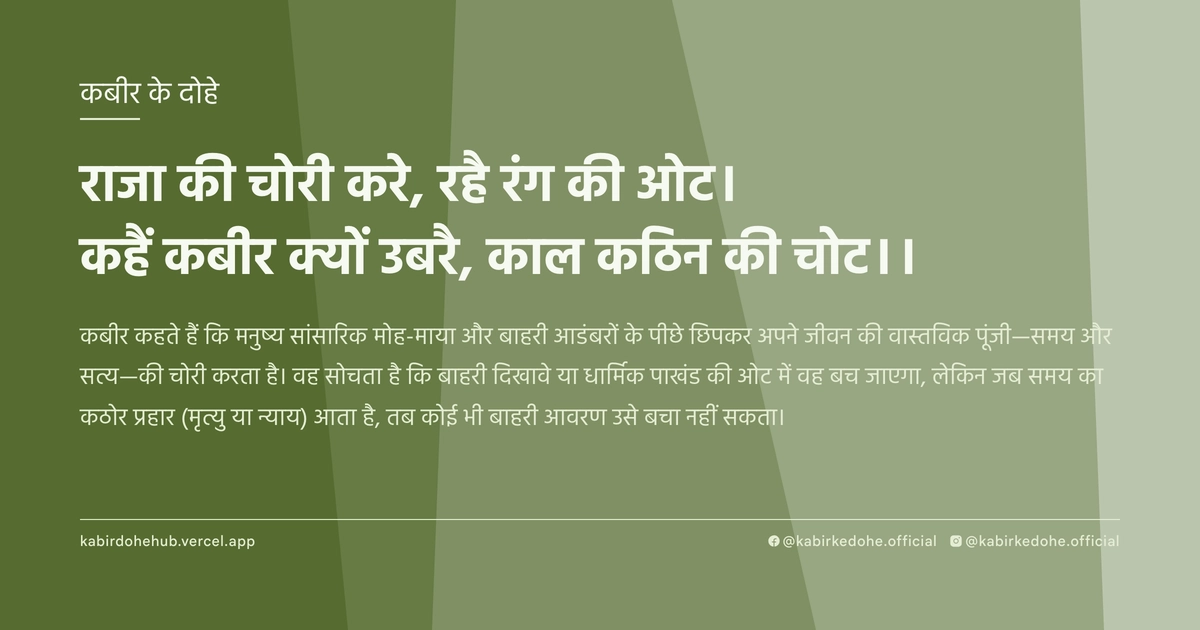
राजा की चोरी करे, रहै रंग की ओट।
कहैं कबीर क्यों उबरै, काल कठिन की चोट।।
Raja ki chori kare, rahai rang ki ot. Kahen Kabir kyun ubarai, kaal kathin ki chot.
इस पृष्ठ पर इस कबीर दोहे का अर्थ (meaning), हिंदी व्याख्या और अंग्रेज़ी अनुवाद, दार्शनिक विश्लेषण और व्यावहारिक जीवन सीख दी गई है। यह दोहा कर्म (Karma) विषय से जुड़ा है — Kabir doha meaning and explanation in Hindi and English.
अर्थ (Meaning):
कबीर कहते हैं कि मनुष्य सांसारिक मोह-माया और बाहरी आडंबरों के पीछे छिपकर अपने जीवन की वास्तविक पूंजी—समय और सत्य—की चोरी करता है। वह सोचता है कि बाहरी दिखावे या धार्मिक पाखंड की ओट में वह बच जाएगा, लेकिन जब समय का कठोर प्रहार (मृत्यु या न्याय) आता है, तब कोई भी बाहरी आवरण उसे बचा नहीं सकता।
Kabir asserts that humans steal from their own spiritual destiny by hiding behind the veil of worldly attachments and outward religious pretenses. One believes that these superficial masks provide a sanctuary, but when the relentless strike of Time—represented by death or ultimate accountability—arrives, no external facade can offer protection or salvation.
व्याख्या (Interpretation):
इस दोहे का शाब्दिक अर्थ है कि व्यक्ति रंग (दिखावे) की ओट लेकर चोरी कर रहा है। आध्यात्मिक स्तर पर, 'रंग' यहाँ माया और सामाजिक पहचान का प्रतीक है। मनुष्य अपनी आत्मा की पुकार को अनसुना कर सांसारिक सुखों की चोरी करता है, यह भ्रम पालकर कि वह मृत्यु को टाल सकता है। यह निर्गुण भक्ति का सार है जहाँ कबीर बताते हैं कि ईश्वर किसी बाहरी कर्मकांड में नहीं, बल्कि आंतरिक सत्य में है। अद्वैत वेदांत के अनुसार, जब तक 'अहंकार' का पर्दा है, तब तक आत्मा और ब्रह्म की एकता का अनुभव असंभव है। काल की चोट वह क्षण है जब माया का पर्दा फट जाता है और व्यक्ति को अपनी रिक्तता का बोध होता है। यह विरोधाभास है कि हम जिसे सुरक्षा समझते हैं, वही वास्तव में हमारी मुक्ति में सबसे बड़ी बाधा है।
Literally, the verse speaks of someone stealing while hiding behind a colored screen. Metaphorically, 'color' represents Maya—the illusory nature of the material world and the social masks we wear. The 'theft' is the misappropriation of one's life-force, spending it on transient pleasures instead of spiritual awakening. In the context of Nirgun Bhakti, Kabir emphasizes that the Formless Divine cannot be reached through ritualistic camouflage. Drawing from Advaita Vedanta, the 'veil' is the ignorance (Avidya) that separates the Atman from Brahman. The 'strike of Time' is the inevitable moment of dissolution where all artificial identities vanish. The central paradox is that the very mechanisms we use to feel secure in the world are the chains that ensure our spiritual bankruptcy when faced with the Absolute.
दार्शनिक विश्लेषण (Philosophical Analysis):
कबीर का यह दोहा उनके युग के धार्मिक पाखंड और कर्मकांडीय कट्टरता पर एक तीखा प्रहार है। उस समय समाज बाहरी प्रतीकों—जैसे माला, तिलक या विशेष वस्त्रों—को मोक्ष का साधन मानता था। कबीर ने इसे 'रंग की ओट' कहा है, जिसका अर्थ है कि व्यक्ति अपनी आंतरिक बुराइयों को बाहरी पवित्रता के पीछे छिपा रहा है। यह दृष्टिकोण सूफी मत के 'नफ्स' (अहंकार) के विनाश के समान है, जहाँ बाहरी दिखावे को आध्यात्मिक प्रगति का शत्रु माना गया है।
दार्शनिक रूप से, यह दोहा अद्वैत वेदांत के उस सिद्धांत को पुष्ट करता है कि संसार एक मिथ्या है। जब हम बाहरी पहचानों से चिपकते हैं, तो हम वास्तव में अपनी वास्तविक प्रकृति से 'चोरी' कर रहे होते हैं। कबीर का तर्क है कि मोक्ष किसी बाहरी क्रिया से नहीं, बल्कि आंतरिक रूपांतरण से आता है। वे जाति और धर्म के भेदों को निरर्थक मानते हैं क्योंकि मृत्यु (काल) किसी के साथ भेदभाव नहीं करती।
मनोवैज्ञानिक स्तर पर, यह 'संज्ञानात्मक विसंगति' (Cognitive Dissonance) की स्थिति है, जहाँ मनुष्य जानता है कि वह गलत रास्ते पर है, लेकिन वह सामाजिक स्वीकृति के 'रंग' में खुद को सुरक्षित महसूस करता है। यह सुरक्षा एक भ्रम है। कबीर चेतावनी देते हैं कि यह मानसिक पलायन अंततः एक गहरे संकट में बदल जाता है जब व्यक्ति का सामना अपनी नग्न सच्चाई से होता है।
यहाँ 'काल' केवल समय नहीं है, बल्कि वह ब्रह्मांडीय न्याय है जो हर झूठ को उजागर करता है। यह सूफीवाद के 'फना' (अहंकार का विलीनीकरण) की प्रक्रिया जैसा है; यदि अहंकार स्वेच्छा से नहीं मिटता, तो वह काल की चोट के रूप में जबरन मिटाया जाता है।
अंततः, कबीर हमें यह सिखाते हैं कि सत्य की खोज के लिए सबसे पहले उन सभी मुखौटों को उतारना होगा जिन्हें हमने दुनिया को दिखाने के लिए पहना है। जब तक 'मैं' का रंग रहेगा, तब तक 'वह' (परमात्मा) का साक्षात्कार संभव नहीं है।
This Doha is a searing critique of the religious hypocrisy and ritualistic rigidity prevalent during Kabir's era. Society then viewed external symbols—beads, tilaks, or specific attire—as shortcuts to salvation. Kabir labels this as 'hiding behind the color,' suggesting that individuals use outward piety to mask inner corruption. This aligns with the Sufi concept of destroying the 'Nafs' (ego), where external displays are seen as obstacles to genuine spiritual proximity to the Divine.
Philosophically, the verse reinforces the Advaita Vedanta principle that the material world is Maya (illusion). By clinging to external identities, humans commit a 'theft' of their own essence, diverting energy from the eternal Atman to the ephemeral ego. Kabir argues that liberation is not a product of ritual but of internal alchemy and the realization of the Non-dual Truth.
From a psychological perspective, this describes a state of profound denial. The individual creates a curated persona to avoid the terrifying void of their own spiritual emptiness. This 'color' provides a false sense of security, a psychological buffer against the anxiety of death. However, Kabir warns that this buffer is porous and will inevitably fail.
'Kaal' (Time/Death) here is not merely a chronological measure but a cosmic auditor. It represents the inevitable moment of truth where all social constructs and religious pretensions are stripped away. In Sufism, this is akin to the forced 'Fana' (annihilation) if the seeker does not voluntarily surrender the ego to the Beloved.
Ultimately, Kabir teaches that the path to the Formless (Nirgun) requires the courage to be authentic. The 'theft' ends only when the seeker stops pretending and accepts the stark reality of their existence, thereby bridging the gap between the individual soul and the universal consciousness.
मूल संदेश (Core Message):
- बाहरी दिखावा आध्यात्मिक शून्यता को नहीं भर सकता।
- सत्य का मार्ग मुखौटों को उतारने से शुरू होता है।
- समय का न्याय अटल है, कोई भी पाखंड इसे नहीं टाल सकता।
- आंतरिक ईमानदारी ही वास्तविक मोक्ष का एकमात्र द्वार है।
- अहंकार का त्याग ही आत्मा और परमात्मा का मिलन है।
- External displays cannot fill internal spiritual voids.
- The path of truth begins with shedding all masks.
- The judgment of Time is absolute; no hypocrisy can evade it.
- Inner honesty is the only true gateway to liberation.
- Surrendering the ego is the only way to unite the soul with the Divine.
व्यावहारिक उदाहरण (Practical Example):
वाराणसी के एक पुराने मोहल्ले में रामदीन नाम का एक वृद्ध बुनकर रहता था। वह शहर के सबसे प्रतिष्ठित धार्मिक समूहों का सदस्य था और हमेशा सबसे शुद्ध सफेद वस्त्र पहनता था। वह हर सुबह मंदिर जाता और घंटों माला जपता, जिससे लोग उसे एक महान संत मानने लगे थे।
लेकिन रामदीन के भीतर एक गहरा अंधकार था। वह अपने व्यापार में बेईमानी करता था, घटिया धागों का उपयोग करता और अपने मजदूरों की मजदूरी काट लेता था। उसे विश्वास था कि उसकी लंबी पूजा और सफेद वस्त्र उसके इन पापों को ढक लेंगे। वह सोचता था कि 'धर्म का रंग' उसे बचा लेगा।
एक दिन, उसके जीवन में एक घुमक्कड़ फकीर आया, जिसने रामदीन के सफेद कपड़ों और उसके मजदूरों की भूख के बीच के विरोधाभास को देख लिया। फकीर ने उससे कहा, 'रामदीन, तुम सफेद रंग की ओट में अपनी आत्मा की चोरी कर रहे हो। जिस दिन काल की चोट पड़ेगी, यह कपड़ा तुम्हारा पाप नहीं धो पाएगा।'
रामदीन को पहले तो गुस्सा आया, लेकिन वह बात उसके मन में घर कर गई। उसने महसूस किया कि वह मंदिर में केवल अपनी छवि चमकाने जाता था, ईश्वर को खोजने नहीं। वह अपनी धार्मिकता का उपयोग एक ढाल की तरह कर रहा था ताकि उसे अपनी बुराइयों का सामना न करना पड़े।
उस रात रामदीन सो नहीं सका। उसे महसूस हुआ कि वह अब तक एक झूठ जी रहा था। उसने अपनी पूरी जिंदगी को एक 'रंग' के पीछे छिपाया था, जबकि अंदर से वह खोखला हो चुका था।
अगली सुबह, रामदीन ने एक बड़ा बदलाव किया। उसने सबसे पहले अपने मजदूरों का बकाया हिसाब चुकता किया और उनसे माफी मांगी। उसने अपने व्यापार में ईमानदारी लाने का संकल्प लिया, भले ही इससे उसका मुनाफा कम हो जाए।
उसने सफेद वस्त्र पहनना बंद नहीं किया, लेकिन अब वह वस्त्र उसकी पहचान नहीं, बल्कि केवल एक कपड़ा थे। उसने बाहरी दिखावे की 'ओट' को त्याग दिया और आंतरिक सत्य को अपना लिया।
समय बीतने के साथ, रामदीन की शांति बाहरी प्रशंसा से नहीं, बल्कि आंतरिक संतोष से आने लगी। जब वह अंततः बीमार पड़ा, तो उसके चेहरे पर वह डर नहीं था जो पहले था, क्योंकि उसने अब अपनी आत्मा की चोरी करना बंद कर दिया था।
उसकी यह रूपांतरण यात्रा यह दर्शाती है कि जब हम मुखौटों को गिरा देते हैं, तभी हम वास्तव में स्वतंत्र होते हैं।
In an old neighborhood of Varanasi lived an elderly weaver named Ramdin. He was a member of the city's most prestigious religious circles and always wore the purest white garments. He visited the temple every morning and spent hours chanting beads, leading people to perceive him as a great saint.
However, a deep darkness resided within Ramdin. He was dishonest in his trade, using inferior threads and cheating his laborers out of their rightful wages. He believed that his long prayers and white robes would veil these sins. He thought the 'color of religion' would protect him from accountability.
One day, a wandering dervish arrived and noticed the stark contrast between Ramdin's pristine white clothes and the hunger of his workers. The dervish told him, 'Ramdin, you are stealing from your own soul while hiding behind the veil of white. When the strike of Time comes, this cloth will not wash away your sins.'
Ramdin was initially angered, but the words took root in his mind. He realized that he went to the temple only to polish his image, not to find God. He had been using his religiosity as a shield to avoid facing his own inner ugliness.
That night, Ramdin could not sleep. He felt the weight of the lie he had been living. He understood that he had spent his entire life hiding behind a 'color,' while inside, he had become hollow.
The next morning, Ramdin made a profound change. First, he settled all outstanding payments to his laborers and asked for their forgiveness. He vowed to bring honesty to his business, even if it meant lower profits.
He did not stop wearing white, but the clothes were no longer his identity; they were merely fabric. He discarded the 'veil' of outward appearance and embraced inner truth.
As time passed, Ramdin's peace came not from external praise, but from internal contentment. When he eventually fell ill, the fear that once haunted him was gone, for he had stopped stealing from his own soul.
His journey of transformation illustrates that only when we drop our masks do we truly become free.
अभ्यास मार्गदर्शन (Practice Guidance):
- दैनिक आत्म-निरीक्षण: प्रतिदिन 15 मिनट मौन बैठें और विचार करें कि आज आपने दुनिया को दिखाने के लिए कौन सा 'मुखौटा' पहना।
- सत्य-लेखन (Journaling): एक डायरी लिखें जिसमें उन बातों का उल्लेख हो जिन्हें आप अपनी सामाजिक छवि के डर से छिपाते हैं।
- व्यवहारिक परिवर्तन: किसी ऐसे व्यक्ति की मदद करें जिससे आप घृणा करते हैं, ताकि आपके भीतर का 'अहंकार' और 'भेदभाव का रंग' मिट सके।
- नैदानिक चेकलिस्ट: क्या मैं अपनी गलतियों को धर्म या परंपरा के नाम पर सही ठहरा रहा हूँ? क्या मेरी बाहरी छवि मेरी आंतरिक शांति से अधिक महत्वपूर्ण है? यदि हाँ, तो आप 'रंग की ओट' में हैं।
- Daily Self-Inquiry: Sit in silence for 15 minutes daily and contemplate which 'mask' you wore today to impress the world.
- Truth-Journaling: Maintain a private journal documenting the truths you hide due to the fear of damaging your social image.
- Behavioral Shift: Perform a selfless act for someone you dislike, specifically to dissolve the 'color' of ego and prejudice within you.
- Diagnostic Checklist: Am I justifying my mistakes in the name of religion or tradition? Is my external image more important than my internal peace? If yes, you are hiding behind the 'veil of color'.
चिंतन प्रश्न (Reflection Questions):
- वह कौन सा 'रंग' या पहचान है जिसे खोने के डर से आप अपनी आत्मा की आवाज को दबाते हैं?
- यदि आज आपकी सारी सामाजिक प्रतिष्ठा छीन ली जाए, तो आपके पास वास्तव में क्या बचेगा?
- आप अपनी डिजिटल पहचान (Social Media) के माध्यम से कौन सा झूठ दुनिया को बेच रहे हैं?
- क्या आपकी धार्मिकता दूसरों को नीचा दिखाने का एक साधन बन गई है?
- मृत्यु के क्षण में, आप अपने साथ क्या ले जाएंगे—अपनी उपलब्धियां या अपनी करुणा?
- What is the 'color' or identity you fear losing so much that you silence your own soul?
- If all your social prestige were stripped away today, what would actually remain of you?
- What lie are you selling to the world through your digital persona on social media?
- Has your religiosity become a tool to feel superior to others?
- At the moment of death, what will you carry with you—your achievements or your compassion?