
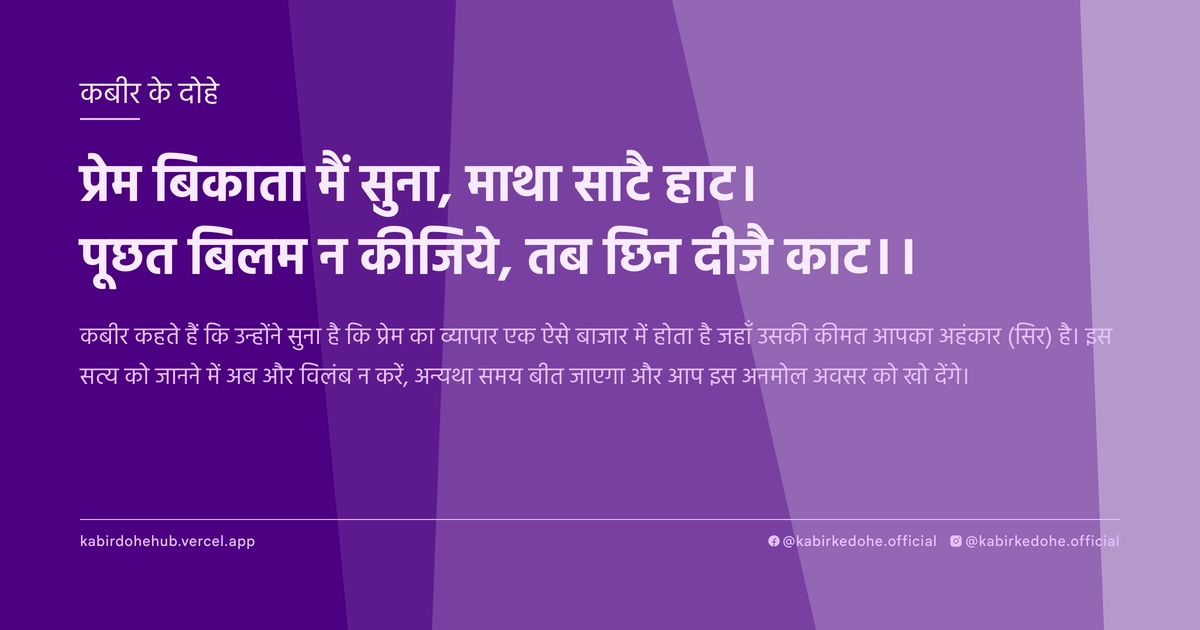
प्रेम बिकाता मैं सुना, माथा साटै हाट।
पूछत बिलम न कीजिये, तब छिन दीजै काट।।
Prem bikata main suna, maatha saate haat. Poochat bilam naC kariye, tab chhin deeje kaat.
इस पृष्ठ पर इस कबीर दोहे का अर्थ (meaning), हिंदी व्याख्या और अंग्रेज़ी अनुवाद, दार्शनिक विश्लेषण और व्यावहारिक जीवन सीख दी गई है। यह दोहा भक्ति (Bhakti) विषय से जुड़ा है — Kabir doha meaning and explanation in Hindi and English.
अर्थ (Meaning):
कबीर कहते हैं कि उन्होंने सुना है कि प्रेम का व्यापार एक ऐसे बाजार में होता है जहाँ उसकी कीमत आपका अहंकार (सिर) है। इस सत्य को जानने में अब और विलंब न करें, अन्यथा समय बीत जाएगा और आप इस अनमोल अवसर को खो देंगे।
Kabir proclaims that he has heard of a marketplace where Divine Love is traded, but the price of admission is the surrender of one's own ego (represented by the head). He urges the seeker not to hesitate or delay in this pursuit, for the window of opportunity is fleeting and may soon close forever.
व्याख्या (Interpretation):
शाब्दिक अर्थ यह है कि प्रेम एक वस्तु की तरह है जिसे प्राप्त करने के लिए सिर देना पड़ता है। रूपकात्मक रूप से, 'सिर' यहाँ अहंकार और व्यक्तिगत पहचान का प्रतीक है। निर्गुण भक्ति में, ईश्वर को पाने का एकमात्र मार्ग 'मैं' का विसर्जन है। यह अद्वैत वेदांत के उस सिद्धांत को दर्शाता है जहाँ आत्मा और ब्रह्म के बीच का पर्दा केवल अहंकार है। जब तक 'मैं' जीवित है, 'वह' नहीं मिल सकता। यह विरोधाभास है कि जिसे हम सबसे कीमती समझते हैं—अपना अस्तित्व—वही वास्तव में वह बाधा है जो हमें अनंत प्रेम से दूर रखती है। माया हमें विश्वास दिलाती है कि हमारा अहंकार हमारी सुरक्षा है, जबकि वास्तव में यह हमारी जेल है।
Literally, the verse suggests that love is a commodity requiring the sacrifice of one's head. Metaphorically, the 'head' symbolizes the ego, the intellectual pride, and the false sense of separate identity. In the tradition of Nirgun Bhakti, the formless Divine is accessible only when the 'I' is annihilated. This aligns with Advaita Vedanta, where the illusion of duality (Maya) is maintained by the ego; once the ego is surrendered, the non-duality of Atman and Brahman is realized. The central paradox is that the very thing we strive to protect—our individual identity—is the sole obstacle to experiencing universal love. To 'buy' the infinite, one must pay with the finite self.
दार्शनिक विश्लेषण (Philosophical Analysis):
कबीर का यह दोहा उस सामाजिक और धार्मिक परिवेश की प्रतिक्रिया है जहाँ धर्म केवल बाहरी कर्मकांडों और जातिगत श्रेष्ठता तक सीमित था। वे तर्क देते हैं कि ईश्वर किसी मंदिर, मस्जिद या विशेष जाति के अधिकार में नहीं है, बल्कि वह प्रेम के माध्यम से उपलब्ध है। यहाँ 'बाजार' का उल्लेख सांसारिक जीवन के विपरीत एक आध्यात्मिक विनिमय को दर्शाता है।
अद्वैत वेदांत के परिप्रेक्ष्य में, यह 'अहं ब्रह्मास्मि' की प्राप्ति के लिए 'अहंकार' के त्याग की मांग है। जब तक साधक स्वयं को शरीर और मन के साथ जोड़कर देखता है, वह द्वैत में फंसा रहता है। कबीर इस द्वैत को तोड़ने के लिए 'सिर काटने' यानी पूर्ण समर्पण की बात करते हैं।
सूफी मत के 'फना' (Fana) के सिद्धांत के साथ इसका गहरा संबंध है, जहाँ प्रेमी अपने अस्तित्व को परमात्मा की इच्छा में विलीन कर देता है। यह केवल शारीरिक मृत्यु नहीं, बल्कि मानसिक और भावनात्मक मृत्यु है—इच्छाओं और पूर्वाग्रहों का अंत।
कबीर ritualism (कर्मकांड) का विरोध करते हुए बताते हैं कि माला जपने या तीर्थ यात्रा करने से अधिक महत्वपूर्ण है हृदय का परिवर्तन। यदि हृदय में अहंकार है, तो सभी धार्मिक क्रियाएं व्यर्थ हैं। सच्चा धर्म वह है जो मनुष्य को उसके संकीर्ण दायरे से निकालकर सार्वभौमिक प्रेम में ले जाए।
मनोवैज्ञानिक स्तर पर, यह दोहा पहचान के संकट और उसके समाधान की बात करता है। मनुष्य अपनी झूठी पहचान (Persona) को बचाने के लिए जीवन भर संघर्ष करता है। कबीर सुझाव देते हैं कि इस संघर्ष को छोड़कर स्वयं को समर्पित कर देना ही वास्तविक स्वतंत्रता और मानसिक शांति का मार्ग है।
Kabir’s verse emerges as a radical critique of the ritualistic and caste-ridden religious landscape of his era. He asserts that the Divine is not the property of a specific caste or confined to temples and mosques, but is accessible through the alchemy of love. The 'marketplace' serves as a metaphor for the spiritual exchange where the currency is not gold, but the surrender of the self.
From the lens of Advaita Vedanta, this is a call to transcend the 'I-consciousness' to realize the unity of Atman and Brahman. As long as the seeker clings to a separate identity, they remain trapped in Maya. The act of 'cutting off the head' is the symbolic destruction of the ego, the only veil separating the individual from the Absolute.
This mirrors the Sufi concept of 'Fana' (annihilation), where the mystic's individual existence is dissolved into the Divine Will. It is not a physical death, but a psychological death—the cessation of personal desires, biases, and the illusion of autonomy.
Kabir vehemently rejects ritualism, suggesting that beads and pilgrimages are meaningless if the heart remains arrogant. He shifts the focus from external piety to internal transformation. True spirituality, for Kabir, is the courage to abandon the safety of the known ego for the uncertainty of Divine Love.
Psychologically, this addresses the tension between the social persona and the authentic self. Humans spend lifetimes defending a fragile identity. Kabir proposes that the only way to find true peace is to stop defending this false construct and surrender to the universal flow of existence.
मूल संदेश (Core Message):
- अहंकार वह अंतिम पर्दा है जो ईश्वर और आत्मा के बीच है।
- सच्चा प्रेम केवल पूर्ण आत्म-समर्पण से ही प्राप्त होता है।
- अपनी पहचान को मिटाना ही वास्तविक पहचान को पाना है।
- आध्यात्मिक प्रगति का अर्थ है 'मैं' से 'हम' और फिर 'शून्य' होना।
- समय सीमित है; अहंकार का त्याग करने में विलंब विनाशकारी है।
- The ego is the final veil separating the soul from the Divine.
- True Love is attained only through absolute self-surrender.
- Erasing the false identity is the only way to find the true Self.
- Spiritual growth is the journey from 'I' to 'We' and finally to 'Zero'.
- Time is fleeting; delaying the surrender of ego is a spiritual tragedy.
व्यावहारिक उदाहरण (Practical Example):
वाराणसी के घाटों पर रहने वाला एक वृद्ध बुनकर था, जिसका नाम माधव था। माधव अपनी कला में इतना निपुण था कि पूरे शहर में उसके बनाए वस्त्रों की मांग थी। लेकिन इस निपुणता ने उसके भीतर एक गहरा अहंकार भर दिया था। वह मानता था कि उसके जैसा कोई दूसरा बुनकर नहीं है और वह अन्य बुनकरों को तुच्छ समझता था।
माधव का जीवन केवल काम और अपनी श्रेष्ठता के गर्व में बीत रहा था। उसके घर में शांति नहीं थी, क्योंकि उसका अहंकार उसे दूसरों से अलग कर चुका था। वह धर्म के नाम पर दान तो करता था, लेकिन उसके मन में यह भाव था कि वह दूसरों से श्रेष्ठ है क्योंकि वह दान दे रहा है।
एक दिन उसने एक फकीर को देखा जो सड़क किनारे बैठा था। फकीर के पास कुछ नहीं था, लेकिन उसके चेहरे पर एक ऐसी शांति और प्रेम था जिसे माधव ने अपने पूरे जीवन के वैभव में नहीं पाया था। माधव ने उससे पूछा, 'आप इतने सुखी कैसे हैं जबकि आपके पास कुछ नहीं है?'
फकीर ने मुस्कुराकर कहा, 'मैंने वह सब कुछ बेच दिया जो मेरा था, ताकि मैं वह पा सकूँ जो सबका है। मैंने अपना अहंकार उस बाजार में दे दिया जहाँ केवल प्रेम बिकता है।'
माधव को पहले तो यह बात समझ नहीं आई। उसने सोचा कि बिना पहचान और बिना प्रतिष्ठा के जीवन कैसा होगा? लेकिन धीरे-धीरे उसे अहसास हुआ कि उसकी 'प्रतिष्ठा' ही वास्तव में उसकी सबसे बड़ी बेड़ी थी। वह जिस सम्मान के लिए दूसरों को नीचा दिखाता था, वही सम्मान उसे अकेला कर रहा था।
उस रात माधव ने अपनी सबसे महंगी रेशमी चादर उठाई और उसे एक गरीब बीमार व्यक्ति को दे दिया। उसने पहली बार यह नहीं सोचा कि वह 'दान' कर रहा है, बल्कि उसने महसूस किया कि वह उस व्यक्ति के माध्यम से स्वयं की सेवा कर रहा है।
उसने अपनी श्रेष्ठता के दावे को त्याग दिया। उसने अपने साथी बुनकरों से माफी मांगी और उनके साथ मिलकर काम करना शुरू किया। उसने अपनी कला को अपनी पहचान बनाने के बजाय, उसे ईश्वर की सेवा का माध्यम बना लिया।
जैसे ही माधव ने अपने 'सिर' (अहंकार) को समर्पित किया, उसका जीवन बदल गया। अब उसके वस्त्रों में केवल धागे नहीं, बल्कि करुणा और प्रेम झलकने लगा। वह अब केवल एक कुशल बुनकर नहीं था, बल्कि एक प्रेमपूर्ण मनुष्य बन गया था।
In the ghats of Varanasi lived an elderly weaver named Madhav. Madhav was so skilled in his craft that his textiles were coveted across the city. However, this mastery had bred a profound arrogance within him. He believed no other weaver could match his skill and viewed his peers with quiet contempt.
Madhav’s life was consumed by work and the pride of his superiority. There was no peace in his home, for his ego had isolated him from everyone. He performed religious charities, but his heart whispered that he was superior because he was the one giving.
One day, he encountered a wandering dervish sitting by the roadside. The dervish possessed nothing, yet his face radiated a peace and love that Madhav had never found in all his material success. Madhav asked, 'How are you so content when you have nothing?'
The dervish smiled and replied, 'I sold everything that was mine so that I could possess that which belongs to everyone. I gave away my ego in the marketplace where only Love is traded.'
At first, Madhav was perplexed. He wondered what life would be without identity and prestige. But gradually, he realized that his 'prestige' was actually his heaviest shackle. The very status he used to look down upon others was the wall keeping him lonely.
That night, Madhav took his most expensive silk shawl and gave it to a sick pauper. For the first time, he didn't feel he was performing 'charity'; instead, he felt he was serving the Divine through another human being.
He abandoned his claim to superiority. He apologized to his fellow weavers and began collaborating with them. He stopped treating his art as a badge of identity and started treating it as a medium of service.
As soon as Madhav surrendered his 'head' (ego), his life transformed. His textiles no longer just held threads, but reflected compassion and love. He ceased to be merely a skilled weaver and became a loving human being.
अभ्यास मार्गदर्शन (Practice Guidance):
- दैनिक आत्म-निरीक्षण: प्रतिदिन 15 मिनट मौन बैठें और उन क्षणों को याद करें जब आपने अपनी श्रेष्ठता सिद्ध करने के लिए दूसरों को छोटा महसूस कराया।
- अहंकार विसर्जन अभ्यास: दिन में कम से कम एक ऐसा कार्य करें जिसमें आप अपनी पहचान छिपाकर किसी की निस्वार्थ मदद करें, ताकि 'कर्ता' होने का भाव समाप्त हो।
- जर्नलिंग प्रॉम्प्ट: 'यदि मेरी सारी उपलब्धियां, पद और प्रतिष्ठा आज छीन ली जाएं, तो मेरे भीतर क्या बचेगा?' इस प्रश्न पर गहराई से लिखें।
- निदान चेकलिस्ट: क्या मैं दूसरों की आलोचना करते समय गुप्त रूप से अपनी श्रेष्ठता महसूस करता हूँ? क्या मैं प्रशंसा की उम्मीद में कार्य करता हूँ? यदि हाँ, तो अहंकार अभी जीवित है।
- Daily Self-Observation: Spend 15 minutes in silence daily, recalling moments where you subtly belittled others to assert your own superiority.
- Ego-Dissolution Practice: Perform at least one act of selfless service daily while keeping your identity hidden, specifically to erase the feeling of being the 'doer'.
- Journaling Prompt: 'If all my achievements, titles, and prestige were stripped away today, what would remain within me?' Explore this deeply in writing.
- Diagnostic Checklist: Do I feel a secret sense of superiority while criticizing others? Do I act primarily for the expectation of praise? If yes, the ego is still active.
चिंतन प्रश्न (Reflection Questions):
- मेरी कौन सी ऐसी 'उपलब्धि' है जिसे खोने के विचार मात्र से मुझे डर लगता है?
- क्या मेरा धर्म और आध्यात्मिकता वास्तव में मुझे विनम्र बना रहे हैं, या वे मेरे अहंकार को एक नया 'आध्यात्मिक मुखौटा' दे रहे हैं?
- जब मैं दूसरों की मदद करता हूँ, तो क्या मैं वास्तव में उनकी मदद कर रहा हूँ या अपनी 'अच्छाई' की छवि को पुष्ट कर रहा हूँ?
- मेरे जीवन का वह कौन सा क्षेत्र है जहाँ मैं अभी भी 'सही' होने की जिद पकड़ कर बैठा हूँ?
- यदि मैं अपनी सामाजिक पहचान (नाम, पेशा, जाति) पूरी तरह भूल जाऊं, तो मैं वास्तव में कौन हूँ?
- Which 'achievement' of mine causes me the most fear at the mere thought of losing it?
- Is my spirituality making me genuinely humble, or is it providing a new 'spiritual mask' for my ego?
- When I help others, am I truly serving them or merely reinforcing my image as a 'good person'?
- In which area of my life am I still stubbornly clinging to the need to be 'right'?
- If I were to completely forget my social identity (name, profession, caste), who would I actually be?