
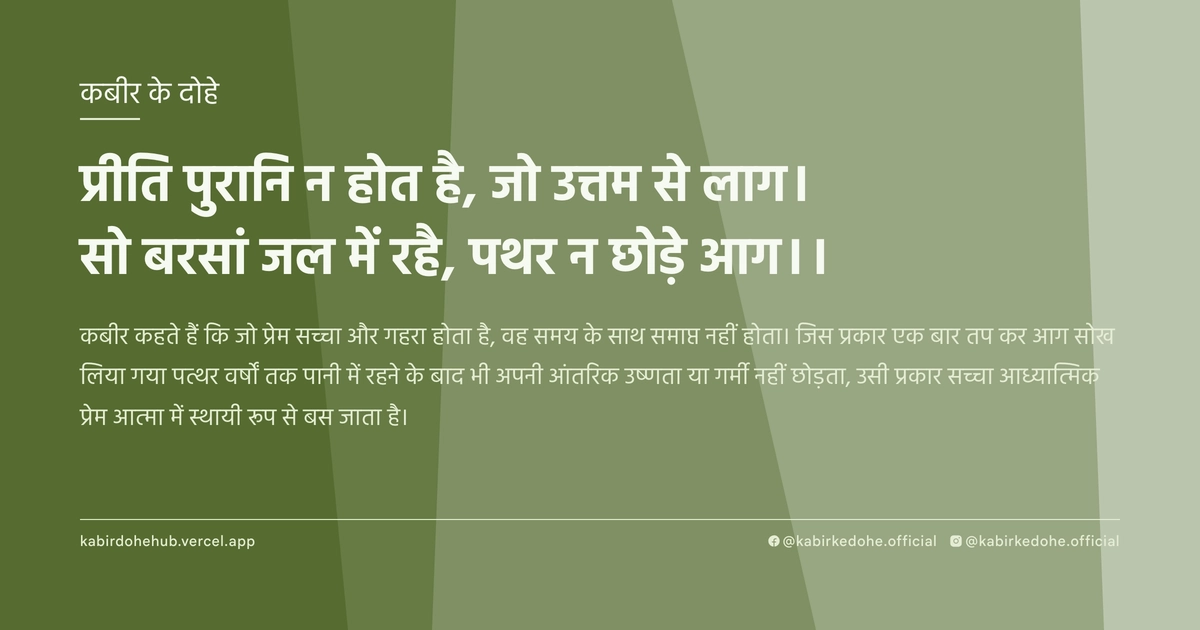
प्रीति पुरानि न होत है, जो उत्तम से लाग।
सो बरसां जल में रहै, पथर न छोड़े आग।।
Preeti purani na hot hai, jo uttam se laag. So barsan jal mein rahai, pathar na chhode aag.
इस पृष्ठ पर इस कबीर दोहे का अर्थ (meaning), हिंदी व्याख्या और अंग्रेज़ी अनुवाद, दार्शनिक विश्लेषण और व्यावहारिक जीवन सीख दी गई है। यह दोहा भक्ति (Bhakti) विषय से जुड़ा है — Kabir doha meaning and explanation in Hindi and English.
अर्थ (Meaning):
कबीर कहते हैं कि जो प्रेम सच्चा और गहरा होता है, वह समय के साथ समाप्त नहीं होता। जिस प्रकार एक बार तप कर आग सोख लिया गया पत्थर वर्षों तक पानी में रहने के बाद भी अपनी आंतरिक उष्णता या गर्मी नहीं छोड़ता, उसी प्रकार सच्चा आध्यात्मिक प्रेम आत्मा में स्थायी रूप से बस जाता है।
Kabir asserts that true, profound love does not fade with time. Just as a stone, once heated in a fire, retains its internal warmth even after being submerged in water for years, a genuine spiritual connection and love, once ignited, remain permanently etched within the soul.
व्याख्या (Interpretation):
इस दोहे का शाब्दिक अर्थ है कि वास्तविक प्रेम अविनाशी है। यहाँ 'पत्थर' मानव अहंकार और जड़ता का प्रतीक है, जबकि 'आग' उस ईश्वरीय प्रेम या ज्ञान की तीव्रता को दर्शाती है जो आत्मा को झकझोर देती है। जब साधक निर्गुण ब्रह्म के प्रेम में डूबता है, तो वह 'माया' के जल (सांसारिक मोह) में रहकर भी अपनी आंतरिक तपिश नहीं खोता। यह अद्वैत वेदांत के उस सिद्धांत को पुष्ट करता है जहाँ एक बार आत्म-साक्षात्कार होने पर जीव और ब्रह्म की एकता स्थायी हो जाती है। यह विरोधाभास है कि बाहरी दुनिया में व्यक्ति सामान्य दिख सकता है, लेकिन भीतर वह परमात्मा की अग्नि से प्रज्वलित रहता है।
Literally, the couplet speaks of the indestructibility of true love. Here, the 'stone' symbolizes human ego and spiritual inertia, while the 'fire' represents the intensity of divine love or gnosis that awakens the soul. When a seeker immerses themselves in the love of the Nirgun Brahman (Formless Absolute), they retain their internal heat even while submerged in the 'waters of Maya' (worldly illusions). This aligns with Advaita Vedanta, suggesting that once the realization of non-duality is achieved, the union of Atman and Brahman is permanent. It presents a paradox: externally, the individual may appear ordinary, yet internally, they remain ignited by the eternal flame of consciousness.
दार्शनिक विश्लेषण (Philosophical Analysis):
कबीर का यह दृष्टिकोण उनके युग के कर्मकांडीय धर्म के विरुद्ध एक सशक्त प्रहार है। जहाँ उस समय धर्म को बाहरी क्रियाओं, तीर्थों और स्नान से जोड़ा जाता था, कबीर 'आंतरिक रूपांतरण' पर बल देते हैं। वे बताते हैं कि ईश्वर की प्राप्ति किसी बाहरी जल (गंगा स्नान) से नहीं, बल्कि भीतर की अग्नि (प्रेम और तप) से होती है।
यह दर्शन सूफी मत के 'इश्क-ए-हकीकी' (दिव्य प्रेम) से मेल खाता है, जहाँ प्रेमी और प्रियतम का विलोपन हो जाता है। जब प्रेम 'उत्तम' यानी शुद्ध होता है, तो वह केवल एक भावना नहीं, बल्कि एक अस्तित्वपरक अवस्था बन जाता है। यह अहंकार के पूर्ण विनाश की प्रक्रिया है; जैसे आग पत्थर की कठोरता को बदल देती है, वैसे ही प्रेम मनुष्य के 'मैं' को समाप्त कर देता है।
अद्वैत वेदांत के संदर्भ में, यह दोहा 'साक्षी भाव' की व्याख्या करता है। संसार का जल (दुख, सुख, मोह) आत्मा को स्पर्श तो करता है, लेकिन उसे विचलित नहीं कर पाता क्योंकि आत्मा अब उस परम सत्य की अग्नि में तप चुकी है। यह स्थिति 'जीवन्मुक्ति' की है, जहाँ व्यक्ति संसार में रहते हुए भी संसार से मुक्त है।
कबीर जाति और वर्ण के भेदभाव को नकारते हुए यह संदेश देते हैं कि प्रेम की यह अग्नि किसी विशेष कुल या धर्म की जागीर नहीं है। यह उस व्यक्ति के लिए उपलब्ध है जो अपनी जड़ता (पत्थरपन) को त्यागकर समर्पण करने को तैयार है। यहाँ 'उत्तम' शब्द का अर्थ केवल श्रेष्ठता नहीं, बल्कि पूर्णता और ईमानदारी है।
अंततः, यह विश्लेषण स्पष्ट करता है कि आध्यात्मिक प्रगति रैखिक नहीं बल्कि रूपांतरणकारी है। एक बार जब चेतना का स्तर बदल जाता है, तो वह वापस पुरानी स्थिति में नहीं लौटता। यह 'अपरिवर्तनीय परिवर्तन' ही वास्तविक मोक्ष है, जो बाहरी परिस्थितियों पर निर्भर नहीं करता।
Kabir's perspective is a powerful critique of the ritualistic religion of his era. While faith was then tied to external acts, pilgrimages, and ritual baths, Kabir emphasizes 'internal transformation.' He argues that God is not found in external waters (like bathing in the Ganges) but in the internal fire of love and austerity.
This philosophy resonates with the Sufi concept of 'Ishq-e-Haqiqi' (Divine Love), where the lover and the Beloved merge into one. When love is 'Uttam' (pure/supreme), it ceases to be a mere emotion and becomes an ontological state. It is a process of the total annihilation of the ego; just as fire alters the nature of a stone, divine love erases the 'I-ness' of the human being.
In the context of Advaita Vedanta, this doha explains the state of 'Sakshi' (the Witness). The waters of the world (pleasure, pain, attachment) may touch the soul, but they cannot extinguish its essence because the soul has been tempered in the fire of ultimate truth. This is the state of 'Jivanmukti'—being liberated while still living in the world.
By rejecting caste and creed, Kabir signals that this fire of love is not the monopoly of any specific lineage or religion. It is accessible to anyone willing to shed their inertia (their 'stoniness') and surrender completely. The word 'Uttam' here implies not just superiority, but absolute sincerity and wholeness.
Ultimately, this analysis reveals that spiritual progress is not linear but transformative. Once the level of consciousness shifts, it cannot revert to its previous state. This 'irreversible change' is the essence of true liberation, rendering the seeker immune to the fluctuations of external circumstances.
मूल संदेश (Core Message):
- अहंकार की जड़ता को प्रेम की तीव्रता से नष्ट करें।
- सच्चा आध्यात्मिक अनुभव बाहरी परिस्थितियों का मोहताज नहीं होता।
- रूपान्तरण तब होता है जब समर्पण पूर्ण और शुद्ध हो।
- सांसारिक दुख उस आत्मा को नहीं छू सकते जो सत्य में तप चुकी है।
- स्थायी शांति केवल आंतरिक रूपांतरण से ही संभव है।
- Destroy the inertia of ego with the intensity of love.
- True spiritual experience is independent of external circumstances.
- Transformation occurs only when surrender is absolute and pure.
- Worldly sorrows cannot touch a soul tempered in Truth.
- Permanent peace is possible only through internal transmutation.
व्यावहारिक उदाहरण (Practical Example):
एक समय की बात है, वाराणसी के एक पुराने मोहल्ले में माधव नाम का एक कुम्हार रहता था। माधव अपनी कला में निपुण था, लेकिन उसका स्वभाव अत्यंत कठोर और क्रोधित था। वह अपने परिवार और पड़ोसियों के साथ हमेशा रूखा व्यवहार करता था, मानो उसका हृदय पत्थर का हो। वह मानता था कि उसकी श्रेष्ठता उसकी कला में है, और बाकी सब उसके सामने तुच्छ हैं।
एक दिन, माधव की मुलाकात एक घुमक्कड़ फकीर से हुई, जिसने उसे कबीर के इस दोहे के बारे में बताया। फकीर ने उससे कहा, 'माधव, तू मिट्टी को तो आकार दे देता है, लेकिन क्या तूने अपने भीतर की उस अग्नि को महसूस किया है जो पत्थर को भी पिघला दे?' माधव ने पहले तो उपहास किया, लेकिन फकीर की आँखों की शांति ने उसे सोचने पर मजबूर कर दिया।
माधव ने धीरे-धीरे आत्म-निरीक्षण शुरू किया। उसने महसूस किया कि उसका क्रोध वास्तव में उसके अकेलेपन और असुरक्षा का कवच था। उसने तय किया कि वह अब केवल मिट्टी के बर्तन नहीं बनाएगा, बल्कि अपने भीतर प्रेम की अग्नि को जगाएगा। उसने निस्वार्थ भाव से दूसरों की मदद करना शुरू किया, बिना किसी उम्मीद के।
शुरुआत में यह कठिन था। उसके पुराने स्वभाव की 'जड़ता' उसे वापस खींचती थी। लेकिन जैसे-जैसे वह क्षमा और करुणा का अभ्यास करने लगा, उसके भीतर एक गहरा बदलाव आया। वह अब भी वही कुम्हार था, उसी पुराने मोहल्ले में रहता था, लेकिन उसका व्यवहार पूरी तरह बदल गया था।
एक बार शहर में भीषण बाढ़ आई। माधव का घर और उसकी सारी कार्यशाला पानी में डूब गई। उसके पास अब कुछ नहीं बचा था। लोग उसे सांत्वना देने आए और कहा कि वह टूट गया होगा। लेकिन माधव के चेहरे पर एक असीम शांति थी।
उसकी पत्नी ने पूछा, 'सब कुछ खो गया, फिर भी आप इतने शांत कैसे हैं?' माधव ने मुस्कुराकर कहा, 'बाहर का जल सब कुछ बहा ले गया, लेकिन भीतर की वह प्रेम की अग्नि, जो मैंने वर्षों के अभ्यास से जगाई थी, वह अब भी प्रज्वलित है। वह जल उसे बुझा नहीं सकता।'
माधव ने अपनी बची-कुची ताकत से बाढ़ पीड़ितों की सेवा करना शुरू किया। उसने देखा कि उसकी आंतरिक शांति दूसरों के लिए आशा का स्रोत बन गई। वह अब केवल एक कलाकार नहीं था, बल्कि एक जीवित उदाहरण था कि सच्चा प्रेम और ज्ञान बाहरी परिस्थितियों से अप्रभावित रहते हैं।
गाँव के लोग अब उसे 'पत्थर दिल माधव' नहीं, बल्कि 'प्रेम-पुंज माधव' कहने लगे। उसने यह जान लिया था कि भौतिक संपत्ति और अहंकार अस्थायी हैं, लेकिन आत्मा में बसा हुआ दिव्य प्रेम शाश्वत है।
उसकी कहानी यह सिखाती है कि जिस प्रकार अग्नि से तपकर पत्थर अपनी प्रकृति बदल लेता है, उसी प्रकार कठिन से कठिन हृदय भी यदि सच्चे प्रेम और साधना के संपर्क में आए, तो वह स्थायी रूप से रूपांतरित हो जाता है।
माधव का जीवन अब एक निरंतर साधना बन गया था, जहाँ हर कार्य प्रेम का एक विस्तार था। उसने सिद्ध कर दिया कि जब प्रेम 'उत्तम' होता है, तो वह समय और परिस्थिति की सीमाओं को पार कर जाता है।
Once, in an ancient lane of Varanasi, lived a potter named Madhav. Madhav was a master of his craft, but his nature was incredibly harsh and volatile. He treated his family and neighbors with coldness, as if his heart were made of stone. He believed his superiority lay in his art, and everyone else was insignificant compared to him.
One day, Madhav encountered a wandering fakir who introduced him to this specific doha of Kabir. The fakir asked, 'Madhav, you give shape to clay, but have you felt the fire within that can melt even a stone?' Madhav initially mocked him, but the profound stillness in the fakir's eyes forced him to reflect.
Madhav began a journey of self-inquiry. He realized that his anger was merely a shield for his loneliness and insecurity. He decided that he would no longer just mold clay; he would ignite the fire of love within himself. He started helping others selflessly, without expecting anything in return.
Initially, it was grueling. The 'inertia' of his old nature constantly pulled him back. However, as he practiced forgiveness and compassion, a deep shift occurred. He remained the same potter in the same old neighborhood, but his demeanor had completely transformed.
One year, a devastating flood hit the city. Madhav's home and entire workshop were submerged. He lost everything he owned. People came to console him, assuming he would be broken by the tragedy. Yet, an infinite peace radiated from Madhav's face.
His wife asked, 'Everything is gone, yet how are you so calm?' Madhav smiled and replied, 'The external waters washed everything away, but the fire of love I ignited within through years of practice still burns. The water cannot extinguish it.'
Madhav used his remaining strength to serve the flood victims. He noticed that his internal peace became a source of hope for others. He was no longer just an artist; he had become a living testament that true love and knowledge remain unaffected by external circumstances.
The townspeople stopped calling him 'Stone-hearted Madhav' and began calling him 'Madhav, the Beacon of Love.' He had learned that material wealth and ego are transient, but the divine love seated in the soul is eternal.
His story teaches that just as a stone changes its nature after being tempered by fire, even the hardest heart, when exposed to true love and spiritual discipline, undergoes a permanent transformation.
Madhav's life became a continuous meditation, where every action was an extension of love. He proved that when love is 'Uttam' (supreme), it transcends the boundaries of time and circumstance.
अभ्यास मार्गदर्शन (Practice Guidance):
- दैनिक चिंतन: प्रतिदिन 20 मिनट मौन बैठें और विचार करें कि आपके जीवन में कौन सी भावनाएं अस्थायी हैं और कौन सा सत्य स्थायी है।
- आत्म-पूछताछ जर्नल: लिखें कि आपके जीवन का वह कौन सा 'पत्थर' (कठोरता/अहंकार) है जिसे प्रेम की अग्नि से पिघलाने की आवश्यकता है।
- व्यवहार परिवर्तन: दिन में कम से कम एक ऐसा कार्य करें जो पूरी तरह निस्वार्थ हो, जहाँ आपको कोई श्रेय न मिले, ताकि अहंकार का विलोपन हो सके।
- डायग्नोस्टिक चेकलिस्ट: क्या आप बाहरी आलोचना या प्रशंसा से विचलित होते हैं? यदि हाँ, तो आपकी आंतरिक अग्नि अभी कच्ची है। यदि आप स्थिर हैं, तो आप इस ज्ञान को जी रहे हैं।
- Daily Contemplation: Sit in silence for 20 minutes daily and reflect on which emotions in your life are transient and which truth is eternal.
- Self-Inquiry Journal: Document the 'stone' (rigidity/ego) within your own personality that needs to be melted by the fire of divine love.
- Behavioral Shift: Perform at least one completely selfless act daily where you receive no credit, aiming for the gradual annihilation of the ego.
- Diagnostic Checklist: Do you fluctuate based on external criticism or praise? If yes, your internal fire is still fragile. If you remain equanimous, you are living this wisdom.
चिंतन प्रश्न (Reflection Questions):
- क्या मेरा 'प्रेम' वास्तव में दूसरे के लिए है, या यह केवल मेरी अपनी छवि को बेहतर बनाने का एक साधन है?
- मेरे व्यक्तित्व का वह कौन सा हिस्सा है जिसे मैं 'अपरिवर्तनीय' मानता हूँ, और क्या वह वास्तव में मेरा सत्य है या केवल एक निर्मित पहचान?
- जब मैं कहता हूँ कि मैं 'स्थिर' हूँ, तो क्या वह वास्तविक शांति है या केवल भावनाओं का दमन?
- क्या मैं अपनी आध्यात्मिक उपलब्धियों का उपयोग दूसरों को नीचा दिखाने के लिए एक सूक्ष्म अहंकार के रूप में कर रहा हूँ?
- यदि मेरा सामाजिक स्तर, पद और संपत्ति आज छीन ली जाए, तो मेरे भीतर क्या बचेगा?
- Is my 'love' truly for the other, or is it merely a tool to enhance my own self-image?
- Which part of my personality do I consider 'unchangeable,' and is that truly my essence or just a constructed identity?
- When I claim to be 'stable,' is it genuine peace or merely the suppression of emotions?
- Am I using my spiritual achievements as a subtle ego to look down upon others?
- If my social status, position, and wealth were stripped away today, what would remain within me?