
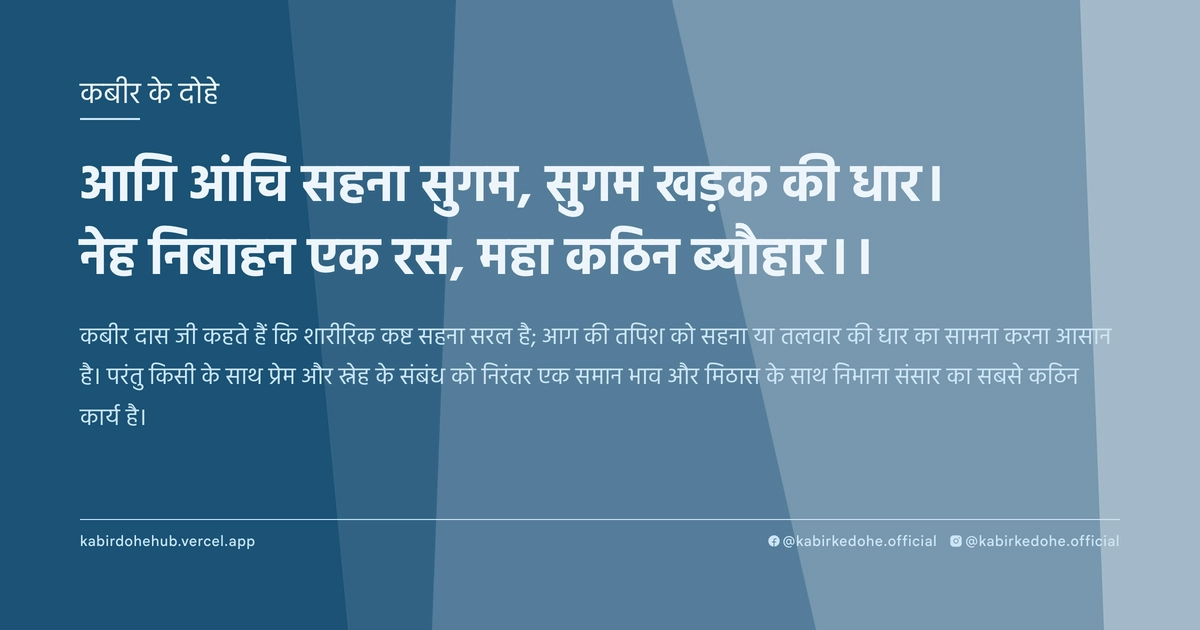
आगि आंचि सहना सुगम, सुगम खड़क की धार।
नेह निबाहन एक रस, महा कठिन ब्यौहार।।
Aagi aanchi sahna sugam, sugam khadak ki dhaar. Neh nibahan ek ras, maha kathin byauhaar.
इस पृष्ठ पर इस कबीर दोहे का अर्थ (meaning), हिंदी व्याख्या और अंग्रेज़ी अनुवाद, दार्शनिक विश्लेषण और व्यावहारिक जीवन सीख दी गई है। यह दोहा संयम (Self-discipline) विषय से जुड़ा है — Kabir doha meaning and explanation in Hindi and English.
अर्थ (Meaning):
कबीर दास जी कहते हैं कि शारीरिक कष्ट सहना सरल है; आग की तपिश को सहना या तलवार की धार का सामना करना आसान है। परंतु किसी के साथ प्रेम और स्नेह के संबंध को निरंतर एक समान भाव और मिठास के साथ निभाना संसार का सबसे कठिन कार्य है।
Kabir asserts that enduring physical agony is relatively simple; one can bear the searing heat of fire or the sharp edge of a sword. However, maintaining a relationship of love and affection with consistent purity and unwavering devotion is the most arduous task in human existence.
व्याख्या (Interpretation):
इस दोहे का शाब्दिक अर्थ है कि बाहरी शारीरिक पीड़ा क्षणिक और प्रत्यक्ष होती है, जिसे साहस के बल पर सहा जा सकता है। लेकिन 'नेह निबाहन' का अर्थ है अहंकार रहित प्रेम। यहाँ 'एक रस' का तात्पर्य उस स्थिरता से है जहाँ प्रेम समय, परिस्थिति या लाभ-हानि से प्रभावित न हो। यह निर्गुण भक्ति का संकेत है, जहाँ भक्त को अपने भीतर के 'मैं' (अहंकार) को मिटाना पड़ता है ताकि वह परमात्मा या अन्य जीवों से अद्वैत भाव से जुड़ सके। माया हमें बाहरी संघर्षों में उलझाती है, लेकिन असली संघर्ष आंतरिक है—अपने स्वभाव की कठोरता को प्रेम में बदलना। यह विरोधाभास है कि जो सबसे सरल दिखता है (प्रेम), वही सबसे कठिन है क्योंकि इसमें पूर्ण आत्म-समर्पण की आवश्यकता होती है।
Literally, the verse suggests that external physical pain is transient and direct, manageable through sheer willpower. However, 'Neh nibahan' refers to love devoid of ego. The phrase 'Ek Ras' signifies a state of constancy where affection remains unaffected by time, circumstance, or transactional gain. This points toward Nirgun Bhakti, where the seeker must dissolve the 'I' (Ahamkara) to unite with the Divine or other beings in a state of non-duality (Advaita). Maya lures us into external conflicts, but the true battle is internal—transforming the rigidity of the temperament into fluid love. It is a profound paradox: that which appears simplest (loving) is the most difficult, as it demands total spiritual surrender.
दार्शनिक विश्लेषण (Philosophical Analysis):
कबीर का यह दोहा मध्यकालीन भारत के सामाजिक और धार्मिक परिवेश की प्रतिक्रिया है, जहाँ कर्मकांड और बाहरी दिखावे को प्राथमिकता दी जाती थी। कबीर ने ritualism (कर्मकांड) को नकारते हुए हृदय की पवित्रता पर बल दिया। उनके अनुसार, मंदिर जाना या कठिन तपस्या करना आसान है, लेकिन एक मनुष्य के प्रति निस्वार्थ प्रेम रखना वास्तविक तपस्या है।
दार्शनिक स्तर पर, यह अद्वैत वेदांत के करीब है। जब तक व्यक्ति स्वयं को दूसरों से अलग मानता है, तब तक 'नेह' (प्रेम) में उतार-चढ़ाव आते रहते हैं। जब 'अहं' का विलोपन होता है, तब केवल 'एक रस' शेष रहता है। यह सूफीवाद के 'फना' (अहंकार का विनाश) के सिद्धांत से मेल खाता है, जहाँ प्रेमी अपने अस्तित्व को मिटाकर प्रिय में विलीन हो जाता है।
कबीर यहाँ मनोवैज्ञानिक परिवर्तन की बात कर रहे हैं। शारीरिक पीड़ा शरीर को प्रभावित करती है, लेकिन संबंधों की कड़वाहट आत्मा को क्षत-विक्षत करती है। अहंकार वह दीवार है जो हमें 'एक रस' होने से रोकती है। लोग अक्सर कठिन शारीरिक श्रम या दंड को अपनी श्रेष्ठता का प्रमाण मानते हैं, जबकि वास्तविक श्रेष्ठता क्षमा और निरंतर प्रेम में निहित है।
यह शिक्षण हमें सिखाता है कि भक्ति केवल ईश्वर के प्रति नहीं, बल्कि मानवता के प्रति होनी चाहिए। यदि आप अपने पड़ोसी या शत्रु के प्रति प्रेम नहीं रख सकते, तो आपकी ईश्वर-भक्ति केवल एक भ्रम है। यह सामाजिक समरसता का मार्ग है जो जाति और धर्म की सीमाओं को तोड़ता है।
अंततः, यह दोहा हमें चेतावनी देता है कि हम बाहरी चुनौतियों को जीतने के प्रयास में अपनी आंतरिक कोमलता न खो दें। सच्चा आध्यात्मिक उत्थान वह है जहाँ व्यक्ति कठिन परिस्थितियों में भी अपने हृदय की करुणा और प्रेम को स्थिर रख सके।
This couplet is a reaction to the socio-religious climate of medieval India, where ritualism and external displays of piety were prioritized. Kabir rejects these superficialities, emphasizing the purity of the heart. In his view, visiting temples or performing rigorous austerities is simple; maintaining selfless love for another human being is the true asceticism.
Philosophically, this aligns with Advaita Vedanta. As long as an individual perceives themselves as separate from others, 'Neh' (love) will fluctuate. Only when the 'Ahamkara' (ego) is dissolved does 'Ek Ras' (a singular, constant essence) remain. This mirrors the Sufi concept of 'Fana' (annihilation of the self), where the lover vanishes into the Beloved.
Kabir addresses a psychological transformation. While physical pain affects the body, the bitterness in relationships lacerates the soul. The ego is the barrier preventing this singular flow of love. People often mistake the ability to endure physical hardship or punishment as a sign of spiritual superiority, whereas true mastery lies in forgiveness and consistent affection.
This teaching posits that devotion must extend beyond the deity to humanity. If one cannot maintain love for a neighbor or an enemy, their devotion to God is a mere illusion. This is the path of social harmony that transcends the boundaries of caste and creed.
Ultimately, the verse warns against losing internal tenderness while striving to conquer external challenges. True spiritual evolution is the ability to keep the heart's compassion and love steady, even amidst the most turbulent circumstances.
मूल संदेश (Core Message):
- शारीरिक सहनशक्ति आध्यात्मिक शक्ति नहीं है।
- अहंकार का विलोपन ही वास्तविक प्रेम का द्वार है।
- स्थिर प्रेम ही आत्मा की उच्चतम अवस्था है।
- बाहरी संघर्षों से अधिक कठिन आंतरिक कोमलता है।
- निस्वार्थता ही अद्वैत की व्यावहारिक अभिव्यक्ति है।
- Physical endurance is not equivalent to spiritual strength.
- The dissolution of ego is the only gateway to true love.
- Consistent love is the highest state of the soul.
- Internal tenderness is harder to achieve than external victory.
- Selflessness is the practical manifestation of non-duality.
व्यावहारिक उदाहरण (Practical Example):
एक समय की बात है, वाराणसी के घाटों पर रहने वाला एक वृद्ध बुनकर था, जिसका नाम माधव था। माधव अपने काम में निपुण था, लेकिन उसका स्वभाव अत्यंत कठोर और क्रोधी था। वह अपने परिवार और पड़ोसियों से छोटी-छोटी बातों पर झगड़ता था।
एक दिन माधव ने सुना कि एक संत कह रहे थे कि तलवार की धार सहना आसान है, पर प्रेम निभाना कठिन। माधव को लगा कि वह बहुत साहसी है क्योंकि उसने जीवन में बहुत गरीबी और शारीरिक कष्ट सहे थे। उसने सोचा, 'मैं तो कठिन से कठिन परिस्थिति सह चुका हूँ, यह प्रेम क्या चीज़ है?'
उसी समय उसके पड़ोस में एक युवा लड़का रहता था, जो अक्सर माधव की छोटी-मोटी गलतियों पर उसका उपहास करता था। माधव उसे नापसंद करता था और उससे बदला लेने की योजना बनाता था।
एक दिन माधव की दुकान में आग लग गई। उसकी मेहनत की सारी साड़ियाँ जल गईं। वह सड़क पर टूटकर रोने लगा। उसे लगा कि अब उसका जीवन समाप्त हो गया है।
तभी वह युवा लड़का, जिसका माधव सबसे अधिक तिरस्कार करता था, दौड़कर आया। उसने न केवल आग बुझाने में मदद की, बल्कि अपनी जमा पूँजी माधव के पैरों में रख दी ताकि वह दोबारा काम शुरू कर सके।
माधव स्तब्ध रह गया। उसने महसूस किया कि आग की लपटों का दर्द वह सह गया था, लेकिन उस लड़के की निस्वार्थ करुणा ने उसके अहंकार की जड़ें हिला दी थीं।
उसने महसूस किया कि वह शारीरिक कष्टों को सहने का दावा तो करता था, लेकिन वह एक साधारण मनुष्य के प्रति प्रेम और कृतज्ञता का भाव रखने में पूरी तरह विफल रहा था।
माधव ने उस दिन एक बड़ा निर्णय लिया। उसने अपने क्रोध को त्याग दिया और संकल्प लिया कि वह अब केवल अपनी श्रेष्ठता नहीं दिखाएगा, बल्कि सबके प्रति 'एक रस' प्रेम रखेगा।
धीरे-धीरे माधव का व्यवहार बदल गया। वह अब केवल एक कुशल बुनकर नहीं, बल्कि पूरे मोहल्ले के लिए प्रेम का स्रोत बन गया। उसने सीखा कि असली वीरता तलवार चलाने में नहीं, बल्कि हृदय को खुला रखने में है।
उसकी यह नई पहचान उसके पुराने अहंकार से कहीं अधिक शक्तिशाली थी, और उसने पाया कि प्रेम निभाना वास्तव में सबसे कठिन लेकिन सबसे फलदायी कार्य है।
Once, in the ghats of Varanasi, lived an elderly weaver named Madhav. Madhav was masterly in his craft, but his temperament was harsh and prone to anger. He frequently clashed with his family and neighbors over trivial matters.
One day, Madhav overheard a saint proclaiming that enduring the edge of a sword is easy, but maintaining love is difficult. Madhav, believing himself courageous because he had survived extreme poverty and physical hardship, thought, 'I have endured the worst; what is this love?'
In his neighborhood lived a young boy who often mocked Madhav's small mistakes. Madhav despised him and secretly plotted ways to humiliate him in return.
Suddenly, a fire broke out in Madhav's workshop. All his meticulously woven sarees were reduced to ashes. He collapsed on the street, weeping, feeling that his life was over.
At that moment, the very boy whom Madhav most despised rushed to his aid. He not only helped extinguish the fire but placed his own meager savings at Madhav's feet so he could restart his business.
Madhav was stunned. He realized that while he had survived the physical heat of the fire, the boy's selfless compassion had incinerated the roots of his ego.
He recognized that while he claimed to be strong in facing physical adversity, he had utterly failed in the simple act of harboring love and gratitude toward a fellow human.
That day, Madhav made a pivotal decision. He renounced his anger and vowed that he would no longer project superiority, but instead cultivate a 'singular essence' of love for all.
Slowly, Madhav's behavior transformed. He became not just a skilled weaver, but a source of affection for the entire neighborhood.
He learned that true bravery does not lie in wielding a sword or enduring pain, but in keeping the heart open and soft.
This new identity was far more powerful than his old ego, and he discovered that maintaining love is indeed the most difficult, yet most rewarding, human endeavor.
अभ्यास मार्गदर्शन (Practice Guidance):
- प्रतिदिन 15 मिनट मौन ध्यान करें, जहाँ आप अपने भीतर के क्रोध और कठोरता को केवल एक साक्षी (observer) के रूप में देखें, बिना किसी निर्णय के।
- एक 'प्रेम-डायरी' बनाएँ: प्रतिदिन एक ऐसी घटना लिखें जहाँ आपने अपनी प्रतिक्रिया (reaction) को प्रेम में बदला, विशेषकर उन लोगों के साथ जिन्हें आप नापसंद करते हैं।
- व्यवहार परिवर्तन: जब भी किसी के साथ विवाद हो, तुरंत प्रतिक्रिया देने के बजाय 10 सेकंड का विराम लें और स्वयं से पूछें, 'क्या मेरा अहंकार बोल रहा है या मेरा प्रेम?'
- निदान चेकलिस्ट: यदि आप किसी व्यक्ति के प्रति अपनी भावनाएँ उनकी उपयोगिता के आधार पर बदलते हैं, तो आप 'एक रस' में नहीं हैं। यदि आप क्षमा करने में कठिनाई महसूस करते हैं, तो आपका अहंकार अभी भी सक्रिय है।
- Practice 15 minutes of silent meditation daily, observing your inner anger and rigidity as a mere witness, without judgment.
- Maintain a 'Love Journal': Record one daily instance where you transformed a reactive impulse into a loving response, especially toward those you find difficult.
- Behavioral Shift: During a conflict, pause for 10 seconds before reacting and ask yourself, 'Is this my ego speaking, or my love?'
- Diagnostic Checklist: If your feelings toward someone fluctuate based on their utility to you, you are not in 'Ek Ras'. If you find forgiveness burdensome, your ego is still dominant.
चिंतन प्रश्न (Reflection Questions):
- क्या मेरा प्रेम केवल उन लोगों के लिए है जो मुझे सम्मान देते हैं, या यह सबके लिए समान है?
- मैं अपनी 'कठोरता' को 'ईमानदारी' या 'सिद्धांत' का नाम देकर उसे सही ठहराता हूँ या नहीं?
- मेरे जीवन में वह कौन सा व्यक्ति है जिसके प्रति मैं 'एक रस' प्रेम नहीं रख पा रहा हूँ, और क्यों?
- क्या मेरी डिजिटल पहचान (सोशल मीडिया) मेरी वास्तविक आंतरिक करुणा को ढक रही है?
- यदि मेरा सारा सामाजिक दर्जा और संपत्ति छीन ली जाए, तो क्या मेरे भीतर केवल प्रेम शेष बचेगा?
- Is my love reserved only for those who respect me, or is it universal?
- Do I mask my rigidity by labeling it as 'honesty' or 'principles'?
- Who is the one person toward whom I cannot maintain 'Ek Ras' love, and what is the root cause?
- Is my digital persona masking a lack of genuine internal compassion?
- If all my social status and assets were stripped away, would only love remain within me?