
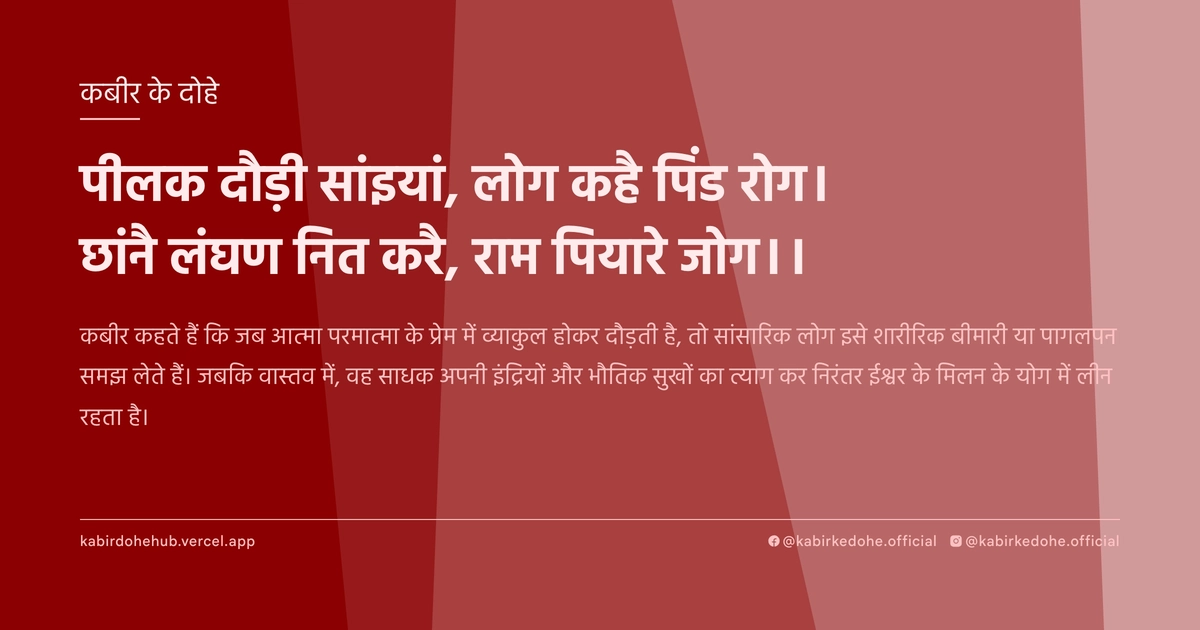
पीलक दौड़ी सांइयां, लोग कहै पिंड रोग।
छांनै लंघण नित करै, राम पियारे जोग।।
Peelak daudi saiyan, log kahai pind rog. Chhannai langhan nit karai, Ram piyare jog.
इस पृष्ठ पर इस कबीर दोहे का अर्थ (meaning), हिंदी व्याख्या और अंग्रेज़ी अनुवाद, दार्शनिक विश्लेषण और व्यावहारिक जीवन सीख दी गई है। यह दोहा भक्ति (Bhakti) विषय से जुड़ा है — Kabir doha meaning and explanation in Hindi and English.
अर्थ (Meaning):
कबीर कहते हैं कि जब आत्मा परमात्मा के प्रेम में व्याकुल होकर दौड़ती है, तो सांसारिक लोग इसे शारीरिक बीमारी या पागलपन समझ लेते हैं। जबकि वास्तव में, वह साधक अपनी इंद्रियों और भौतिक सुखों का त्याग कर निरंतर ईश्वर के मिलन के योग में लीन रहता है।
Kabir explains that when the soul rushes in an intense longing for the Divine, the worldly people mistake this spiritual ecstasy for a physical ailment or madness. In reality, the seeker is practicing the yoga of divine union by consistently transcending the limitations of the physical body and sensory desires.
व्याख्या (Interpretation):
यहाँ 'पीलक' उस तीव्र तड़प और बेचैनी का प्रतीक है जो विरह में उत्पन्न होती है। बाहरी दुनिया केवल 'पिंड' यानी शरीर को देखती है और जिसे वह रोग कहती है, वह वास्तव में आत्मा की जागृति है। यह दोहा निर्गुण भक्ति के उस चरम बिंदु को दर्शाता है जहाँ साधक माया के बंधनों को तोड़कर शून्य में विलीन होने का प्रयास करता है। अद्वैत वेदांत के अनुसार, यह द्वैत का अंत है जहाँ 'मैं' और 'तू' का भेद समाप्त हो जाता है। यह विरोधाभास है कि जिसे दुनिया बीमारी मानती है, वही वास्तव में पूर्ण स्वास्थ्य और मोक्ष की स्थिति है।
Here, 'Peelak' symbolizes the intense restlessness and yearning born of spiritual separation. The external world perceives only the 'Pind' or the physical body, mislabeling spiritual awakening as a disease. This verse illustrates the pinnacle of Nirgun Bhakti, where the seeker strives to dissolve into the Void by breaking the shackles of Maya. According to Advaita Vedanta, this represents the end of duality, where the distinction between the self and the Divine vanishes. It presents a profound paradox: what the world deems as illness is, in truth, the state of ultimate spiritual health and liberation.
दार्शनिक विश्लेषण (Philosophical Analysis):
कबीर का यह दोहा मध्यकालीन भारत के उस सामाजिक परिवेश पर प्रहार करता है जहाँ केवल बाहरी लक्षणों को महत्व दिया जाता था। उन्होंने कर्मकांडों और शारीरिक दिखावे के बजाय आंतरिक रूपांतरण पर जोर दिया। यह सूफी मत के 'इश्क-ए-हकीकी' (ईश्वरीय प्रेम) से गहराई से जुड़ा है, जहाँ प्रेमी अपने प्रिय (ईश्वर) की याद में दुनिया की नजरों में पागल हो जाता है।
दार्शनिक स्तर पर, यह 'अहंकार' के विनाश की प्रक्रिया है। जब साधक 'छांनै लंघण' यानी भौतिक सीमाओं को पार करता है, तो वह अपनी पहचान को शरीर से हटाकर आत्मा में स्थापित करता है। यह प्रक्रिया दर्दनाक हो सकती है, जिसे लोग 'रोग' समझते हैं, लेकिन यह वास्तव में अज्ञानता की परतों का हटना है।
कबीर यहाँ यह स्पष्ट करते हैं कि वास्तविक 'योग' आसन या प्राणायाम नहीं, बल्कि निरंतर राम (परमात्मा) के साथ एकाकार रहना है। यह भक्ति मार्ग का वह स्तर है जहाँ साधक को सामाजिक प्रतिष्ठा या आलोचना की कोई चिंता नहीं रहती।
यह विश्लेषण हमें बताता है कि आध्यात्मिक प्रगति अक्सर सामाजिक मानदंडों के विपरीत होती है। जो व्यक्ति सत्य की खोज में निकलता है, उसे समाज अक्सर 'विचलित' घोषित कर देता है क्योंकि वह उन सुखों को त्याग देता है जिन्हें दुनिया अनिवार्य मानती है।
अंततः, यह दोहा हमें सिखाता है कि शरीर केवल एक माध्यम है, लक्ष्य नहीं। जब आत्मा अपनी मूल अवस्था की ओर लौटती है, तो शरीर की उपेक्षा स्वाभाविक है, और यही वह 'योग' है जो साधक को परमात्मा के प्रिय बना देता है।
Kabir's verse strikes at the heart of the medieval Indian social environment, where external appearances were prioritized over internal truth. He emphasizes internal transformation over ritualism and physical displays of piety. This is deeply aligned with the Sufi concept of 'Ishq-e-Haqiqi' (Divine Love), where the lover becomes 'mad' in the eyes of the world due to an overwhelming longing for the Beloved.
On a philosophical level, this describes the process of the annihilation of the ego. When the seeker 'transcends the sieve' or the physical limitations, they shift their identity from the body to the Atman. This transition can be turbulent and painful, which the uninitiated mistake for a physical or mental illness, whereas it is actually the shedding of layers of ignorance.
Kabir clarifies that true 'Yoga' is not merely postures or breathwork, but the continuous state of oneness with the Divine (Ram). This is a stage of devotion where the seeker becomes indifferent to social prestige or criticism.
This analysis reveals that spiritual progress often runs counter to social norms. One who pursues the Absolute Truth is often labeled as 'disturbed' because they renounce the very comforts that society deems essential for a successful life.
Ultimately, the verse teaches that the body is merely a vehicle, not the destination. When the soul returns to its source, the neglect of the physical shell is a natural consequence, and this singular focus is the 'Yoga' that makes the seeker beloved to the Divine.
मूल संदेश (Core Message):
- बाहरी दुनिया की समझ सीमित है, आंतरिक सत्य अनंत है।
- आध्यात्मिक व्याकुलता कोई रोग नहीं, बल्कि जागृति का लक्षण है।
- शरीर की सीमाओं को पार करना ही वास्तविक योग है।
- ईश्वर के प्रति प्रेम सामाजिक मानदंडों से ऊपर होता है।
- अहंकार का विसर्जन ही परमात्मा से मिलन का एकमात्र मार्ग है।
- The world's perception is limited; the inner truth is infinite.
- Spiritual restlessness is not a disease, but a symptom of awakening.
- Transcending physical limitations is the essence of true Yoga.
- Love for the Divine supersedes all social norms and conventions.
- The dissolution of ego is the only path to union with the Absolute.
व्यावहारिक उदाहरण (Practical Example):
एक समय की बात है, बनारस के घाटों पर एक वृद्ध विधवा रहती थी, जिसका नाम जानकी था। समाज उसे एक बोझ समझता था क्योंकि वह अक्सर अकेले बैठकर हँसती या रोती रहती थी।
लोग कहते थे कि बुढ़ापे के कारण उसका मानसिक संतुलन बिगड़ गया है और वह 'पिंड रोग' से ग्रस्त है।
जानकी की दिनचर्या केवल गंगा की लहरों को देखना और मौन रहकर अपने भीतर के राम से बातें करना था।
वह भोजन और नींद की परवाह नहीं करती थी, जिससे उसके शरीर की काया कमजोर हो गई थी।
एक दिन एक अहंकारी पंडित ने उसे उपहास करते हुए कहा, "तुम इस बीमारी में क्यों जी रही हो? मंदिर आओ और पूजा करो।"
जानकी ने मंद मुस्कान के साथ उत्तर दिया, "पंडित जी, आप जिसे बीमारी कह रहे हैं, वह तो मेरा सबसे बड़ा सुख है। मैं उस प्रेम में डूबी हूँ जहाँ आपका मंदिर छोटा पड़ जाता है।"
पंडित को पहले तो यह बात समझ नहीं आई, लेकिन जब उसने जानकी की आँखों में एक असीम शांति और तेज देखा, तो वह ठिठक गया।
उसने महसूस किया कि वह स्वयं शास्त्रों के बोझ तले दबा हुआ था, जबकि जानकी बिना किसी शास्त्र के सत्य को जी रही थी।
यह 'कबीर ट्विस्ट' था—पंडित का अहंकार टूट गया और उसने समझा कि वास्तविक भक्ति बाहरी आडंबरों में नहीं, बल्कि उस आंतरिक तड़प में है जो दुनिया को पागलपन लगती है।
उस दिन के बाद, पंडित ने अपनी किताबी विद्वत्ता को छोड़कर जानकी के मौन से सीखना शुरू किया, और अपने जीवन में वास्तविक शांति की खोज की।
Once, on the ghats of Varanasi, lived an elderly widow named Janaki. Society viewed her as a burden because she would often be seen laughing or weeping alone in solitude.
People whispered that she had lost her mental balance due to old age and was suffering from a 'disease of the body' (pind rog).
Janaki's entire routine consisted of watching the ripples of the Ganges and conversing in silence with the Ram residing within her.
She neglected food and sleep, causing her physical frame to become frail and wasted.
One day, an arrogant priest mocked her, saying, "Why do you live in this sickness? Come to the temple and perform the rituals."
Janaki replied with a gentle smile, "Pandit ji, what you call sickness is actually my greatest joy. I am immersed in a love where your temple becomes too small to contain the experience."
The priest did not understand at first, but when he looked into Janaki's eyes, he saw an infinite peace and a divine radiance.
He realized that while he was crushed under the weight of scriptures, Janaki was living the Truth without needing a single book.
This was the 'Kabir Twist'—the priest's ego shattered, and he understood that true devotion is not in external pomp, but in that internal longing which the world mistakes for madness.
From that day forward, the priest abandoned his bookish scholarship to learn from Janaki's silence, seeking real peace in his own life.
अभ्यास मार्गदर्शन (Practice Guidance):
- प्रतिदिन 20 मिनट के लिए 'साक्षी भाव' का अभ्यास करें, जहाँ आप अपने शरीर और विचारों को एक बाहरी observer की तरह देखें।
- एक डायरी लिखें जिसमें आप उन क्षणों को दर्ज करें जब आपने सामाजिक दबाव के कारण अपनी आंतरिक सहजता का त्याग किया।
- जब लोग आपकी आध्यात्मिक प्रवृत्तियों का मजाक उड़ाएं, तो प्रतिक्रिया देने के बजाय उस 'तड़प' को और गहरा करें।
- डायग्नोस्टिक चेकलिस्ट: क्या मैं अपनी पहचान शरीर (पिंड) से जोड़ रहा हूँ? क्या मैं बाहरी प्रशंसा के लिए साधना कर रहा हूँ? यदि हाँ, तो आप अभी भी माया के प्रभाव में हैं।
- Practice 'Sakshi Bhav' (Witness Consciousness) for 20 minutes daily, observing your body and thoughts as if you are an external observer.
- Maintain a journal to record moments where you sacrificed your inner authenticity to conform to social expectations.
- When others mock your spiritual inclinations, instead of reacting, use that energy to deepen your internal longing for the Divine.
- Diagnostic Checklist: Am I identifying myself primarily with the body (Pind)? Am I practicing spirituality for external validation? If yes, you are still under the influence of Maya.
चिंतन प्रश्न (Reflection Questions):
- क्या मेरा 'सभ्य' व्यवहार वास्तव में मेरी आंतरिक सच्चाई है, या केवल एक सामाजिक मुखौटा है?
- मैं अपनी मानसिक शांति के लिए दूसरों की स्वीकृति पर कितना निर्भर हूँ?
- यदि दुनिया मुझे 'पागल' कहे, तो क्या मुझमें इतना साहस है कि मैं अपने सत्य पर अडिग रहूँ?
- मेरे जीवन का कौन सा 'रोग' वास्तव में मेरी आत्मा की पुकार है जिसे मैं दबा रहा हूँ?
- क्या मैं शरीर की सुख-सुविधाओं को ही जीवन का अंतिम लक्ष्य मान बैठा हूँ?
- Is my 'civilized' behavior truly my inner reality, or merely a social mask?
- How dependent am I on external validation for my internal peace?
- If the world labeled me 'mad,' would I have the courage to remain steadfast in my truth?
- Which 'ailment' in my life is actually a call from my soul that I am suppressing?
- Have I mistaken physical comforts for the ultimate goal of existence?