
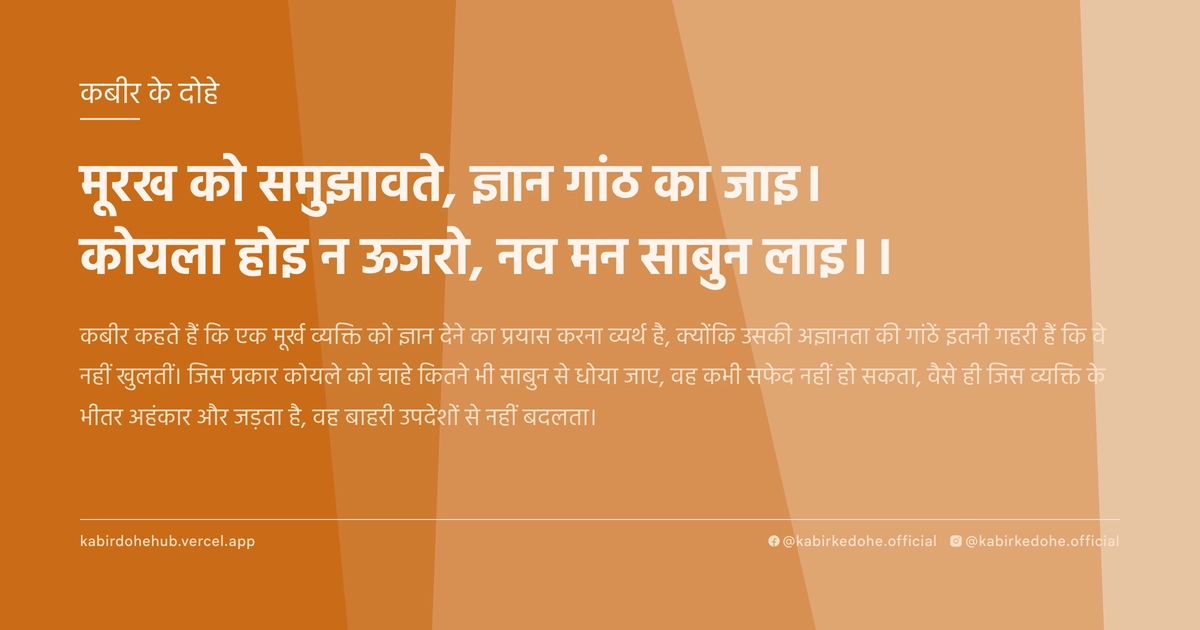
मूरख को समुझावते, ज्ञान गांठ का जाइ।
कोयला होइ न ऊजरो, नव मन साबुन लाइ।।
Murakh ko samujhavate, gyan gaanth ka jaaye. Koyla hoye na ujro, nav man sabun laayi.
इस पृष्ठ पर इस कबीर दोहे का अर्थ (meaning), हिंदी व्याख्या और अंग्रेज़ी अनुवाद, दार्शनिक विश्लेषण और व्यावहारिक जीवन सीख दी गई है। यह दोहा अहंकार (The Ego) विषय से जुड़ा है — Kabir doha meaning and explanation in Hindi and English.
अर्थ (Meaning):
कबीर कहते हैं कि एक मूर्ख व्यक्ति को ज्ञान देने का प्रयास करना व्यर्थ है, क्योंकि उसकी अज्ञानता की गांठें इतनी गहरी हैं कि वे नहीं खुलतीं। जिस प्रकार कोयले को चाहे कितने भी साबुन से धोया जाए, वह कभी सफेद नहीं हो सकता, वैसे ही जिस व्यक्ति के भीतर अहंकार और जड़ता है, वह बाहरी उपदेशों से नहीं बदलता।
Kabir asserts that attempting to impart wisdom to a fool is a futile endeavor, as the knots of their ignorance are too deeply ingrained to be undone. Just as a piece of coal can never be turned white regardless of how much soap is used to scrub it, a person blinded by ego and mental rigidity cannot be transformed by mere external instructions.
व्याख्या (Interpretation):
यह दोहा अज्ञानता की प्रकृति और अहंकार के प्रभाव का विश्लेषण करता है। यहाँ "मूरख" का अर्थ केवल बौद्धिक कमी नहीं, बल्कि वह व्यक्ति है जो स्वयं को पूर्ण मानता है और सत्य के प्रति बंद है। "ज्ञान गांठ" उस मानसिक अवरोध का प्रतीक है जो व्यक्ति को आत्म-साक्षात्कार से रोकता है। कोयले का उदाहरण एक शक्तिशाली रूपक है जो यह दर्शाता है कि कुछ आंतरिक स्वभाव तब तक नहीं बदलते जब तक कि आंतरिक रूपांतरण (Alchemy) न हो। यह निर्गुण भक्ति के उस सिद्धांत से जुड़ा है जहाँ बाहरी कर्मकांडों की तुलना में आंतरिक शुद्धि अनिवार्य है। माया यहाँ उस भ्रम के रूप में है जो व्यक्ति को विश्वास दिलाता है कि वह सही है, जबकि वह वास्तव में सत्य से दूर है। अंततः, यह आत्मा और ब्रह्म के मिलन में आने वाली सबसे बड़ी बाधा—अहंकार—की ओर संकेत करता है।
This couplet analyzes the nature of ignorance and the suffocating grip of the ego. Here, the "fool" does not refer to a lack of intellectual capacity, but to one who believes they are already complete and remains closed to the Truth. The "knot of knowledge" symbolizes the mental blockage that prevents a seeker from achieving self-realization. The metaphor of coal is a powerful illustration that certain internal dispositions cannot be altered through superficial means; they require a fundamental internal alchemy. This aligns with the principles of Nirgun Bhakti, where internal purification is deemed far more essential than external rituals. Maya manifests here as the illusion of certainty, convincing the individual of their own righteousness while they remain estranged from the Truth. Ultimately, it points toward the greatest obstacle in the union of Atman and Brahman: the stubbornness of the ego.
दार्शनिक विश्लेषण (Philosophical Analysis):
कबीर का यह विचार उनके युग के सामाजिक और धार्मिक पाखंड के विरुद्ध एक तीखा प्रहार है। उस समय धर्म केवल बाहरी प्रतीकों, जैसे तिलक, माला और विशेष वस्त्रों तक सीमित था। कबीर ने तर्क दिया कि यदि हृदय में अहंकार है, तो ये बाहरी साधन वैसे ही बेकार हैं जैसे कोयले पर साबुन लगाना। यह दृष्टिकोण अद्वैत वेदांत के करीब है, जहाँ अविद्या (अज्ञान) ही बंधन का कारण है। जब तक अविद्या का पर्दा नहीं हटता, तब तक कोई भी उपदेश फलदायी नहीं होता।
सूफीवाद के संदर्भ में, यह 'नफ्स' (अहंकार) के विनाश की बात है। जब तक व्यक्ति अपनी झूठी पहचान को नहीं मिटाता, वह परमात्मा के नूर को ग्रहण नहीं कर सकता। कबीर यहाँ यह स्पष्ट कर रहे हैं कि ज्ञान कोई ऐसी वस्तु नहीं है जिसे बाहर से थोपा जा सके; यह एक आंतरिक जागृति है। जो व्यक्ति सीखने के लिए तैयार नहीं है, उसके लिए सबसे महान गुरु के शब्द भी व्यर्थ हैं।
यह दोहा मनोवैज्ञानिक रूपांतरण की प्रक्रिया को समझाता है। परिवर्तन के लिए सबसे पहली शर्त 'विनम्रता' है। अहंकार एक ऐसी दीवार है जो सत्य के प्रवेश को रोकती है। कबीर चेतावनी देते हैं कि हम दूसरों को बदलने की व्यर्थ कोशिश करने के बजाय अपनी स्वयं की पात्रता पर ध्यान दें।
ऐतिहासिक रूप से, कबीर ने जाति व्यवस्था और धार्मिक श्रेष्ठता के दावों को चुनौती दी। वे जानते थे कि जो व्यक्ति अपनी जाति या धर्म के अहंकार में डूबा है, वह सत्य को कभी नहीं देख पाएगा। उनके लिए 'मूर्खता' का अर्थ था—सत्य के बजाय परंपराओं को प्राथमिकता देना।
अंततः, यह शिक्षण हमें यह समझने के लिए प्रेरित करता है कि आध्यात्मिक विकास के लिए केवल सूचना (Information) पर्याप्त नहीं है, बल्कि रूपांतरण (Transformation) आवश्यक है। कोयले का सफेद न होना यह दर्शाता है कि कुछ परिवर्तन केवल बाहरी प्रयासों से नहीं, बल्कि अग्नि (तपस) के माध्यम से ही संभव हैं, जहाँ अहंकार पूरी तरह जलकर राख हो जाए।
Kabir's insight is a sharp critique of the social and religious hypocrisy of his era. During his time, religion was often reduced to external symbols—tilaks, beads, and specific attire. Kabir argued that if the heart is consumed by ego, these external tools are as useless as scrubbing coal with soap. This perspective closely aligns with Advaita Vedanta, where Avidya (ignorance) is identified as the root cause of bondage. Until the veil of Avidya is lifted, no amount of external instruction can be fruitful.
In the context of Sufism, this relates to the annihilation of the 'Nafs' (the lower self/ego). Until an individual erases their false identity, they cannot absorb the divine light (Noor) of the Creator. Kabir clarifies that knowledge is not a commodity to be imposed from the outside; it is an internal awakening. For one who is not receptive, even the words of the greatest master remain void of impact.
This couplet explains the psychological process of transformation. The primary prerequisite for change is humility. Ego acts as a wall that blocks the entry of Truth. Kabir warns us against the futile effort of trying to change others, urging us instead to focus on our own readiness and receptivity.
Historically, Kabir challenged the caste system and claims of religious superiority. He recognized that anyone immersed in the pride of caste or creed would be blind to the universal Truth. To him, 'foolishness' meant prioritizing rigid tradition over living experience.
Ultimately, this teaching prompts us to understand that spiritual growth requires more than mere information; it requires transformation. The fact that coal cannot become white suggests that certain changes are impossible through superficial effort; they require the fire of 'Tapas' (spiritual discipline), where the ego is completely incinerated to reveal the purity beneath.
मूल संदेश (Core Message):
- अहंकार सत्य के मार्ग में सबसे बड़ी बाधा है।
- बाहरी उपदेश तब तक व्यर्थ हैं जब तक आंतरिक पात्रता न हो।
- विनम्रता ही वह कुंजी है जो अज्ञान की गांठों को खोलती है।
- परिवर्तन थोपा नहीं जा सकता, यह केवल अनुभव से आता है।
- शून्य होने का साहस ही पूर्णता की ओर ले जाता है।
- Ego is the primary obstacle on the path to Truth.
- External teachings are futile without internal receptivity.
- Humility is the only key that unlocks the knots of ignorance.
- Transformation cannot be imposed; it only arises from experience.
- The courage to become nothing is the only way to become everything.
व्यावहारिक उदाहरण (Practical Example):
वाराणसी के एक पुराने मोहल्ले में माधव नाम का एक अत्यंत अभिमानी विद्वान रहता था। उसने वेदों और शास्त्रों का गहन अध्ययन किया था और पूरे शहर में अपनी बुद्धिमत्ता के लिए प्रसिद्ध था। वह अक्सर गलियों में खड़े होकर लोगों को उनके अज्ञान के बारे में उपदेश देता और उन्हें नीचा दिखाता था। वह मानता था कि क्योंकि उसने पुस्तकें पढ़ी हैं, इसलिए वह सत्य का एकमात्र स्वामी है।
उसी शहर में एक वृद्ध विधवा, जानकी रहती थी, जो बहुत कम पढ़ी-लिखी थी लेकिन उसका जीवन सादगी और करुणा से भरा था। वह चुपचाप मंदिर की सफाई करती और भूखों को भोजन कराती। माधव अक्सर जानकी के पास जाता और उसे धर्म के कठिन श्लोकों के माध्यम से यह समझाने की कोशिश करता कि उसकी पूजा पद्धति गलत है और उसे शास्त्रों के अनुसार चलना चाहिए।
जानकी माधव की बातों को शांति से सुनती, लेकिन वह कभी बहस नहीं करती। माधव अपनी विद्वत्ता का प्रदर्शन करता रहा, लेकिन जानकी के व्यवहार में कोई बदलाव नहीं आया; वह अपनी करुणा और सेवा में लीन रही। माधव को लगा कि जानकी वास्तव में एक "मूर्ख" है जिसे कितना भी समझाया जाए, वह समझती ही नहीं।
एक दिन, शहर में एक महान संत आए। माधव उनके चरणों में गिर पड़ा और अपनी विद्वत्ता का बखान करने लगा। संत ने माधव की ओर देखा और मुस्कुराते हुए कहा, "पुत्र, तुम्हारी पुस्तकें तुम्हें शब्द तो दे सकती हैं, लेकिन अनुभव नहीं। तुम उस कोयले की तरह हो जो खुद को सफेद दिखाने की कोशिश कर रहा है, जबकि तुम्हारा अहंकार तुम्हारी चमक को ढक रहा है।"
संत ने फिर जानकी की ओर इशारा किया और कहा, "यह स्त्री, जिसे तुम मूर्ख समझते हो, उसने शब्दों को नहीं, बल्कि सत्य को जिया है। उसने अहंकार की गांठों को खोल दिया है, जबकि तुम्हारी गांठें और कसती जा रही हैं।"
माधव को पहली बार महसूस हुआ कि उसका ज्ञान केवल एक बोझ था। उसने देखा कि वह दूसरों को बदलने की कोशिश में खुद को खो चुका था। उसे समझ आया कि जानकी की "मूर्खता" वास्तव में एक गहरी शांति थी, जबकि उसकी "बुद्धिमत्ता" केवल एक शोर था।
उस रात माधव सो नहीं सका। उसने महसूस किया कि वह अब तक केवल शब्दों का व्यापार कर रहा था। उसने अपनी पुस्तकों को एक तरफ रखा और जानकी के पास जाकर उससे क्षमा मांगी। उसने पूछा, "माँ, मुझे वह रास्ता दिखाओ जहाँ शब्द समाप्त होते हैं और सत्य शुरू होता है।"
जानकी ने केवल इतना कहा, "बेटा, जब तक तू खुद को बड़ा समझता रहेगा, तू छोटा ही रहेगा। जिस दिन तू शून्य हो जाएगा, पूरा ब्रह्मांड तुझमें समा जाएगा।"
माधव का जीवन बदल गया। उसने उपदेश देना छोड़ दिया और सेवा करना शुरू किया। उसने सीखा कि ज्ञान थोपा नहीं जाता, बल्कि जब अहंकार मिटता है, तो ज्ञान स्वयं प्रकट होता है।
अब माधव वाराणसी की गलियों में एक अलग व्यक्ति था। वह अब दूसरों को सुधारने की कोशिश नहीं करता था, बल्कि स्वयं को सुधारने के प्रयास में लगा रहता था। उसने जान लिया था कि कोयले को सफेद करने के लिए साबुन नहीं, बल्कि अग्नि की आवश्यकता होती है।
In an ancient neighborhood of Varanasi lived a highly arrogant scholar named Madhav. He had studied the Vedas and Shastras profoundly and was famous throughout the city for his intellect. He often stood in the streets, lecturing people on their ignorance and belittling them, believing that his book-learning made him the sole possessor of Truth.
In the same city lived an elderly widow named Janaki. She was barely literate, but her life was filled with simplicity and compassion. She quietly cleaned the temple and fed the hungry. Madhav frequently approached Janaki, attempting to use complex Sanskrit shlokas to convince her that her way of worship was incorrect and that she must follow the scriptures strictly.
Janaki listened to Madhav's words with peace, but she never argued. Madhav continued to flaunt his scholarship, yet Janaki's behavior remained unchanged; she stayed immersed in her service and love. Madhav concluded that Janaki was truly a "fool" who could not understand regardless of how much she was taught.
One day, a great saint visited the city. Madhav fell at the saint's feet and began boasting of his erudition. The saint looked at Madhav and smiled, saying, "Son, your books may give you words, but they cannot give you experience. You are like a piece of coal trying to appear white, while your ego obscures your true radiance."
The saint then pointed toward Janaki and said, "This woman, whom you deem a fool, has not just read the words but has lived the Truth. She has untied the knots of ego, while your knots are only tightening."
For the first time, Madhav realized that his knowledge was merely a burden. He saw that in his attempt to change others, he had lost himself. He understood that Janaki's "foolishness" was actually a profound peace, while his "intellect" was merely noise.
Madhav could not sleep that night. He realized he had been trading in words all along. He set aside his books, went to Janaki, and begged for her forgiveness. He asked, "Mother, show me the path where words end and Truth begins."
Janaki simply replied, "Son, as long as you consider yourself great, you will remain small. The day you become zero, the entire universe will merge within you."
Madhav's life transformed. He stopped preaching and started serving. He learned that knowledge cannot be imposed; rather, when the ego vanishes, knowledge reveals itself spontaneously.
Madhav was now a different man in the streets of Varanasi. He no longer tried to fix others but focused on refining himself. He had learned that to turn coal white, one does not need soap, but the fire of transformation.
He spent the rest of his days in silent contemplation, realizing that the greatest wisdom lies not in knowing everything, but in knowing that one knows nothing at all.
अभ्यास मार्गदर्शन (Practice Guidance):
- दैनिक आत्म-निरीक्षण: प्रतिदिन 15 मिनट मौन बैठें और विचार करें कि आज आपने कितनी बार दूसरों को 'सही' साबित करने के लिए बहस की।
- अहंकार की पहचान: जब भी आपको किसी पर अपनी बौद्धिक श्रेष्ठता महसूस हो, तो मन में कहें, "मैं केवल एक माध्यम हूँ, स्वामी नहीं।"
- सेवा का अभ्यास: किसी ऐसे व्यक्ति की मदद करें जिसे आप 'अज्ञानी' या 'मूर्ख' समझते हैं, बिना उन्हें यह अहसास कराए कि आप उन्हें कुछ सिखा रहे हैं।
- डायरी लेखन: उन क्षणों को लिखें जब आपने अपनी गलती स्वीकार की और उससे आपको कैसा महसूस हुआ।
- नैदानिक चेकलिस्ट: यदि आप दूसरों की सलाह सुनकर चिढ़ जाते हैं या आपको लगता है कि केवल आप ही सत्य जानते हैं, तो समझ लें कि आपकी 'ज्ञान की गांठ' अभी कसी हुई है।
- Daily Self-Observation: Sit in silence for 15 minutes daily and reflect on how many times you argued today just to prove yourself 'right'.
- Ego Recognition: Whenever you feel intellectual superiority over someone, mentally repeat, "I am merely a medium, not the master."
- Practice of Service: Help someone you perceive as 'ignorant' or 'foolish' without letting them feel that you are trying to teach them something.
- Journaling: Document moments where you admitted a mistake and describe the emotional shift that followed.
- Diagnostic Checklist: If you feel irritated when receiving advice or believe that only you possess the Truth, recognize that your 'knot of knowledge' is still tightly wound.
चिंतन प्रश्न (Reflection Questions):
- क्या मेरी बौद्धिक उपलब्धियाँ मुझे दूसरों से जोड़ रही हैं या मुझे उनसे अलग कर रही हैं?
- मैं वास्तव में सत्य की खोज कर रहा हूँ, या केवल अपनी मान्यताओं की पुष्टि करने वाले प्रमाण खोज रहा हूँ?
- मेरे जीवन में वह कौन सा 'कोयला' (अहंकार) है जिसे मैं बाहरी दिखावे के साबुन से सफेद करने की कोशिश कर रहा हूँ?
- जब कोई मेरी मान्यताओं को चुनौती देता है, तो मेरी पहली प्रतिक्रिया रक्षात्मक होती है या जिज्ञासु?
- क्या मैं वास्तव में दूसरों को बदलना चाहता हूँ, या मैं केवल अपनी श्रेष्ठता सिद्ध करना चाहता हूँ?
- मेरे भीतर का वह कौन सा हिस्सा है जो अभी भी यह मानता है कि वह 'सब कुछ' जानता है?
- Are my intellectual achievements connecting me to others or isolating me from them?
- Am I truly seeking the Truth, or am I merely searching for evidence that confirms my existing beliefs?
- What is the 'coal' (ego) in my life that I am trying to make white using the soap of external appearances?
- When someone challenges my beliefs, is my primary reaction defensive or curious?
- Do I genuinely want to change others, or do I simply want to prove my own superiority?
- Which part of me still clings to the belief that it 'knows everything'?