
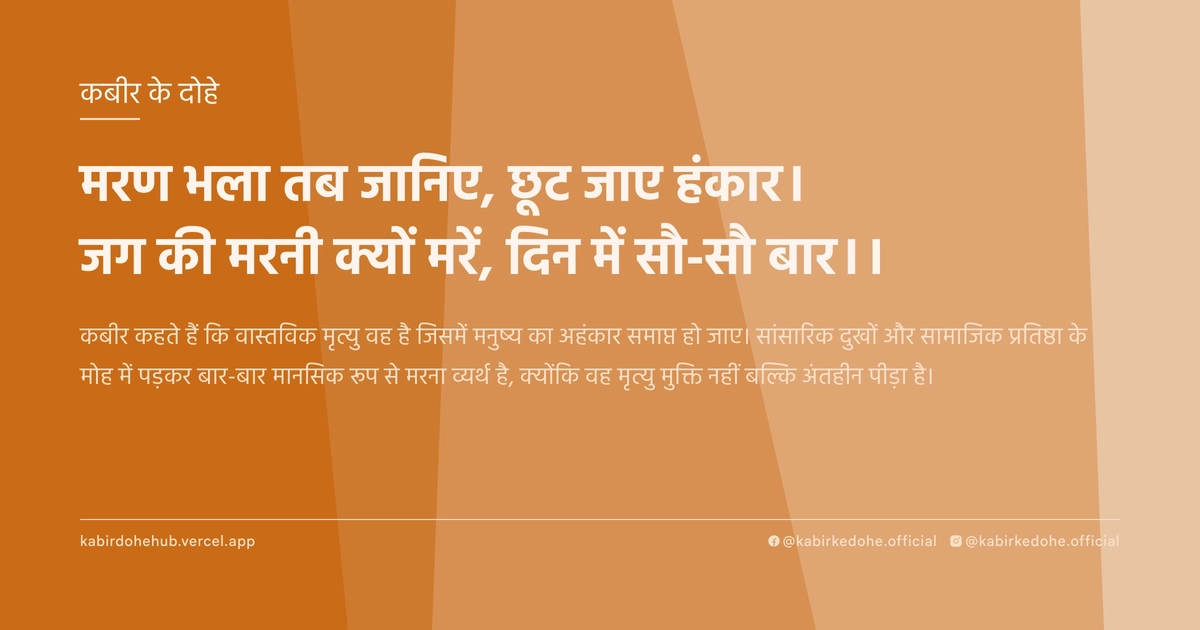
मरण भला तब जानिए, छूट जाए हंकार।
जग की मरनी क्यों मरें, दिन में सौ-सौ बार।।
Maran bhala tab jaaniye, choot jaaye hankaar. Jag ki marni kyon marein, din mein sau-sau baar.
इस पृष्ठ पर इस कबीर दोहे का अर्थ (meaning), हिंदी व्याख्या और अंग्रेज़ी अनुवाद, दार्शनिक विश्लेषण और व्यावहारिक जीवन सीख दी गई है। यह दोहा अहंकार (The Ego) विषय से जुड़ा है — Kabir doha meaning and explanation in Hindi and English.
अर्थ (Meaning):
कबीर कहते हैं कि वास्तविक मृत्यु वह है जिसमें मनुष्य का अहंकार समाप्त हो जाए। सांसारिक दुखों और सामाजिक प्रतिष्ठा के मोह में पड़कर बार-बार मानसिक रूप से मरना व्यर्थ है, क्योंकि वह मृत्यु मुक्ति नहीं बल्कि अंतहीन पीड़ा है।
Kabir asserts that the only death worth welcoming is the dissolution of the ego. He questions why we choose to suffer the 'death' of worldly anxieties and social pressures a hundred times a day, which offers no liberation, only repetitive agony.
व्याख्या (Interpretation):
इस दोहे में 'मरण' के दो अर्थ हैं: शारीरिक मृत्यु और अहंकार का विलोप। कबीर का तर्क है कि जब तक 'मैं' (अहंकार) जीवित है, तब तक आत्मा बंधन में है। निर्गुण भक्ति के अनुसार, जब अहंकार मरता है, तब आत्मा का परमात्मा (ब्रह्म) से मिलन होता है। यह अद्वैत वेदांत के उस सिद्धांत को दर्शाता है जहाँ ज्ञाता और ज्ञेय का भेद समाप्त हो जाता है। माया हमें बाहरी दुनिया की छोटी-छोटी बातों पर विलाप करने को मजबूर करती है, जिसे कबीर 'जग की मरनी' कहते हैं। यह एक विरोधाभास है कि हम जीवित रहते हुए भी मानसिक रूप से मृत होते हैं क्योंकि हम अपनी पहचान को बाहरी उपाधियों से जोड़ते हैं। वास्तविक मृत्यु वह है जो हमें इस भ्रम से मुक्त कर दे।
In this couplet, 'death' carries a dual meaning: physical cessation and the annihilation of the ego. Kabir argues that as long as the 'I' (ego) persists, the soul remains imprisoned. In the tradition of Nirgun Bhakti, the death of the ego is the prerequisite for the soul's union with the Formless Divine. This mirrors the Advaita Vedanta principle where the distinction between the knower and the known vanishes. Maya compels us to grieve over trivial worldly attachments, which Kabir describes as 'worldly deaths.' It is a profound paradox: we are biologically alive yet mentally dead because we tether our identity to external labels. True death is the spiritual alchemy that dissolves the false self to reveal the eternal Atman.
दार्शनिक विश्लेषण (Philosophical Analysis):
कबीर का यह दर्शन उनके समय के कठोर सामाजिक और धार्मिक ढांचे के विरुद्ध एक विद्रोह था। उन्होंने देखा कि लोग जाति, धर्म और कर्मकांडों के अहंकार में डूबे हुए थे, जो वास्तव में उनकी आध्यात्मिक प्रगति में बाधा थे। कबीर का 'हंकार' केवल गर्व नहीं, बल्कि वह सूक्ष्म पहचान है जो मनुष्य को दूसरों से अलग करती है। यह सूफी मत के 'फना' (Fana) के सिद्धांत के समान है, जहाँ साधक ईश्वर में विलीन होने के लिए अपने अस्तित्व को मिटा देता है।
अद्वैत वेदांत के परिप्रेक्ष्य में, यह दोहा 'अहं ब्रह्मास्मि' की प्राप्ति का मार्ग बताता है। जब तक 'अहं' (ego) है, तब तक 'ब्रह्म' का अनुभव असंभव है। कबीर ritualism (कर्मकांड) का विरोध करते हैं क्योंकि वे मानते हैं कि बाहरी दिखावा अहंकार को और पुष्ट करता है। मंदिर, मस्जिद या तीर्थयात्रा तब तक व्यर्थ हैं जब तक हृदय के भीतर का अहंकार जीवित है।
मनोवैज्ञानिक स्तर पर, 'जग की मरनी' आधुनिक अवसाद और चिंता का प्रतिबिंब है। हम दूसरों की राय, सामाजिक स्थिति और भौतिक संपदा के खोने के डर से दिन में सौ बार मरते हैं। यह मानसिक मृत्यु हमें वर्तमान क्षण से काट देती है और एक अंतहीन चक्र में फंसा देती है।
कबीर यहाँ एक क्रांतिकारी बदलाव का सुझाव देते हैं: बाहरी मृत्यु से डरने के बजाय, आंतरिक मृत्यु (अहंकार का त्याग) का स्वागत करें। यह मृत्यु विनाश नहीं, बल्कि रूपांतरण है। यह बीज के मरने जैसा है ताकि एक विशाल वृक्ष जन्म ले सके।
अंततः, यह दोहा हमें सिखाता है कि मुक्ति किसी बाहरी स्थान पर नहीं, बल्कि स्वयं के भीतर के 'अहं' के विसर्जन में है। जब हम यह समझ जाते हैं कि हम शरीर नहीं बल्कि वह अविनाशी चेतना हैं, तब संसार की छोटी-छोटी हार और जीत हमें विचलित नहीं करतीं।
Kabir's philosophy here is a radical rebellion against the rigid social and religious hierarchies of his era. He observed people immersed in the ego of caste, creed, and ritualism, which acted as barriers to spiritual evolution. For Kabir, 'Hankaar' is not merely pride, but the subtle sense of separate identity that isolates the human from the universal. This aligns closely with the Sufi concept of 'Fana' (annihilation), where the seeker dissolves their individual existence to merge with the Divine.
From the lens of Advaita Vedanta, this doha outlines the path toward realizing 'Aham Brahmasmi' (I am Brahman). As long as the 'Aham' (ego) persists, the experience of the Absolute remains elusive. Kabir rejects ritualism because external displays often reinforce the ego rather than dismantle it. Temples, mosques, and pilgrimages are futile if the internal ego remains untouched.
On a psychological level, the 'worldly death' is a reflection of modern anxiety and depression. We suffer a hundred deaths a day through the fear of judgment, loss of status, and material insecurity. This mental attrition disconnects us from the present moment and traps us in a cycle of perpetual longing and grief.
Kabir proposes a revolutionary shift: instead of fearing physical death, welcome the internal death of the ego. This is not a death of destruction, but of transformation. It is akin to a seed dying so that a mighty tree may emerge from the earth.
Ultimately, this teaching suggests that liberation is not found in a distant heaven but in the surrender of the self. Once we realize we are not the transient body but the eternal consciousness, the trivial triumphs and failures of the world cease to disturb our inner peace.
मूल संदेश (Core Message):
- बाहरी पहचान एक भ्रम है जो केवल पीड़ा उत्पन्न करता है।
- अहंकार का विसर्जन ही वास्तविक आध्यात्मिक जन्म है।
- मानसिक तनाव हमारी अपनी निर्मित छवियों का परिणाम है।
- मुक्ति का मार्ग स्वयं के 'होने' के अहंकार को मिटाने में है।
- शाश्वत शांति केवल तब आती है जब 'मैं' समाप्त हो जाता है।
- External identity is an illusion that generates only suffering.
- The dissolution of ego is the only true spiritual birth.
- Mental distress is the result of the images we create of ourselves.
- The path to liberation lies in erasing the ego of 'being'.
- Eternal peace arrives only when the 'I' ceases to exist.
व्यावहारिक उदाहरण (Practical Example):
वाराणसी के एक पुराने घाट पर माधव नाम का एक वृद्ध बुनकर रहता था। माधव अपनी कला में निपुण था और पूरे शहर में उसकी साड़ियों की मांग थी। इस प्रसिद्धि ने उसके भीतर एक सूक्ष्म अहंकार पैदा कर दिया था। वह खुद को अन्य बुनकरों से श्रेष्ठ समझने लगा था और अक्सर अपनी श्रेष्ठता का प्रदर्शन करता था।
माधव का जीवन तनावपूर्ण था। यदि किसी ग्राहक ने उसकी डिजाइन की आलोचना की, तो वह कई दिनों तक दुखी रहता। यदि किसी अन्य बुनकर ने उससे बेहतर दाम पाए, तो वह ईर्ष्या से जलता। वह वास्तव में दिन में सौ बार मरता था—कभी अपमान से, कभी ईर्ष्या से, तो कभी अपनी छवि खोने के डर से।
एक दिन उसकी मुलाकात एक घुमंतू फकीर से हुई। फकीर ने माधव की बेचैनी को देखा और उससे पूछा, "तुम इस रेशमी धागे को बुन रहे हो, लेकिन क्या तुमने अपने भीतर के अहंकार के धागे को तोड़ा है?"
माधव ने गर्व से अपनी उपलब्धियां गिनानी शुरू कीं। फकीर मुस्कुराया और बोला, "तुम्हारी यही उपलब्धियां तुम्हारी बेड़ियाँ हैं। तुम अपनी साड़ियों के साथ अपनी पहचान जोड़ चुके हो। जिस दिन साड़ी फटेगी, तुम भी टूट जाओगे।"
माधव को यह बात चुभी, लेकिन उसने गहराई से सोचा। उसे अहसास हुआ कि उसकी मानसिक शांति उसकी कला पर नहीं, बल्कि इस बात पर निर्भर थी कि दुनिया उसे कैसे देखती है। वह अपनी ही बनाई छवि का गुलाम बन गया था।
उस रात माधव ने एक निर्णय लिया। उसने अपनी पहचान को अपनी कला से अलग करना शुरू किया। उसने यह सोचना छोड़ दिया कि वह "महान बुनकर" है और केवल "एक माध्यम" बन गया जिसके जरिए सुंदरता दुनिया में आती है।
धीरे-धीरे उसने अन्य बुनकरों की मदद करना शुरू किया, बिना इस उम्मीद के कि वे उसकी प्रशंसा करेंगे। उसने अपनी श्रेष्ठता का मुखौटा उतार फेंका।
जैसे ही उसका अहंकार 'मरा', उसकी मानसिक पीड़ा समाप्त हो गई। अब यदि कोई उसकी आलोचना करता, तो उसे दुख नहीं होता, क्योंकि अब वहां कोई 'मैं' नहीं था जिसे चोट पहुंचे। वह वास्तव में मुक्त हो गया था।
On an ancient ghat in Varanasi lived an elderly weaver named Madhav. Madhav was a master of his craft, and his sarees were coveted across the city. This fame had birthed a subtle ego within him; he began to view himself as superior to other weavers, often flaunting his expertise.
Madhav's life was fraught with tension. If a client criticized a design, he would dwell in misery for days. If a fellow weaver secured a better price, he burned with jealousy. He was truly dying a hundred times a day—sometimes from perceived insult, sometimes from envy, and often from the fear of losing his prestige.
One day, he encountered a wandering fakir. The fakir noticed Madhav's restlessness and asked, "You weave these silk threads beautifully, but have you broken the threads of ego within you?"
Madhav began to list his achievements with pride. The fakir smiled and replied, "These very achievements are your shackles. You have tied your identity to your sarees. The day the fabric tears, you too shall break."
Madhav felt stung by the words, but he contemplated them deeply. He realized that his peace depended not on his art, but on how the world perceived him. He had become a slave to the image he had created of himself.
That night, Madhav made a conscious decision. He began to decouple his identity from his profession. He stopped seeing himself as the "Great Weaver" and started seeing himself as a mere "channel" through which beauty entered the world.
Slowly, he began helping other weavers without expecting praise or recognition. He stripped away the mask of superiority.
As his ego 'died', his mental anguish vanished. Now, if someone criticized his work, he felt no pain, for there was no 'I' left to be wounded. He had finally achieved a living liberation.
अभ्यास मार्गदर्शन (Practice Guidance):
- प्रतिदिन 20 मिनट मौन साधना करें, जहाँ आप अपने विचारों को केवल एक साक्षी (Witness) की तरह देखें, बिना किसी निर्णय के।
- एक 'अहंकार डायरी' लिखें: दिन भर में जब भी आपको क्रोध, ईर्ष्या या श्रेष्ठता का अनुभव हो, उसे लिखें और विश्लेषण करें कि कौन सा 'मैं' आहत हुआ है।
- सचेत सेवा: सप्ताह में एक बार ऐसा कार्य करें जिसमें आपकी पहचान गुप्त रहे और आप बिना किसी प्रशंसा की इच्छा के दूसरों की मदद करें।
- निदान चेकलिस्ट: क्या मैं दूसरों की राय से विचलित होता हूँ? क्या मैं अपनी उपलब्धियों का श्रेय लेने के लिए उत्सुक रहता हूँ? क्या मैं दूसरों की सफलता पर सूक्ष्म दुख महसूस करता हूँ? यदि हाँ, तो 'जग की मरनी' अभी जारी है।
- Practice 20 minutes of silent mindfulness daily, observing your thoughts as a detached witness without judgment.
- Maintain an 'Ego Journal': Record moments of anger, jealousy, or superiority, and analyze which specific 'I' felt threatened or validated.
- Anonymous Service: Once a week, perform an act of kindness where your identity remains hidden, ensuring there is no desire for external validation.
- Diagnostic Checklist: Do I feel disturbed by others' opinions? Am I eager to take credit for achievements? Do I feel a subtle pinch of pain at others' success? If yes, the 'worldly death' is still active.
चिंतन प्रश्न (Reflection Questions):
- यदि आपकी सभी उपाधियाँ, संपत्ति और सामाजिक प्रतिष्ठा आज छीन ली जाएँ, तो आपके भीतर क्या बचेगा?
- आपकी डिजिटल पहचान (Social Media) आपके वास्तविक स्वरूप को कितना ढक रही है?
- आप किन लोगों के सामने अपनी श्रेष्ठता सिद्ध करने की कोशिश करते हैं और क्यों?
- क्या आप वास्तव में दूसरों की खुशी में खुश होते हैं, या आप केवल अपनी छवि को 'उदार' दिखाना चाहते हैं?
- वह कौन सा डर है जो आपको अपने अहंकार को पूरी तरह छोड़ने से रोकता है?
- If all your titles, possessions, and social prestige were stripped away today, what would remain of you?
- To what extent does your digital persona mask your authentic self?
- Before whom do you constantly strive to prove your superiority, and why?
- Are you truly happy for others, or are you merely projecting an image of a 'generous' person?
- What is the fundamental fear that prevents you from completely surrendering your ego?