
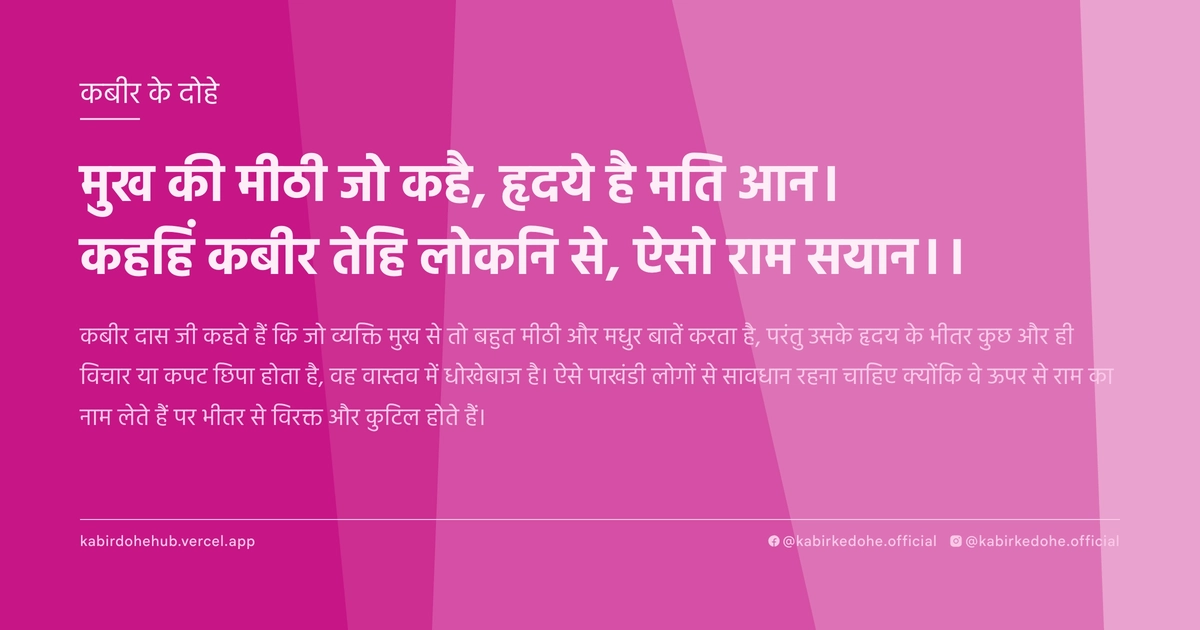
मुख की मीठी जो कहै, हृदये है मति आन।
कहहिं कबीर तेहि लोकनि से, ऐसो राम सयान।।
Mukh ki meethi jo kahai, hridaye hai mati aan. Kahahin Kabir tehi lokani se, aiso Ram sayan.
इस पृष्ठ पर इस कबीर दोहे का अर्थ (meaning), हिंदी व्याख्या और अंग्रेज़ी अनुवाद, दार्शनिक विश्लेषण और व्यावहारिक जीवन सीख दी गई है। यह दोहा निष्ठा (Integrity) विषय से जुड़ा है — Kabir doha meaning and explanation in Hindi and English.
अर्थ (Meaning):
कबीर दास जी कहते हैं कि जो व्यक्ति मुख से तो बहुत मीठी और मधुर बातें करता है, परंतु उसके हृदय के भीतर कुछ और ही विचार या कपट छिपा होता है, वह वास्तव में धोखेबाज है। ऐसे पाखंडी लोगों से सावधान रहना चाहिए क्योंकि वे ऊपर से राम का नाम लेते हैं पर भीतर से विरक्त और कुटिल होते हैं।
Kabir warns against those who speak sweet words while harboring contradictory or malicious intentions in their hearts. He suggests that such hypocrisy is a dangerous facade; those who project a pious or kind image while remaining internally deceitful are not truly aligned with the Divine, and one must remain vigilant around such individuals.
व्याख्या (Interpretation):
यह दोहा बाहरी दिखावे और आंतरिक सत्य के बीच के गहरे अंतर्विरोध को दर्शाता है। 'मुख की मीठी' शब्द माया के उस आवरण को इंगित करते हैं जिससे मनुष्य अपनी असलियत छुपाता है। कबीर यहाँ 'राम' शब्द का प्रयोग किसी मूर्ति या व्यक्ति के लिए नहीं, बल्कि उस शुद्ध चेतना (Nirgun Brahman) के लिए कर रहे हैं जो सत्य और ईमानदारी में बसती है। जब हृदय में 'मति आन' (अन्य विचार या द्वेष) होता है, तो वह आत्मा और परमात्मा के बीच एक अवरोध बन जाता है। यह अद्वैत वेदांत के उस सिद्धांत को पुष्ट करता है कि जब तक मन में द्वैत (पाखंड) है, तब तक वास्तविक ज्ञान की प्राप्ति असंभव है। यहाँ विरोधाभास यह है कि जो सबसे अधिक 'धार्मिक' या 'मधुर' दिखता है, वही अक्सर अपनी अहंकार की परतों में सबसे अधिक कैद होता है।
This couplet illuminates the profound contradiction between external projection and internal reality. The phrase 'sweet speech' symbolizes the veil of Maya, which humans use to camouflage their true nature. Kabir uses 'Ram' not as a sectarian deity, but as the Formless Absolute (Nirgun Brahman) that resides in absolute truth and integrity. When the heart harbors 'another mind' (malice or deceit), it creates a psychic barrier between the Atman and the Brahman. This aligns with Advaita Vedanta, suggesting that as long as duality—in the form of hypocrisy—exists, the realization of oneness is impossible. The central paradox presented is that the individual who appears most 'pious' or 'sweet' is often the one most imprisoned by the layers of their own ego.
दार्शनिक विश्लेषण (Philosophical Analysis):
कबीर का यह प्रहार उनके युग के धार्मिक पाखंड और कर्मकांडीय आडंबरों पर है। उन्होंने देखा कि कैसे धर्म के नाम पर लोग केवल शब्दों का खेल खेलते थे, जबकि उनके आचरण में करुणा का अभाव था। यह सूफी मत के 'नफ्स' (अहंकार) के विनाश की अवधारणा से मेल खाता है, जहाँ बाहरी इबादत तब तक व्यर्थ है जब तक कि आंतरिक शुद्धि न हो जाए।
दार्शनिक स्तर पर, कबीर यहाँ 'सत्य' को केवल बोलने की क्रिया नहीं, बल्कि होने की अवस्था (state of being) के रूप में परिभाषित कर रहे हैं। जब वाणी और हृदय में सामंजस्य नहीं होता, तो व्यक्ति एक मानसिक विखंडन की स्थिति में होता है। यह विखंडन ही दुख का मूल कारण है क्योंकि यह व्यक्ति को उसकी वास्तविक प्रकृति से दूर ले जाता है।
अद्वैत वेदांत के अनुसार, ब्रह्म सत्य है और जगत मिथ्या। यहाँ 'मीठी वाणी' वह मिथ्या है जो सत्य को ढक लेती है। कबीर का उद्देश्य व्यक्ति को इस भ्रम से जगाना है कि केवल शब्दों के माध्यम से ईश्वर या नैतिकता को प्राप्त किया जा सकता है। वे स्पष्ट करते हैं कि ईश्वर बाहरी अनुष्ठानों में नहीं, बल्कि आंतरिक ईमानदारी में बसता है।
सामाजिक संदर्भ में, यह दोहा जाति और वर्ग के उन भेदों पर प्रहार करता है जहाँ उच्च वर्ग के लोग अपनी श्रेष्ठता सिद्ध करने के लिए शिष्टाचार का मुखौटा पहनते थे, जबकि उनके भीतर निम्न वर्ग के प्रति घृणा भरी होती थी। कबीर इस सामाजिक ढोंग को उखाड़ फेंकने का आह्वान करते हैं।
अंततः, यह विश्लेषण हमें मनोवैज्ञानिक रूपांतरण की ओर ले जाता है। अहंकार (Ego) स्वयं को बचाने के लिए 'मीठी वाणी' का सहारा लेता है। जब साधक इस पाखंड को पहचान लेता है, तब वह 'अहं' से 'स्व' की ओर बढ़ता है। यह केवल एक नैतिक चेतावनी नहीं है, बल्कि एक आध्यात्मिक सर्जरी है जो आत्मा को उसके झूठे आवरणों से मुक्त करती है।
Kabir's critique is a direct assault on the religious hypocrisy and ritualistic pomposity of his era. He observed how people played linguistic games in the name of religion while lacking genuine compassion in their conduct. This resonates with the Sufi concept of destroying the 'Nafs' (the lower self/ego), where external worship is deemed futile without internal purification.
On a philosophical level, Kabir defines 'Truth' not as an act of speaking, but as a state of being. When there is a misalignment between speech and heart, the individual exists in a state of psychic fragmentation. This fragmentation is the root of suffering, as it alienates the individual from their primordial nature.
According to Advaita Vedanta, Brahman is the only reality, and the world is Maya (illusion). Here, 'sweet speech' is the illusion that veils the truth. Kabir aims to awaken the seeker from the delusion that divinity or morality can be attained through mere verbal gymnastics. He asserts that the Divine resides in internal integrity, not in external performances.
In a social context, this couplet attacks the caste and class hierarchies where the elite used the mask of etiquette to hide their deep-seated prejudice against the marginalized. Kabir calls for the dismantling of this social pretense, urging a return to authentic human connection.
Ultimately, this analysis leads to a psychological transformation. The ego employs 'sweetness' as a survival mechanism to maintain a false image. Once the seeker recognizes this hypocrisy, they transition from the 'Ego' to the 'Self'. This is not merely a moral warning but a spiritual surgery designed to strip the soul of its deceptive layers.
मूल संदेश (Core Message):
- बाहरी मिठास अक्सर आंतरिक कड़वाहट का मुखौटा होती है।
- सत्य केवल शब्दों में नहीं, बल्कि हृदय के भावों में होता है।
- पाखंड आत्मा और परमात्मा के बीच की सबसे बड़ी दीवार है।
- ईमानदारी की कड़वाहट, झूठ की मिठास से कहीं अधिक पवित्र है।
- जब वाणी और मन एक होते हैं, तब वास्तविक आध्यात्मिक जागृति होती है।
- External sweetness is often a mask for internal bitterness.
- Truth resides not in words, but in the intentions of the heart.
- Hypocrisy is the greatest wall between the soul and the Divine.
- The bitterness of honesty is far holier than the sweetness of a lie.
- True spiritual awakening occurs when speech and mind align in unity.
व्यावहारिक उदाहरण (Practical Example):
वाराणसी के एक पुराने घाट पर माधव नाम का एक वृद्ध नाविक रहता था। वह अपनी विनम्रता और मधुर वाणी के लिए पूरे शहर में प्रसिद्ध था। वह हर आने वाले यात्री का स्वागत ऐसे शब्दों से करता जैसे वे उसके अपने परिजन हों। लोग उसे 'संत हृदय' मानते थे।
किंतु, माधव के भीतर एक गहरा लालच और ईर्ष्या छिपी थी। वह मन ही मन उन यात्रियों को ठगने की योजना बनाता था और अपने साथी नाविकों के बारे में झूठ बोलकर उन्हें नीचा दिखाता था। उसकी मीठी बातें केवल एक जाल थीं ताकि लोग उस पर भरोसा करें और वह अधिक पैसे वसूल सके।
एक दिन, एक फकीर उसके पास आया। फकीर ने माधव की मीठी बातों को सुना और फिर उसकी आँखों में गहराई से देखा। फकीर ने मुस्कुराते हुए कहा, "माधव, तुम्हारी जीभ तो शहद घोल रही है, लेकिन तुम्हारी साँसें कड़वाहट उगल रही हैं। जिस दिन हृदय और वाणी एक होंगे, उस दिन तुम्हें असली राम मिलेंगे।"
माधव को पहले तो गुस्सा आया, लेकिन फकीर के शब्दों ने उसके भीतर के उस अंधेरे को छू लिया जिसे वह सालों से छिपा रहा था। उसे महसूस हुआ कि वह अपनी मीठी बातों के बोझ तले दब गया है और अपनी असलियत से पूरी तरह कट चुका है।
उस रात माधव सो नहीं सका। उसने महसूस किया कि उसकी 'मधुरता' वास्तव में उसका सबसे बड़ा झूठ था। उसने महसूस किया कि वह दूसरों को धोखा नहीं दे रहा था, बल्कि स्वयं को एक ऐसे पिंजरे में कैद कर रहा था जहाँ सत्य के लिए कोई जगह नहीं थी।
अगले दिन, माधव ने एक नया रास्ता चुना। उसने अपनी बनावटी मिठास छोड़ दी। उसने अपनी गलतियों को स्वीकार करना शुरू किया और ईमानदारी से अपनी सेवा देना शुरू किया। अब उसकी वाणी उतनी 'मीठी' नहीं थी, लेकिन उसमें एक ऐसी सच्चाई थी जो लोगों के दिलों को छूने लगी।
उसने पाया कि जब उसने दिखावा छोड़ा, तो उसे वह मानसिक शांति मिली जो उसे हजारों मीठे शब्दों से नहीं मिली थी। उसके साथी नाविक, जो पहले उससे नफरत करते थे, अब उसका सम्मान करने लगे क्योंकि वे उसकी ईमानदारी देख सकते थे।
माधव की कहानी यह सिखाती है कि बाहरी चमक-धमक और मीठी बातें केवल भ्रम पैदा करती हैं। वास्तविक रूपांतरण तब होता है जब हम अपने आंतरिक अंधेरे का सामना करते हैं और उसे सत्य के प्रकाश में विलीन कर देते हैं।
On an ancient ghat in Varanasi lived an elderly boatman named Madhav. He was renowned throughout the city for his humility and sweet speech. He welcomed every traveler with words so warm that they felt like kin. People regarded him as a 'saintly soul'.
However, hidden within Madhav was a deep vein of greed and jealousy. In his heart, he plotted ways to swindle travelers and whispered lies about his fellow boatmen to undermine them. His sweetness was merely a net cast to gain trust and extract more money.
One day, a wandering fakir approached him. The fakir listened to Madhav's honeyed words and then looked deeply into his eyes. Smiling, the fakir said, "Madhav, your tongue pours honey, but your breath exhales bitterness. The day your heart and speech become one, you shall find the true Ram."
Madhav was initially angered, but the fakir's words pierced the darkness he had spent years concealing. He realized that his 'sweetness' was actually his greatest lie, and he had become completely estranged from his own authentic self.
That night, Madhav could not sleep. He felt the crushing weight of his pretense. He realized he wasn't just deceiving others; he was imprisoning himself in a cage where truth had no room to breathe.
The next day, Madhav chose a different path. He abandoned his artificial sweetness. He began to acknowledge his mistakes and provide his services with raw honesty. His speech was no longer as 'sweet', but it possessed a truth that began to touch people's hearts deeply.
He discovered that by shedding the facade, he attained a mental peace that thousands of honeyed words could never provide. His fellow boatmen, who once detested him, began to respect him because they could see his integrity.
Madhav's story teaches that external luster and sweet words create only illusions. True transformation occurs when we confront our internal shadows and dissolve them in the light of truth.
अभ्यास मार्गदर्शन (Practice Guidance):
- दैनिक आत्म-निरीक्षण: प्रतिदिन सोने से पहले 10 मिनट बैठें और विचार करें कि आज आपने कितनी बार ऐसी बात कही जो आपके आंतरिक भावों के विपरीत थी।
- मौन का अभ्यास: दिन में एक घंटा पूर्ण मौन रहें। यह आपको शब्दों के पीछे छिपी अपनी वास्तविक मंशा को पहचानने में मदद करेगा।
- सत्य-लेखन (Journaling): एक डायरी लिखें जहाँ आप अपनी उन भावनाओं को दर्ज करें जिन्हें आप दुनिया के सामने 'मीठा' बनाकर छिपाते हैं।
- निदान चेकलिस्ट: यदि आप दूसरों की प्रशंसा करते समय भीतर घृणा महसूस करते हैं, या अपनी छवि बचाने के लिए झूठ बोलते हैं, तो समझें कि आप 'माया' के पाखंड में फंसे हैं।
- Daily Self-Audit: Spend 10 minutes before sleep reflecting on how many times you spoke words that contradicted your internal feelings.
- Practice of Silence: Maintain complete silence for one hour daily. This helps you identify the true intentions hidden behind your words.
- Truth-Journaling: Keep a diary where you record the raw emotions you typically mask with 'sweetness' in public.
- Diagnostic Checklist: If you feel resentment while praising others, or lie to protect your public image, recognize that you are trapped in the hypocrisy of Maya.
चिंतन प्रश्न (Reflection Questions):
- क्या मेरी विनम्रता वास्तव में करुणा से उपजी है, या यह केवल दूसरों को प्रभावित करने का एक उपकरण है?
- मैं अपनी सार्वजनिक छवि (Digital/Social Ego) को बनाए रखने के लिए अपने किन आंतरिक सत्यों का गला घोंट रहा हूँ?
- यदि मेरे मन के विचार शब्दों के रूप में प्रकट हो जाएं, तो कितने लोग मुझसे दूर चले जाएंगे?
- क्या मैं उन लोगों को क्षमा कर सकता हूँ जिन्होंने मेरे साथ वही पाखंड किया जो मैं अनजाने में दूसरों के साथ करता हूँ?
- मेरे जीवन में 'सत्य' की परिभाषा क्या है—वह जो सुनने में अच्छा लगे, या वह जो वास्तव में सही हो?
- Is my humility born of genuine compassion, or is it merely a tool to influence others?
- Which internal truths am I suppressing to maintain my public image (Digital/Social Ego)?
- If my innermost thoughts were voiced aloud, how many people would distance themselves from me?
- Can I forgive those who practiced the same hypocrisy toward me that I unconsciously practice toward others?
- What is my definition of 'Truth'—that which sounds pleasant, or that which is fundamentally right?