
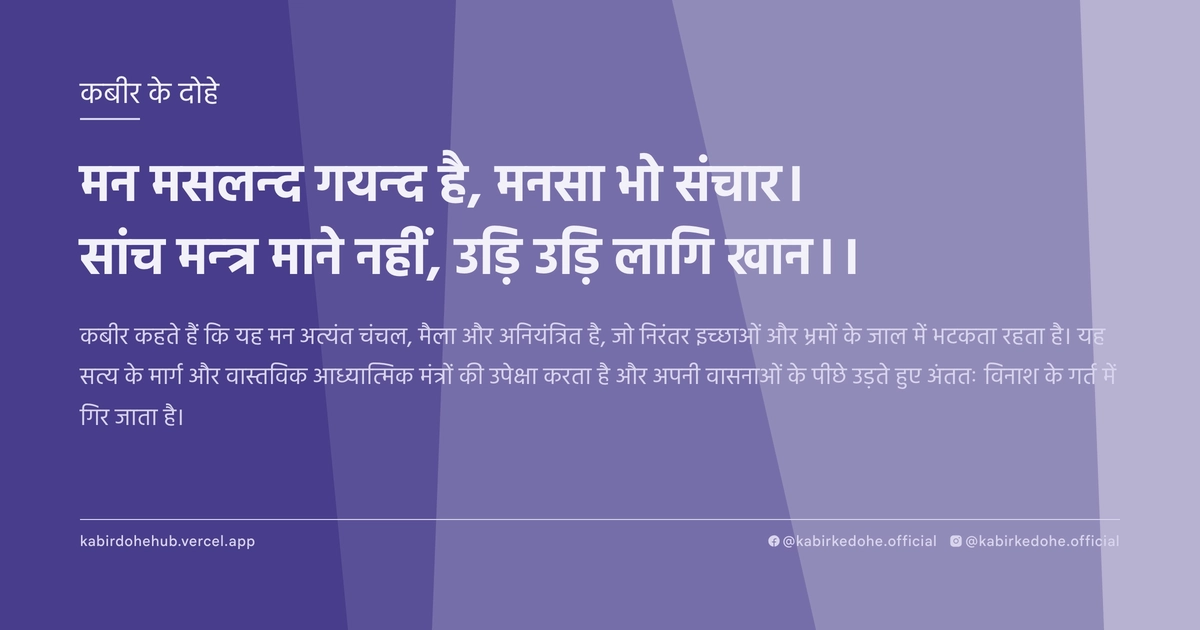
मन मसलन्द गयन्द है, मनसा भो संचार।
सांच मन्त्र माने नहीं, उड़ि उड़ि लागि खान।।
Man masaland gayand hai, mansa bho sanchar. Saanch mantra maane nahi, udi udi laagi khaan.
इस पृष्ठ पर इस कबीर दोहे का अर्थ (meaning), हिंदी व्याख्या और अंग्रेज़ी अनुवाद, दार्शनिक विश्लेषण और व्यावहारिक जीवन सीख दी गई है। यह दोहा मन नियंत्रण (Mind Control) विषय से जुड़ा है — Kabir doha meaning and explanation in Hindi and English.
अर्थ (Meaning):
कबीर कहते हैं कि यह मन अत्यंत चंचल, मैला और अनियंत्रित है, जो निरंतर इच्छाओं और भ्रमों के जाल में भटकता रहता है। यह सत्य के मार्ग और वास्तविक आध्यात्मिक मंत्रों की उपेक्षा करता है और अपनी वासनाओं के पीछे उड़ते हुए अंततः विनाश के गर्त में गिर जाता है।
Kabir asserts that the human mind is inherently restless, soiled by desires, and chaotic, constantly drifting through a sea of mental projections. It stubbornly ignores the mantra of Truth and the call of the Eternal, fluttering like a distracted bird toward the lures of illusion, which ultimately lead to its own downfall.
व्याख्या (Interpretation):
यहाँ 'मसलन्द गयन्द' मन की उस अवस्था को दर्शाता है जहाँ वह वासनाओं से लिपटा और अशुद्ध है। कबीर मन की तुलना एक ऐसे पक्षी से करते हैं जो सत्य के स्थिर केंद्र को छोड़कर बाहरी दुनिया के क्षणिक आकर्षणों की ओर उड़ता है। यह निरगुण भक्ति का संकेत है, जहाँ बाहरी कर्मकांडों के बजाय आंतरिक शुद्धि पर बल दिया गया है। माया यहाँ उस 'खान' या जाल की तरह है जो मन को लुभाती है। जब तक साधक अद्वैत के सत्य को नहीं पहचानता, वह मन के इस द्वंद्व में फंसा रहता है। अंततः, यह दोहा आत्मा और परमात्मा के बीच खड़ी 'अहंकार' की दीवार को ढहाने की आवश्यकता पर जोर देता है।
The terms 'masaland gayand' signify a mind saturated with impurities and erratic impulses. Kabir employs the metaphor of a bird to represent the mind's tendency to flee from the stillness of the Truth toward the fragmented distractions of the material world. This aligns with Nirgun Bhakti, emphasizing internal purification over external ritualism. Maya is depicted as the 'khaan' or the trap—a deceptive lure that promises satisfaction but delivers bondage. Until the seeker realizes the non-duality of Atman and Brahman, the mind remains a fragmented entity. The central paradox is that the mind, which is the tool for liberation, is also the primary obstacle to it.
दार्शनिक विश्लेषण (Philosophical Analysis):
कबीर का यह दोहा उनके युग के धार्मिक पाखंड और मानसिक जड़ता पर एक गहरा प्रहार है। वे उस समय के समाज को देखते हैं जहाँ लोग केवल मंत्रों के जाप में विश्वास करते थे, लेकिन अपने मन की वृत्तियों को बदलने का प्रयास नहीं करते थे। कबीर यहाँ 'सांच मन्त्र' की बात करते हैं, जो किसी शब्द का जाप नहीं, बल्कि सत्य का अनुभव है। यह अद्वैत वेदांत के उस सिद्धांत से मेल खाता है जहाँ अज्ञान (Avidya) को ही बंधन का कारण माना गया है।
सूफी मत के 'नफ्स' (अहंकार/इच्छा) के विचार की तरह, कबीर भी मन को एक जंगली जानवर या अनियंत्रित पक्षी मानते हैं जिसे वश में करना अनिवार्य है। वे बताते हैं कि जब तक मन 'गयन्द' (मैला) है, वह सत्य को ग्रहण नहीं कर सकता। यह मनोवैज्ञानिक रूपांतरण की प्रक्रिया है, जहाँ साधक को पहले अपनी मानसिक गंदगी को पहचानना होता है।
कबीर का विरोध केवल बाहरी कर्मकांडों से नहीं, बल्कि उस मानसिक स्थिति से है जो सत्य को जानने के बजाय भ्रम में आनंद खोजती है। वे स्पष्ट करते हैं कि सत्य का मार्ग सरल है, लेकिन मन की जटिलता उसे कठिन बना देती है। यहाँ 'उड़ना' वास्तव में मानसिक भटकाव का प्रतीक है, जो व्यक्ति को वर्तमान क्षण से दूर ले जाता है।
दार्शनिक स्तर पर, यह दोहा 'चित्त' की शुद्धि की बात करता है। जब मन वासनाओं से मुक्त होता है, तभी वह ब्रह्म के साथ एकाकार हो सकता है। कबीर यह चेतावनी देते हैं कि यदि मन को अनुशासन में नहीं रखा गया, तो वह केवल विनाशकारी प्रवृत्तियों को जन्म देगा।
अंततः, कबीर यह संदेश देते हैं कि वास्तविक धर्म मन के नियंत्रण और सत्य के प्रति पूर्ण समर्पण में निहित है। वे जाति, धर्म और संप्रदाय से ऊपर उठकर एक ऐसी चेतना की बात करते हैं जो केवल सत्य (Truth) को अपना आधार मानती है।
This couplet serves as a profound critique of the religious hypocrisy and mental stagnation prevalent during Kabir's era. He observes a society obsessed with the rote repetition of mantras while neglecting the actual transformation of the mind's tendencies. For Kabir, the 'True Mantra' is not a linguistic formula but the direct experiential realization of Truth. This resonates with Advaita Vedanta, where ignorance (Avidya) is identified as the root cause of all bondage.
Drawing a parallel to the Sufi concept of 'Nafs' (the lower self or ego), Kabir views the mind as a wild animal or a distracted bird that must be disciplined. He argues that as long as the mind remains 'gayand' (soiled), it is incapable of perceiving the Divine. This is a call for psychological transmutation, requiring the seeker to first acknowledge their internal impurities.
Kabir's rebellion is not merely against external rituals, but against the mental state that seeks solace in illusions rather than Truth. He posits that while the path to Truth is straightforward, the complexities of the ego make it seem arduous. The act of 'flying' symbolizes the mental drift that alienates the individual from the present moment.
On a metaphysical level, the doha addresses the purification of the 'Chitta' (consciousness). Only when the mind is purged of cravings can it merge with the Absolute. Kabir warns that an undisciplined mind inevitably gravitates toward destructive patterns, leading to spiritual bankruptcy.
Ultimately, Kabir suggests that true religion lies in the mastery of the mind and total surrender to Truth. He transcends caste and creed to advocate for a consciousness that recognizes the universal truth beyond the fragmented identities of the ego.
मूल संदेश (Core Message):
- मानसिक चंचलता ही आध्यात्मिक प्रगति की सबसे बड़ी बाधा है।
- सत्य शब्दों में नहीं, बल्कि मन की शुद्धता और स्थिरता में है।
- इच्छाओं का पीछा करना विनाश के गर्त में गिरने के समान है।
- बाहरी कर्मकांड व्यर्थ हैं यदि आंतरिक रूपांतरण न हुआ हो।
- अहंकार का विसर्जन ही आत्मा और परमात्मा के मिलन का एकमात्र मार्ग है।
- Mental restlessness is the primary obstacle to spiritual evolution.
- Truth resides not in linguistic formulas, but in the purity of the mind.
- Chasing transient desires is akin to flying toward a bottomless pit.
- External rituals are futile without a corresponding internal transformation.
- The dissolution of the ego is the only path to the union of Atman and Brahman.
व्यावहारिक उदाहरण (Practical Example):
वाराणसी के एक पुराने घाट पर माधव नाम का एक वृद्ध बुनकर रहता था। माधव अपनी कला में निपुण था, लेकिन उसका मन हमेशा असंतोष से भरा रहता था। वह हमेशा सोचता था कि यदि उसके पास और अधिक धन होता, या यदि उसका बेटा शहर से लौटकर उसकी सेवा करता, तो वह सुखी होता। उसका मन एक ऐसे पक्षी की तरह था जो कभी भविष्य की चिंताओं में उड़ता, तो कभी अतीत के पछतावे में।
वह मंदिर जाता, घंटों मंत्र पढ़ता, लेकिन जैसे ही वह मंदिर से बाहर निकलता, उसका क्रोध और लोभ फिर से जाग उठते। वह सत्य की बातें सुनता था, लेकिन उन्हें अपने जीवन में उतारने के बजाय केवल शब्दों तक सीमित रखता था। उसकी मानसिक अशांति उसके काम और रिश्तों पर हावी होने लगी थी।
एक दिन उसने एक फकीर को देखा जो शांत भाव से बैठा था। माधव ने उससे पूछा, "मैं इतने मंत्र पढ़ता हूँ, फिर भी मन शांत क्यों नहीं होता?"
फकीर ने मुस्कुराते हुए कहा, "माधव, तूने मंत्रों को जीभ पर रखा है, मन में नहीं। तेरा मन तो अभी भी उन पुरानी यादों और लालच की खान में उड़ रहा है। तूने शब्दों को पकड़ा है, सत्य को नहीं।"
यह बात माधव के दिल पर लगी। उसने महसूस किया कि वह जिस 'सत्य' की खोज कर रहा था, वह बाहर नहीं, बल्कि उसके भीतर के शोर को शांत करने में था। उसने तय किया कि वह केवल मंत्र नहीं पढ़ेगा, बल्कि हर विचार को साक्षी भाव से देखेगा।
शुरुआत में यह कठिन था। जब भी उसे क्रोध आता, वह खुद से कहता, "देखो, मन फिर से उड़ रहा है।"
धीरे-धीरे, उसने अपनी इच्छाओं के प्रति मोह छोड़ना शुरू किया। उसने महसूस किया कि उसकी खुशी बेटे के लौटने में नहीं, बल्कि वर्तमान क्षण की शांति में है।
उसने अपने काम को ही पूजा बना लिया। अब वह केवल कपड़ा नहीं बुनता था, बल्कि हर धागे के साथ अपने मन को एकाग्र करना सीख गया था।
माधव का जीवन बदल गया। वह अब भी वही पुराना बुनकर था, लेकिन उसके भीतर का 'मसलन्द' मन अब शांत और निर्मल हो गया था। उसने जान लिया था कि सत्य किसी मंत्र में नहीं, बल्कि मन की स्थिरता में है।
On an ancient ghat in Varanasi lived an elderly weaver named Madhav. Madhav was a master of his craft, yet his mind was a whirlwind of discontent. He constantly believed that if he possessed more wealth, or if his son returned from the city to serve him, he would finally find peace. His mind was like a bird, perpetually fluttering between future anxieties and past regrets.
He visited temples and recited mantras for hours, but the moment he stepped outside, his anger and greed resurfaced. He listened to spiritual discourses, but he kept the wisdom as mere words, never allowing it to permeate his actual behavior. This mental turbulence began to erode his relationships and the quality of his work.
One day, he encountered a wandering dervish sitting in profound stillness. Madhav asked, "I recite so many mantras, yet why does my mind remain unrest?"
The dervish smiled and replied, "Madhav, you have placed the mantras on your tongue, not in your heart. Your mind is still flying toward the pits of old memories and cravings. You have grasped the words, but not the Truth."
These words struck a chord deep within Madhav. He realized that the 'Truth' he sought was not an external destination but the act of silencing the internal noise.
He decided that instead of rote recitation, he would practice the art of witnessing his thoughts. In the beginning, it was an uphill battle. Whenever anger flared, he would tell himself, "Look, the mind is flying again."
Slowly, he began to detach from his compulsive desires. He realized that his happiness did not depend on his son's return, but on his own ability to remain present.
He transformed his weaving into a meditative act. He no longer just wove fabric; with every thread, he practiced centering his consciousness.
Madhav's life underwent a complete transformation. He remained the same humble weaver, but the 'soiled' mind had become clear and still. He had finally understood that Truth resides not in the mantra, but in the stillness of the mind.
अभ्यास मार्गदर्शन (Practice Guidance):
- प्रतिदिन 20 मिनट 'साक्षी भाव' का अभ्यास करें: अपने विचारों को बिना किसी निर्णय के केवल देखें, जैसे आप किसी अजनबी को सड़क पर चलते देख रहे हों।
- स्व-पूछताछ जर्नल: प्रतिदिन एक ऐसी इच्छा लिखें जिसने आपको मानसिक रूप से विचलित किया, और विश्लेषण करें कि वह इच्छा किस डर या असुरक्षा से उपजी है।
- व्यवहारिक परिवर्तन: जब भी मन किसी पुराने विवाद या भविष्य की चिंता में 'उड़े', तो तुरंत अपनी सांसों पर ध्यान केंद्रित करें और वर्तमान भौतिक संवेदनाओं को महसूस करें।
- निदान चेकलिस्ट: क्या मैं शब्दों के माध्यम से आध्यात्मिकता का दिखावा कर रहा हूँ? क्या मेरी प्रतिक्रियाएं अभी भी क्रोध और लोभ से संचालित हैं? क्या मैं शांति की तलाश बाहर कर रहा हूँ जबकि शोर भीतर है?
- Practice 'Witness Consciousness' for 20 minutes daily: Observe your thoughts without judgment, as if you are watching a stranger walk down the street.
- Self-Inquiry Journaling: Every day, record one desire that caused mental agitation and analyze which fear or insecurity triggered that craving.
- Behavioral Shift: Whenever the mind 'flies' toward a past conflict or future anxiety, immediately anchor yourself in your breath and feel the physical sensations of the present moment.
- Diagnostic Checklist: Am I performing spirituality through words while remaining unchanged? Are my reactions still driven by anger and greed? Am I seeking peace externally while the noise persists internally?
चिंतन प्रश्न (Reflection Questions):
- मेरे जीवन में वह कौन सा 'सांच मन्त्र' है जिसे मैं जानता तो हूँ, लेकिन पालन नहीं कर पा रहा?
- मेरा मन किन 'खान' (आकर्षणों) की ओर सबसे अधिक उड़ता है, और वे मुझे वास्तव में क्या देते हैं?
- क्या मेरी आध्यात्मिक पहचान केवल एक सामाजिक मुखौटा है, या यह मेरे व्यवहार में परिलक्षित होती है?
- मैं अपनी डिजिटल पहचान (सोशल मीडिया) के माध्यम से किस प्रकार के भ्रम को पोषित कर रहा हूँ?
- यदि मेरे पास मेरी सभी उपलब्धियां और पद छीन लिए जाएं, तो मेरे भीतर क्या शेष बचेगा?
- What is the 'True Mantra' in my life that I intellectually understand but fail to embody?
- Toward which 'pits' of attraction does my mind most frequently fly, and what do they actually provide me?
- Is my spiritual identity merely a social mask, or is it reflected in my spontaneous behavior?
- In what ways am I nurturing illusions through my digital identity and social media presence?
- If all my achievements and titles were stripped away, what would remain of my core essence?