
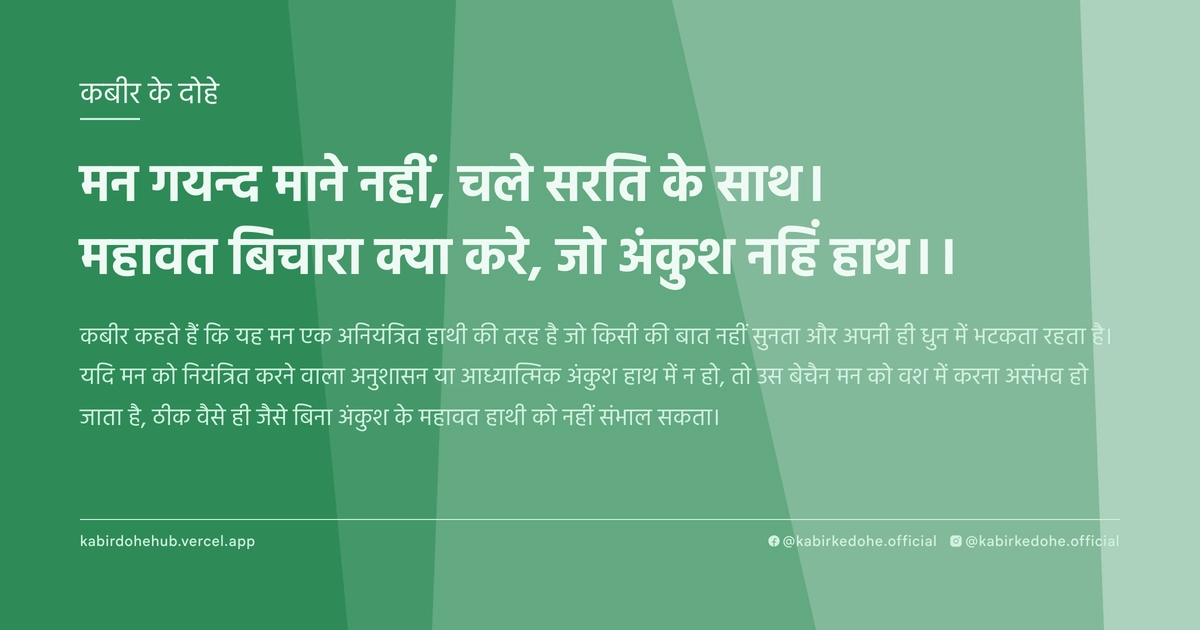
मन गयन्द माने नहीं, चले सरति के साथ।
महावत बिचारा क्या करे, जो अंकुश नहिं हाथ।।
Man gayand maane nahi, chale sarati ke saath. Mahavat bichara kya kare, jo ankush nahin haath.
इस पृष्ठ पर इस कबीर दोहे का अर्थ (meaning), हिंदी व्याख्या और अंग्रेज़ी अनुवाद, दार्शनिक विश्लेषण और व्यावहारिक जीवन सीख दी गई है। यह दोहा मन नियंत्रण (Mind Control) विषय से जुड़ा है — Kabir doha meaning and explanation in Hindi and English.
अर्थ (Meaning):
कबीर कहते हैं कि यह मन एक अनियंत्रित हाथी की तरह है जो किसी की बात नहीं सुनता और अपनी ही धुन में भटकता रहता है। यदि मन को नियंत्रित करने वाला अनुशासन या आध्यात्मिक अंकुश हाथ में न हो, तो उस बेचैन मन को वश में करना असंभव हो जाता है, ठीक वैसे ही जैसे बिना अंकुश के महावत हाथी को नहीं संभाल सकता।
Kabir posits that the human mind is akin to a wild, unruly elephant that refuses to obey and wanders according to its own whims. If the spiritual 'ankush' or the hook of discipline and mindfulness is not held firmly in hand, the poor mahout—the conscious self—remains helpless in steering this chaotic force toward liberation.
व्याख्या (Interpretation):
यहाँ 'गयन्द' (हाथी) मन की अनियंत्रित इच्छाओं और वासनाओं का प्रतीक है। 'सरति' उस प्रवाह को दर्शाता है जहाँ मन बिना सोचे-समझे इंद्रियों के पीछे भागता है। महावत वह चेतना या विवेक है जो स्वयं को इस मन का स्वामी मानती है, लेकिन वास्तव में वह असहाय है। यह दोहा निर्गुण भक्ति के उस सत्य को उजागर करता है जहाँ अहंकार और मन का द्वंद्व चलता है। जब तक साधक माया के प्रभाव को समझकर विवेक रूपी अंकुश विकसित नहीं करता, वह केवल बाहरी कर्मकांडों में उलझा रहता है। यह आत्मा और मन के बीच के संघर्ष को दर्शाता है, जहाँ मन ब्रह्म की ओर जाने के बजाय संसार के आकर्षणों में डूबा रहता है। अंततः, यह अद्वैत वेदांत के उस बिंदु पर ले जाता है जहाँ मन का विसर्जन ही वास्तविक मुक्ति है।
In this verse, the 'gayand' (elephant) symbolizes the untamed desires and erratic impulses of the human mind. 'Sarati' represents the current of sensory attraction that pulls the mind away from the center. The 'mahout' is the conscious intellect or the aspiring seeker who believes they are in control but finds themselves powerless. This doha illuminates a core tenet of Nirgun Bhakti: the internal struggle between the ego-driven mind and the witnessing consciousness. Until the seeker develops the 'ankush' of spiritual discipline and discernment, they remain a prisoner to Maya's illusions. It highlights the paradox of the human condition—we are the masters of our lives, yet slaves to our thoughts. The non-duality of Atman and Brahman is obscured by this mental noise, suggesting that the annihilation of the erratic mind is the only path to realizing the formless Truth.
दार्शनिक विश्लेषण (Philosophical Analysis):
कबीर का यह दोहा उस समय के सामाजिक और धार्मिक पाखंड पर एक गहरा प्रहार है, जहाँ लोग बाहरी अनुष्ठानों को आध्यात्मिक प्रगति मान लेते थे। कबीर तर्क देते हैं कि तीर्थयात्रा या माला जपना व्यर्थ है यदि मन का हाथी अभी भी अनियंत्रित है। यह दृष्टिकोण सूफीवाद के 'नफ्स' (lower self) के विचार से मिलता-जुलता है, जहाँ आत्मा को अपनी निम्न प्रवृत्तियों पर विजय पानी होती है।
अद्वैत वेदांत के परिप्रेक्ष्य में, मन वह पर्दा है जो जीव को ब्रह्म से अलग करता है। जब मन 'सरति' या वासनाओं के साथ बहता है, तो वह 'अहंकार' को पुष्ट करता है। कबीर यहाँ मनोवैज्ञानिक रूपांतरण की बात कर रहे हैं; वे कहते हैं कि केवल ज्ञान से नहीं, बल्कि अभ्यास और वैराग्य से ही मन को वश में किया जा सकता है।
ऐतिहासिक रूप से, कबीर ने जाति और धर्म के बंधनों को तोड़ा क्योंकि उन्होंने देखा कि एक पंडित और एक अछूत, दोनों का मन समान रूप से अनियंत्रित और भयभीत हो सकता है। उनके लिए, वास्तविक धर्म 'मन की शुद्धि' है, न कि सामाजिक पहचान।
यहाँ 'अंकुश' का अर्थ केवल दमन नहीं, बल्कि सजगता (Mindfulness) है। यदि हम अपनी इच्छाओं को केवल दबाते हैं, तो वे और अधिक हिंसक हो जाती हैं। लेकिन जब हम उन्हें साक्षी भाव से देखते हैं, तो वे स्वतः शांत होने लगती हैं।
अंततः, यह विश्लेषण हमें बताता है कि मुक्ति बाहरी दुनिया में नहीं, बल्कि आंतरिक अराजकता के प्रबंधन में है। जब महावत (चेतना) और हाथी (मन) एक लय में आ जाते हैं, तब साधक को उस निर्गुण परमात्मा का अनुभव होता है जो शब्दों से परे है।
Kabir's verse serves as a profound critique of the ritualistic superficiality prevalent in his era, where external piety was often mistaken for internal evolution. He argues that pilgrimages or repetitive chanting are futile if the 'elephant of the mind' remains wild. This aligns closely with the Sufi concept of 'Nafs' (the lower self), which must be disciplined and transcended to reach the state of Fana (annihilation of the ego).
From the lens of Advaita Vedanta, the mind is the primary veil obscuring the realization of Brahman. When the mind flows with 'sarati' or worldly cravings, it reinforces the illusion of duality and the solidity of the ego. Kabir is proposing a psychological alchemy; he suggests that intellectual knowledge is insufficient unless paired with 'Sadhana' (disciplined practice) and 'Vairagya' (detachment).
Historically, Kabir dismantled caste and religious hierarchies by observing that the turmoil of the mind is universal. Whether a high priest or a social outcast, the struggle against the erratic nature of the mind is the same. For him, the only true religion is the purification of the inner landscape.
Crucially, the 'ankush' (hook) does not represent violent suppression, but rather 'Sakshi Bhav' or mindful witnessing. Suppression only fuels the subconscious fire; however, conscious observation allows the impulses to dissolve.
Ultimately, this analysis reveals that liberation is not a geographical destination but a state of internal coherence. When the Mahout (Consciousness) and the Elephant (Mind) move in unison, the seeker transcends the noise of the world to experience the silent, formless Absolute.
मूल संदेश (Core Message):
- बाहरी अनुष्ठान व्यर्थ हैं यदि आंतरिक मन अनियंत्रित है।
- सजगता ही वह एकमात्र अंकुश है जो मन को शांत कर सकता है।
- प्रतिक्रिया और प्रतिक्रिया के बीच का अंतराल ही वास्तविक स्वतंत्रता है।
- मन का दास बनना अज्ञानता है, मन का स्वामी बनना योग है।
- जब अहंकार मिटता है, तब महावत और हाथी एक हो जाते हैं।
- External rituals are hollow if the internal mind remains a chaotic storm.
- Mindfulness is the only hook capable of taming the wild impulses of the ego.
- The gap between a stimulus and your response is where true freedom resides.
- Being a slave to the mind is ignorance; mastering the mind is the essence of Yoga.
- When the ego dissolves, the Mahout and the Elephant merge into one Truth.
व्यावहारिक उदाहरण (Practical Example):
एक समय की बात है, वाराणसी के घाटों पर रहने वाले एक वृद्ध बुनकर थे, जिनका नाम माधव था। माधव अपने काम में निपुण थे, लेकिन उनका स्वभाव अत्यंत क्रोधी और अस्थिर था। छोटी सी बात पर वे अपने परिवार और पड़ोसियों पर चिल्ला देते थे। वे रोज़ मंदिर जाते, घंटों पूजा करते, लेकिन घर लौटते ही उनका मन फिर से ईर्ष्या और क्रोध के भंवर में डूब जाता।
एक दिन उनकी मुलाकात एक मौन साधु से हुई। माधव ने अपनी व्यथा सुनाई कि वे इतने नियम पालते हैं, फिर भी मन शांत नहीं होता। साधु ने उन्हें एक छोटा सा प्रयोग बताया: "जब भी तुम्हारा मन क्रोध के हाथी की तरह चिंघाड़ने लगे, तो बस तीन सेकंड के लिए अपनी सांस को रोककर यह पूछना कि 'यह क्रोध किसका है?'"
शुरुआत में माधव को यह बहुत सरल और व्यर्थ लगा। लेकिन एक दोपहर, जब उनके बेटे ने गलती से उनके कीमती धागों की पोटली गिरा दी, माधव का चेहरा लाल हो गया और वे चिल्लाने ही वाले थे। तभी उन्हें साधु की बात याद आई। उन्होंने अपनी सांस रोकी और खुद से पूछा, "यह क्रोध किसका है? क्या यह मेरा है, या यह केवल एक विचार है जो मुझमें उठ रहा है?"
उस एक पल के ठहराव ने एक चमत्कार किया। माधव ने महसूस किया कि वे और उनका क्रोध दो अलग चीजें हैं। वे 'महावत' थे और क्रोध वह 'हाथी' था। जैसे ही उन्होंने इस दूरी को पहचाना, क्रोध की तीव्रता कम हो गई।
अगले कुछ महीनों तक माधव ने इस 'सांस रूपी अंकुश' का अभ्यास किया। उन्होंने पाया कि जब वे प्रतिक्रिया देने के बजाय निरीक्षण करना शुरू करते हैं, तो मन की सरति (धारा) धीमी होने लगती है।
धीरे-धीरे, माधव के जीवन में एक गहरा ठहराव आया। अब वे केवल मंदिर के नियमों के गुलाम नहीं थे, बल्कि अपने मन के स्वामी बन चुके थे।
उनकी पत्नी ने देखा कि अब माधव की आँखों में एक ऐसी शांति थी जो पहले कभी नहीं थी। वे अब भी बुनते थे, लेकिन अब उनके धागों में क्रोध नहीं, बल्कि प्रेम और धैर्य पिरोया हुआ था।
इस प्रकार, माधव ने सीखा कि बाहरी पूजा केवल एक आवरण है; वास्तविक युद्ध तो भीतर है, जहाँ सजगता ही एकमात्र अंकुश है।
Once in the sacred alleys of Varanasi, there lived an elderly weaver named Madhav. While he was a master of his craft, his temperament was volatile and erratic. He would erupt in anger over the smallest inconveniences, shouting at his children and neighbors. Despite spending hours in temples and following rigorous rituals, his mind remained a storm of jealousy and rage the moment he stepped home.
One day, he encountered a silent monk. Madhav lamented that despite his piety, his mind refused to be still. The monk gave him a simple practice: "Whenever your mind begins to trumpet like a wild elephant, pause for three seconds, hold your breath, and ask yourself, 'To whom does this anger belong?'"
Initially, Madhav found this trivial. However, one afternoon, his son accidentally knocked over a precious bundle of dyed threads. Madhav's face flushed, and he was on the verge of a scream. Suddenly, the monk's words echoed. He held his breath and asked, "To whom does this anger belong? Is it 'me', or is it merely a thought arising within me?"
That momentary gap created a profound shift. Madhav realized that he was not the anger; he was the observer of the anger. He was the 'Mahout', and the rage was the 'Elephant'. By creating this distance, the intensity of the emotion vanished.
For the next few months, Madhav practiced this 'breath-hook' diligently. He discovered that by observing his impulses instead of reacting to them, the current of his mind began to slow down.
Gradually, a deep stillness descended upon Madhav's life. He was no longer a slave to external religious rules; he had become the master of his own internal landscape.
His wife noticed a new light in his eyes—a peace that had been absent for decades. He continued to weave, but now his threads were infused with patience and love rather than tension.
Thus, Madhav learned that external worship is merely a shell; the real battle is internal, where mindfulness is the only effective hook to tame the wild mind.
अभ्यास मार्गदर्शन (Practice Guidance):
- प्रतिदिन 20 मिनट 'साक्षी भाव' का अभ्यास करें: अपने विचारों को ऐसे देखें जैसे आप सड़क पर चलती गाड़ियों को देखते हैं, उनमें शामिल न हों।
- जब भी मन विचलित हो, 'तीन-सेकंड पॉज़' तकनीक अपनाएं और स्वयं से पूछें कि यह विचार कहाँ से आया और कहाँ जा रहा है।
- एक 'मानसिक डायरी' लिखें जिसमें आप उन क्षणों को दर्ज करें जब आपका 'मन-हाथी' अनियंत्रित हुआ और आपने उसे कैसे संभाला।
- डायग्नोस्टिक चेकलिस्ट: क्या मैं छोटी बातों पर प्रतिक्रिया देता हूँ? क्या मेरी शांति बाहरी परिस्थितियों पर निर्भर है? क्या मैं केवल दिखावे की भक्ति कर रहा हूँ? यदि हाँ, तो अंकुश की कमी है।
- Practice 'Witness Consciousness' for 20 minutes daily: Observe your thoughts as if you are watching cars pass on a street; do not jump into the traffic.
- Implement the 'Three-Second Pause' technique whenever the mind becomes erratic, asking: 'Where did this thought originate, and where is it heading?'
- Maintain a 'Mental Ledger' to record instances where the 'mind-elephant' went wild and the specific strategy used to regain control.
- Diagnostic Checklist: Do I react impulsively to trivialities? Is my peace dependent on external conditions? Am I practicing superficial piety? If yes, the 'ankush' of mindfulness is missing.
चिंतन प्रश्न (Reflection Questions):
- मेरे जीवन में वह 'हाथी' कौन सी इच्छा या आदत है जो मुझे बार-बार मेरे लक्ष्यों से भटकाती है?
- क्या मैं वास्तव में शांत हूँ, या मैं केवल अपनी अशांति को सामाजिक शिष्टाचार के पीछे छिपा रहा हूँ?
- मेरा 'अंकुश' क्या है—क्या यह डर है, दबाव है, या वास्तविक आत्म-जागरूकता?
- यदि मेरी सारी सामाजिक पहचान (पद, प्रतिष्ठा, धर्म) छीन ली जाए, तो क्या मेरा मन तब भी स्थिर रहेगा?
- मैं अपनी डिजिटल पहचान (सोशल मीडिया) को नियंत्रित करता हूँ, या वह मुझे नियंत्रित कर रही है?
- Which specific desire or habit in my life acts as the 'wild elephant', repeatedly diverting me from my higher purpose?
- Am I truly peaceful, or am I merely masking my internal turmoil with a veneer of social etiquette?
- What is my 'ankush'—is it driven by fear, external pressure, or genuine self-awareness?
- If all my social identities (status, titles, religion) were stripped away, would my mind remain steady?
- Do I control my digital persona, or is the digital ego now controlling the real me?