
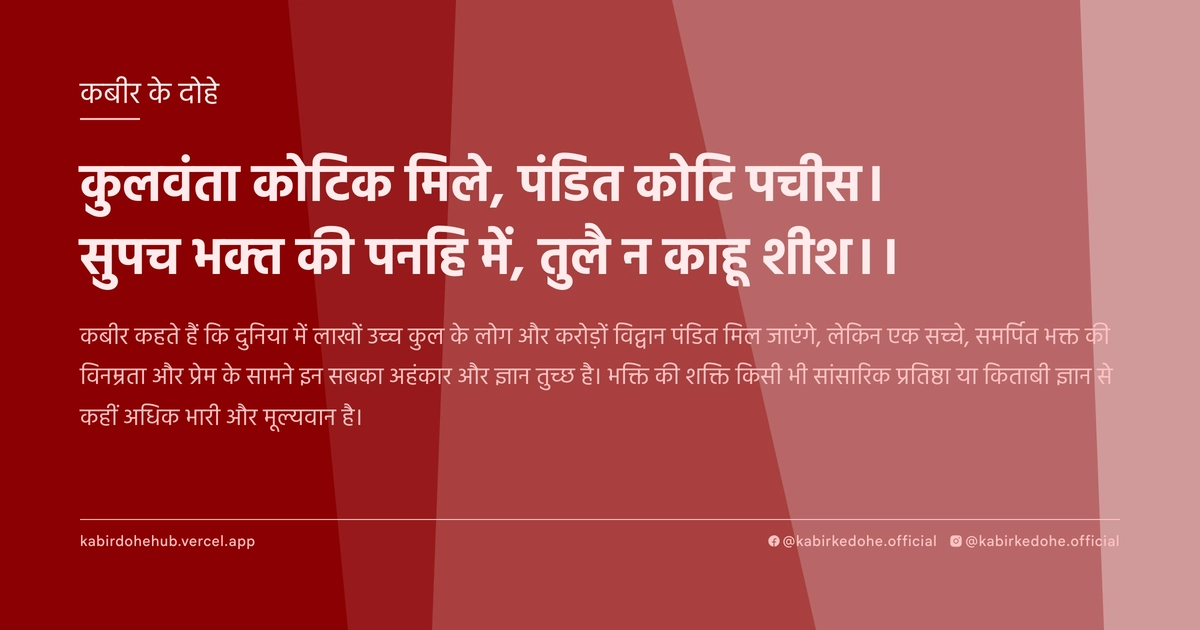
कुलवंता कोटिक मिले, पंडित कोटि पचीस।
सुपच भक्त की पनहि में, तुलै न काहू शीश।।
Kulvanta kotik mile, pandit koti pachis. Supach bhakt ki panahi me, tulai na kahu sheesh.
इस पृष्ठ पर इस कबीर दोहे का अर्थ (meaning), हिंदी व्याख्या और अंग्रेज़ी अनुवाद, दार्शनिक विश्लेषण और व्यावहारिक जीवन सीख दी गई है। यह दोहा जाति विरोध (Anti-casteism) विषय से जुड़ा है — Kabir doha meaning and explanation in Hindi and English.
अर्थ (Meaning):
कबीर कहते हैं कि दुनिया में लाखों उच्च कुल के लोग और करोड़ों विद्वान पंडित मिल जाएंगे, लेकिन एक सच्चे, समर्पित भक्त की विनम्रता और प्रेम के सामने इन सबका अहंकार और ज्ञान तुच्छ है। भक्ति की शक्ति किसी भी सांसारिक प्रतिष्ठा या किताबी ज्ञान से कहीं अधिक भारी और मूल्यवान है।
Kabir asserts that while one may find millions of people born into noble lineages and tens of millions of learned scholars, none of their prestige or intellectual prowess can outweigh the spiritual weight of a single devoted seeker. The purity of a devotee's love transcends all social status and academic achievement.
व्याख्या (Interpretation):
इस दोहे का शाब्दिक अर्थ है कि कुल और विद्या की गणना करोड़ों में हो सकती है, परंतु भक्ति का कोई पैमाना नहीं है। यहाँ 'कुलवंता' सामाजिक प्रतिष्ठा का प्रतीक है और 'पंडित' बौद्धिक अहंकार का। कबीर एक विरोधाभास प्रस्तुत करते हैं: जहाँ दुनिया बाहरी पहचान को महत्व देती है, वहीं ईश्वर केवल आंतरिक समर्पण देखते हैं। यह निर्गुण भक्ति का सार है, जहाँ आत्मा का परमात्मा से मिलन किसी शास्त्र या जाति के माध्यम से नहीं, बल्कि प्रेम के माध्यम से होता है। माया हमें यह विश्वास दिलाती है कि ज्ञान या जन्म हमें श्रेष्ठ बनाता है, लेकिन वास्तव में यह केवल एक पर्दा है। जब भक्त की 'पनहि' (विनम्रता/समर्पण) तराजू में रखी जाती है, तो संसार का सारा अहंकार हल्का साबित होता है, क्योंकि प्रेम ही एकमात्र सत्य है जो ब्रह्म के साथ एकाकार हो सकता है।
Literally, the verse suggests that while noble birth and scholarship are quantifiable in millions, devotion is immeasurable. 'Kulvanta' symbolizes social prestige, and 'Pandit' represents intellectual ego. Kabir presents a profound paradox: while the world values external markers of identity, the Divine recognizes only internal surrender. This is the essence of Nirgun Bhakti, where the union of Atman and Brahman occurs not through scriptures or caste, but through unconditional love. Maya creates the illusion that lineage or literacy grants spiritual superiority, but these are merely veils. When the 'panahi' (humility/devotion) of a seeker is placed on the cosmic scale, the collective ego of the world is found wanting, for love is the only currency that holds weight in the realm of the Absolute.
दार्शनिक विश्लेषण (Philosophical Analysis):
कबीर का यह दोहा उस युग की सामाजिक संरचना पर प्रहार है जहाँ जन्म और शास्त्र ज्ञान को मोक्ष का द्वार माना जाता था। उन्होंने स्पष्ट किया कि आध्यात्मिक उत्थान का संबंध रक्त या किताबों से नहीं, बल्कि हृदय की शुद्धता से है। यह विचार सीधे तौर पर अद्वैत वेदांत के उस सिद्धांत से जुड़ता है जहाँ आत्मा की मौलिक एकता को बाहरी भेदों से ऊपर रखा गया है। कबीर ने कर्मकांडीय धर्म का विरोध किया, क्योंकि वे जानते थे कि जब तक 'मैं' (अहंकार) जीवित है, तब तक ज्ञान केवल एक बोझ है।
सूफी मत के 'इश्क-ए-हकीकी' (ईश्वरीय प्रेम) की तरह, कबीर भी प्रेम को सर्वोच्च मानते हैं। उनके लिए पंडित वह नहीं है जिसने वेद रटे हों, बल्कि वह है जिसने स्वयं को मिटा दिया हो। यह 'अहं ब्रह्मास्मि' की अनुभूति है, लेकिन यह अनुभूति अहंकार के विसर्जन के बाद आती है। यहाँ 'सुपच' शब्द का प्रयोग जानबूझकर किया गया है—जो समाज में सबसे निचले पायदान पर थे, उन्हें सर्वोच्च आध्यात्मिक स्थान देकर कबीर जाति व्यवस्था की जड़ों को हिला देते हैं।
मनोवैज्ञानिक स्तर पर, यह दोहा हमें बाहरी सत्यापन (External Validation) की भूख से मुक्त करता है। हम अक्सर अपनी पहचान अपनी डिग्री, पद या परिवार से जोड़ते हैं, जो वास्तव में एक मानसिक बंधन है। कबीर सिखाते हैं कि वास्तविक स्वतंत्रता तब मिलती है जब हम अपनी पहचान को इन कृत्रिम श्रेणियों से हटाकर सार्वभौमिक चेतना में विलीन कर देते हैं।
भक्ति आंदोलन के संदर्भ में, यह संदेश लोकतांत्रिक था। इसने अध्यात्म को मठों और मंदिरों से निकालकर आम आदमी की झोपड़ी तक पहुँचाया। यह इस बात की घोषणा थी कि ईश्वर के प्रति प्रेम किसी विशेष विशेषाधिकार का मोहताज नहीं है। यह ज्ञान के विरुद्ध प्रेम की विजय है, जहाँ तर्क समाप्त होता है और अनुभव शुरू होता है।
अंततः, यह विश्लेषण हमें यह समझने पर मजबूर करता है कि 'श्रेष्ठता' का पैमाना क्या है। यदि ज्ञान विनम्रता नहीं लाता, तो वह केवल गर्व का साधन है। वास्तविक ज्ञान वह है जो व्यक्ति को शून्य बना दे, क्योंकि शून्य में ही अनंत का वास होता है। कबीर का यह मार्ग 'अहं' से 'वयम' (हम) और फिर 'तत' (वह/परमात्मा) की ओर ले जाने वाला मार्ग है।
This couplet is a direct assault on the social hierarchy of Kabir's era, where birthright and scriptural literacy were deemed the only gateways to liberation. He clarifies that spiritual ascension is unrelated to bloodline or books, but rooted in the purity of the heart. This aligns with Advaita Vedanta, which posits that the fundamental unity of the soul transcends all external distinctions. Kabir rejected ritualism because he understood that as long as the 'I' (ego) persists, knowledge is merely a burden.
Mirroring the Sufi concept of 'Ishq-e-Haqiqi' (Divine Love), Kabir elevates love above all. To him, a true 'Pandit' is not one who has memorized the Vedas, but one who has annihilated their own ego. This is the realization of 'Aham Brahmasmi,' but it is a realization that occurs only after the dissolution of the self. The intentional use of the term 'Supach' (referring to those at the lowest social rung) serves to dismantle the caste system by placing the marginalized devotee at the pinnacle of spiritual achievement.
Psychologically, this verse liberates the individual from the hunger for external validation. We often tether our identity to degrees, titles, or ancestry, which are essentially mental shackles. Kabir teaches that true freedom is found when we shift our identity from these artificial categories to the universal consciousness.
Within the context of the Bhakti movement, this message was profoundly democratic. It moved spirituality out of the monasteries and temples and into the huts of the common folk. It was a declaration that love for the Divine requires no special privilege. It is the victory of love over intellect, where logic ends and direct experience begins.
Ultimately, this analysis forces us to redefine 'superiority.' If knowledge does not yield humility, it is merely a tool for pride. True wisdom is that which reduces the individual to zero, for only in the void can the Infinite reside. Kabir’s path is a transition from 'Aham' (I) to 'Vayam' (We) and finally to 'Tat' (That/The Absolute).
मूल संदेश (Core Message):
- बाहरी पहचान केवल एक भ्रम है, आंतरिक प्रेम ही एकमात्र सत्य है।
- ज्ञान जब अहंकार बन जाता है, तो वह मुक्ति के मार्ग में बाधा बन जाता है।
- विनम्रता वह द्वार है जिससे ईश्वर का प्रवेश हृदय में होता है।
- श्रेष्ठता जन्म या डिग्री से नहीं, बल्कि आत्मा की शुद्धता से मापी जाती है।
- शून्य होने का साहस करें, तभी आप अनंत को प्राप्त कर सकते हैं।
- External identity is a mere illusion; internal love is the only truth.
- When knowledge transforms into ego, it becomes an obstacle to liberation.
- Humility is the gateway through which the Divine enters the heart.
- Superiority is measured by the purity of the soul, not by birth or degrees.
- Dare to become zero; only then can you attain the Infinite.
व्यावहारिक उदाहरण (Practical Example):
वाराणसी के एक पुराने घाट पर रामदीन नाम का एक वृद्ध नाविक रहता था। वह अनपढ़ था और जीवन भर केवल नाव चलाने का काम किया था। उसी शहर में पंडित शिवदत्त रहते थे, जिन्हें अपनी विद्वत्ता और संस्कृत के ज्ञान पर बहुत गर्व था। शिवदत्त अक्सर रामदीन का मज़ाक उड़ाते थे कि वह बिना शास्त्रों के ईश्वर को कैसे पा सकता है।
रामदीन कभी पलटकर जवाब नहीं देता था। वह बस मुस्कुराता और अपनी नाव की पतवार संभालता। उसका पूरा जीवन एक सरल प्रार्थना था। जब वह नाव चलाता, तो वह लहरों में परमात्मा की लय देखता और हर यात्री में ईश्वर का अंश महसूस करता।
एक बार शहर में एक बहुत बड़ा धार्मिक शास्त्रार्थ हुआ। दूर-दूर से विद्वान आए। शिवदत्त ने घंटों तक जटिल तर्कों से अपनी श्रेष्ठता सिद्ध की। लेकिन जब सभा समाप्त हुई, तो एक अज्ञात साधु आए जिन्होंने पूछा, 'परमात्मा कहाँ है?'
शिवदत्त ने श्लोकों की झड़ी लगा दी, लेकिन साधु संतुष्ट नहीं हुए। तभी रामदीन वहाँ से गुज़रा। उसने बस इतना कहा, 'महाराज, परमात्मा तो उस प्यास में है जो एक प्यासा पानी के लिए महसूस करता है, और उस शांति में है जो एक माँ अपने बच्चे को सुलाते समय महसूस करती है।'
साधु मुस्कुराए और बोले, 'यही वह सत्य है जिसे ये विद्वान शब्दों के जाल में ढूँढ रहे हैं।' शिवदत्त यह देखकर दंग रह गए कि जिस व्यक्ति को वे अनपढ़ समझते थे, उसकी एक सरल बात ने उनके वर्षों के अध्ययन को छोटा कर दिया।
रामदीन के शब्दों में कोई तर्क नहीं था, केवल अनुभव था। उसने कभी किताब नहीं पढ़ी थी, लेकिन उसने जीवन को पढ़ा था। उसने अपने अहंकार को गंगा की लहरों में बहुत पहले बहा दिया था।
शिवदत्त को पहली बार अपनी 'विद्वत्ता' का बोझ महसूस हुआ। उन्हें समझ आया कि वे केवल शब्दों के संग्रहकर्ता थे, जबकि रामदीन सत्य के अनुभवकर्ता थे।
उस दिन शिवदत्त ने अपनी पोथियाँ एक तरफ रखीं और रामदीन के चरणों में बैठकर यह पूछा कि 'प्रेम' कैसे किया जाता है। यह एक महान पंडित का एक साधारण नाविक के सामने आत्म-समर्पण था।
रामदीन ने केवल इतना कहा, 'जब तक आप खुद को बड़ा समझेंगे, आप छोटे ही रहेंगे। जिस दिन आप शून्य हो जाएंगे, आप पूरी दुनिया को समेट लेंगे।'
शिवदत्त का जीवन बदल गया। अब वे केवल शास्त्र नहीं पढ़ाते थे, बल्कि लोगों को प्रेम और विनम्रता का मार्ग दिखाते थे। उन्होंने सीखा कि भक्ति का वजन ज्ञान के वजन से कहीं अधिक होता है।
On an ancient ghat in Varanasi lived an elderly boatman named Ramdeen. He was illiterate and had spent his entire life rowing boats. In the same city lived Pandit Shivdutt, who took immense pride in his scholarship and mastery of Sanskrit. Shivdutt often mocked Ramdeen, questioning how someone without scriptural knowledge could ever hope to find God.
Ramdeen never argued. He would simply smile and continue steering his boat. His entire life was a simple prayer. As he rowed, he saw the rhythm of the Divine in the waves and felt a spark of God in every passenger he carried.
Once, a grand theological debate was organized in the city. Scholars arrived from far and wide. Shivdutt spent hours using complex logic to prove his superiority. However, when the assembly ended, an anonymous monk arrived and asked, 'Where is the Divine?'
Shivdutt unleashed a torrent of shlokas, but the monk remained unsatisfied. Just then, Ramdeen happened to be passing by. He simply said, 'Maharaj, the Divine is in the thirst of a thirsty man for water, and in the peace a mother feels while lullabying her child to sleep.'
The monk smiled and remarked, 'This is the truth that these scholars are searching for within a web of words.' Shivdutt was stunned to see that the man he considered ignorant had rendered his years of study insignificant with one simple observation.
There was no logic in Ramdeen's words, only experience. He had never read a book, but he had read life. He had cast his ego into the currents of the Ganges long ago.
For the first time, Shivdutt felt the burden of his 'scholarship.' He realized he was merely a collector of words, while Ramdeen was an experiencer of Truth.
That day, Shivdutt set aside his manuscripts and sat at Ramdeen's feet, asking how one learns to 'love.' It was the surrender of a great scholar before a simple boatman.
Ramdeen replied, 'As long as you consider yourself great, you will remain small. The day you become zero, you will encompass the entire universe.'
Shivdutt's life transformed. He no longer just taught scriptures; he guided people toward the path of love and humility. He learned that the weight of devotion far exceeds the weight of knowledge.
अभ्यास मार्गदर्शन (Practice Guidance):
- प्रतिदिन 15 मिनट मौन रहकर इस विचार पर मनन करें कि आपकी कौन सी पहचान (पद, शिक्षा, कुल) आपको दूसरों से श्रेष्ठ महसूस कराती है, और फिर उसे मानसिक रूप से विसर्जित करें।
- एक 'अहंकार डायरी' लिखें: दिन भर में जब भी आपको लगे कि आप किसी से अधिक जानते हैं या श्रेष्ठ हैं, उसे लिखें और फिर विचार करें कि यह ज्ञान आपको विनम्र बना रहा है या अहंकारी।
- व्यवहार परिवर्तन: सप्ताह में एक बार ऐसे व्यक्ति की सेवा करें जिसे समाज 'निम्न' मानता है, और यह महसूस करें कि उनकी सरलता में आपसे अधिक आध्यात्मिक गहराई हो सकती है।
- निदान चेकलिस्ट: क्या आप किसी की बात सुनने के बजाय उसे सुधारने की कोशिश करते हैं? क्या आप अपनी उपलब्धियों का उल्लेख बार-बार करते हैं? यदि हाँ, तो आप 'पंडित' के अहंकार में हैं, 'भक्त' की विनम्रता में नहीं।
- Spend 15 minutes in daily silence contemplating which identity (status, education, lineage) makes you feel superior to others, and then mentally dissolve that identity.
- Maintain an 'Ego Diary': Note every instance during the day when you felt more knowledgeable or superior than someone else, then analyze whether that knowledge is fostering humility or pride.
- Behavioral Shift: Once a week, serve someone whom society deems 'marginalized,' and consciously seek the spiritual depth and simplicity they may possess.
- Diagnostic Checklist: Do you find yourself trying to correct others instead of listening? Do you frequently mention your achievements? If yes, you are residing in the ego of the 'Pandit' rather than the humility of the 'Bhakta'.
चिंतन प्रश्न (Reflection Questions):
- यदि आपसे आपकी सारी डिग्रियां, पद और पारिवारिक प्रतिष्ठा छीन ली जाए, तो आपके पास 'स्वयं' के रूप में क्या बचेगा?
- क्या आपका ज्ञान आपको दूसरों के प्रति अधिक करुणामयी बना रहा है, या अधिक आलोचनात्मक?
- आपकी 'डिजिटल पहचान' (सोशल मीडिया प्रोफाइल) आपके वास्तविक आंतरिक स्वरूप को कितना ढक लेती है?
- वह कौन सा गुप्त पूर्वाग्रह है जो आपको कुछ खास लोगों को अपने से कमतर समझने पर मजबूर करता है?
- क्या आप सत्य को जानने के इच्छुक हैं, या केवल यह सिद्ध करने के इच्छुक हैं कि आप सही हैं?
- If all your degrees, titles, and family prestige were stripped away, what would remain of 'you'?
- Is your knowledge making you more compassionate toward others, or more critical?
- To what extent does your 'digital identity' (social media profile) mask your true internal state?
- What is the hidden bias that compels you to view certain people as inferior to yourself?
- Are you genuinely interested in knowing the Truth, or are you merely interested in proving that you are right?