
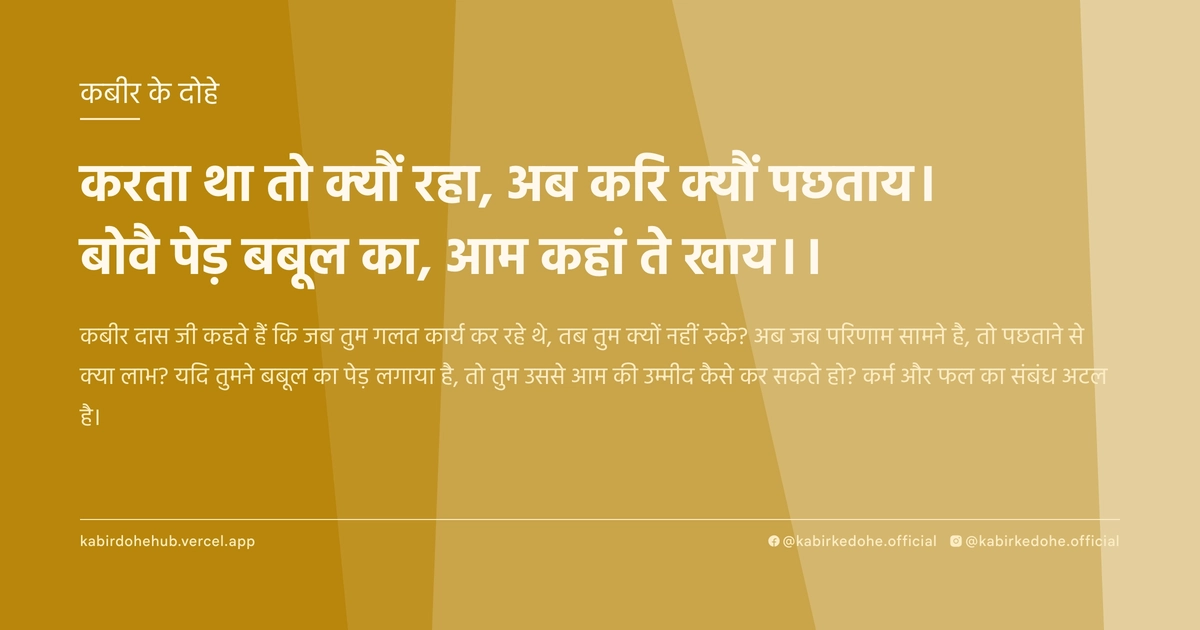
करता था तो क्यौं रहा, अब करि क्यौं पछताय।
बोवै पेड़ बबूल का, आम कहां ते खाय।।
Karta tha to kyon raha, ab kari kyon pachtaye. Bovai ped babool ka, aam kahan te khaye.
इस पृष्ठ पर इस कबीर दोहे का अर्थ (meaning), हिंदी व्याख्या और अंग्रेज़ी अनुवाद, दार्शनिक विश्लेषण और व्यावहारिक जीवन सीख दी गई है। यह दोहा कर्म (Karma) विषय से जुड़ा है — Kabir doha meaning and explanation in Hindi and English.
अर्थ (Meaning):
कबीर दास जी कहते हैं कि जब तुम गलत कार्य कर रहे थे, तब तुम क्यों नहीं रुके? अब जब परिणाम सामने है, तो पछताने से क्या लाभ? यदि तुमने बबूल का पेड़ लगाया है, तो तुम उससे आम की उम्मीद कैसे कर सकते हो? कर्म और फल का संबंध अटल है।
Kabir asks why one continued in error when they had the chance to stop, and why they grieve now that the consequences have arrived. He asserts that if one plants the seeds of a thorny acacia tree, it is an impossibility to expect the sweet fruit of a mango. Action and result are inextricably linked.
व्याख्या (Interpretation):
यह दोहा कर्म के सिद्धांत और कारण-कार्य संबंध की गहरी व्याख्या करता है। शाब्दिक रूप से यह कृषि का उदाहरण है, लेकिन आध्यात्मिक रूप से यह 'माया' और 'अज्ञान' के जाल को दर्शाता है। बबूल यहाँ तामसिक और राजसिक प्रवृत्तियों का प्रतीक है, जबकि आम सात्विक आनंद और मोक्ष का। जब मनुष्य अहंकारवश गलत मार्ग चुनता है, तो वह वास्तव में अपने ही भविष्य के दुखों का बीजारोपण करता है। यह निर्गुण भक्ति का वह पहलू है जहाँ ईश्वर बाहरी दंड नहीं देता, बल्कि प्रकृति का नियम ही न्याय करता है। आत्मा जब ब्रह्म से विमुख होकर वासनाओं में लिप्त होती है, तो वह स्वयं को बंधन में डालती है।
This couplet provides a profound exposition on the law of Karma and the relationship between cause and effect. Literally, it uses an agricultural metaphor, but spiritually, it illustrates the trap of Maya (illusion) and Avidya (ignorance). The acacia (Babool) symbolizes tamasic and rajasic tendencies—bitterness, anger, and greed—while the mango represents sattvic bliss and liberation. When a human, driven by ego, chooses a path of righteousness-void actions, they are effectively sowing the seeds of their own future suffering. In the context of Nirgun Bhakti, the Divine does not impose external punishment; rather, the cosmic law of equilibrium ensures justice. When the Atman (soul) drifts from Brahman (the Absolute) to indulge in transient desires, it creates its own shackles.
दार्शनिक विश्लेषण (Philosophical Analysis):
कबीर का यह दोहा मध्यकालीन भारत के उस समय का है जब कर्मकांड और बाहरी आडंबर चरम पर थे। कबीर ने स्पष्ट किया कि मोक्ष किसी मंदिर, मस्जिद या अनुष्ठान से नहीं, बल्कि शुद्ध कर्मों से मिलता है। यह विचार अद्वैत वेदांत के इस सिद्धांत से मेल खाता है कि हम जो हैं, वह हमारे पिछले संस्कारों का परिणाम है।
यहाँ 'बबूल' केवल एक पेड़ नहीं, बल्कि उन मानसिक संस्कारों का प्रतीक है जो क्रोध, ईर्ष्या और घृणा से बने होते हैं। सूफीवाद के नजरिए से, यह 'नफ्स' (अहंकार) की तुष्टि का परिणाम है। जब व्यक्ति अपने अहंकार को संतुष्ट करने के लिए दूसरों को कष्ट देता है, तो वह वास्तव में अपने भीतर कड़वाहट का वृक्ष लगा रहा होता है।
कबीर यहाँ तर्क देते हैं कि पछतावा तब व्यर्थ होता है जब समय बीज से वृक्ष बन चुका हो। यह मनोवैज्ञानिक परिवर्तन की आवश्यकता पर जोर देता है। वे सिखाते हैं कि जागरूकता (Awareness) ही वह एकमात्र उपकरण है जो हमें गलत बीज बोने से रोक सकता है।
सामाजिक स्तर पर, यह दोहा जाति और वर्ग के भेदभाव को नकारता है। कर्म का नियम सबके लिए समान है—चाहे वह ब्राह्मण हो या चर्मकार। यह समानता का संदेश ही कबीर की क्रांतिकारी दृष्टि थी।
अंततः, यह विश्लेषण हमें बताता है कि आध्यात्मिक उन्नति के लिए 'साधना' केवल मंत्र जाप नहीं, बल्कि अपने दैनिक व्यवहार का शुद्धिकरण है। यदि व्यवहार में कड़वाहट है, तो ध्यान के घंटों के बाद भी शांति प्राप्त नहीं होगी क्योंकि बीज अभी भी बबूल का ही है।
Kabir’s couplet emerges from a medieval Indian era dominated by rigid ritualism and superficial piety. He asserts that liberation is not achieved through temples, mosques, or complex rituals, but through the purity of one's actions. This aligns with the Advaita Vedanta principle that our current state of being is the cumulative result of our past Samskaras (mental impressions).
The 'Babool' (acacia) is not merely a tree but a symbol for mental impressions forged from anger, jealousy, and hatred. From a Sufi perspective, this is the result of catering to the 'Nafs' (the lower ego). When an individual harms others to satisfy their ego, they are effectively planting a tree of bitterness within their own consciousness.
Kabir argues that repentance is futile once the seed has already matured into a tree. This emphasizes the urgent need for psychological transformation. He teaches that mindfulness (Awareness) is the only tool capable of preventing the sowing of destructive seeds.
On a societal level, this teaching dismantles caste and class hierarchies. The law of Karma is universal and impartial—applying equally to the priest and the laborer. This insistence on cosmic equality was the core of Kabir's revolutionary vision.
Ultimately, this analysis reveals that spiritual progress is not about the quantity of mantra recitation, but the quality of daily conduct. If one's behavior remains caustic, hours of meditation will not yield peace, for the seed remains that of the acacia, not the mango.
मूल संदेश (Core Message):
- कर्म का नियम अटल है; जैसा बीज, वैसा फल।
- वर्तमान की पीड़ा अतीत के अज्ञान का परिणाम है।
- अहंकार और घृणा केवल आंतरिक कांटे पैदा करते हैं।
- जागरूकता ही गलत कर्मों के चक्र को तोड़ सकती है।
- प्रेम और करुणा ही जीवन में 'आम' जैसे मीठे फल लाते हैं।
- बाहरी दुनिया हमारे आंतरिक संस्कारों का दर्पण है।
- The law of Karma is absolute; the seed determines the fruit.
- Present suffering is the harvest of past ignorance.
- Ego and hatred only cultivate internal thorns.
- Mindfulness is the only tool to break the cycle of wrong action.
- Only love and compassion yield the 'mangoes' of spiritual bliss.
- The external world is a mirror of our internal impressions.
व्यावहारिक उदाहरण (Practical Example):
वाराणसी के एक पुराने घाट पर रहने वाली एक वृद्ध विधवा, जानकी, का जीवन अत्यंत कठिन था। वह शहर के संपन्न लोगों के घरों में छोटे-मोटे काम करती थी। जानकी का स्वभाव अत्यंत कड़वा था; वह हर बात पर शिकायत करती और अपने आस-पास के लोगों को ताने मारती रहती थी। वह मानती थी कि उसकी कड़वाहट उसकी गरीबी का परिणाम है।
एक दिन, उसने अपने पड़ोस में रहने वाली एक युवा महिला, जो उससे भी अधिक अभावों में जी रही थी, पर झूठा आरोप लगाया कि उसने उसके कुछ पैसे चुराए हैं। जानकी ने पूरे मोहल्ले में उस लड़की की बदनामी की। समय बीता, और जानकी की तबीयत बिगड़ने लगी। अब उसे देखभाल की जरूरत थी, लेकिन जिस कड़वाहट का बीज उसने सालों से बोया था, वह अब फल दे रहा था।
मोहल्ले के लोग, जो कभी उसकी मदद करते थे, अब उससे दूर रहने लगे। उसकी कड़वी जुबान ने उसके चारों ओर एक ऐसा शून्य पैदा कर दिया था जहाँ कोई उसके दुख में साथ खड़ा नहीं होना चाहता था। वह बिस्तर पर लेटी हुई अपनी पुरानी बातों को याद कर रही थी और रो रही थी कि अब उसे कोई पूछने वाला क्यों नहीं है।
तभी वह युवा लड़की, जिस पर उसने आरोप लगाया था, उसके पास आई। उसने जानकी के पैर छुए और उसे दवा खिलाई। जानकी की आँखों में आँसू थे। उसने पूछा, 'मैंने तुम्हारे साथ इतना बुरा किया, फिर भी तुम मेरी सेवा क्यों कर रही हो?'
लड़की ने शांति से उत्तर दिया, 'माँ, आपने बबूल बोया था, लेकिन मैं अपने जीवन में आम का पेड़ लगाना चाहती हूँ। यदि मैं भी वही कड़वाहट लौटाऊँ, तो मेरे जीवन में भी कांटे ही उगेंगे।'
यह सुनकर जानकी को कबीर के शब्दों का बोध हुआ। उसे समझ आया कि उसकी वर्तमान एकाकी स्थिति किसी बाहरी भाग्य का खेल नहीं, बल्कि उसके अपने ही व्यवहार का परिणाम थी।
उसने महसूस किया कि उसने सालों तक दूसरों के प्रति घृणा का बीज बोया था, और अब वह उम्मीद कर रही थी कि लोग उसे प्रेम दें। यह एक असंभव अपेक्षा थी।
उस दिन के बाद, जानकी ने अपनी शेष आयु क्षमा और कृतज्ञता में बिताने का निर्णय लिया। उसने अपनी कड़वाहट को त्याग दिया और धीरे-धीरे उसके जीवन में वह शांति आने लगी जिसकी उसने कभी कल्पना नहीं की थी।
उसका परिवर्तन केवल शब्दों में नहीं, बल्कि उसके व्यवहार में दिखा। वह अब दूसरों की मदद के लिए तत्पर रहती थी, यह जानते हुए कि आज बोया गया प्रेम का बीज ही कल सुखद फल देगा।
In the ancient ghats of Varanasi lived an elderly widow named Janaki. Her life was fraught with hardship, spending her days doing odd jobs for the wealthy. Janaki had developed a caustic personality; she complained incessantly and cast sharp taunts at everyone around her, believing her bitterness was a justified reaction to her poverty.
One day, she falsely accused a young woman in her neighborhood—who lived in even deeper deprivation—of stealing a small amount of money. Janaki spent weeks defaming the girl throughout the locality. As time passed, Janaki's health declined severely. She now required constant care, but the seeds of bitterness she had sown for decades were now bearing fruit.
The neighbors, who once helped her out of pity, now avoided her. Her sharp tongue had created a void where no one wished to stand by her in her hour of need. Lying in bed, she wept, wondering why she had been abandoned by everyone.
Suddenly, the very young woman she had accused entered the room. She touched Janaki's feet and began administering her medicine. With tears in her eyes, Janaki asked, 'I treated you so poorly, why are you serving me?'
The girl replied calmly, 'Mother, you sowed the acacia, but I wish to plant a mango tree in my own life. If I return the same bitterness, only thorns will grow in my path as well.'
Hearing this, the essence of Kabir’s wisdom struck Janaki. She realized that her current isolation was not a whim of fate, but the direct harvest of her own behavior.
She understood that she had spent years sowing seeds of hatred and was now expecting the fruit of love. It was a logical impossibility.
From that day forward, Janaki decided to spend the remainder of her life in forgiveness and gratitude. She discarded her caustic nature, and slowly, a peace she had never imagined began to permeate her existence.
Her transformation was evident not in words, but in action. She became the first to help others, knowing that only the seeds of love sown today would yield sweet fruit tomorrow.
अभ्यास मार्गदर्शन (Practice Guidance):
- दैनिक आत्म-निरीक्षण: प्रतिदिन सोने से पहले 10 मिनट यह विश्लेषण करें कि आज आपने दूसरों के प्रति कौन से 'बीज' (शब्द या कार्य) बोए हैं।
- प्रतिक्रिया विलंब: जब भी क्रोध या ईर्ष्या महसूस हो, प्रतिक्रिया देने से पहले 5 गहरी साँसें लें और स्वयं से पूछें, 'क्या मैं इस क्षण बबूल का बीज बो रहा हूँ?'
- क्षमा जर्नल: उन लोगों की सूची बनाएं जिनसे आप घृणा करते हैं। लिखें कि उनकी कड़वाहट आपके भीतर किस 'कांटे' को जन्म दे रही है और सचेत रूप से उन्हें क्षमा करें।
- निदान चेकलिस्ट: (1) क्या मैं दूसरों की सफलता से जलता हूँ? (2) क्या मैं अपनी समस्याओं के लिए दूसरों को दोष देता हूँ? (3) क्या मेरे रिश्तों में कड़वाहट है? यदि हाँ, तो आप बबूल के फल की प्रतीक्षा कर रहे हैं।
- Daily Self-Audit: Spend 10 minutes before sleep analyzing what 'seeds' (words or actions) you sowed in others today.
- Response Delay: Whenever anger or jealousy arises, take 5 deep breaths before reacting and ask yourself, 'Am I sowing a seed of acacia in this moment?'
- Forgiveness Journal: List people you harbor resentment toward. Write down which 'thorn' their bitterness is creating within you and consciously release them.
- Diagnostic Checklist: (1) Do I feel envy at others' success? (2) Do I blame others for my misfortunes? (3) Is there persistent bitterness in my relationships? If yes, you are currently awaiting the fruit of the acacia.
चिंतन प्रश्न (Reflection Questions):
- मेरे जीवन के कौन से वर्तमान दुख वास्तव में मेरे ही पुराने व्यवहार के परिणाम हैं?
- क्या मैं अपनी सार्वजनिक छवि को 'आम' जैसा मीठा बना रहा हूँ, जबकि निजी तौर पर 'बबूल' बो रहा हूँ?
- डिजिटल युग में, मेरी सोशल मीडिया टिप्पणियाँ किस तरह के बीज बो रही हैं?
- मैं उन लोगों के प्रति कैसा व्यवहार करता हूँ जिनसे मुझे कोई लाभ मिलने की उम्मीद नहीं है?
- क्या मेरा पछतावा वास्तव में परिवर्तन की इच्छा है, या केवल दंड से बचने का डर?
- मेरे भीतर का कौन सा 'कांटा' मुझे दूसरों के साथ जुड़ने से रोक रहा है?
- Which of my current sorrows are actually the harvests of my own past behaviors?
- Am I crafting a public persona as sweet as a mango while privately sowing acacia thorns?
- In this digital age, what kind of seeds am I sowing through my social media interactions?
- How do I treat those from whom I expect absolutely no benefit or return?
- Is my repentance a genuine desire for transformation, or merely a fear of consequence?
- Which internal 'thorn' is preventing me from truly connecting with other human beings?