
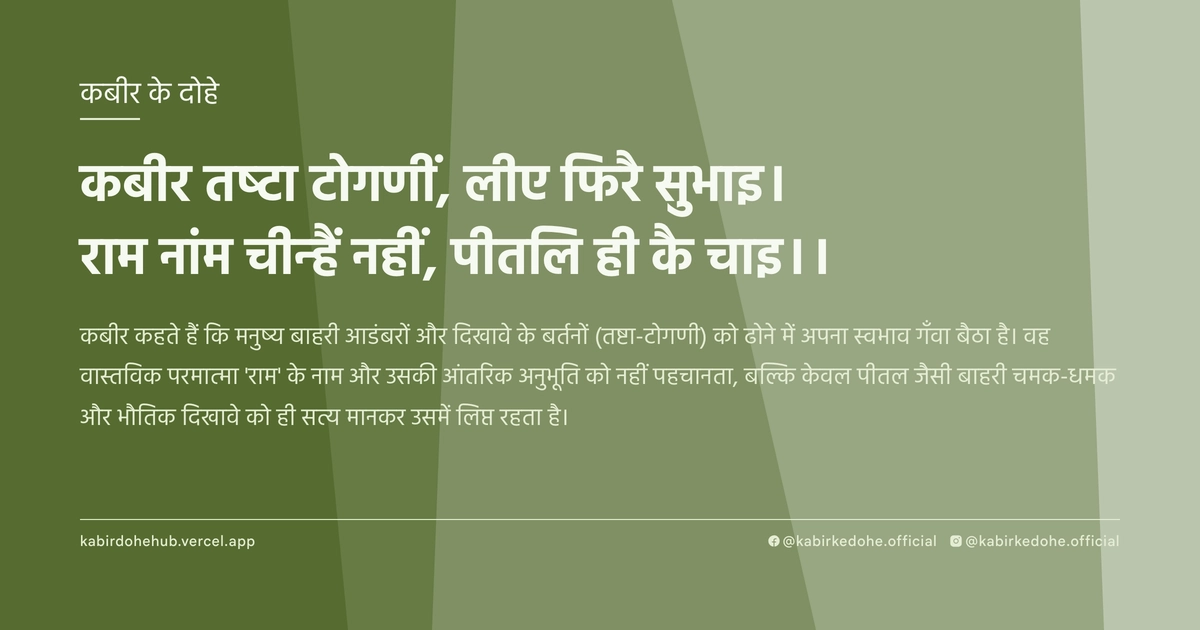
कबीर तष्टा टोगणीं, लीए फिरै सुभाइ।
राम नांम चीन्हैं नहीं, पीतलि ही कै चाइ।।
Kabir tashta toganin, leeae phirai subhai. Ram naam chinnahin nahi, peetali hi kai chaai.
इस पृष्ठ पर इस कबीर दोहे का अर्थ (meaning), हिंदी व्याख्या और अंग्रेज़ी अनुवाद, दार्शनिक विश्लेषण और व्यावहारिक जीवन सीख दी गई है। यह दोहा धार्मिक पाखंड (Religious Hypocrisy) विषय से जुड़ा है — Kabir doha meaning and explanation in Hindi and English.
अर्थ (Meaning):
कबीर कहते हैं कि मनुष्य बाहरी आडंबरों और दिखावे के बर्तनों (तष्टा-टोगणी) को ढोने में अपना स्वभाव गँवा बैठा है। वह वास्तविक परमात्मा 'राम' के नाम और उसकी आंतरिक अनुभूति को नहीं पहचानता, बल्कि केवल पीतल जैसी बाहरी चमक-धमक और भौतिक दिखावे को ही सत्य मानकर उसमें लिप्त रहता है।
Kabir observes that humans spend their lives carrying the heavy vessels of outward ritualism and social pretension. They remain oblivious to the true essence of the Divine Name (Ram), mistakenly equating spiritual worth with the superficial glitter of brass—symbolizing the attraction to external forms over internal realization.
व्याख्या (Interpretation):
यहाँ 'तष्टा-टोगणी' (बर्तन) उन धार्मिक कर्मकांडों और सामाजिक मुखौटों का प्रतीक हैं जिन्हें मनुष्य गर्व से धारण करता है। कबीर इस विरोधाभास को उजागर करते हैं कि व्यक्ति ईश्वर की खोज का दावा तो करता है, परंतु उसकी दृष्टि केवल 'पीतल' यानी भौतिकता और अहंकार पर टिकी है। यह निरगुण भक्ति का सार है, जहाँ ईश्वर किसी मूर्ति या बाहरी क्रिया में नहीं, बल्कि आत्मा के भीतर स्थित है। माया यहाँ उस भ्रम के रूप में है जो हमें यह विश्वास दिलाती है कि बाहरी चमक ही पवित्रता है। जब तक साधक इस बाहरी आवरण को नहीं त्यागता, वह आत्म-ब्रह्म की अद्वैत स्थिति को प्राप्त नहीं कर सकता।
The 'tashta-togni' (vessels) serve as metaphors for the cumbersome rituals and social masks humans wear to signal piety. Kabir highlights the paradox of the seeker who claims to pursue God but is blinded by 'brass'—the allure of materialism and ego. This aligns with Nirgun Bhakti, asserting that the Divine is formless and resides within, not in external apparatus. Maya is the veil that tricks the consciousness into equating superficial luster with spiritual purity. Until the seeker discards these external shells, the non-duality of Atman and Brahman remains obscured by the illusion of form.
दार्शनिक विश्लेषण (Philosophical Analysis):
कबीर का यह दोहा उनके युग के गहरे धार्मिक पाखंड पर प्रहार करता है, जहाँ धर्म केवल बाहरी प्रतीकों, जैसे माला, तिलक और विशेष वस्त्रों तक सीमित हो गया था। कबीर ने स्पष्ट किया कि ईश्वर की प्राप्ति के लिए किसी भौतिक माध्यम की आवश्यकता नहीं है। यह दृष्टिकोण अद्वैत वेदांत के करीब है, जो कहता है कि आत्मा और परमात्मा एक ही हैं, और उनके बीच केवल अज्ञान का पर्दा है।
सूफी मत के 'फना' (अहंकार का विनाश) की तरह, कबीर यहाँ भी व्यक्ति को अपने 'स्व' या अहंकार को मिटाने का आह्वान करते हैं। पीतल की चमक यहाँ उस 'माया' का प्रतिनिधित्व करती है जो सत्य को ढक लेती है। कबीर का तर्क है कि जो व्यक्ति केवल बाहरी दिखावे में विश्वास करता है, वह वास्तव में आध्यात्मिक रूप से अंधा है।
उन्होंने जाति और वर्ण व्यवस्था के उस ढांचे को चुनौती दी जो यह मानता था कि कुछ विशेष लोग या विशेष कर्मकांड ही मोक्ष का मार्ग हैं। उनके लिए 'राम नाम' कोई मंत्र नहीं, बल्कि एक चेतना है, एक आंतरिक कंपन है जिसे केवल मौन और समर्पण से पहचाना जा सकता है।
मनोवैज्ञानिक स्तर पर, यह दोहा हमारे 'सोशल पर्सोना' (सामाजिक व्यक्तित्व) और 'ट्रू सेल्फ' (वास्तविक स्वरूप) के बीच के संघर्ष को दर्शाता है। हम दुनिया को दिखाने के लिए जो मुखौटे पहनते हैं, वे अंततः हमारे और सत्य के बीच की दीवार बन जाते हैं।
अंततः, कबीर यह संदेश देते हैं कि वास्तविक भक्ति वह है जो हृदय की गहराई से उपजती है, न कि वह जो प्रदर्शन के लिए की जाती है। जब बाहरी बर्तनों का मोह छूटता है, तभी आंतरिक शून्यता में परमात्मा का संगीत सुनाई देता है।
This couplet is a scathing critique of the religious hypocrisy prevalent in Kabir's era, where spirituality had devolved into a collection of external symbols like beads, tilaks, and specific attire. Kabir asserts that the realization of the Divine requires no physical medium, echoing the core of Advaita Vedanta: that the soul and the Absolute are one, separated only by the veil of ignorance.
Parallel to the Sufi concept of 'Fana' (annihilation of the ego), Kabir calls for the dissolution of the curated self. The 'glitter of brass' represents Maya—the cosmic illusion that masks the ultimate truth. He argues that those obsessed with outward appearances are spiritually blind, mistaking the map for the territory.
Kabir challenged the caste-based hierarchy that suggested salvation was reserved for specific classes or achieved through rigid rituals. For him, 'Ram Naam' is not a mere chant but a state of consciousness, an internal vibration accessible only through silence and surrender.
Psychologically, the poem explores the tension between the 'social persona' and the 'true self.' The masks we wear to gain social validation eventually become barriers that prevent us from experiencing our authentic existence.
Ultimately, Kabir posits that genuine devotion is an internal alchemy, not a public performance. Only when the attachment to the 'vessels' of identity is severed can the silence of the void reveal the music of the Divine.
मूल संदेश (Core Message):
- बाहरी दिखावा सत्य की प्राप्ति में सबसे बड़ी बाधा है।
- ईश्वर किसी वस्तु में नहीं, बल्कि आंतरिक चेतना में है।
- अहंकार का त्याग ही वास्तविक आध्यात्मिक यात्रा की शुरुआत है।
- साधन और साध्य के बीच के अंतर को पहचानें।
- सत्य सरल है, जबकि पाखंड जटिल और बोझिल होता है।
- External pretension is the greatest obstacle to realizing the Truth.
- The Divine resides in internal consciousness, not in material objects.
- The dissolution of ego is the true beginning of the spiritual journey.
- Distinguish clearly between the means (ritual) and the end (realization).
- Truth is simple; hypocrisy is complex and burdensome.
व्यावहारिक उदाहरण (Practical Example):
एक समय की बात है, वाराणसी के घाटों पर माधव नाम का एक वृद्ध कुम्हार रहता था। माधव अपनी कला में निपुण था, लेकिन वह शहर के सबसे बड़े मंदिर के पुजारी का बहुत सम्मान करता था। पुजारी जी हमेशा रेशमी वस्त्र पहनते, माथे पर बड़ा तिलक लगाते और सोने की माला धारण करते थे। माधव सोचता था कि शायद पुजारी जी की बाहरी चमक ही उनकी उच्च आध्यात्मिक अवस्था का प्रमाण है।
माधव ने तय किया कि वह भी वैसा ही बनेगा। उसने अपनी मेहनत की कमाई से महंगे वस्त्र खरीदे और पूजा-पाठ के लिए पीतल के बड़े-बड़े और चमकते हुए बर्तन जुटाए। वह अब घंटों उन बर्तनों को चमकाने और उन्हें सजाकर रखने में बिताता। उसने अपनी मिट्टी की कला को समय देना कम कर दिया क्योंकि उसे लगा कि असली धर्म तो इन बाहरी प्रतीकों में है।
एक दिन, माधव ने देखा कि एक फकीर घाट की सीढ़ियों पर बैठा है। उस फकीर के पास न तो कोई वस्त्र थे और न ही कोई बर्तन। वह बस अपनी आँखें बंद किए शांत बैठा था, और उसके चेहरे पर एक ऐसी शांति थी जो माधव ने कभी पुजारी जी के चेहरे पर नहीं देखी थी। माधव ने उत्सुकता में फकीर से पूछा, "महाराज, आप बिना किसी साधन, बिना किसी पूजा-सामग्री के इतने शांत कैसे हैं?"
फकीर मुस्कुराया और बोला, "बेटा, तुम पीतल के बर्तनों को चमकाने में इतने व्यस्त हो कि तुमने उस पानी को देखना ही छोड़ दिया जो इन बर्तनों में भरा होना चाहिए था। बर्तन तो केवल साधन हैं, प्यास तो भीतर की है।"
माधव को अचानक कबीर का वह दोहा याद आया जो उसने बचपन में सुना था। उसे अहसास हुआ कि वह अब तक केवल 'बर्तनों' (दिखावे) को ढो रहा था, जबकि उसके भीतर का 'राम' (शांति और सत्य) उपेक्षित था।
उस रात माधव ने अपने उन महंगे बर्तनों को एक तरफ रख दिया। उसने फिर से अपनी चाक घुमाना शुरू किया, लेकिन इस बार वह मिट्टी को केवल बर्तन बनाने के लिए नहीं, बल्कि एक ध्यान की तरह गढ़ने लगा।
उसने महसूस किया कि जब वह पूरी तन्मयता से मिट्टी को छूता है, तो वह मिट्टी, वह चाक और वह स्वयं—तीनों एक हो जाते हैं। यही वह 'राम नाम' था जिसे वह बाहर खोज रहा था।
माधव अब पुजारी जी के रेशमी वस्त्रों से प्रभावित नहीं होता था। उसने जान लिया था कि सच्ची पवित्रता सोने की माला में नहीं, बल्कि काम के प्रति ईमानदारी और हृदय की सरलता में है।
उसका जीवन बदल गया। अब वह केवल एक कुम्हार नहीं था, बल्कि एक ऐसा साधक था जिसने दिखावे के बर्तनों को त्याग कर सत्य के अमृत को चख लिया था।
Once in the ghats of Varanasi, there lived an elderly potter named Madhav. Madhav was skilled in his craft but held a deep reverence for the city's chief temple priest. The priest always wore shimmering silk robes, a prominent tilak on his forehead, and heavy gold beads. Madhav believed that this outward splendor was the evidence of the priest's high spiritual attainment.
Driven by this belief, Madhav decided to emulate him. He spent his meager savings on expensive clothes and acquired large, glittering brass vessels for his rituals. He began spending hours polishing these vessels, neglecting his pottery, convinced that true religion lay in these external symbols.
One day, Madhav noticed a wandering fakir sitting on the stone steps of the ghat. The fakir possessed no fine clothes, no ritual vessels; he sat in profound silence with eyes closed. Yet, there was a serenity on his face that Madhav had never seen on the priest.
Curious, Madhav asked, "Maharaj, how are you so peaceful without any means or ritual materials?"
The fakir smiled and replied, "Son, you are so busy polishing the brass vessels that you have forgotten to look at the water that should be inside them. The vessel is merely a tool; the thirst is internal."
Suddenly, a couplet by Kabir, heard in childhood, flashed through Madhav's mind. He realized he had been carrying 'vessels' (pretensions) while the 'Ram' (inner peace and truth) within him remained neglected.
That night, Madhav set aside his expensive ornaments. He returned to his potter's wheel, but this time, he shaped the clay not just to make pots, but as a form of meditation.
He discovered that when he touched the clay with total presence, the clay, the wheel, and himself merged into one. This was the 'Ram Naam' he had been searching for externally.
Madhav was no longer swayed by the priest's silk robes. He understood that true purity does not reside in gold beads, but in honesty toward one's work and simplicity of heart.
His life was transformed. He was no longer just a potter, but a seeker who had discarded the brass vessels of vanity to taste the nectar of truth.
अभ्यास मार्गदर्शन (Practice Guidance):
- दैनिक आत्म-निरीक्षण: प्रतिदिन 15 मिनट मौन बैठें और विचार करें कि आज आपने कितनी बार अपनी छवि (Image) को सुधारने के लिए झूठ बोला या दिखावा किया।
- सादा जीवन अभ्यास: सप्ताह में एक दिन ऐसा तय करें जब आप अपनी सामाजिक पहचान (पद, प्रतिष्ठा, ब्रांड) को पूरी तरह त्याग कर एक साधारण व्यक्ति की तरह व्यवहार करें।
- जर्नलिंग प्रॉम्प्ट: "यदि मेरी सभी बाहरी उपलब्धियाँ और पहचान छीन ली जाएँ, तो मेरे भीतर क्या बचेगा?" इस प्रश्न पर गहराई से लिखें।
- डायग्नोस्टिक चेकलिस्ट: क्या मैं दूसरों की प्रशंसा के बिना भी अपने आध्यात्मिक अभ्यास में खुश हूँ? क्या मैं किसी की बाहरी वेशभूषा देखकर उसकी बुद्धिमत्ता का निर्णय करता हूँ? यदि उत्तर 'नहीं' और 'हाँ' है, तो आप अभी भी 'पीतल' के मोह में हैं।
- Daily Self-Inquiry: Spend 15 minutes in silence daily, reflecting on how many times you manipulated your image or performed for others' validation today.
- Simplicity Practice: Designate one day a week to consciously strip away your social identity (title, status, brands) and interact with the world as a simple human being.
- Journaling Prompt: "If all my external achievements and identities were stripped away, what would remain within me?" Explore this in depth.
- Diagnostic Checklist: Am I content in my spiritual practice without external validation? Do I judge a person's wisdom by their attire or symbols? If the answers are 'No' and 'Yes', you are still clinging to the 'brass'.
चिंतन प्रश्न (Reflection Questions):
- मेरे जीवन के वे कौन से 'पीतल के बर्तन' हैं जिन्हें मैं दुनिया को दिखाने के लिए ढो रहा हूँ?
- क्या मेरी धार्मिकता दूसरों को प्रभावित करने का एक साधन बन गई है?
- जब मैं अकेला होता हूँ, तब मेरी पहचान क्या होती है, और जब मैं समाज में होता हूँ, तब क्या होती है?
- मैं अपनी आंतरिक शून्यता को भरने के लिए किन बाहरी प्रतीकों का सहारा ले रहा हूँ?
- क्या मैं वास्तव में सत्य की खोज कर रहा हूँ, या केवल 'सत्य खोजने वाले' की छवि बना रहा हूँ?
- What are the 'brass vessels' in my own life that I carry solely for social validation?
- Has my spirituality become a tool to influence or impress others?
- Who am I when I am completely alone, versus who I pretend to be in society?
- Which external symbols am I using to mask my internal emptiness?
- Am I truly seeking the Truth, or am I merely cultivating the image of a 'seeker'?