
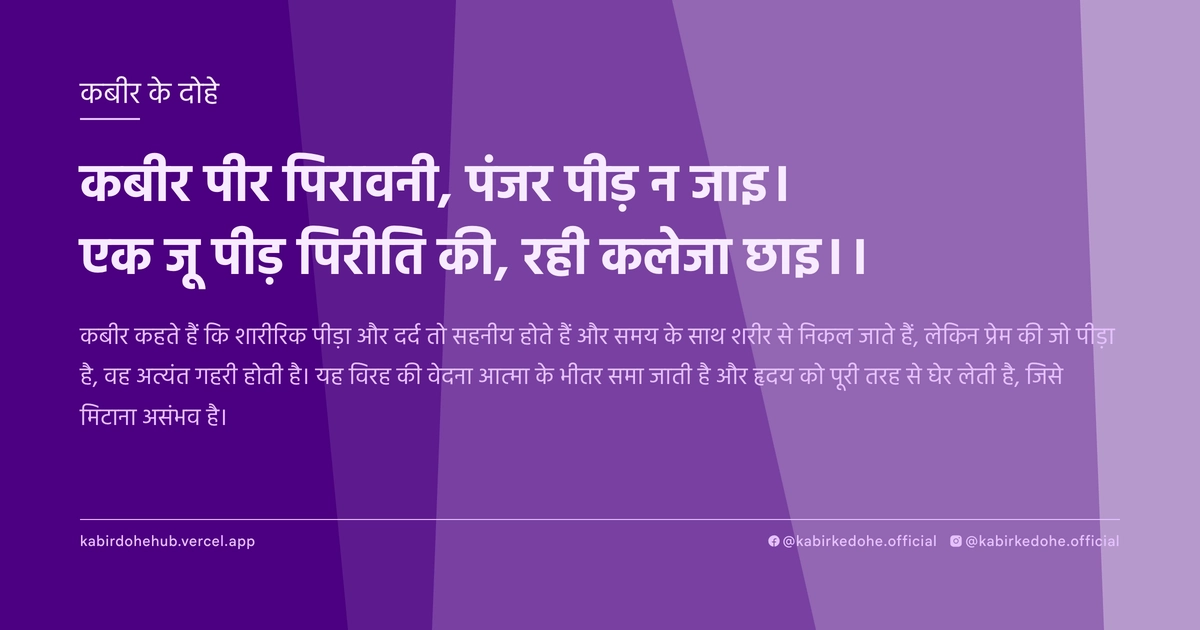
कबीर पीर पिरावनी, पंजर पीड़ न जाइ।
एक जू पीड़ पिरीति की, रही कलेजा छाइ।।
Kabir peer piravani, panjar peed na jai. Ek ju peed piriti ki, rahi kaleja chhai.
इस पृष्ठ पर इस कबीर दोहे का अर्थ (meaning), हिंदी व्याख्या और अंग्रेज़ी अनुवाद, दार्शनिक विश्लेषण और व्यावहारिक जीवन सीख दी गई है। यह दोहा भक्ति (Bhakti) विषय से जुड़ा है — Kabir doha meaning and explanation in Hindi and English.
अर्थ (Meaning):
कबीर कहते हैं कि शारीरिक पीड़ा और दर्द तो सहनीय होते हैं और समय के साथ शरीर से निकल जाते हैं, लेकिन प्रेम की जो पीड़ा है, वह अत्यंत गहरी होती है। यह विरह की वेदना आत्मा के भीतर समा जाती है और हृदय को पूरी तरह से घेर लेती है, जिसे मिटाना असंभव है।
Kabir asserts that physical pain and bodily ailments are transient and can be endured or cured as they affect only the skeletal frame. However, the agony of divine love and longing is an entirely different dimension of suffering. This spiritual ache permeates the very core of one's being, enveloping the heart in a persistent, transformative longing.
व्याख्या (Interpretation):
इस दोहे में कबीर शारीरिक कष्ट और आध्यात्मिक विरह के बीच के अंतर को स्पष्ट करते हैं। 'पंजर' का अर्थ है हड्डियों का ढांचा, जो नश्वर है। भौतिक दर्द केवल शरीर तक सीमित रहता है, लेकिन 'पिरीति' या प्रेम की पीड़ा आत्मा का गुण है। यह विरह वास्तव में आत्मा का परमात्मा से मिलने की तड़प है, जिसे निर्गुण भक्ति में 'विरह-ताप' कहा गया है। यह पीड़ा कोई अभिशाप नहीं, बल्कि एक शोधन प्रक्रिया है जो अहंकार को गलाती है। जब साधक इस दर्द को स्वीकार करता है, तो वह माया के मोह से मुक्त होकर अद्वैत की स्थिति की ओर बढ़ता है। यहाँ विरोधाभास यह है कि यह पीड़ा ही वास्तव में परम आनंद का द्वार है।
In this couplet, Kabir distinguishes between somatic suffering and the metaphysical ache of separation. The 'panjar' refers to the skeletal frame, symbolizing the transient, material body. While physical pain is localized and temporary, the 'peed' of 'pirit' (love) is an existential longing of the Atman for the Brahman. In the tradition of Nirgun Bhakti, this is known as 'Viraha', the fire of separation that purifies the soul. This pain is not a negative affliction but a spiritual catalyst that dissolves the ego (Ahamkara) and strips away the illusions of Maya. The central paradox presented is that this agonizing longing is the only true path to ultimate liberation and union. By embracing this divine sorrow, the seeker transcends the duality of pleasure and pain, realizing the non-dual nature of existence.
दार्शनिक विश्लेषण (Philosophical Analysis):
कबीर का यह दर्शन सूफी मत के 'इश्क-ए-हकीकी' (ईश्वरीय प्रेम) और भारतीय अद्वैत वेदांत का एक अनूठा संगम है। उनके समय में धर्म केवल कर्मकांडों और बाहरी दिखावे तक सीमित था, जिसे कबीर ने सिरे से नकार दिया। उन्होंने तर्क दिया कि ईश्वर को मंदिर या मस्जिद में नहीं, बल्कि हृदय की उस तड़प में खोजा जाना चाहिए जो मनुष्य को उसके मूल स्रोत से जोड़ती है।
शारीरिक पीड़ा का वर्णन करके कबीर यह समझाते हैं कि शरीर केवल एक वस्त्र है। जब तक हम शरीर को ही 'स्व' मानते हैं, हम केवल भौतिक सुख-दुख में उलझे रहते हैं। लेकिन जब प्रेम जागता है, तो वह 'मैं' और 'तू' के भेद को मिटा देता है। यह सूफीवाद के 'फना' (अहंकार का विनाश) के समान है, जहाँ प्रेमी अपने अस्तित्व को प्रेमी (ईश्वर) में विलीन कर देता है।
अद्वैत वेदांत के परिप्रेक्ष्य में, यह विरह वास्तव में एक भ्रम है, क्योंकि आत्मा और परमात्मा कभी अलग थे ही नहीं। लेकिन यह 'भ्रमित विरह' ही वह ईंधन है जो साधक को साधना की ओर धकेलता है। बिना तड़प के ज्ञान केवल बौद्धिक व्यायाम है, लेकिन विरह के साथ ज्ञान अनुभव बन जाता है।
कबीर जाति और वर्ण व्यवस्था के विरुद्ध थे क्योंकि उनका मानना था कि प्रेम की यह पीड़ा सार्वभौमिक है। यह किसी पंडित या मौलवी की बपौती नहीं, बल्कि हर उस हृदय का अनुभव है जो सत्य की खोज में है। उन्होंने ritualism के स्थान पर internal alchemy (आंतरिक कीमिया) पर जोर दिया।
मनोवैज्ञानिक स्तर पर, यह दोहा हमें सिखाता है कि भावनात्मक और आध्यात्मिक पीड़ा को दबाने के बजाय उसे स्वीकार करना चाहिए। जब हम अपनी आंतरिक रिक्तता को स्वीकार करते हैं, तभी हम उसे पूर्णता से भरने की क्षमता रखते हैं। यह अहंकार के विनाश और करुणा के उदय की प्रक्रिया है।
Kabir's philosophy here represents a profound synthesis of the Sufi concept of 'Ishq-e-Haqiqi' (Divine Love) and the non-dualism of Advaita Vedanta. During his era, spirituality had devolved into rigid ritualism and caste-based hierarchies, which Kabir vehemently rejected. He posited that the Divine is not found in the architecture of temples or mosques, but in the raw, unfiltered longing of a heart yearning for its source.
By contrasting physical pain with spiritual longing, Kabir emphasizes that the body is merely a 'panjar' or a temporary vessel. As long as one identifies with the physical form, they remain trapped in the cycle of sensory pleasure and pain. However, the awakening of divine love shatters this identification, leading to the annihilation of the ego. This mirrors the Sufi concept of 'Fana', where the individual self is extinguished in the presence of the Absolute.
From the lens of Advaita Vedanta, the feeling of separation is technically an illusion (Maya), as the Atman and Brahman are eternally one. Yet, this 'illusory separation' serves a critical purpose: it acts as the catalyst for spiritual awakening. Without the ache of longing, knowledge remains a mere intellectual exercise; with it, knowledge transforms into a lived experience of Truth.
Kabir's rejection of caste and ritualism is rooted in the universality of this pain. He asserts that the capacity for divine longing is not the monopoly of a priestly class but is accessible to any soul, regardless of social standing. He replaces external piety with an internal alchemy, where the fire of longing burns away the dross of the ego.
Psychologically, this teaching encourages the integration of suffering. Instead of avoiding emotional pain, the seeker is urged to lean into it, recognizing that the void felt within is actually the 'presence' of the Divine calling them home. It is a transition from the small 'i' to the universal 'I'.
मूल संदेश (Core Message):
- शारीरिक पीड़ा क्षणभंगुर है, जबकि आध्यात्मिक विरह शाश्वत है।
- अहंकार का विसर्जन केवल प्रेम की गहरी तड़प से संभव है।
- दुख को दबाना नहीं, बल्कि उसे रूपांतरित करना ही साधना है।
- सच्चा मिलन उसी को मिलता है जो विरह की अग्नि में तपता है।
- आत्मा की पुकार को पहचानना ही वास्तविक ज्ञान की शुरुआत है।
- Physical pain is transient; spiritual longing is an eternal catalyst.
- The dissolution of ego is only possible through the intensity of divine love.
- Sadhana is not the avoidance of pain, but its conscious transformation.
- Only those who endure the fire of separation attain the bliss of union.
- Recognizing the soul's cry is the true beginning of spiritual awakening.
व्यावहारिक उदाहरण (Practical Example):
वाराणसी के एक पुराने मोहल्ले में रामदीन नाम का एक वृद्ध बुनकर रहता था। वह अपनी कला में निपुण था, लेकिन उसका मन हमेशा अशांत रहता था। उसने जीवन भर कठोर परिश्रम किया, कई बीमारियाँ झेलीं और शरीर के ढलने के साथ-साथ उसे जोड़ों के दर्द और कमजोरी ने घेर लिया। वह अक्सर कहता, "यह शरीर तो अब बोझ बन गया है, इसकी पीड़ा तो मैं सह लेता हूँ।"
लेकिन रामदीन के जीवन में एक और दर्द था—एक ऐसी रिक्तता जिसे वह शब्दों में बयां नहीं कर पाता था। उसे लगता था कि वह कुछ बहुत कीमती खो चुका है, जिसे वह पहचान नहीं पा रहा था। वह घंटों गंगा के घाट पर बैठता और शून्य में ताकता रहता। उसके पड़ोसी उसे पागल समझते थे क्योंकि वह अपनी भौतिक तकलीफों के बावजूद एक अजीब सी उदासी में डूबा रहता था।
एक दिन उसकी मुलाकात एक घुमक्कड़ फकीर से हुई। फकीर ने रामदीन की आँखों में वह तड़प देखी और मुस्कुराकर कहा, "रामदीन, तू जिसे बीमारी समझ रहा है, वह वास्तव में तेरी आत्मा की पुकार है। शरीर का दर्द तो दवा से जाता है, लेकिन यह जो दिल की टीस है, यह तुझे तेरे असली घर की याद दिला रही है।"
रामदीन ने पूछा, "पर यह दर्द तो मुझे बेचैन करता है, मैं इससे छुटकारा चाहता हूँ।"
फकीर ने जवाब दिया, "यही तो सबसे बड़ी भूल है। इस दर्द से भाग मत, इसे गले लगा। यह दर्द ही वह धागा है जो तुझे उस परम सत्य से जोड़े हुए है। जिस दिन तू इस विरह को अपना लेगा, यह दर्द ही तेरा सबसे बड़ा आनंद बन जाएगा।"
रामदीन ने उस दिन से अपनी शिकायतें बंद कर दीं। उसने अपने शारीरिक दर्द को एक साधारण घटना की तरह देखना शुरू किया और अपनी आंतरिक तड़प को एक प्रार्थना बना लिया। वह अब बुनते समय केवल कपड़े नहीं बुनता था, बल्कि हर धागे के साथ उस अदृश्य प्रेमी का नाम जपता था।
धीरे-धीरे उसकी बेचैनी एक गहरे सुकून में बदल गई। उसने महसूस किया कि जब वह इस विरह में पूरी तरह डूब जाता है, तो वह अकेला नहीं रहता; बल्कि पूरा ब्रह्मांड उसके भीतर समा जाता है। उसका अहंकार, जो उसे 'बीमार' और 'दुखी' महसूस कराता था, धीरे-धीरे गल गया।
अब जब लोग उससे उसके शारीरिक कष्टों के बारे में पूछते, तो वह मुस्कुराकर कहता, "हड्डियों का दर्द तो आता-जाता रहता है, लेकिन मेरे हृदय में जो प्रेम की अग्नि जल रही है, उसने मुझे अमर कर दिया है।"
रामदीन का जीवन अब एक जीवित उदाहरण था कि कैसे सही दिशा में मोड़ा गया दुख, मोक्ष का मार्ग बन जाता है। उसने सीखा कि विरह वास्तव में मिलन की पहली शर्त है।
In a narrow lane of old Varanasi lived an elderly weaver named Ramdeen. He was a master of his craft, yet his mind was perpetually restless. Throughout his life, he had endured grueling labor and various ailments; as age caught up, he suffered from chronic joint pain and frailty. He would often mutter, "This body has become a burden; I can endure its aches, for they are merely physical."
However, there was another pain in Ramdeen's life—a profound emptiness he could not articulate. He felt as though he had lost something precious, something he couldn't quite name. He would spend hours sitting on the ghats of the Ganges, staring into the void. His neighbors thought him eccentric, as he remained immersed in a strange melancholy despite his physical sufferings.
One day, he encountered a wandering fakir. The fakir noticed the longing in Ramdeen's eyes and smiled, saying, "Ramdeen, what you perceive as a sickness is actually the call of your soul. The pain of the body is cured by medicine, but this ache in your heart is reminding you of your true home."
Ramdeen asked, "But this pain makes me restless; I want to be rid of it."
The fakir replied, "That is your greatest mistake. Do not flee from this pain; embrace it. This very longing is the thread that connects you to the Ultimate Truth. The day you accept this separation, this pain will become your greatest joy."
From that day on, Ramdeen ceased his complaints. He began to view his physical ailments as trivial events and transformed his internal longing into a constant prayer. As he wove his fabrics, he no longer just interlaced threads; he wove the name of the Invisible Beloved into every pattern.
Gradually, his restlessness evolved into a deep, abiding peace. He realized that when he fully immersed himself in this longing, he was no longer alone; rather, the entire universe resided within him. His ego, which had identified him as 'sick' or 'miserable,' slowly dissolved.
Now, when people asked about his physical suffering, he would smile and say, "The ache of the bones comes and goes, but the fire of love burning in my heart has made me immortal."
Ramdeen's life became a living testament to how suffering, when redirected, becomes the path to liberation. He learned that longing is, in fact, the first condition for union.
अभ्यास मार्गदर्शन (Practice Guidance):
- प्रतिदिन 20 मिनट मौन बैठें और अपने भीतर की उस 'अतृप्ति' या 'खालीपन' को महसूस करें जिसे आप आमतौर पर भरने की कोशिश करते हैं। इसे दबाएं नहीं, बल्कि इसे एक दिव्य पुकार के रूप में स्वीकार करें।
- एक 'विरह जर्नल' बनाएँ। इसमें उन क्षणों को लिखें जब आप अकेलापन या अधूरापन महसूस करते हैं। फिर विचार करें कि क्या यह अधूरापन वास्तव में परमात्मा से मिलने की एक गहरी इच्छा है।
- व्यवहार परिवर्तन: जब भी आपको शारीरिक या मानसिक कष्ट हो, तो स्वयं से कहें, "यह केवल शरीर का खेल है, मेरी आत्मा अविनाशी है और वह प्रेम की खोज में है।"
- निदानात्मक चेकलिस्ट: क्या आप अपनी उदासी को बाहरी चीजों (मनोरंजन, खरीदारी, सोशल मीडिया) से भरने की कोशिश कर रहे हैं? यदि हाँ, तो आप विरह को 'माया' में बदल रहे हैं। यदि आप उस उदासी में ठहर सकते हैं, तो आप आध्यात्मिक मार्ग पर हैं।
- Sit in silence for 20 minutes daily and consciously feel the 'unsatisfied' void within you that you usually try to fill. Do not suppress it; instead, acknowledge it as a divine summons.
- Maintain a 'Longing Journal'. Record moments of loneliness or incompleteness, then reflect on whether this void is actually a profound yearning for the Divine.
- Behavioral Shift: Whenever you experience physical or mental distress, remind yourself: "This is merely the play of the body; my soul is eternal and is seeking Love."
- Diagnostic Checklist: Are you attempting to numb your sadness with external distractions (entertainment, shopping, digital noise)? If yes, you are converting spiritual longing into Maya. If you can dwell within that sadness without fleeing, you are on the path of awakening.
चिंतन प्रश्न (Reflection Questions):
- आप अपनी आंतरिक रिक्तता को भरने के लिए किन बाहरी मुखौटों का उपयोग कर रहे हैं?
- क्या आप वास्तव में शांति चाहते हैं, या आप उस तड़प से डरते हैं जो आपको सत्य की ओर ले जाएगी?
- आपका 'डिजिटल अहंकार' आपकी वास्तविक आध्यात्मिक प्यास को कैसे छिपा रहा है?
- यदि आपका शरीर पूरी तरह स्वस्थ हो, तब भी क्या आप भीतर से पूर्ण महसूस करेंगे?
- क्या आप अपने जीवन के सबसे गहरे दुख को ईश्वर के प्रति प्रेम में बदलने का साहस रखते हैं?
- What external masks are you using to camouflage your internal void?
- Do you truly seek peace, or are you afraid of the longing that leads to Truth?
- How does your 'digital ego' distract you from your authentic spiritual thirst?
- If your body were perfectly healthy, would you still feel a sense of incompleteness within?
- Do you have the courage to transmute your deepest grief into divine love?