
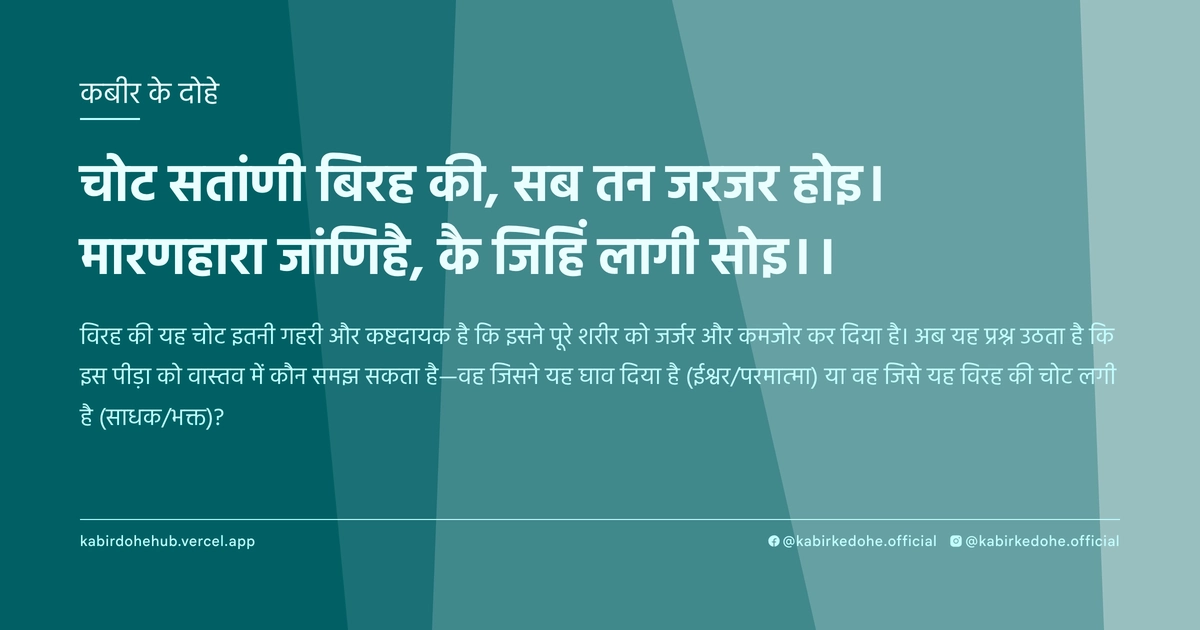
चोट सतांणी बिरह की, सब तन जरजर होइ।
मारणहारा जांणिहै, कै जिहिं लागी सोइ।।
Chot satani birah ki, sab tan jarjar hoye. Maaranhara janhai, kai jihin laagi soi.
इस पृष्ठ पर इस कबीर दोहे का अर्थ (meaning), हिंदी व्याख्या और अंग्रेज़ी अनुवाद, दार्शनिक विश्लेषण और व्यावहारिक जीवन सीख दी गई है। यह दोहा भक्ति (Bhakti) विषय से जुड़ा है — Kabir doha meaning and explanation in Hindi and English.
अर्थ (Meaning):
विरह की यह चोट इतनी गहरी और कष्टदायक है कि इसने पूरे शरीर को जर्जर और कमजोर कर दिया है। अब यह प्रश्न उठता है कि इस पीड़ा को वास्तव में कौन समझ सकता है—वह जिसने यह घाव दिया है (ईश्वर/परमात्मा) या वह जिसे यह विरह की चोट लगी है (साधक/भक्त)?
The wound of separation from the Divine is so excruciating that it has left the entire physical and spiritual being withered and frail. The central question arises: who truly comprehends the magnitude of this agony—the one who inflicts the separation (the Divine) or the one who suffers the longing (the devotee)?
व्याख्या (Interpretation):
यह दोहा विरह की उस अवस्था का वर्णन करता है जहाँ आत्मा अपने मूल स्रोत, परमात्मा से अलग होने के कारण तड़प रही है। 'चोट' यहाँ शारीरिक नहीं, बल्कि आध्यात्मिक शून्यता है। 'जरजर' होना केवल शरीर की कमजोरी नहीं, बल्कि अहंकार का पूरी तरह से ढह जाना है। यह निरगुण भक्ति का वह चरम है जहाँ भक्त को यह अहसास होता है कि परमात्मा और भक्त एक ही हैं; मारने वाला और मरने वाला अलग नहीं हैं। यह अद्वैत वेदांत के उस सत्य की ओर संकेत करता है जहाँ द्वैत (दो होने का भाव) समाप्त हो जाता है। विरह यहाँ एक साधन है, जो साधक को बाहरी दुनिया से काटकर आंतरिक सत्य की ओर ले जाता है। अंततः, यह विरोधाभास कि 'मारणहारा' और 'लागी सोइ' एक ही हैं, यह दर्शाता है कि परमात्मा ही वह विरह पैदा करता है ताकि आत्मा अपनी तड़प के माध्यम से वापस उसी की ओर लौटे।
This couplet describes the state of 'Viraha' (longing), where the soul suffers due to its perceived separation from its primordial source, the Divine. The 'wound' mentioned is not physical but a profound spiritual void. To be 'jarjar' or withered signifies not just bodily decay, but the complete collapse of the ego. This represents the pinnacle of Nirgun Bhakti, where the devotee realizes that the Divine and the seeker are not distinct; the inflictor of the pain and the sufferer are one. It points toward the Advaita Vedantic truth where duality vanishes. Longing here serves as a spiritual tool, severing the seeker's ties to the material world to redirect them inward. Ultimately, the paradox that the 'slayer' and the 'slain' are the same reveals that the Divine creates this longing to compel the soul to return to its origin through the intensity of its own yearning.
दार्शनिक विश्लेषण (Philosophical Analysis):
कबीर का यह दोहा मध्यकालीन भारत के उस सामाजिक-धार्मिक परिवेश में रचा गया था जहाँ कर्मकांड और बाहरी आडंबरों की प्रधानता थी। कबीर ने मंदिर-मस्जिद के विवादों से ऊपर उठकर 'हृदय की तड़प' को वास्तविक पूजा माना। यहाँ विरह का दर्शन सूफी मत के 'इश्क-ए-हकीकी' (दिव्य प्रेम) से गहराई से मिलता है, जहाँ प्रेमी (साधक) अपने प्रिय (परमात्मा) के लिए पूरी तरह मिट जाने की इच्छा रखता है।
दार्शनिक स्तर पर, यह 'माया' के आवरण को हटाने की प्रक्रिया है। जब तक मनुष्य संसार के मोह में है, उसे विरह महसूस नहीं होता। लेकिन जैसे ही ज्ञान की किरण जागती है, उसे अपनी वास्तविक स्थिति—परमात्मा से अलगाव—का बोध होता है। यह बोध एक तीव्र पीड़ा के रूप में आता है, जो अहंकार को गला देता है।
अद्वैत वेदांत के परिप्रेक्ष्य में, यह विरह एक भ्रम है, क्योंकि आत्मा और ब्रह्म कभी अलग थे ही नहीं। परंतु, इस भ्रम (माया) को तोड़ने के लिए इस मानसिक पीड़ा की आवश्यकता होती है। जब साधक कहता है कि 'सब तन जरजर होइ', तो वह वास्तव में अपनी उस पहचान को नष्ट कर रहा होता है जो उसे परमात्मा से अलग करती है।
कबीर यहाँ ritualism (कर्मकांड) का खंडन करते हैं। उनके अनुसार, हज़ारों मालाएँ जपने या तीर्थ यात्रा करने से वह शांति नहीं मिलती जो एक बूंद सच्चे विरह और समर्पण से मिलती है। विरह यहाँ एक 'अग्नि' है जो अशुद्धियों को जलाकर केवल शुद्ध चेतना को शेष रखती है।
मनोवैज्ञानिक रूप से, यह 'अहंकार के विसर्जन' की प्रक्रिया है। जब व्यक्ति यह स्वीकार कर लेता है कि वह पूरी तरह से असहाय है और उसकी तड़प ही उसकी एकमात्र पूंजी है, तब वह 'शून्य' हो जाता है। इसी शून्यता में परमात्मा का वास होता है। यह विरह विनाशकारी नहीं, बल्कि सृजनात्मक है, क्योंकि यह एक नए, आध्यात्मिक मनुष्य का जन्म कराता है।
Kabir's couplet was composed within the socio-religious milieu of medieval India, a time dominated by rigid rituals and outward displays of piety. Rising above the conflicts of temple and mosque, Kabir identified the 'longing of the heart' as the only true form of worship. Here, the philosophy of separation deeply aligns with the Sufi concept of 'Ishq-e-Haqiqi' (Divine Love), where the lover (seeker) desires total annihilation in the Beloved (the Divine).
On a philosophical level, this is the process of peeling away the layers of 'Maya' (illusion). As long as a human is immersed in worldly attachments, they do not feel this separation. However, the moment the spark of spiritual awareness awakens, they realize their true state—estrangement from the Source. This realization manifests as intense pain, which systematically erodes the ego.
From the perspective of Advaita Vedanta, this longing is technically an illusion, for the Atman and Brahman were never separate. Yet, to shatter the illusion of duality, this psychological agony is necessary. When the seeker claims their body is 'withered,' they are actually dismantling the false identity that creates the sense of separation.
Kabir explicitly rejects ritualism here. He suggests that chanting thousands of beads or embarking on pilgrimages cannot provide the liberation that a single drop of genuine longing and surrender can. Separation is treated as a 'fire' that incinerates impurities, leaving behind only pure consciousness.
Psychologically, this is the process of 'ego-dissolution.' When an individual accepts their total helplessness and recognizes that their yearning is their only asset, they become 'empty' (Shunya). It is in this emptiness that the Divine resides. This longing is not destructive but creative, as it births a new, spiritually awakened human being.
मूल संदेश (Core Message):
- बाहरी सुख केवल एक भ्रम है जो वास्तविक प्यास को छिपाता है।
- आध्यात्मिक पीड़ा वास्तव में परमात्मा द्वारा दिया गया एक निमंत्रण है।
- अहंकार का टूटना ही दिव्य मिलन की पहली अनिवार्य शर्त है।
- विरह की अग्नि में जलकर ही आत्मा की अशुद्धियाँ समाप्त होती हैं।
- परमात्मा और भक्त के बीच का द्वैत केवल एक मानसिक पर्दा है।
- सच्ची भक्ति कर्मकांडों में नहीं, बल्कि हृदय की तड़प में बसती है।
- External pleasures are mere illusions that mask the true spiritual thirst.
- Spiritual agony is actually an invitation extended by the Divine.
- The shattering of the ego is the first essential condition for union.
- Only by burning in the fire of longing are the soul's impurities removed.
- The duality between the Divine and the devotee is but a mental veil.
- True devotion resides not in rituals, but in the yearning of the heart.
व्यावहारिक उदाहरण (Practical Example):
वाराणसी के एक पुराने घाट पर रहने वाले माधव, जो जीवन भर मिट्टी के बर्तन बनाने का काम करते थे, की कहानी है। माधव का जीवन अत्यंत सरल था, लेकिन उनके भीतर एक अनजानी बेचैनी थी। वे हर साल गंगा आरती में जाते, मंत्र पढ़ते और दान देते, फिर भी उन्हें लगता कि उनके जीवन में कुछ बहुत बड़ा गायब है।
एक दिन, एक फकीर ने उनसे कहा, "माधव, तुम जिसे बाहर खोज रहे हो, वह तुम्हारी तड़प में ही छिपा है। जब तक तुम यह नहीं मानोगे कि तुम अधूरे हो, तब तक तुम पूर्ण नहीं हो पाओगे।"
माधव ने इस बात पर विचार किया। उन्होंने महसूस किया कि उनकी बेचैनी वास्तव में एक 'विरह' था—एक ऐसी प्यास जिसे दुनिया की कोई भी चीज़ नहीं बुझा सकती थी। उन्होंने बाहरी दिखावे और समाज द्वारा तय किए गए 'धार्मिक' कार्यों को छोड़ दिया।
वे अब घंटों मौन में बैठने लगे। शुरुआत में यह मौन उन्हें डरावना लगा। उन्हें ऐसा महसूस हुआ जैसे उनका पुराना व्यक्तित्व, उनका अहंकार, धीरे-धीरे टूट रहा है। उन्हें लगा कि वे अंदर से 'जरजर' हो रहे हैं, जैसे कोई पुराना पेड़ सूख रहा हो।
उनके पड़ोसी उन्हें पागल समझने लगे क्योंकि उन्होंने अब बड़े मेलों और उत्सवों में जाना बंद कर दिया था। लेकिन माधव के भीतर एक अजीब सी शांति जन्म ले रही थी। वे अब मिट्टी के बर्तन केवल जीविका के लिए नहीं, बल्कि एक ध्यान की तरह बनाने लगे।
एक शाम, जब वे घाट पर अकेले बैठे थे, उन्हें अचानक यह अहसास हुआ कि जिस ईश्वर को वे बाहर खोज रहे थे, वही ईश्वर उनकी इस तड़प के रूप में उनके भीतर मौजूद है। उन्हें समझ आया कि यह दर्द उन्हें तोड़ने के लिए नहीं, बल्कि उन्हें खोलने के लिए था।
उनकी आँखों से आँसू बहने लगे, लेकिन यह दुख के आँसू नहीं थे। यह वह क्षण था जब 'मारणहारा' (परमात्मा) और 'लागी सोइ' (भक्त) का भेद मिट गया। माधव ने महसूस किया कि विरह ही वास्तव में मिलन का सबसे छोटा रास्ता है।
इस अनुभव के बाद, माधव का व्यवहार पूरी तरह बदल गया। वे अब दूसरों के दुख को देखकर विचलित नहीं होते थे, बल्कि उनके प्रति गहरी करुणा महसूस करते थे। उन्होंने सीखा कि जब हम अपनी आंतरिक शून्यता को स्वीकार करते हैं, तभी हम वास्तव में दूसरों से जुड़ पाते हैं।
माधव अब एक प्रसिद्ध कुम्हार नहीं थे, लेकिन वे एक ऐसे इंसान बन चुके थे जिनके पास बैठने मात्र से लोग शांति महसूस करते थे। उन्होंने जान लिया था कि परमात्मा को पाने के लिए किसी मंदिर की नहीं, बल्कि एक टूटे हुए हृदय की आवश्यकता होती है।
अंततः, माधव की वह 'जरजर' अवस्था ही उनकी सबसे बड़ी शक्ति बन गई। उन्होंने दुनिया को दिखाया कि विरह की अग्नि में जलकर ही आत्मा सोने की तरह चमकती है।
This is the story of Madhav, a potter living on an ancient ghat in Varanasi. Madhav's life was simple, yet he carried an inexplicable restlessness within him. Every year, he attended the Ganga Aarti, recited mantras, and gave alms, yet he felt something profound was missing from his existence.
One day, a wandering dervish told him, "Madhav, that which you seek outside is hidden within your own longing. Until you accept that you are incomplete, you will never find wholeness."
Madhav pondered these words. He realized that his restlessness was actually a form of 'Viraha'—a thirst that no worldly pleasure could quench. He decided to abandon the outward displays of piety and the 'religious' duties prescribed by society.
He began spending hours in absolute silence. Initially, this silence felt terrifying. He felt as though his old personality, his ego, was slowly crumbling. He felt he was becoming 'jarjar' (withered), like an old tree drying up from the inside.
His neighbors began to think he had lost his mind because he stopped attending the grand fairs and festivals. However, a strange peace was germinating within Madhav. He stopped making pottery just for a living and began treating the act of shaping clay as a form of meditation.
One evening, while sitting alone on the ghat, he had a sudden realization: the God he had been searching for externally was present within him as this very longing. He understood that this pain was not meant to destroy him, but to open him up.
Tears streamed down his face, but they were not tears of sorrow. It was the moment where the distinction between the 'Slayer' (the Divine) and the 'Sufferer' (the devotee) vanished. Madhav realized that longing is, in fact, the shortest path to union.
After this experience, Madhav's behavior transformed completely. He was no longer disturbed by the suffering of others; instead, he felt a profound compassion for them. He learned that only by accepting our internal void can we truly connect with others.
Madhav was no longer a famous potter, but he became a man whose mere presence radiated peace. He had learned that reaching the Divine requires not a temple, but a broken heart.
Ultimately, Madhav's 'withered' state became his greatest strength. He showed the world that only by burning in the fire of separation does the soul shine like pure gold.
अभ्यास मार्गदर्शन (Practice Guidance):
- दैनिक विरह-ध्यान: प्रतिदिन 20 मिनट एकांत में बैठें और उस आंतरिक शून्यता या 'कमी' को महसूस करें जिसे आप दुनिया की चीजों से भरने की कोशिश करते हैं। उसे दबाएं नहीं, बल्कि उसमें डूब जाएं।
- आत्म-पूछताछ जर्नल: एक डायरी लिखें जिसमें यह दर्ज करें कि आप किन चीजों के प्रति सबसे अधिक आसक्त हैं और जब वे आपसे दूर होती हैं, तो आपको कैसा महसूस होता है। विश्लेषण करें कि क्या यह दुख वास्तव में उस वस्तु के लिए है या परमात्मा के लिए।
- अहंकार का विसर्जन अभ्यास: दिन में एक बार जानबूझकर ऐसी स्थिति में आएं जहाँ आप अपनी श्रेष्ठता को त्यागकर पूरी तरह से विनम्र और 'छोटे' महसूस करें (जैसे किसी जरूरतमंद की निस्वार्थ सेवा करना)।
- निदान चेकलिस्ट: यदि आप अभी भी बाहरी उपलब्धियों में खुशी खोज रहे हैं, या दूसरों की आलोचना कर रहे हैं, तो आप 'माया' के प्रभाव में हैं। यदि आप अपनी आंतरिक पीड़ा को ईश्वर की पुकार के रूप में देख पा रहे हैं, तो आप सही मार्ग पर हैं।
- Daily Longing Meditation: Spend 20 minutes in solitude daily, focusing on the internal void or 'lack' that you try to fill with worldly possessions. Do not suppress it; instead, immerse yourself in it.
- Self-Inquiry Journaling: Keep a diary recording the things you are most attached to and how you feel when they are taken away. Analyze whether this grief is truly for the object or a displaced longing for the Divine.
- Ego-Dissolution Practice: Once a day, intentionally place yourself in a situation where you relinquish your sense of superiority and feel completely humble and 'small' (e.g., selfless service to someone in need).
- Diagnostic Checklist: If you are still seeking happiness in external achievements or criticizing others, you are under the influence of 'Maya.' If you can perceive your internal pain as a call from the Divine, you are on the right path.
चिंतन प्रश्न (Reflection Questions):
- मेरी वह कौन सी 'डिजिटल पहचान' या सामाजिक छवि है जिसे मैं खोने से सबसे ज्यादा डरता हूँ?
- क्या मेरी वर्तमान मानसिक पीड़ा वास्तव में किसी बाहरी कारण से है, या यह मेरी आत्मा की अपनी मूल स्थिति में लौटने की तड़प है?
- मैं अपनी श्रेष्ठता के अहंकार को छिपाने के लिए किस तरह की 'विनम्रता' का ढोंग करता हूँ?
- यदि मेरा पूरा जीवन—मेरा करियर, मेरा परिवार, मेरा शरीर—एक पल में 'जरजर' हो जाए, तो मेरे भीतर क्या बचेगा?
- क्या मैं वास्तव में परमात्मा को चाहता हूँ, या मैं केवल उस शांति को चाहता हूँ जो मुझे मेरी इच्छाओं की पूर्ति से मिलेगी?
- मेरे जीवन का वह कौन सा हिस्सा है जिसे मैं अभी भी 'मेरा' कहता हूँ, जबकि वह वास्तव में ईश्वर का है?
- What is that 'digital identity' or social image that I am most terrified of losing?
- Is my current mental anguish truly caused by external factors, or is it my soul's longing to return to its original state?
- What kind of 'humility' do I pretend to have to mask my ego of superiority?
- If my entire life—my career, my family, my body—were to become 'withered' in an instant, what would remain within me?
- Do I truly desire the Divine, or do I only desire the peace that comes from the fulfillment of my worldly wishes?
- Which part of my life do I still call 'mine,' while it actually belongs to the Divine?