
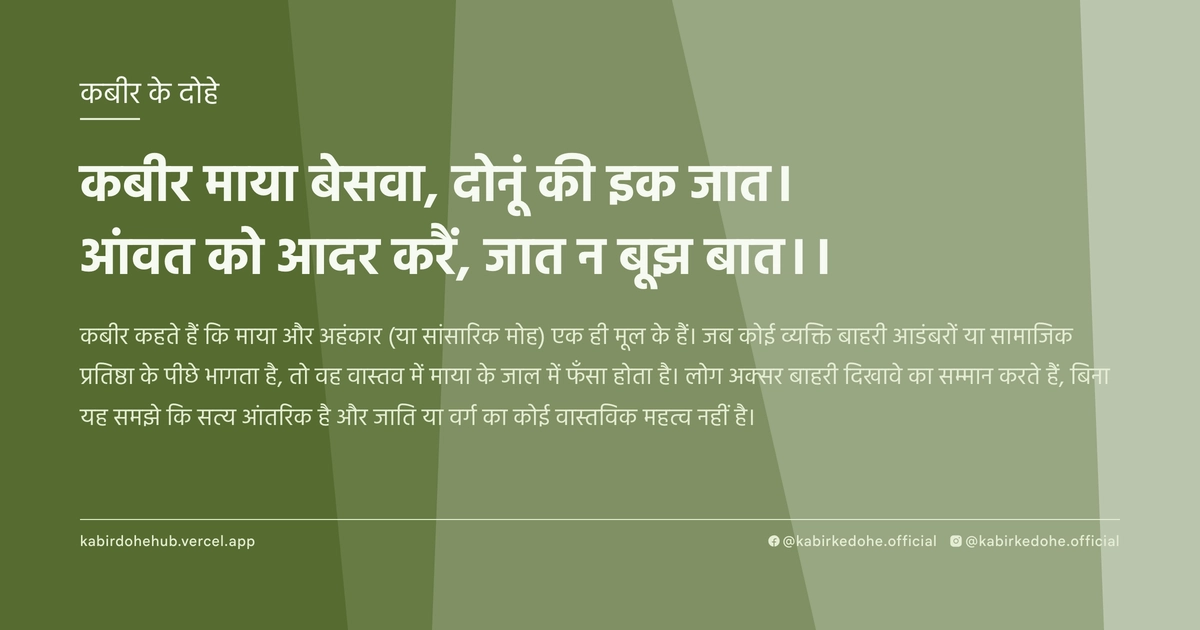
कबीर माया बेसवा, दोनूं की इक जात।
आंवत को आदर करैं, जात न बूझ बात।।
Kabir maya beswa, donun ki ik jaat. Aavant ko aadar karein, jaat na bujh baat.
इस पृष्ठ पर इस कबीर दोहे का अर्थ (meaning), हिंदी व्याख्या और अंग्रेज़ी अनुवाद, दार्शनिक विश्लेषण और व्यावहारिक जीवन सीख दी गई है। यह दोहा माया (Maya) विषय से जुड़ा है — Kabir doha meaning and explanation in Hindi and English.
अर्थ (Meaning):
कबीर कहते हैं कि माया और अहंकार (या सांसारिक मोह) एक ही मूल के हैं। जब कोई व्यक्ति बाहरी आडंबरों या सामाजिक प्रतिष्ठा के पीछे भागता है, तो वह वास्तव में माया के जाल में फँसा होता है। लोग अक्सर बाहरी दिखावे का सम्मान करते हैं, बिना यह समझे कि सत्य आंतरिक है और जाति या वर्ग का कोई वास्तविक महत्व नहीं है।
Kabir asserts that Maya (illusion) and the ego's attachments are essentially of the same nature. When a person pursues external pomp or social prestige, they are merely dancing to the tune of illusion. People tend to honor the outward appearance or status of a person, failing to realize that truth is internal and that caste or social labels hold no spiritual significance.
व्याख्या (Interpretation):
इस दोहे में 'बेसवा' शब्द माया के छलावे को दर्शाता है। कबीर यहाँ एक गहरे विरोधाभास को उजागर करते हैं: हम जिसे 'सम्मान' समझते हैं, वह अक्सर केवल माया का एक रूप होता है। यह निरगुण भक्ति का मार्ग है जहाँ ईश्वर को किसी आकार या सामाजिक श्रेणी में नहीं बांधा जा सकता। माया वह पर्दा है जो आत्मा और ब्रह्म के बीच अद्वैत के अनुभव को रोकता है। जब हम बाहरी पहचान (जात) को महत्व देते हैं, तो हम अपनी वास्तविक पहचान (आत्मा) को भूल जाते हैं। यह अज्ञानता ही मानवीय दुखों का मूल कारण है। अंततः, कबीर यह समझाते हैं कि सत्य को जानने के लिए सामाजिक श्रेणियों के भ्रम को तोड़ना अनिवार्य है।
In this couplet, the term 'Beswa' symbolizes the deceptive nature of Maya. Kabir highlights a profound paradox: what we perceive as 'honor' or 'status' is often merely a manifestation of illusion. This aligns with Nirgun Bhakti, where the Divine is formless and transcends all social hierarchies. Maya acts as the veil obscuring the non-dual realization of Atman and Brahman. When we prioritize external identities (caste or class), we alienate ourselves from our true essence. This ignorance is the root of human suffering. Ultimately, Kabir suggests that to realize the Truth, one must dismantle the illusion of social categorization and recognize the singular consciousness flowing through all.
दार्शनिक विश्लेषण (Philosophical Analysis):
कबीर का यह दोहा उनके युग के कठोर जातिगत भेदभाव और कर्मकांडों पर एक प्रहार है। उन्होंने देखा कि समाज व्यक्ति की योग्यता के बजाय उसकी जाति और बाहरी वेशभूषा को सम्मान देता है। यह दृष्टिकोण अद्वैत वेदांत के इस सिद्धांत से मेल खाता है कि केवल एक ही चेतना (ब्रह्म) सर्वव्यापी है, और विविधता केवल माया का खेल है। कबीर यहाँ सूफी मत के 'वहदत-अल-वजूद' (अस्तित्व की एकता) के करीब हैं, जहाँ खुदा और बंदे के बीच का अंतर मिट जाता है।
दार्शनिक स्तर पर, कबीर 'माया' को एक ऐसी शक्ति के रूप में देखते हैं जो मनुष्य को सत्य से दूर ले जाती है। जब हम किसी व्यक्ति की 'जात' या पद को देखकर उसे सम्मान देते हैं, तो हम वास्तव में उस व्यक्ति के भीतर की आत्मा का नहीं, बल्कि उसके द्वारा ओढ़े गए सामाजिक मुखौटे का सम्मान कर रहे होते हैं। यह अहंकार (Ego) को पुष्ट करता है और आध्यात्मिक प्रगति में बाधा डालता है।
कबीर का विरोध केवल सामाजिक नहीं, बल्कि मनोवैज्ञानिक भी है। वे समझाते हैं कि जब तक हम बाहरी पहचानों से चिपके रहेंगे, हम आंतरिक शांति प्राप्त नहीं कर सकते। यह 'अहं' का विसर्जन है, जहाँ व्यक्ति यह समझता है कि वह न तो अपनी जाति है, न अपना पेशा, और न ही अपनी सामाजिक प्रतिष्ठा।
वेदांत के अनुसार, माया वह शक्ति है जो असत्य को सत्य जैसा दिखाती है। सामाजिक प्रतिष्ठा इसी माया का एक सूक्ष्म रूप है। कबीर इस भ्रम को तोड़कर साधक को उस स्थिति में ले जाना चाहते हैं जहाँ केवल 'प्रेम' और 'सत्य' ही एकमात्र मापदंड हों।
अंत में, यह दोहा हमें सिखाता है कि वास्तविक सम्मान वह है जो आत्मा की शुद्धता के लिए हो, न कि उस बाहरी आवरण के लिए जिसे समाज ने थोपा है। यह कर्मकांडों के ऊपर चेतना की विजय का आह्वान है।
Kabir's couplet is a sharp critique of the rigid caste hierarchies and ritualistic superficiality of his era. He observed that society accorded respect based on caste and attire rather than intrinsic merit or spiritual purity. This perspective aligns with Advaita Vedanta, which posits that only one consciousness (Brahman) is omnipresent, and all perceived diversities are mere plays of Maya.
Philosophically, Kabir views Maya as the force that diverts the soul from the Truth. When we honor someone based on their 'caste' or rank, we are not respecting the soul within, but rather the social mask they wear. This reinforces the ego and creates a barrier to spiritual evolution.
Kabir's rebellion is not just social but psychological. He argues that as long as we cling to external identities, inner peace remains elusive. This is the process of 'ego-annihilation,' where the seeker realizes they are neither their caste, nor their profession, nor their social status.
According to Vedantic thought, Maya is the power that makes the unreal appear real. Social prestige is a subtle form of this illusion. Kabir seeks to shatter this delusion, guiding the seeker toward a state where only 'Love' and 'Truth' are the valid metrics of existence.
Ultimately, this verse teaches that genuine respect is reserved for the purity of the soul, not for the external coverings imposed by society. It is a call for the victory of consciousness over ritualism.
मूल संदेश (Core Message):
- बाहरी पहचान माया का एक पर्दा है।
- सच्चा सम्मान आत्मा की शुद्धता का होता है।
- जाति और वर्ग केवल सामाजिक भ्रम हैं।
- अहंकार का त्याग ही सत्य का द्वार है।
- अद्वैत का अर्थ है सबके भीतर एक ही नूर देखना।
- दिखावे से परे जाकर आंतरिक सत्य को खोजें।
- External identity is but a veil of Maya.
- True honor belongs to the purity of the soul.
- Caste and class are mere social delusions.
- Renunciation of ego is the gateway to Truth.
- Non-duality means seeing one light in all.
- Look beyond appearances to find the internal Truth.
व्यावहारिक उदाहरण (Practical Example):
वाराणसी के एक पुराने घाट पर रामदीन नाम का एक वृद्ध नाई रहता था। वह शहर के सबसे बड़े पंडितों और अमीरों की सेवा करता था। रामदीन को अपनी कला पर गर्व था, लेकिन उसे हमेशा यह महसूस होता था कि समाज उसे केवल उसकी जाति के कारण नीचा देखता है। वह अक्सर सोचता था कि क्या उसकी सेवा का मूल्य केवल उसकी जाति से तय होता है?
एक दिन, घाट पर एक फकीर आया जिसने फटे कपड़े पहने थे और जिसकी कोई पहचान नहीं थी। शहर के बड़े लोग उसे अनदेखा कर रहे थे, लेकिन रामदीन ने उसे देखा और उसकी आंखों में एक अजीब सी शांति महसूस की। रामदीन ने उसे अपने पास बुलाया और बिना किसी संकोच के उसकी सेवा की, उसे भोजन कराया और उसके चरणों में बैठ गया।
पंडितों ने रामदीन को टोका, 'तुम एक मामूली फकीर के आगे क्यों झुक रहे हो? उसकी जात क्या है?' रामदीन ने मुस्कुराते हुए जवाब दिया, 'महाराज, मैं अब तक आपकी जात और आपके कपड़ों का सम्मान करता था, लेकिन इस फकीर की आंखों में जो नूर है, वह किसी जात का मोहताज नहीं है।'
उस क्षण रामदीन को कबीर की बात याद आई कि माया केवल बाहरी आवरण है। उसने महसूस किया कि वह अब तक जिस 'सम्मान' की तलाश कर रहा था, वह वास्तव में एक भ्रम था। उसने अपनी जाति के प्रति अपनी हीन भावना को त्याग दिया क्योंकि उसने जान लिया था कि आत्मा की कोई जाति नहीं होती।
रामदीन का व्यवहार बदल गया। अब वह केवल अमीरों की चापलूसी नहीं करता था, बल्कि हर इंसान को समान दृष्टि से देखने लगा। उसने अपने काम को केवल पैसा कमाने का जरिया नहीं, बल्कि सेवा का माध्यम बना लिया।
उसकी इस निस्वार्थ सेवा ने धीरे-धीरे शहर के अन्य लोगों को भी प्रभावित किया। जो लोग पहले केवल ऊंच-नीच देखते थे, वे अब रामदीन की शांति और संतोष को देखने लगे।
रामदीन ने पाया कि जब उसने बाहरी पहचानों का मोह छोड़ दिया, तो उसे वह सम्मान मिला जो उसे कभी किसी पद या जाति से नहीं मिला था।
यह 'कबीर ट्विस्ट' था—जब उसने बाहरी पहचान (माया) को नकार दिया, तो उसे आंतरिक सत्य (ब्रह्म) का अनुभव हुआ और उसका जीवन पूर्णता से भर गया।
On an ancient ghat in Varanasi lived an elderly barber named Ramdeen. He served the city's most prominent priests and wealthy merchants. While Ramdeen took pride in his craft, he always felt the sting of social inferiority due to his caste. He often wondered if the value of his service was determined solely by his birth.
One day, a wandering dervish arrived at the ghat, clad in tattered rags with no known identity. The city's elite ignored him, but Ramdeen noticed a strange, profound peace in the dervish's eyes. Without hesitation, Ramdeen invited him, served him, fed him, and sat humbly at his feet.
The priests reprimanded him, asking, 'Why do you bow before a mere beggar? What is his caste?' Ramdeen smiled and replied, 'Masters, until now I respected your caste and your robes, but the light in this dervish's eyes belongs to no caste.'
In that moment, Ramdeen recalled Kabir's teaching that Maya is merely an external covering. He realized that the 'honor' he had been craving was a delusion. He shed his own feelings of inferiority, understanding that the soul possesses no caste.
Ramdeen's behavior transformed. He stopped flattering the wealthy and began viewing every human being with an equal eye. He turned his profession from a mere means of earning into a medium of selfless service.
His selfless approach gradually influenced others in the city. Those who previously saw only hierarchy began to notice the serenity and contentment radiating from Ramdeen.
Ramdeen discovered that by letting go of the obsession with external identities, he received a form of respect that no rank or caste could ever provide.
This was the 'Kabir Twist'—by rejecting the illusion of external identity (Maya), he experienced the internal Truth (Brahman), and his life was filled with genuine fulfillment.
अभ्यास मार्गदर्शन (Practice Guidance):
- दैनिक ध्यान: प्रतिदिन 20 मिनट मौन बैठें और विचार करें कि आपकी सामाजिक पहचान (नाम, पद, जाति) के बिना आप वास्तव में कौन हैं।
- आत्म-पूछताछ जर्नल: लिखें कि दिन भर में आपने कितनी बार किसी व्यक्ति का मूल्यांकन उसके कपड़ों, भाषा या पद के आधार पर किया।
- व्यवहार परिवर्तन: सप्ताह में एक बार ऐसे व्यक्ति की मदद करें या उससे बात करें जिसे समाज 'निम्न' मानता है, और उसमें दैवीय अंश खोजें।
- डायग्नोस्टिक चेकलिस्ट: क्या आप किसी की प्रशंसा उसकी उपलब्धियों के कारण करते हैं या उसके चरित्र के कारण? यदि उत्तर 'उपलब्धियों' है, तो आप अभी भी माया के प्रभाव में हैं।
- Daily Meditation: Sit in silence for 20 minutes daily and contemplate who you truly are stripped of your social identities (name, rank, caste).
- Self-Inquiry Journal: Document instances during the day where you judged a person based on their attire, language, or social status.
- Behavioral Shift: Once a week, consciously engage with or help someone marginalized by society, seeking the divine spark within them.
- Diagnostic Checklist: Do you admire someone for their achievements or for their character? If the answer is 'achievements,' you are still under the influence of Maya.
चिंतन प्रश्न (Reflection Questions):
- यदि आपकी सारी डिग्रियां और पद छीन लिए जाएं, तो आपकी पहचान क्या रह जाएगी?
- आप अपने जीवन में किन लोगों को 'अदृश्य' कर देते हैं और क्यों?
- क्या आपका 'सम्मान' वास्तव में सम्मान है, या केवल अपनी सामाजिक श्रेष्ठता की पुष्टि?
- आपके भीतर का कौन सा हिस्सा अभी भी जाति या वर्ग के पूर्वाग्रहों से संचालित है?
- क्या आप किसी ऐसे व्यक्ति से प्रेम कर सकते हैं जिसकी सामाजिक स्थिति आपसे बिल्कुल विपरीत हो?
- आपकी डिजिटल पहचान (सोशल मीडिया) आपकी वास्तविक आत्मा को कितना ढक रही है?
- If all your degrees and titles were stripped away, what would remain of your identity?
- Which people in your life do you render 'invisible,' and why?
- Is your 'respect' for others genuine, or is it merely a confirmation of your own social superiority?
- Which part of your subconscious is still driven by caste or class biases?
- Can you truly love someone whose social standing is the polar opposite of yours?
- To what extent does your digital identity (social media) obscure your authentic soul?