
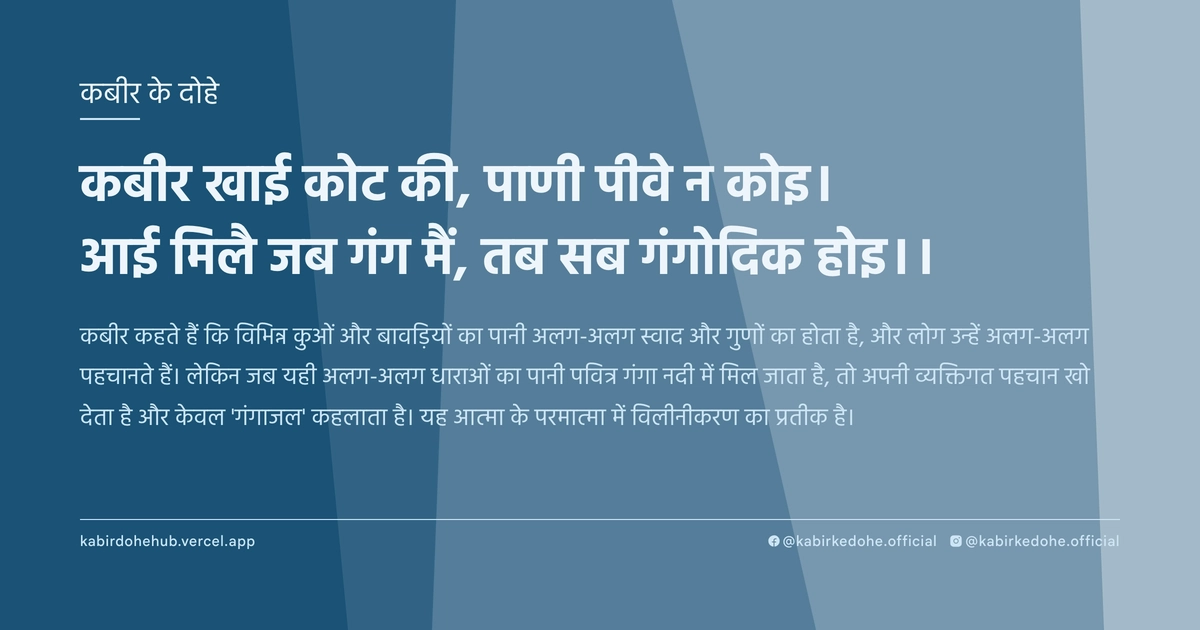
कबीर खाई कोट की, पाणी पीवे न कोइ।
आई मिलै जब गंग मैं, तब सब गंगोदिक होइ।।
Kabir khai kot ki, paani peeve na koi. Aai milai jab gang main, tab sab gangodik hoye.
इस पृष्ठ पर इस कबीर दोहे का अर्थ (meaning), हिंदी व्याख्या और अंग्रेज़ी अनुवाद, दार्शनिक विश्लेषण और व्यावहारिक जीवन सीख दी गई है। यह दोहा सत्संग (Satsang) विषय से जुड़ा है — Kabir doha meaning and explanation in Hindi and English.
अर्थ (Meaning):
कबीर कहते हैं कि विभिन्न कुओं और बावड़ियों का पानी अलग-अलग स्वाद और गुणों का होता है, और लोग उन्हें अलग-अलग पहचानते हैं। लेकिन जब यही अलग-अलग धाराओं का पानी पवित्र गंगा नदी में मिल जाता है, तो अपनी व्यक्तिगत पहचान खो देता है और केवल 'गंगाजल' कहलाता है। यह आत्मा के परमात्मा में विलीनीकरण का प्रतीक है।
Kabir observes that water from various wells and ponds is distinct in taste and identity, and people perceive them as separate entities. However, once these diverse streams merge into the holy Ganges, they lose their individual identities and are collectively known only as 'Ganges water.' This serves as a profound metaphor for the individual soul merging into the Universal Consciousness.
व्याख्या (Interpretation):
यहाँ 'खाई कोट' (कुएँ और बावड़ियाँ) मानवीय अहंकार, व्यक्तिगत पहचान और सांसारिक सीमाओं का प्रतीक हैं। जब तक आत्मा स्वयं को एक अलग इकाई मानती है, वह द्वैत (duality) में फंसी रहती है। 'गंग' यहाँ निर्गुण ब्रह्म या परम सत्य का प्रतिनिधित्व करती है। जब साधक अपनी सीमित पहचान (अहंकार) को त्याग कर परमात्मा में लीन होता है, तो वह 'गंगोदिक' हो जाता है, जिसका अर्थ है कि वह अब ईश्वर से अलग नहीं रहा। यह अद्वैत वेदांत के उस सिद्धांत को दर्शाता है जहाँ जीव और ब्रह्म की एकता स्थापित होती है। माया हमें यह विश्वास दिलाती है कि हम अलग हैं, लेकिन सत्य यह है कि हम उसी एक अनंत सागर की बूंदें हैं।
In this verse, 'khai kot' (wells and ponds) symbolize the human ego, individual identity, and the limitations of the material world. As long as the soul perceives itself as a separate entity, it remains trapped in duality. The 'Gang' (Ganges) represents the Nirgun Brahman or the Ultimate Truth. When the seeker relinquishes their limited identity (ego) and merges into the Divine, they become 'Gangodik,' meaning they are no longer distinct from God. This illustrates the core tenet of Advaita Vedanta, where the distinction between the Jiva (individual soul) and Brahman (Universal Soul) vanishes. Maya creates the illusion of separation, but the truth is that we are all droplets of the same infinite ocean.
दार्शनिक विश्लेषण (Philosophical Analysis):
कबीर का यह दोहा मध्यकालीन भारत के सामाजिक और धार्मिक संघर्षों के बीच एक सेतु का कार्य करता है। उस समय समाज जाति, पंथ और कर्मकांडों में गहराई से विभाजित था। कबीर ने 'कुओं' के माध्यम से उन संकीर्ण पहचानों पर प्रहार किया है जो मनुष्य को एक-दूसरे से अलग करती हैं। उनका दर्शन यह है कि बाहरी कर्मकांड और पहचान केवल भ्रम हैं।
अद्वैत वेदांत के दृष्टिकोण से, यह दोहा 'तत्वमसि' (वह तू ही है) की अवधारणा को पुष्ट करता है। जिस प्रकार पानी का गुण पानी ही रहता है चाहे वह कुएँ में हो या नदी में, उसी प्रकार आत्मा का मूल स्वरूप शुद्ध है, बस वह अपनी सीमित पहचान के कारण खुद को छोटा महसूस करता है। जब यह पहचान मिटती है, तो केवल अनंतता शेष रहती है।
सूफी मत के 'फना' (annihilation of self) के सिद्धांत के साथ इसका गहरा संबंध है। सूफीवाद में भी माना जाता है कि जब तक 'मैं' मौजूद है, 'वह' (ईश्वर) नहीं मिल सकता। अहंकार का मिटना ही परमात्मा के मिलन की पहली शर्त है। कबीर यहाँ यह समझा रहे हैं कि मोक्ष कोई बाहरी स्थान नहीं, बल्कि अपनी सीमित पहचान का विस्तार है।
कबीर ने ritualism (कर्मकांड) का विरोध किया क्योंकि वे जानते थे कि मंदिर, मस्जिद या तीर्थयात्राएं तब तक व्यर्थ हैं जब तक हृदय के भीतर का 'कुआँ' (अहंकार) नहीं सूखता। वे बाहरी पवित्रता के बजाय आंतरिक एकता पर बल देते हैं।
मनोवैज्ञानिक स्तर पर, यह दोहा व्यक्तित्व के विखंडन से समग्रता की ओर बढ़ने की यात्रा है। मनुष्य अक्सर अपनी सामाजिक भूमिकाओं (पिता, पुत्र, जाति, पद) को ही अपनी पहचान मान लेता है। कबीर हमें इन कृत्रिम सीमाओं से ऊपर उठकर उस सार्वभौमिक चेतना में विलीन होने का आह्वान करते हैं जहाँ कोई भेद नहीं रहता।
This couplet by Kabir acts as a bridge amidst the social and religious conflicts of medieval India, where society was deeply fragmented by caste, creed, and ritualism. Through the metaphor of 'wells,' Kabir attacks the narrow identities that separate humans from one another. His philosophy asserts that external rituals and labels are mere illusions.
From the perspective of Advaita Vedanta, this Doha reinforces the concept of 'Tat Tvam Asi' (Thou Art That). Just as the essence of water remains water whether it is in a well or a river, the fundamental nature of the soul is pure; it only feels limited due to its perceived separate identity. Once this identity dissolves, only infinity remains.
There is a profound connection here to the Sufi concept of 'Fana' (the annihilation of the self). In Sufism, it is believed that as long as the 'I' exists, the 'He' (God) cannot be realized. The erasure of the ego is the primary condition for union with the Divine. Kabir explains that liberation is not a destination, but the expansion of one's limited identity into the universal.
Kabir rejected ritualism because he understood that temples, mosques, or pilgrimages are futile unless the 'well' of ego within the heart runs dry. He emphasizes internal unity over external purity.
On a psychological level, this verse describes the journey from fragmentation to wholeness. Humans often mistake their social roles (father, son, caste, rank) for their true identity. Kabir calls us to rise above these artificial boundaries and merge into the universal consciousness where all distinctions cease to exist.
मूल संदेश (Core Message):
- अहंकार वह दीवार है जो हमें अनंतता से अलग करती है।
- विविधता केवल सतह पर है; मूल तत्व एक ही है।
- अपनी सीमित पहचान को मिटाना ही वास्तविक आध्यात्मिक उपलब्धि है।
- जब 'मैं' मिटता है, तब केवल 'वह' (परमात्मा) शेष रहता है।
- प्रेम वह गंगा है जिसमें सभी भेद समाप्त हो जाते हैं।
- The ego is the only wall separating us from the infinite.
- Diversity exists only on the surface; the essence is one.
- Erasing the limited self is the ultimate spiritual achievement.
- When the 'I' vanishes, only the 'Divine' remains.
- Love is the Ganges in which all distinctions dissolve.
व्यावहारिक उदाहरण (Practical Example):
वाराणसी के घाटों पर रहने वाली एक वृद्ध विधवा, जानकी, अपना पूरा जीवन धर्म और शुद्धता के कठोर नियमों का पालन करते हुए बिता चुकी थी। वह मानती थी कि कुछ लोग जन्म से ही पवित्र होते हैं और कुछ अपवित्र। वह अपने घर के पास के कुएँ का पानी केवल कुछ खास लोगों को छूने देने की अनुमति देती थी, क्योंकि उसे लगता था कि उसकी 'पवित्रता' उसके अलग रहने में है।
एक दिन, शहर में भीषण बाढ़ आई। गंगा का जलस्तर इतना बढ़ गया कि वह शहर की गलियों और सभी कुओं में समा गया। जानकी ने देखा कि जिस कुएँ के पानी को वह 'शुद्ध' मानकर दूसरों से बचाती थी, वह अब पूरी तरह से गंगा की लहरों में मिल चुका था।
उसने देखा कि बाढ़ के पानी में अमीर-गरीब, ऊंच-नीच और जाति का कोई भेद नहीं था। हर कोई उसी एक जलधारा में बह रहा था। उस क्षण उसे एक गहरा अहसास हुआ कि जिस 'शुद्धता' के अहंकार में उसने दूसरों को ठुकराया, वह वास्तव में उसकी अपनी सीमितता थी।
उसने महसूस किया कि वह खुद को एक अलग 'कुएँ' की तरह मानकर अलग-थलग रही थी, जबकि वह वास्तव में उसी अनंत गंगा का हिस्सा थी। उसका अहंकार, जो उसे दूसरों से श्रेष्ठ बनाता था, बाढ़ के पानी की तरह बह गया।
बाढ़ उतरने के बाद, जानकी बदल गई। उसने अपने घर के दरवाजे सबके लिए खोल दिए। अब वह पानी की शुद्धता कुएँ से नहीं, बल्कि उस प्रेम से देखती थी जो सबको जोड़ता है।
वह अब किसी को 'अपवित्र' नहीं कहती थी, क्योंकि उसे समझ आ गया था कि हम सब अंततः एक ही स्रोत से आए हैं और उसी में मिल जाएंगे।
उसने अपनी पूरी जमापूंजी उन लोगों की मदद में लगा दी जो बाढ़ में बेघर हो गए थे, चाहे उनकी जाति कुछ भी हो।
उसका जीवन अब एक अलग कुआँ नहीं, बल्कि एक बहती नदी बन गया था, जिसमें करुणा और समानता का प्रवाह था।
उसने पाया कि जब उसने अपनी 'विशेष' पहचान छोड़ी, तब उसे वास्तविक शांति मिली।
यह उसका 'कबीर ट्विस्ट' था—विनाश (बाढ़) ने उसे सृजन (प्रेम) का मार्ग दिखाया।
Janaki, an elderly widow living on the ghats of Varanasi, had spent her entire life adhering to strict rules of religion and purity. She believed that some people were born pure and others impure. She allowed only a few specific people to touch the water of the well near her house, believing her 'purity' lay in her separation.
One day, a massive flood hit the city. The water level of the Ganges rose so high that it overflowed into the streets and merged into every single well in the city. Janaki watched as the water she considered 'pure' and guarded so fiercely was now completely subsumed by the waves of the Ganges.
She noticed that in the floodwaters, there was no distinction between rich and poor, high and low, or caste. Everyone was floating in the same current. In that moment, she had a profound realization: the 'purity' she used to exclude others was actually her own limitation.
She realized she had been living like a separate 'well,' isolated and stagnant, while she was actually a part of the same infinite Ganges.
Her ego, which had made her feel superior, washed away just like the debris in the flood. After the waters receded, Janaki was a changed woman.
She opened the doors of her home to everyone. She no longer judged purity by the source of the water, but by the love that connects all beings.
She stopped calling anyone 'impure,' understanding that we all originate from the same source and will eventually return to it.
She spent her remaining savings helping those who had become homeless in the flood, regardless of their caste or background.
Her life was no longer a stagnant well, but a flowing river of compassion and equality.
She discovered that only when she let go of her 'special' identity did she find true peace.
This was her 'Kabir Twist'—where a disaster (the flood) revealed the path to creation (universal love).
अभ्यास मार्गदर्शन (Practice Guidance):
- दैनिक ध्यान: प्रतिदिन 20 मिनट मौन बैठें और कल्पना करें कि आपकी व्यक्तिगत पहचान (नाम, पद, संबंध) पानी की एक बूंद की तरह है जो धीरे-धीरे एक विशाल समुद्र में विलीन हो रही है।
- आत्म-पूछताछ जर्नल: प्रतिदिन एक ऐसी घटना लिखें जहाँ आपने अपने 'अहंकार' या 'श्रेष्ठता' के कारण किसी को छोटा महसूस कराया, और फिर विश्लेषण करें कि वह कौन सी 'कुएँ वाली पहचान' थी जिसने आपको अलग किया।
- व्यवहार परिवर्तन: सप्ताह में एक बार ऐसे व्यक्ति की सेवा करें जिससे आप वैचारिक या सामाजिक रूप से असहमत हों, यह महसूस करते हुए कि आप दोनों एक ही चेतना के अंश हैं।
- डायग्नोस्टिक चेकलिस्ट: क्या मैं अभी भी 'मैं' और 'तुम' के बीच अंतर महसूस कर रहा हूँ? क्या मेरी शांति दूसरों की स्थिति पर निर्भर है? यदि हाँ, तो मैं अभी भी 'कुएँ' में हूँ, 'गंगा' में नहीं।
- Daily Meditation: Sit in silence for 20 minutes daily and visualize your personal identity (name, rank, relationships) as a single drop of water slowly merging into a vast, infinite ocean.
- Self-Inquiry Journal: Each day, record an instance where you felt superior or used your ego to belittle someone. Analyze which 'well-like identity' created that separation.
- Behavioral Shift: Once a week, serve someone with whom you are ideologically or socially conflicted, consciously acknowledging that you are both fragments of the same consciousness.
- Diagnostic Checklist: Do I still feel a sharp distinction between 'I' and 'Thou'? Is my peace dependent on the status of others? If yes, I am still residing in the 'well' and have not yet reached the 'Ganges'.
चिंतन प्रश्न (Reflection Questions):
- मेरी वह कौन सी 'पहचान' है जिसे मैं सबसे अधिक पकड़ कर रखता हूँ, और यदि वह कल छिन जाए, तो मेरा अस्तित्व क्या बचेगा?
- मैं किन लोगों को अपने 'कुएँ' से बाहर रखता हूँ, और वास्तव में वह अलगाव मेरी सुरक्षा के लिए है या मेरे अहंकार की संतुष्टि के लिए?
- क्या मेरी धार्मिक या आध्यात्मिक मान्यताएं मुझे दूसरों से जोड़ रही हैं या मुझे एक 'विशेष' समूह का हिस्सा बनाकर अलग कर रही हैं?
- यदि मैं स्वयं को एक शरीर और नाम के बिना देखूँ, तो क्या मैं अभी भी अपने शत्रुओं से अलग हूँ?
- मेरे जीवन का वह कौन सा हिस्सा है जहाँ मैं अभी भी 'शुद्धता' और 'अशुद्धता' का भ्रम पाल रहा हूँ?
- Which 'identity' do I cling to most fiercely, and if it were stripped away tomorrow, what would remain of my existence?
- Whom do I keep outside the 'well' of my acceptance, and is that separation for my protection or for the satisfaction of my ego?
- Are my religious or spiritual beliefs connecting me to others, or are they isolating me by making me feel part of a 'special' group?
- If I view myself without a body or a name, am I still separate from my enemies?
- In which area of my life am I still harboring the illusion of 'purity' versus 'impurity'?