
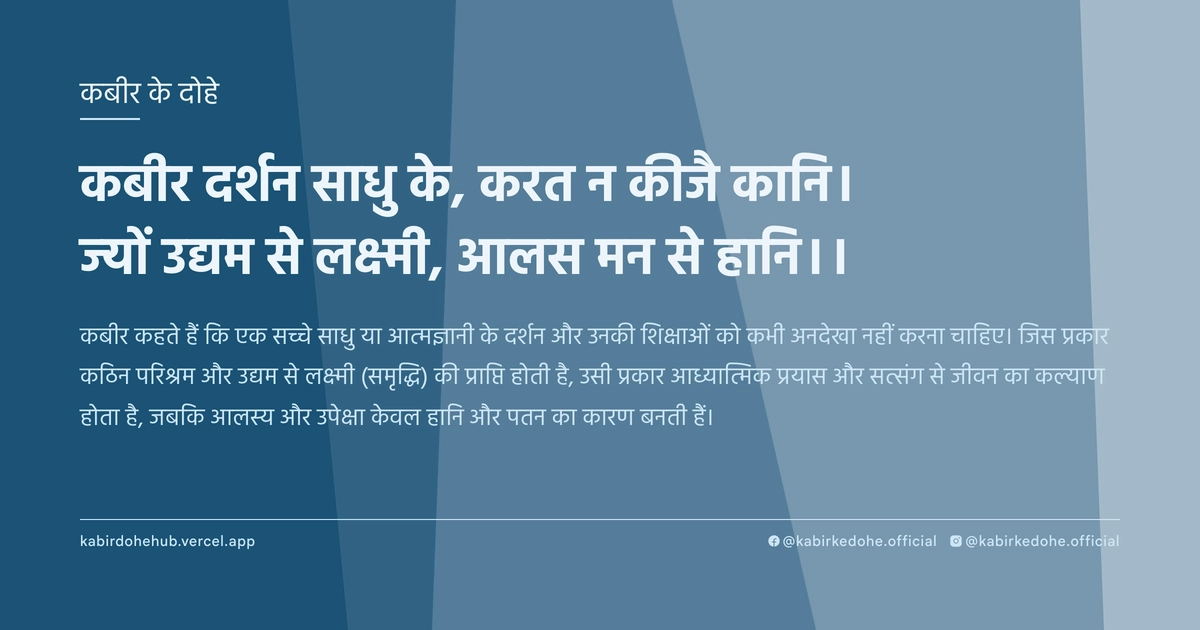
कबीर दर्शन साधु के, करत न कीजै कानि।
ज्यों उद्यम से लक्ष्मी, आलस मन से हानि।।
Kabir darshan sadhu ke, karat na keeje kaani. Jyon udyam se lakshmi, aalas man se haani.
इस पृष्ठ पर इस कबीर दोहे का अर्थ (meaning), हिंदी व्याख्या और अंग्रेज़ी अनुवाद, दार्शनिक विश्लेषण और व्यावहारिक जीवन सीख दी गई है। यह दोहा सत्संग (Satsang) विषय से जुड़ा है — Kabir doha meaning and explanation in Hindi and English.
अर्थ (Meaning):
कबीर कहते हैं कि एक सच्चे साधु या आत्मज्ञानी के दर्शन और उनकी शिक्षाओं को कभी अनदेखा नहीं करना चाहिए। जिस प्रकार कठिन परिश्रम और उद्यम से लक्ष्मी (समृद्धि) की प्राप्ति होती है, उसी प्रकार आध्यात्मिक प्रयास और सत्संग से जीवन का कल्याण होता है, जबकि आलस्य और उपेक्षा केवल हानि और पतन का कारण बनती हैं।
Kabir emphasizes that the sight and teachings of a true seeker or enlightened soul should never be ignored or treated with indifference. Just as diligent effort and hard work attract prosperity (Lakshmi), spiritual diligence and the company of the wise lead to liberation, while mental laziness and spiritual apathy result only in loss and stagnation.
व्याख्या (Interpretation):
शाब्दिक अर्थ में यह दोहा सत्संग के महत्व को बताता है, लेकिन गहरा आध्यात्मिक अर्थ 'साधु' को एक बाहरी व्यक्ति के बजाय 'अंतरात्मा की जागृति' के रूप में देखने में है। यहाँ 'कानि' करना या अनदेखा करना वास्तव में माया के प्रभाव में अपनी अंतर्दृष्टि को बंद करना है। यह निर्गुण भक्ति का मार्ग है जहाँ गुरु केवल एक माध्यम है जो साधक को उसके भीतर के ब्रह्म से मिलाता है। जब हम आध्यात्मिक ज्ञान के प्रति उदासीन होते हैं, तो हम अविद्या (अज्ञान) के जाल में फंसे रहते हैं। यह विरोधाभास है कि हम भौतिक समृद्धि के लिए तो उद्यम करते हैं, लेकिन आत्मा की मुक्ति के लिए आलसी रहते हैं। अंततः, यह दोहा आत्मा और परमात्मा के अद्वैत मिलन के लिए सक्रिय प्रयास की आवश्यकता पर बल देता है।
Literally, the verse advocates for the company of the wise, but metaphorically, the 'Sadhu' represents the awakened consciousness within. To 'ignore' (kaani) is to remain blinded by Maya, the cosmic illusion that veils the true self. In the context of Nirgun Bhakti, the enlightened guide is a catalyst who strips away the ego to reveal the formless Brahman. The central paradox highlighted is the human tendency to exert immense effort for material gain (Lakshmi) while remaining spiritually lethargic. This spiritual inertia is the primary obstacle to realizing the non-duality of Atman and Brahman. The verse suggests that liberation is not a passive occurrence but a result of conscious, disciplined effort toward self-realization.
दार्शनिक विश्लेषण (Philosophical Analysis):
कबीर का यह दोहा उस सामाजिक और धार्मिक परिवेश में लिखा गया था जहाँ कर्मकांड और बाहरी आडंबरों का बोलबाला था। कबीर ने मंदिर-मस्जिद के बजाय 'सत्य' के दर्शन पर जोर दिया। यह दर्शन अद्वैत वेदांत के करीब है, जहाँ यह माना जाता है कि ईश्वर कहीं बाहर नहीं बल्कि स्वयं के भीतर है, बशर्ते कि हम अपनी आध्यात्मिक जड़ता को त्याग दें।
सूफी मत के 'इश्क-ए-हकीकी' की तरह, यहाँ भी एक तीव्र तड़प और प्रयास की आवश्यकता है। कबीर का 'उद्यम' केवल शारीरिक श्रम नहीं, बल्कि 'साधना' है। वे जाति और धर्म के भेदों को नकारते हुए यह स्पष्ट करते हैं कि ज्ञान किसी विशेष वर्ग की जागीर नहीं है, बल्कि वह है जो जागृत है।
मनोवैज्ञानिक स्तर पर, यह दोहा 'संज्ञानात्मक विसंगति' (cognitive dissonance) को संबोधित करता है। मनुष्य जानता है कि सत्य क्या है, फिर भी वह उसे अनदेखा करता है। यह आलस्य वास्तव में अहंकार का एक रक्षा तंत्र है, जो उसे अपनी पहचान खोने के डर से रोकता है।
कबीर यहाँ 'लक्ष्मी' का उदाहरण देकर भौतिक और आध्यात्मिक जगत के बीच एक सेतु बनाते हैं। वे यह समझाते हैं कि यदि भौतिक जगत में परिणाम के लिए प्रयास आवश्यक है, तो सूक्ष्म जगत में भी चेतना के विस्तार के लिए अनुशासन अनिवार्य है।
अंततः, यह विश्लेषण हमें यह सिखाता है कि मोक्ष कोई उपहार नहीं है, बल्कि एक उपलब्धि है। यह उस 'शून्य' की प्राप्ति है जहाँ अहंकार का विलीनीकरण होता है और केवल शुद्ध चेतना शेष रहती है।
Kabir composed this verse during an era dominated by rigid ritualism and caste hierarchies. By emphasizing the 'darshan' of a Sadhu, he shifts the focus from institutional religion to the lived experience of truth. This aligns with Advaita Vedanta, which posits that the realization of the Self is the only true liberation, requiring the removal of the veil of ignorance.
Drawing parallels with Sufism's 'Ishq-e-Haqiqi' (Divine Love), Kabir suggests that spiritual attainment requires an active, burning longing. His concept of 'Udyam' (effort) is not merely physical labor but 'Sadhana'—the disciplined practice of mindfulness and devotion to the Formless (Nirgun).
From a psychological perspective, the 'laziness' Kabir refers to is a manifestation of the ego's resistance. The ego fears the annihilation that comes with true spiritual awakening; thus, it creates a state of apathy to protect its illusory identity.
By using 'Lakshmi' (the goddess of wealth) as an analogy, Kabir bridges the gap between the mundane and the transcendental. He argues that if humans are willing to struggle for fleeting material gains, they should be even more diligent in their pursuit of eternal truth.
Ultimately, this analysis reveals that liberation is not a passive gift of grace but a conscious achievement. It is the process of refining the soul until the distinction between the seeker and the sought vanishes into the Absolute.
मूल संदेश (Core Message):
- अध्यात्म में उदासीनता सबसे बड़ा अवरोध है।
- सत्य की पहचान के लिए सक्रिय प्रयास अनिवार्य है।
- बाहरी मार्गदर्शन को आंतरिक अनुभव में बदलें।
- मानसिक आलस्य आत्मा की सबसे बड़ी हानि है।
- जैसे कर्म से धन मिलता है, वैसे ही साधना से मुक्ति मिलती है।
- Indifference is the greatest obstacle in the spiritual path.
- Active effort is mandatory for the realization of Truth.
- Convert external guidance into internal experience.
- Mental lethargy is the soul's most significant loss.
- As action brings wealth, Sadhana brings liberation.
व्यावहारिक उदाहरण (Practical Example):
वाराणसी के एक पुराने घाट पर माधव नाम का एक वृद्ध बुनकर रहता था। वह अपनी कला में निपुण था, लेकिन उसका मन हमेशा इस बात से परेशान रहता था कि उसके जीवन का उद्देश्य क्या है। वह अक्सर घाट पर आने वाले संतों को देखता, लेकिन उनके उपदेशों को 'पुरानी बातें' कहकर अनदेखा कर देता था।
एक दिन एक फकीर उसके पास आया जिसने कोई लंबा भाषण नहीं दिया, बस माधव के कपड़े बुनने के तरीके को देखा और कहा, 'जैसे तुम धागों को जोड़कर एक सुंदर वस्त्र बनाते हो, वैसे ही तुम्हारा जीवन भी बिखरे हुए अनुभवों का एक ताना-बाना है, जिसे तुमने अभी तक जोड़ा नहीं है।'
माधव को पहली बार लगा कि कोई उसकी आंतरिक स्थिति को देख रहा है। उसने उस फकीर के साथ समय बिताना शुरू किया। फकीर ने उसे सिखाया कि ध्यान केवल आँखें बंद करना नहीं है, बल्कि अपने काम में पूरी जागरूकता लाना है।
शुरुआत में माधव को यह कठिन लगा। उसका मन पुराने ढर्रे पर चलने और आलस्य करने का आदी था। वह सोचता था कि ज्ञान अपने आप आ जाएगा, लेकिन फकीर ने उसे चेतावनी दी कि बिना प्रयास के ज्ञान केवल एक विचार है, अनुभव नहीं।
माधव ने अपने जीवन में एक बदलाव किया। उसने हर दिन सुबह एक घंटा मौन रहकर अपने भीतर के शोर को सुनना शुरू किया। उसने अपनी ईर्ष्या और क्रोध को पहचानना शुरू किया, जो उसके भीतर की 'हानि' थी।
धीरे-धीरे, माधव का काम और उसकी चेतना एक हो गए। अब वह केवल कपड़ा नहीं बुन रहा था, बल्कि हर धागे में वह उस अनंत परमात्मा का अनुभव करने लगा।
एक दिन उसके गाँव में एक बड़ा विवाद हुआ। माधव, जो पहले चुप रहता था, उसने अपनी शांत और संतुलित बुद्धि से उस विवाद को सुलझाया। लोग हैरान थे कि एक साधारण बुनकर इतना ज्ञानी कैसे हो गया।
माधव ने मुस्कुराकर कहा, 'मैंने बस उस सत्य को अनदेखा करना बंद कर दिया जिसे मैं सालों से देख रहा था। मैंने अपने आध्यात्मिक आलस्य को त्याग कर प्रयास करना शुरू किया।'
इस 'कबीर ट्विस्ट' ने माधव को एक कुशल कारीगर से एक आत्मज्ञानी व्यक्ति में बदल दिया। उसने महसूस किया कि जिस लक्ष्मी की वह तलाश कर रहा था, वह वास्तव में आंतरिक शांति और संतोष था।
उसकी कहानी यह सिद्ध करती है कि जब हम सही मार्गदर्शन को स्वीकार करते हैं और उस पर सक्रियता से कार्य करते हैं, तो जीवन का रूपांतरण निश्चित है।
On an ancient ghat in Varanasi lived an elderly weaver named Madhav. He was a master of his craft, yet his mind was perpetually troubled by a sense of purposelessness. He often watched the saints visiting the ghats but dismissed their teachings as 'outdated clichés,' ignoring the essence of their wisdom.
One day, a wandering fakir approached him. Instead of a long sermon, the fakir simply observed Madhav weaving and remarked, 'Just as you intertwine threads to create a beautiful cloth, your life is a warp and weft of scattered experiences that you have yet to weave together.'
For the first time, Madhav felt someone was seeing his internal state. He began spending time with the fakir, who taught him that meditation wasn't just about closing one's eyes, but about bringing total awareness into one's daily labor.
Initially, Madhav struggled. His mind was accustomed to the comfort of old habits and spiritual lethargy. He believed enlightenment would simply happen to him, but the fakir warned that without effort, knowledge remains a mere concept, never an experience.
Madhav decided to change. He began spending one hour every morning in silence, observing the noise within his own mind. He started identifying his jealousy and anger as the 'losses' (haani) mentioned in the wisdom.
Gradually, Madhav's work and his consciousness merged. He was no longer just weaving fabric; in every thread, he began to experience the presence of the Infinite.
One day, a fierce dispute erupted in his village. Madhav, who had previously remained passive, used his newfound inner balance and clarity to resolve the conflict peacefully. The villagers were astonished by the wisdom of a simple weaver.
Madhav smiled and said, 'I simply stopped ignoring the truth that had been standing before me for years. I traded my spiritual laziness for conscious effort.'
This 'Kabir Twist' transformed Madhav from a skilled artisan into a self-realized soul. He realized that the 'Lakshmi' he had been seeking was actually the wealth of inner peace and contentment.
His story proves that when we stop ignoring the guidance of the awakened and apply it with diligence, the transformation of life is inevitable.
अभ्यास मार्गदर्शन (Practice Guidance):
- दैनिक चिंतन: प्रतिदिन 15 मिनट इस प्रश्न पर विचार करें कि 'मैं किन सत्यों को जानबूझकर अनदेखा कर रहा हूँ ताकि मैं अपने कंफर्ट ज़ोन में रह सकूँ?'
- जागरूकता अभ्यास: दिन में तीन बार रुकें और स्वयं से पूछें, 'क्या इस समय मेरा मन आध्यात्मिक आलस्य में है या मैं सचेत रूप से वर्तमान में हूँ?'
- जर्नलिंग: अपनी उन आदतों की सूची बनाएं जो आपके मानसिक विकास में बाधा बन रही हैं और उन्हें 'आध्यात्मिक हानि' के रूप में चिह्नित करें।
- डायग्नोस्टिक चेकलिस्ट: यदि आप ज्ञान को केवल पढ़ते हैं लेकिन व्यवहार में नहीं लाते, या यदि आप गुरु के शब्दों को तर्क से काटने की कोशिश करते हैं, तो आप 'कानि' (अनदेखा) कर रहे हैं।
- Daily Contemplation: Spend 15 minutes reflecting on the question: 'What truths am I deliberately ignoring just to stay within my comfort zone?'
- Awareness Practice: Three times a day, pause and ask yourself: 'Is my mind currently in a state of spiritual lethargy, or am I consciously present?'
- Journaling: List the habits that hinder your mental and spiritual growth and categorize them as 'spiritual losses' (haani).
- Diagnostic Checklist: You are 'ignoring' (kaani) the truth if you consume spiritual knowledge intellectually but fail to apply it behaviorally, or if you use logic to dismiss intuitive wisdom.
चिंतन प्रश्न (Reflection Questions):
- मैं अपनी बौद्धिक श्रेष्ठता का उपयोग सत्य को स्वीकार करने के लिए करता हूँ या उसे नकारने के लिए?
- मेरे जीवन में 'आध्यात्मिक आलस्य' किस रूप में प्रकट होता है—प्रोक्रैस्टिनेशन या अहंकार के रूप में?
- क्या मैं केवल उन बातों को सुनता हूँ जो मेरी मौजूदा मान्यताओं की पुष्टि करती हैं?
- यदि मेरा अहंकार पूरी तरह मिट जाए, तो मेरे व्यक्तित्व का कौन सा हिस्सा बचेगा?
- मैं भौतिक समृद्धि के लिए जितना प्रयास करता हूँ, क्या मैं अपनी चेतना के उत्थान के लिए भी उतना ही समर्पित हूँ?
- Do I use my intellectual superiority to embrace the truth or to dismiss it?
- In what form does 'spiritual lethargy' manifest in my life—as procrastination or as ego?
- Do I only listen to voices that confirm my existing biases and beliefs?
- If my ego were to be completely annihilated, what part of my identity would remain?
- Am I as dedicated to the elevation of my consciousness as I am to the pursuit of material prosperity?