
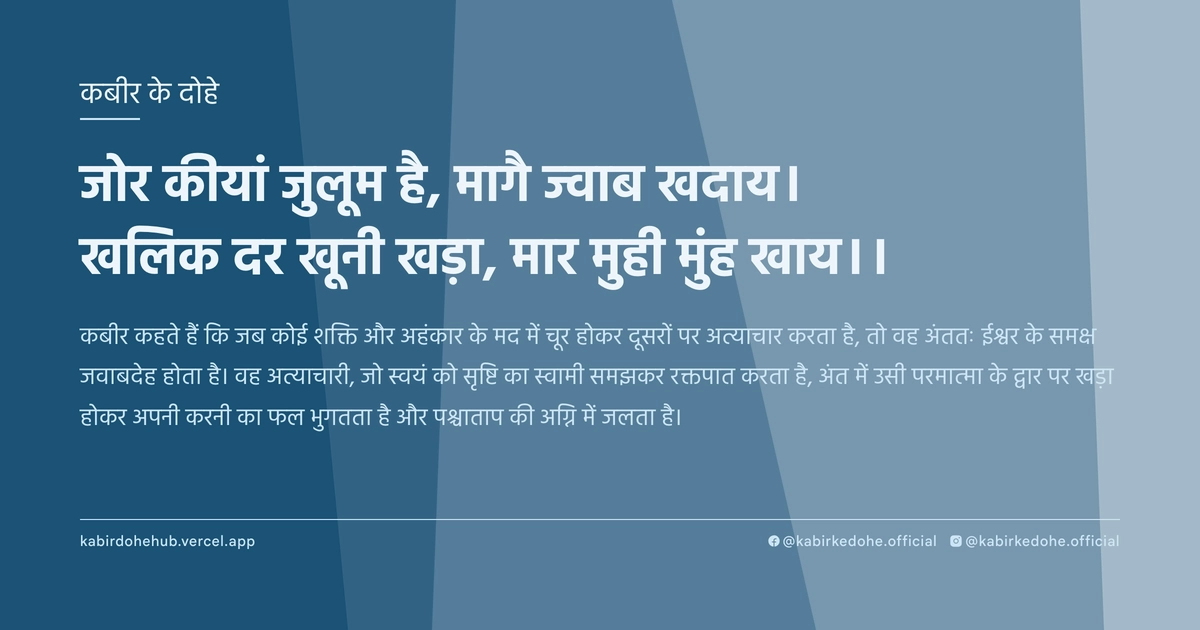
जोर कीयां जुलूम है, मागै ज्वाब खदाय।
खलिक दर खूनी खड़ा, मार मुही मुंह खाय।।
Jor kiya julum hai, maagai jawab khaday. Khalik dar khooni khada, maar muhi munh khay.
इस पृष्ठ पर इस कबीर दोहे का अर्थ (meaning), हिंदी व्याख्या और अंग्रेज़ी अनुवाद, दार्शनिक विश्लेषण और व्यावहारिक जीवन सीख दी गई है। यह दोहा कर्म (Karma) विषय से जुड़ा है — Kabir doha meaning and explanation in Hindi and English.
अर्थ (Meaning):
कबीर कहते हैं कि जब कोई शक्ति और अहंकार के मद में चूर होकर दूसरों पर अत्याचार करता है, तो वह अंततः ईश्वर के समक्ष जवाबदेह होता है। वह अत्याचारी, जो स्वयं को सृष्टि का स्वामी समझकर रक्तपात करता है, अंत में उसी परमात्मा के द्वार पर खड़ा होकर अपनी करनी का फल भुगतता है और पश्चाताप की अग्नि में जलता है।
Kabir asserts that when one commits atrocities driven by power and arrogance, they must eventually answer to the Divine. The oppressor, who stands as a murderer at the door of the Creator, believing themselves to be the master of existence, ultimately finds themselves consumed by the consequences of their own cruelty and the silence of divine justice.
व्याख्या (Interpretation):
यह दोहा सत्ता के अहंकार और दैवीय न्याय के बीच के अंतर्विरोध को दर्शाता है। 'जोर' यहाँ केवल शारीरिक शक्ति नहीं, बल्कि 'अहंकार' (Ego) का प्रतीक है जो मनुष्य को यह भ्रम देता है कि वह ईश्वर से ऊपर है। निरगुण भक्ति के परिप्रेक्ष्य में, यह 'माया' का चरम रूप है जहाँ व्यक्ति स्वयं को कर्ता मान बैठता है। जब 'खूनी' (अत्याचारी) 'खलिक' (सृष्टिकर्ता) के द्वार पर खड़ा होता है, तो यह आत्मा और परमात्मा के मिलन की वह विडंबना है जहाँ केवल पाप का बोझ शेष रहता है। यह अद्वैत वेदांत के उस सत्य को उजागर करता है कि चूंकि हर जीव में एक ही चेतना है, इसलिए दूसरे को कष्ट देना वास्तव में स्वयं को ही चोट पहुँचाना है। अंततः, यह दोहा चेतावनी देता है कि सांसारिक शक्ति क्षणभंगुर है, जबकि कर्मों का हिसाब शाश्वत है।
This couplet illustrates the contradiction between worldly power and divine justice. 'Jor' (force) here symbolizes not just physical strength, but the 'Ahamkara' (ego) that deludes a human into believing they are superior to the Divine. In the context of Nirgun Bhakti, this is the peak of 'Maya' (illusion), where the individual falsely assumes the role of the sole doer. When the 'khooni' (murderer/oppressor) stands at the door of the 'Khalik' (Creator), it represents the tragic irony of the soul meeting the Absolute while burdened by sin. It echoes Advaita Vedanta's truth: since the same consciousness resides in all, harming another is fundamentally harming oneself. Ultimately, the verse warns that earthly power is ephemeral, while the karmic ledger is eternal and inescapable.
दार्शनिक विश्लेषण (Philosophical Analysis):
कबीर का यह दोहा उनके युग के सामाजिक और धार्मिक पाखंड के विरुद्ध एक तीव्र प्रहार है। उस समय सत्ता का केंद्रीकरण और धार्मिक कट्टरता चरम पर थी, जहाँ शासक और पुरोहित वर्ग अपनी शक्ति का उपयोग निर्बलों के दमन के लिए करते थे। कबीर यहाँ 'खलिक' शब्द का प्रयोग कर सूफी प्रभाव को दर्शाते हैं, जो ईश्वर को एक न्यायप्रिय सृष्टिकर्ता के रूप में प्रस्तुत करता है।
दार्शनिक स्तर पर, यह दोहा 'कर्म' के सिद्धांत और 'ईश्वरीय न्याय' के समन्वय को दर्शाता है। कबीर यह स्पष्ट करते हैं कि कोई भी व्यक्ति, चाहे वह कितना भी शक्तिशाली क्यों न हो, ब्रह्मांडीय न्याय (Cosmic Justice) से ऊपर नहीं है। यह विचार अद्वैत वेदांत के इस सिद्धांत से मेल खाता है कि जब व्यक्ति द्वैत (Duality) में जीता है और दूसरों को 'पराया' मानकर प्रताड़ित करता है, तो वह वास्तव में अपनी ही पूर्णता को खंडित कर रहा होता है।
यहाँ 'जुलूम' केवल शारीरिक हिंसा नहीं है, बल्कि यह मानसिक और आध्यात्मिक हिंसा भी है। जब मनुष्य अपनी वासनाओं और अहंकार के अधीन होकर दूसरों के अधिकारों का हनन करता है, तो वह अपनी आत्मा का पतन करता है। कबीर का उद्देश्य डराना नहीं, बल्कि यह बोध कराना है कि अहंकार का अंत अत्यंत कष्टदायक होता है।
सूफी मत के 'फना' (अहंकार का विनाश) की अवधारणा यहाँ नकारात्मक रूप में दिखती है। जहाँ एक साधक प्रेम से अपना अहंकार मिटाता है, वहीं एक अत्याचारी का अहंकार दैवीय दंड के माध्यम से जबरन तोड़ा जाता है। यह एक मनोवैज्ञानिक चेतावनी है कि बाहरी विजय आंतरिक शून्यता को नहीं भर सकती।
अंततः, कबीर ritualism (कर्मकांड) को नकारते हुए यह संदेश देते हैं कि मंदिर या मस्जिद जाने से अधिक महत्वपूर्ण यह है कि आप जीवित मनुष्यों के साथ कैसा व्यवहार करते हैं। यदि हृदय में करुणा नहीं है, तो सारी इबादत व्यर्थ है। यह दोहा मानवतावाद और आध्यात्मिक जवाबदेही का एक उत्कृष्ट संगम है।
Kabir's couplet is a fierce assault on the social and religious hypocrisy of his era. During his time, the centralization of power and religious bigotry were rampant, with rulers and priestly classes using their authority to oppress the marginalized. By using the word 'Khalik' (Creator), Kabir integrates Sufi influence, presenting God as a just and omniscient judge.
Philosophically, this verse synthesizes the law of Karma with Divine Justice. Kabir clarifies that no individual, regardless of their worldly stature, is exempt from Cosmic Justice. This aligns with Advaita Vedanta's premise: when a person lives in 'Duality' and perceives others as separate entities to be exploited, they are fundamentally fracturing their own wholeness.
'Julum' (oppression) here transcends mere physical violence; it encompasses mental and spiritual cruelty. When a human, driven by lust for power and ego, violates the rights of others, they precipitate the fall of their own soul. Kabir's intent is not merely to instill fear, but to awaken the realization that the collapse of the ego is inevitable and painful if not achieved through love.
The Sufi concept of 'Fana' (annihilation of the self) appears here in a negative light. While a seeker dissolves their ego through love and devotion, the oppressor's ego is forcibly shattered by divine retribution. This serves as a psychological warning that external conquests cannot fill the void of internal emptiness.
Ultimately, by rejecting ritualism, Kabir emphasizes that the quality of one's interaction with fellow humans is more significant than the performance of religious rites. If the heart lacks compassion, all prayers are futile. This couplet is a masterful convergence of humanism and spiritual accountability.
मूल संदेश (Core Message):
- अहंकार एक ऐसा पर्दा है जो हमें सत्य और करुणा से दूर करता है।
- सांसारिक शक्ति क्षणभंगुर है, लेकिन नैतिक कर्म शाश्वत होते हैं।
- दूसरों का दमन वास्तव में अपनी ही आत्मा का विनाश है।
- ईश्वरीय न्याय से बचना असंभव है, चाहे आप कितने भी शक्तिशाली हों।
- सच्ची मुक्ति अहंकार के विसर्जन और सेवा के मार्ग में निहित है।
- Ego is a veil that distances us from truth and compassion.
- Worldly power is ephemeral, but moral actions are eternal.
- Oppressing others is, in reality, the destruction of one's own soul.
- Divine justice is inescapable, regardless of one's earthly power.
- True liberation lies in the dissolution of ego and the path of service.
व्यावहारिक उदाहरण (Practical Example):
एक समय की बात है, राजस्थान के एक छोटे से गाँव में राम सिंह नाम का एक शक्तिशाली जमींदार रहता था। राम सिंह का प्रभाव इतना था कि गाँव का हर व्यक्ति उससे डरता था। वह गरीब किसानों की जमीनें हड़प लेता और जो विरोध करता, उसे समाज से बहिष्कृत या शारीरिक दंड देता। वह मानता था कि उसकी शक्ति ही उसका धर्म है और ईश्वर केवल अमीरों की सुनता है।
उसी गाँव में एक बूढ़ा कुम्हार रहता था, जो मिट्टी के बर्तन बनाता था। वह शांत स्वभाव का था और कबीर के दोहों का अनुयायी था। जब राम सिंह ने कुम्हार की छोटी सी झोपड़ी को भी हड़पने की कोशिश की, तो कुम्हार ने केवल इतना कहा, "मालिक, मिट्टी का शरीर है और मिट्टी में ही मिलना है, पर याद रखियेगा कि हिसाब उस खलिक के यहाँ होगा जहाँ कोई वकील नहीं चलता।"
राम सिंह इस बात पर जोर से हँसा और कुम्हार को अपमानित कर वहाँ से चला गया। समय बीता, और राम सिंह का अहंकार और बढ़ता गया। उसने अपने ही बेटों और करीबियों को सत्ता के लालच में एक-दूसरे के खिलाफ खड़ा कर दिया। धीरे-धीरे उसकी संपत्ति और प्रभाव घटने लगा, और वह एक गंभीर बीमारी की चपेट में आ गया जिसने उसे लकवाग्रस्त कर दिया।
अब वह बिस्तर पर पड़ा था, और जिन लोगों पर उसने जुल्म किया था, उनमें से कोई भी उसकी देखभाल के लिए नहीं आया। उसके अपने बेटे उसकी संपत्ति के लिए लड़ रहे थे और उसे एक बोझ समझने लगे। वह पूरी तरह अकेला हो गया, ठीक वैसे ही जैसे वह दूसरों को अकेला छोड़ देता था।
एक रात, जब वह दर्द से कराह रहा था, उसे कुम्हार की वह बात याद आई। उसे महसूस हुआ कि उसकी सारी 'जोर' (शक्ति) बेकार गई। उसने महसूस किया कि उसने केवल दूसरों का खून नहीं बहाया, बल्कि अपनी आत्मा को भी मार डाला था।
वह चीख-चीख कर माफी माँगना चाहता था, लेकिन उसकी आवाज नहीं निकल रही थी। उसे ऐसा लगा जैसे वह वास्तव में उस 'खलिक' के द्वार पर खड़ा है, जहाँ उसके पास देने के लिए कुछ नहीं था, केवल उसके पापों का बोझ था।
उसने अपनी बची हुई मानसिक शक्ति से कुम्हार को बुलवाया। जब कुम्हार आया, तो राम सिंह की आँखों में आँसू थे। उसने अपनी सारी बची हुई जमीन गाँव के गरीबों के नाम करने का फैसला किया।
यह 'कबीर ट्विस्ट' था—अहंकार का पूर्ण विनाश। राम सिंह ने समझा कि असली शक्ति दूसरों को झुकाने में नहीं, बल्कि दूसरों की सेवा में है। उसने अपने अंतिम दिनों में करुणा को अपनाया, जिससे उसे वह मानसिक शांति मिली जो उसे सत्ता के शिखर पर कभी नहीं मिली थी।
Once, in a small village in Rajasthan, lived a powerful landlord named Ram Singh. His influence was so absolute that every villager trembled in his presence. He seized the lands of poor farmers and subjected anyone who dared resist to social boycott or physical torture. He believed his power was his religion and that God only listened to the wealthy.
In the same village lived an elderly potter who crafted clay vessels. He was a man of peace and a follower of Kabir's teachings. When Ram Singh attempted to seize the potter's tiny hut, the old man simply said, "Master, this body is made of clay and shall return to clay, but remember that the final account will be settled with the Creator, where no worldly lawyer can intervene."
Ram Singh laughed derisively and left, leaving the potter humiliated. As time passed, Ram Singh's arrogance grew. In his greed, he pitted his own sons and associates against one another. Gradually, his wealth and influence waned, and he was struck by a severe illness that left him paralyzed.
Now bedridden, not a single person he had oppressed came to tend to him. His own sons fought over his remaining assets, viewing him as a mere burden. He became utterly alone, mirroring the loneliness he had imposed on others.
One night, while writhing in pain, the potter's words echoed in his mind. He realized that all his 'Jor' (force) had been futile. He understood that he hadn't just shed the blood of others, but had murdered his own soul in the process.
He wanted to scream for forgiveness, but his voice failed him. He felt as if he were truly standing at the door of the 'Khalik' (Creator), possessing nothing but the heavy burden of his sins.
Using the last of his mental strength, he summoned the potter. When the potter arrived, Ram Singh's eyes were filled with tears. He decided to bequeath all his remaining land to the village poor.
This was the 'Kabir Twist'—the total annihilation of the ego. Ram Singh realized that true power lies not in subjugating others, but in serving them. In his final days, he embraced compassion, finding a mental peace that had eluded him even at the peak of his power.
अभ्यास मार्गदर्शन (Practice Guidance):
- दैनिक आत्म-निरीक्षण: प्रतिदिन 15 मिनट मौन बैठें और विचार करें कि क्या आज आपने अपनी शक्ति या पद का उपयोग किसी को छोटा महसूस कराने के लिए किया है।
- करुणा का अभ्यास: सप्ताह में एक बार ऐसे व्यक्ति की सहायता करें जो आपसे सामाजिक या आर्थिक रूप से कमजोर हो, बिना किसी अपेक्षा के।
- जर्नलिंग प्रॉम्प्ट: लिखें कि आपके जीवन में 'अहंकार' ने किस रूप में प्रवेश किया है (जैसे- ज्ञान का अहंकार, पद का अहंकार) और यह आपको दूसरों से कैसे अलग करता है।
- डायग्नोस्टिक चेकलिस्ट: यदि आप दूसरों की गलती पर तुरंत क्रोधित होते हैं या अपनी सफलता का श्रेय केवल स्वयं को देते हैं, तो यह संकेत है कि 'जोर' (अहंकार) अभी भी हावी है।
- Daily Self-Inquiry: Spend 15 minutes in silence daily, reflecting on whether you used your power or position to make someone feel inferior today.
- Practice of Compassion: Once a week, help someone who is socially or economically weaker than you, without any expectation of reward.
- Journaling Prompt: Write about how 'Ego' has entered your life (e.g., ego of knowledge, ego of status) and how it separates you from others.
- Diagnostic Checklist: If you react with immediate anger to others' mistakes or attribute all your success solely to yourself, it is a sign that 'Jor' (ego) is still dominating.
चिंतन प्रश्न (Reflection Questions):
- मेरे जीवन का वह कौन सा हिस्सा है जहाँ मैं 'शक्ति' के मद में दूसरों की आवाज़ को अनसुना कर देता हूँ?
- यदि आज मेरा सारा सामाजिक पद और संपत्ति छीन ली जाए, तो मेरी वास्तविक पहचान क्या रह जाएगी?
- क्या मैं वास्तव में दूसरों के प्रति दयालु हूँ, या मेरी दया केवल मेरी श्रेष्ठता की भावना को संतुष्ट करती है?
- मेरे भीतर का 'खूनी' (क्रूरता) किन परिस्थितियों में जागता है और मैं उसे कैसे नियंत्रित कर सकता हूँ?
- क्या मैं अपनी डिजिटल पहचान (Social Media Ego) के माध्यम से दूसरों को नीचा दिखाने का प्रयास करता हूँ?
- In which area of my life do I ignore others' voices due to the intoxication of 'power'?
- If all my social status and wealth were stripped away today, what would remain of my true identity?
- Am I truly compassionate, or does my kindness merely satisfy a feeling of superiority?
- Under what circumstances does the 'murderer' (cruelty) within me awaken, and how can I control it?
- Do I attempt to belittle others through my digital identity (Social Media Ego)?