
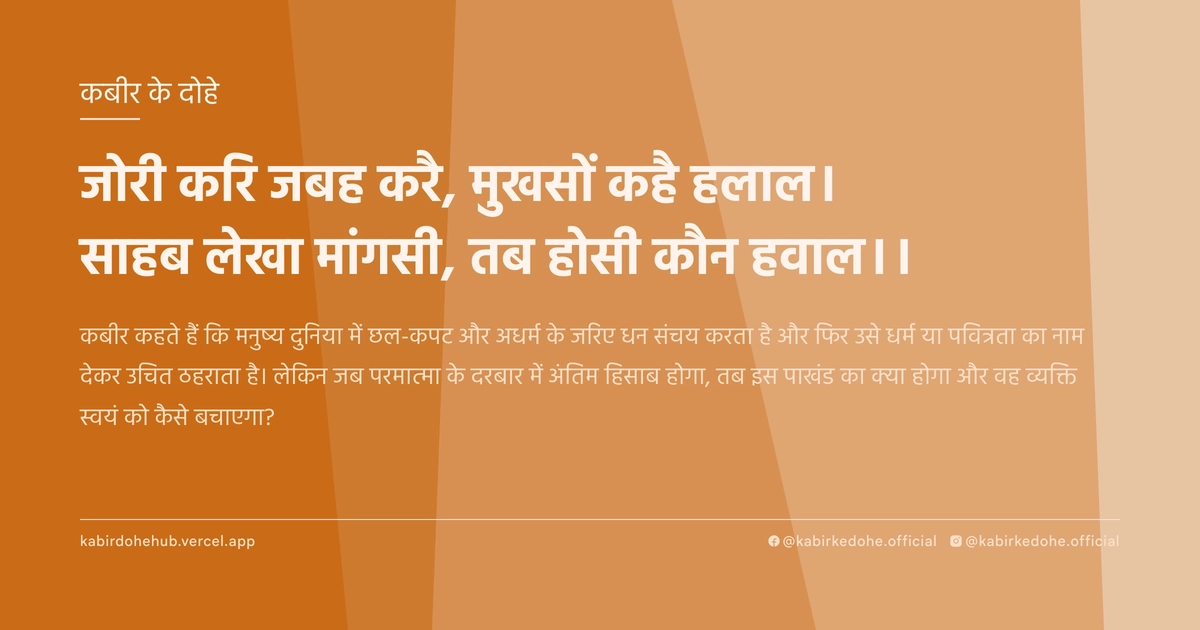
जोरी करि जबह करै, मुखसों कहै हलाल।
साहब लेखा मांगसी, तब होसी कौन हवाल।।
Jori kari jabah karai, mukhson kahai halal. Sahab lekha maangsi, tab hosi kaun haval.
इस पृष्ठ पर इस कबीर दोहे का अर्थ (meaning), हिंदी व्याख्या और अंग्रेज़ी अनुवाद, दार्शनिक विश्लेषण और व्यावहारिक जीवन सीख दी गई है। यह दोहा कर्म (Karma) विषय से जुड़ा है — Kabir doha meaning and explanation in Hindi and English.
अर्थ (Meaning):
कबीर कहते हैं कि मनुष्य दुनिया में छल-कपट और अधर्म के जरिए धन संचय करता है और फिर उसे धर्म या पवित्रता का नाम देकर उचित ठहराता है। लेकिन जब परमात्मा के दरबार में अंतिम हिसाब होगा, तब इस पाखंड का क्या होगा और वह व्यक्ति स्वयं को कैसे बचाएगा?
Kabir asserts that a person accumulates wealth through deceit and unethical means, yet publicly claims it to be 'halal' or righteous. He warns that when the Supreme Being demands an account of one's deeds, the facade of piety will crumble, leaving the soul in a state of utter desperation and ruin.
व्याख्या (Interpretation):
इस दोहे का शाब्दिक अर्थ है कि जो व्यक्ति दूसरों को ठगकर धन कमाता है और फिर उसे पवित्र बताता है, वह ईश्वर के न्याय से बच नहीं पाएगा। रूपकात्मक स्तर पर, 'जोरी' केवल धन नहीं बल्कि अहंकार और माया का संचय है। यह निर्गुण भक्ति के उस सिद्धांत को दर्शाता है जहाँ बाहरी दिखावा शून्य है और केवल आंतरिक सत्य मायने रखता है। यहाँ 'हलाल' शब्द का प्रयोग धार्मिक पाखंड पर प्रहार करने के लिए किया गया है, जो यह बताता है कि मनुष्य अपनी चेतना को धोखा दे सकता है, लेकिन ब्रह्मांडीय न्याय (Cosmic Justice) से नहीं। यह अद्वैत वेदांत के उस सत्य की ओर संकेत करता है कि आत्मा का वास्तविक स्वरूप शुद्ध है, लेकिन जब वह माया और लोभ के जाल में फंसकर झूठ का सहारा लेती है, तो वह स्वयं को परमात्मा से दूर कर लेती है।
Literally, the verse warns against the hypocrisy of claiming unethical gains as righteous. Metaphorically, 'Jori' represents not just material wealth, but the accumulation of ego and the illusions of Maya. This aligns with Nirgun Bhakti, where external rituals and claims of piety are dismissed in favor of internal truth. The use of 'halal' serves as a critique of religious hypocrisy, suggesting that while one can deceive society or the self, they cannot deceive the Universal Consciousness. In the context of Advaita Vedanta, the soul's true nature is pure, but when it entangles itself in greed and falsehood, it creates a distorted identity. The 'account' mentioned is the inevitable realization of the gap between one's projected image and their actual spiritual vibration, leading to a profound existential crisis upon awakening.
दार्शनिक विश्लेषण (Philosophical Analysis):
कबीर का यह दोहा उनके युग के सामाजिक और धार्मिक पाखंड के विरुद्ध एक तीव्र विद्रोह है। 15वीं शताब्दी में, धर्म का उपयोग अक्सर शोषण को वैध बनाने के लिए किया जाता था। कबीर ने देखा कि कैसे लोग मंदिर और मस्जिद में दान देते थे, जबकि वह धन गरीबों के खून-पसीने से कमाया गया होता था। यह विश्लेषण स्पष्ट करता है कि कबीर केवल आर्थिक चोरी की बात नहीं कर रहे, बल्कि 'आध्यात्मिक चोरी' की बात कर रहे हैं—जहाँ व्यक्ति अपनी बुराई को धर्म की चादर से ढकता है।
दार्शनिक रूप से, यह सूफी मत के 'नफ्स' (अहंकार) के विनाश और अद्वैत वेदांत के 'माया' के निवारण से जुड़ा है। जब तक मनुष्य यह मानता है कि वह अपनी चालाकी से सत्य को बदल सकता है, वह द्वैत में फंसा रहता है। कबीर का तर्क है कि सत्य (Satya) अपरिवर्तनीय है। जो कर्म अधर्म से प्रेरित हैं, उन्हें किसी भी धार्मिक लेबल से पवित्र नहीं किया जा सकता।
यहाँ 'साहब' शब्द का प्रयोग उस निराकार ईश्वर के लिए किया गया है जो किसी धर्म या संप्रदाय का नहीं, बल्कि केवल सत्य का न्यायकर्ता है। यह विचार कि हर क्रिया का एक परिणाम होता है, कर्म सिद्धांत (Law of Karma) की पुष्टि करता है। कबीर यह समझाते हैं कि बाहरी शुद्धता (जैसे स्नान या मंत्र जाप) आंतरिक अशुद्धता को नहीं मिटा सकती।
मनोवैज्ञानिक स्तर पर, यह दोहा 'संज्ञानात्मक विसंगति' (Cognitive Dissonance) को संबोधित करता है। मनुष्य अपने गलत कार्यों को सही ठहराने के लिए तर्क गढ़ता है ताकि वह मानसिक शांति पा सके। कबीर इस झूठी शांति को तोड़ते हैं और चेतावनी देते हैं कि यह मानसिक विसंगति अंततः आध्यात्मिक पतन का कारण बनती है।
अंततः, यह संदेश है कि भक्ति का मार्ग केवल प्रेम और सत्य से संभव है। यदि जीवन में ईमानदारी नहीं है, तो पूजा-पाठ केवल एक नाटक है। कबीर का उद्देश्य व्यक्ति को उसके 'मुखौटे' से अलग कर उसे उसके वास्तविक, नग्न सत्य के सामने खड़ा करना है, ताकि वह अहंकार का त्याग कर वास्तविक परमात्मा से मिल सके।
This doha is a fierce rebellion against the social and religious hypocrisy of Kabir's 15th-century era. During this time, religion was often weaponized to legitimize exploitation. Kabir observed the paradox of individuals donating to temples and mosques using wealth extracted through the suffering of others. This analysis reveals that Kabir is not merely discussing financial theft, but 'spiritual theft'—the act of cloaking vice in the garment of virtue.
Philosophically, this connects to the Sufi concept of annihilating the 'Nafs' (ego) and the Advaita Vedantic removal of 'Maya'. As long as a person believes they can manipulate truth through cleverness, they remain trapped in duality. Kabir argues that Truth (Satya) is immutable; actions driven by unrighteousness cannot be sanctified by any religious label.
The term 'Sahab' refers to the Formless Divine, who is not a deity of a specific sect but the ultimate Judge of Truth. This reinforces the Law of Karma, suggesting that every action leaves an indelible imprint on the soul. Kabir posits that external purity, such as ritual bathing or chanting, cannot erase internal corruption.
Psychologically, the verse addresses 'cognitive dissonance.' Humans construct elaborate justifications for their wrongdoings to maintain a sense of moral superiority. Kabir shatters this false peace, warning that such mental gymnastics lead to spiritual bankruptcy and a fragmented consciousness.
Ultimately, the message is that the path of Bhakti is accessible only through love and honesty. Without integrity, prayer is merely a performance. Kabir's intent is to strip away the 'mask' of the persona, forcing the individual to confront their naked truth, thereby facilitating the dissolution of the ego to merge with the Universal Truth.
मूल संदेश (Core Message):
- पाखंड की दीवारें सत्य के प्रहार से गिर जाती हैं।
- अधर्म से कमाया धन कभी शांति नहीं दे सकता।
- ईश्वर बाहरी दिखावे को नहीं, आंतरिक नीयत को देखता है।
- सच्ची पवित्रता ईमानदारी और करुणा में निहित है।
- अहंकार का अंत ही परमात्मा से मिलन का मार्ग है।
- कर्मों का हिसाब अटल है, यहाँ कोई वकील नहीं चलता।
- The walls of hypocrisy crumble before the strike of Truth.
- Wealth gained through unrighteousness can never yield peace.
- The Divine sees the internal intent, not the external display.
- True purity resides in absolute integrity and compassion.
- The annihilation of ego is the only path to the Divine.
- The account of karma is absolute; no excuses are accepted.
व्यावहारिक उदाहरण (Practical Example):
वाराणसी के एक पुराने मोहल्ले में रामदीन नाम का एक कपड़े का व्यापारी था। वह शहर भर में अपनी ईमानदारी और धर्मपरायणता के लिए प्रसिद्ध था। वह हर सुबह मंदिर जाता, लंबी माला जपता और गरीबों में अन्न बांटता था। लोग उसे 'पुण्य आत्मा' कहते थे।
लेकिन रामदीन का एक गुप्त चेहरा था। वह अपने व्यापार में घटिया धागों का उपयोग करता और उन्हें उच्च गुणवत्ता वाला बताकर ऊंचे दामों पर बेचता था। वह माप में हेराफेरी करता और अपने सहायकों का वेतन काट लेता था।
वह मन ही मन सोचता था कि जो धन वह इस 'चालाकी' से कमा रहा है, उसका एक हिस्सा दान करके वह उसे 'पवित्र' बना रहा है। उसके लिए दान एक तरह का 'शुद्धिकरण शुल्क' था जिसे वह ईश्वर को चुका रहा था।
एक दिन, उसकी दुकान पर एक वृद्ध फकीर आया। फकीर ने रामदीन की माला और उसके माथे का तिलक देखा, और फिर उसकी दुकान के कपड़ों की गुणवत्ता की जांच की। फकीर मुस्कुराया और बिना कुछ खरीदे बस इतना कहा, "बेटा, तूने कपड़े तो अच्छे पहने हैं, पर तेरी आत्मा के कपड़े फटे हुए हैं।"
रामदीन को पहले तो गुस्सा आया, लेकिन फकीर की आंखों में एक ऐसी गहराई थी जिसने उसे अंदर तक हिला दिया। फकीर ने कहा, "तू जिसे दान कह रहा है, वह वास्तव में तेरे पापों को छिपाने का पर्दा है। जिस दिन हिसाब होगा, उस दिन यह पर्दा गिर जाएगा।"
उस रात रामदीन सो नहीं सका। उसे महसूस हुआ कि वह अब तक खुद को और दुनिया को धोखा दे रहा था। उसे याद आया कि कैसे उसने कई मासूम ग्राहकों को ठगा था। उसे अपनी 'पवित्रता' का दावा एक बोझ लगने लगा।
अगले दिन से रामदीन ने अपनी कार्यशैली बदल दी। उसने अपने सभी ग्राहकों को ईमानदारी से सूचित किया कि पिछले माल में कमी थी और उन्हें उचित मुआवजा दिया। उसने अपने कर्मचारियों का बकाया वेतन ब्याज सहित चुकाया।
शुरुआत में उसका मुनाफा कम हो गया, लेकिन उसके मन का बोझ हल्का हो गया। उसने महसूस किया कि असली 'हलाल' या पवित्रता वह नहीं है जो दुनिया देखती है, बल्कि वह है जो आत्मा महसूस करती है।
अब वह मंदिर केवल दिखावे के लिए नहीं, बल्कि कृतज्ञता के लिए जाता था। उसने सीखा कि धर्म केवल कर्मकांड नहीं, बल्कि ईमानदारी का दूसरा नाम है।
रामदीन का जीवन अब बाहरी प्रशंसा से नहीं, बल्कि आंतरिक शांति से संचालित था। उसने जान लिया था कि ईश्वर के दरबार में केवल सत्य की मुद्रा चलती है।
In an old neighborhood of Varanasi lived a cloth merchant named Ramdeen. He was renowned throughout the city for his apparent honesty and piety. Every morning, he visited the temple, chanted long prayers, and distributed food to the poor. People hailed him as a 'virtuous soul.'
However, Ramdeen had a hidden face. In his business, he used inferior threads and sold them as high-quality fabric at exorbitant prices. He manipulated measurements and unfairly deducted wages from his assistants.
He believed that by donating a portion of the wealth earned through this 'cleverness,' he was making the money 'pure.' For him, charity was a kind of 'purification fee' paid to the Divine to offset his sins.
One day, an elderly fakir visited his shop. The fakir observed Ramdeen's prayer beads and the tilak on his forehead, then inspected the quality of the fabrics. The fakir smiled and, without buying anything, simply said, "Son, your clothes are fine, but the clothes of your soul are torn."
Ramdeen was initially offended, but there was a depth in the fakir's eyes that shook him to the core. The fakir added, "What you call charity is merely a veil to hide your sins. The day the final account is called, this veil will fall."
That night, Ramdeen could not sleep. He realized he had been deceiving both the world and himself. He remembered the countless innocent customers he had cheated. His claim of 'purity' began to feel like a crushing burden.
From the next day, Ramdeen transformed his business practices. He honestly informed his customers about the defects in previous batches and provided fair compensation. He paid all his employees' arrears with interest.
Initially, his profits declined, but the burden on his heart lifted. He realized that true 'halal' or purity is not what the world perceives, but what the soul experiences.
He no longer visited the temple for show, but out of genuine gratitude. He learned that religion is not about rituals, but is synonymous with integrity.
Ramdeen's life was no longer driven by external praise, but by internal peace. He understood that in the court of the Divine, only the currency of truth is accepted.
अभ्यास मार्गदर्शन (Practice Guidance):
- दैनिक आत्म-निरीक्षण: प्रतिदिन सोने से पहले 15 मिनट मौन बैठें और विचार करें कि क्या आज आपने किसी को धोखा दिया या अपने लाभ के लिए झूठ बोला।
- सत्य-लेखन (Journaling): एक डायरी लिखें जिसमें आप अपनी उन गलतियों को स्वीकार करें जिन्हें आपने 'सही' ठहराने की कोशिश की।
- अहंकार का त्याग: सप्ताह में एक बार ऐसा कार्य करें जिससे आपकी सामाजिक छवि को ठेस पहुंचे लेकिन सत्य की जीत हो।
- निदान चेकलिस्ट: क्या मैं अपनी गलतियों को धर्म या परंपरा के नाम पर सही ठहरा रहा हूँ? क्या मेरी बाहरी छवि और आंतरिक आचरण में गहरा अंतर है? क्या मैं दूसरों की मदद केवल प्रशंसा पाने के लिए करता हूँ?
- Daily Self-Audit: Spend 15 minutes in silence before sleep, reflecting on whether you deceived anyone or lied for personal gain today.
- Truth-Journaling: Maintain a diary where you explicitly acknowledge the wrongs you have tried to justify as 'right' or 'necessary.'
- Ego Dissolution: Once a week, perform an act that may bruise your social image but upholds the absolute truth.
- Diagnostic Checklist: Am I justifying my mistakes in the name of religion or tradition? Is there a profound gap between my public persona and private conduct? Do I help others primarily to seek validation?
चिंतन प्रश्न (Reflection Questions):
- वह कौन सा झूठ है जिसे मैं इतने समय से सच मानकर जी रहा हूँ?
- यदि आज मेरा पूरा जीवन एक खुली किताब बन जाए, तो मुझे किस बात का सबसे अधिक डर लगेगा?
- क्या मेरी धार्मिक पहचान मेरी वास्तविक नैतिकता को ढकने का एक साधन है?
- मैं दूसरों के प्रति जितना उदार दिखता हूँ, क्या मैं अपने भीतर उतना ही ईमानदार हूँ?
- मेरे जीवन का वह कौन सा 'लाभ' है जिसे प्राप्त करने के लिए मैंने अपनी आत्मा का सौदा किया?
- क्या मैं वास्तव में सत्य की खोज में हूँ, या केवल सत्य जैसा दिखने की कोशिश कर रहा हूँ?
- What is the lie that I have lived with for so long that I now believe it to be true?
- If my entire life became an open book today, what would I fear most being revealed?
- Is my religious or spiritual identity merely a tool to mask my actual lack of ethics?
- Am I as honest with myself as I appear to be generous toward others?
- What 'gain' in my life was achieved by compromising the integrity of my soul?
- Am I truly in pursuit of Truth, or am I merely trying to appear truthful?