
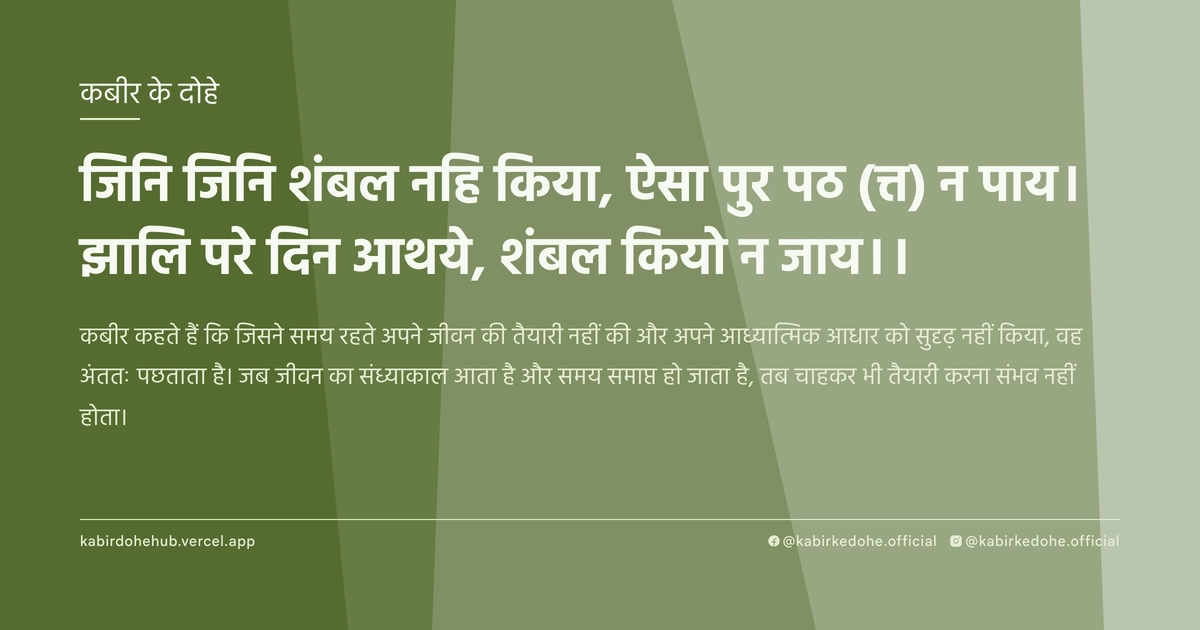
जिनि जिनि शंबल नहि किया, ऐसा पुर पठ (त्त) न पाय।
झालि परे दिन आथये, शंबल कियो न जाय।।
Jini jini shambal nahi kiya, aisa pur path na paay. Jhaali pare din aathye, shambal kiyo na jaaye.
इस पृष्ठ पर इस कबीर दोहे का अर्थ (meaning), हिंदी व्याख्या और अंग्रेज़ी अनुवाद, दार्शनिक विश्लेषण और व्यावहारिक जीवन सीख दी गई है। यह दोहा समय का महत्व (The Value of Time) विषय से जुड़ा है — Kabir doha meaning and explanation in Hindi and English.
अर्थ (Meaning):
कबीर कहते हैं कि जिसने समय रहते अपने जीवन की तैयारी नहीं की और अपने आध्यात्मिक आधार को सुदृढ़ नहीं किया, वह अंततः पछताता है। जब जीवन का संध्याकाल आता है और समय समाप्त हो जाता है, तब चाहकर भी तैयारी करना संभव नहीं होता।
Kabir warns that those who fail to prepare their spiritual foundation and align themselves with the Truth while they have the opportunity will find themselves adrift. When the day ends and the final hour arrives, the opportunity for preparation vanishes, leaving only regret.
व्याख्या (Interpretation):
यहाँ 'शंबल' का अर्थ केवल भौतिक तैयारी नहीं, बल्कि आत्म-साक्षात्कार और अहंकार का विसर्जन है। कबीर संकेत करते हैं कि मनुष्य माया के मोह में इतना अंधा हो जाता है कि वह मृत्यु की निश्चितता को भूल जाता है। यह दोहा निर्गुण भक्ति के उस सिद्धांत पर आधारित है जहाँ आत्मा को परमात्मा से मिलने के लिए निरंतर सजग रहना पड़ता है। जब तक श्वास है, तब तक अवसर है; एक बार जब शरीर जड़ हो जाता है, तो साधना का समय समाप्त हो जाता है। यह द्वैत से अद्वैत की ओर बढ़ने की तात्कालिकता को दर्शाता है।
The term 'Shambal' refers not to material preparation, but to the spiritual alignment and the dissolution of the ego. Kabir suggests that humans are so blinded by Maya (illusion) that they ignore the inevitability of death. This aligns with Nirgun Bhakti, where the soul must remain vigilantly awake to merge with the formless Divine. The paradox lies in the human tendency to procrastinate spiritual awakening. Once the 'day' (life) ends, the window for transformation closes, emphasizing the urgency of realizing the Atman-Brahman non-duality before the physical vessel fails.
दार्शनिक विश्लेषण (Philosophical Analysis):
कबीर का यह दोहा उनके समय के कर्मकांडीय ढोंग पर एक गहरा प्रहार है। उन्होंने देखा कि लोग जीवन भर बाहरी अनुष्ठानों में लगे रहते हैं, लेकिन आंतरिक शुद्धि की उपेक्षा करते हैं। यह दर्शन अद्वैत वेदांत के करीब है, जहाँ यह माना जाता है कि अज्ञानता (Avidya) ही बंधन का कारण है। कबीर का 'शंबल' वास्तव में उस अज्ञानता का निवारण है।
सूफी मत के 'फना' (अहंकार का विनाश) के समान, कबीर यहाँ समय की सीमितता की बात कर रहे हैं। वे तर्क देते हैं कि मोक्ष या मुक्ति कोई ऐसी वस्तु नहीं है जिसे अंत समय में जल्दबाजी में प्राप्त किया जा सके; यह एक निरंतर चलने वाली प्रक्रिया है।
सामाजिक स्तर पर, कबीर जाति और धर्म के भेदों को नकारते हुए कहते हैं कि मृत्यु सबको समान रूप से अपनी चपेट में लेती है। इसलिए, बाहरी पहचानों के बजाय आंतरिक सत्य की खोज ही एकमात्र वास्तविक तैयारी है।
मनोवैज्ञानिक रूप से, यह दोहा 'विलंब' (procrastination) की मानवीय प्रवृत्ति को संबोधित करता है। हम अक्सर सोचते हैं कि आध्यात्मिक खोज बुढ़ापे के लिए है, जबकि कबीर इसे वर्तमान की अनिवार्यता मानते हैं।
अंततः, यह संदेश देता है कि जब तक चेतना जाग्रत है, तब तक ही सुधार संभव है। एक बार जब संस्कार और आदतें पत्थर की तरह जम जाती हैं, तो परिवर्तन कठिन हो जाता है।
This couplet is a profound critique of the ritualistic hypocrisy prevalent during Kabir's era. He observed people spending lifetimes on external ceremonies while neglecting internal purification. This philosophy mirrors Advaita Vedanta, where Avidya (ignorance) is seen as the primary shackle. 'Shambal' is the active dismantling of this ignorance.
Parallel to the Sufi concept of 'Fana' (annihilation of the self), Kabir emphasizes the temporal limitation of human life. He argues that liberation is not a last-minute achievement but a cumulative process of conscious living and ego-death.
Socially, Kabir rejects caste and creed, asserting that death is the ultimate equalizer. Therefore, the only valid preparation is the pursuit of the internal Truth, rendering external identities irrelevant.
Psychologically, the verse addresses the human tendency toward spiritual procrastination. The common fallacy is believing that enlightenment is a destination for old age, whereas Kabir presents it as an immediate necessity.
Ultimately, the teaching posits that transformation is only possible while consciousness is fluid. Once the patterns of the ego harden into rigid identities, the window for genuine spiritual alchemy closes.
मूल संदेश (Core Message):
- आध्यात्मिक आलस्य ही सबसे बड़ा बंधन है।
- समय की रेत फिसल रही है, जागृति अभी आवश्यक है।
- बाहरी तैयारी व्यर्थ है यदि भीतर शून्य है।
- अहंकार का विसर्जन ही वास्तविक सुरक्षा है।
- मृत्यु अंत नहीं, बल्कि तैयारी की परीक्षा है।
- वर्तमान क्षण ही एकमात्र द्वार है।
- Spiritual procrastination is the heaviest shackle of all.
- The sands of time are slipping; awakening is an immediate need.
- External preparations are futile if the interior is void.
- The dissolution of ego is the only true security.
- Death is not the end, but the test of one's preparation.
- The present moment is the only gateway to Truth.
व्यावहारिक उदाहरण (Practical Example):
एक समय की बात है, वाराणसी के घाटों पर रामदीन नाम का एक वृद्ध नाविक रहता था। वह जीवन भर केवल नाव चलाने और पैसे कमाने में लगा रहा। वह अक्सर देखता कि लोग तीर्थयात्रा के लिए आते हैं, लेकिन वह स्वयं को इस दौड़ से अलग मानता था।
रामदीन का मानना था कि वह अपनी पूरी उम्र मेहनत कर रहा है, इसलिए वह अंत में 'पुण्य' कमा लेगा। उसने कभी ध्यान नहीं किया, कभी अपने क्रोध पर नियंत्रण नहीं पाया, और न ही कभी यह सोचा कि उसके भीतर का अहंकार उसे सत्य से दूर कर रहा है।
वह अक्सर कहता, 'अभी तो बहुत समय है, जब मैं थक जाऊँगा तब ईश्वर का नाम लूँगा।' वह अपनी नाव को तो हर दिन ठीक करता था, लेकिन अपने मन की मरम्मत करना भूल गया।
एक दिन, अचानक रामदीन को एक गंभीर बीमारी ने घेर लिया। वह बिस्तर पर पड़ा था और उसके पास अब न तो नाव चलाने की शक्ति थी और न ही किसी से विवाद करने का समय।
उसने महसूस किया कि अब वह प्रार्थना करना चाहता है, लेकिन उसका मन इतना अशांत और क्रोधित था कि वह एकाग्र नहीं हो पा रहा था। वर्षों की कड़वाहट ने उसके हृदय को पत्थर बना दिया था।
वह रोने लगा कि उसने अपनी पूरी ऊर्जा बाहरी दुनिया को संवारने में लगा दी, लेकिन अपने भीतर के 'शंबल' (आधार) को कभी मजबूत नहीं किया।
उसे याद आया कि कैसे उसने कई जरूरतमंदों को अपनी नाव में मुफ्त बिठाने से मना किया था, केवल इसलिए क्योंकि वह भविष्य के लिए धन संचित कर रहा था।
अब वह धन उसके किसी काम का नहीं था। वह केवल एक खालीपन महसूस कर रहा था, क्योंकि उसने समय रहते अपनी आत्मा की तैयारी नहीं की थी।
उसकी यह तड़प एक 'कबीर ट्विस्ट' थी—उसे समझ आया कि आध्यात्मिक तैयारी का अर्थ मंदिर जाना नहीं, बल्कि वर्तमान क्षण में करुणा और जागरूकता के साथ जीना है।
रामदीन ने अपने अंतिम दिनों में अपने अहंकार को स्वीकार किया और क्षमा माँगना शुरू किया, लेकिन वह जानता था कि उसने अपना सबसे कीमती समय गँवा दिया था।
Once, on the ghats of Varanasi, lived an old boatman named Ramdeen. He spent his entire life solely focused on rowing his boat and accumulating wealth. He watched pilgrims arrive daily but considered himself exempt from their spiritual quests.
Ramdeen believed that because he worked hard, he would automatically earn 'punya' (merit) in the end. He never practiced mindfulness, never controlled his temper, and never realized that his arrogance was distancing him from the Truth.
He often told himself, 'There is plenty of time; I will turn to God once I am too tired to work.' He meticulously repaired his boat every day but forgot to repair his own mind.
One day, a severe illness struck Ramdeen. He found himself bedridden, stripped of the strength to row or the energy to argue with others.
He suddenly felt a desperate urge to pray, but his mind was so turbulent and filled with old grudges that he could not find a moment of stillness. Years of bitterness had calcified his heart.
He wept, realizing he had spent all his energy polishing the external world while neglecting the 'Shambal' (foundation) of his own soul.
He recalled how he had refused to carry the needy across the river for free, driven by the greed of hoarding for a future that was now slipping away.
Now, his gold was useless. He felt a void, knowing he had ignored the spiritual preparation required for the transition beyond the physical.
This was his 'Kabir Twist'—the realization that spiritual preparation is not about visiting temples, but about living with compassion and awareness in the present moment.
In his final days, Ramdeen began to acknowledge his ego and seek forgiveness, though he lived with the heavy knowledge that he had squandered his most precious resource: time.
अभ्यास मार्गदर्शन (Practice Guidance):
- दैनिक आत्म-निरीक्षण: प्रतिदिन 15 मिनट मौन बैठें और विचार करें कि क्या आपका वर्तमान व्यवहार आपके भविष्य के आध्यात्मिक लक्ष्य के अनुरूप है।
- अहंकार की पहचान: एक जर्नल बनाएँ जिसमें उन क्षणों को लिखें जब आपका 'मैं' (ego) आपके विवेक पर हावी हुआ।
- वर्तमान में निवेश: किसी भी कार्य को करते समय यह सोचें कि यदि यह आपका अंतिम कार्य हो, तो क्या आप इसमें पूर्णता और प्रेम ला पाएंगे?
- निदान चेकलिस्ट: क्या आप अभी भी 'कल' पर भरोसा कर रहे हैं? क्या आप बाहरी दिखावे को आंतरिक शांति से अधिक महत्व दे रहे हैं? यदि हाँ, तो आप 'शंबल' नहीं कर रहे हैं।
- Daily Self-Audit: Spend 15 minutes in silence contemplating whether your current actions align with your ultimate spiritual destination.
- Ego Mapping: Maintain a journal recording moments where the 'I' (ego) overrode your inner wisdom and compassion.
- Investment in Now: While performing any task, ask yourself: 'If this were my final act on earth, would I perform it with total presence and love?'
- Diagnostic Checklist: Are you still relying on 'tomorrow' for your awakening? Do you value external validation over internal peace? If yes, you are failing to build your 'Shambal'.
चिंतन प्रश्न (Reflection Questions):
- यदि आज आपकी जीवन यात्रा समाप्त हो जाए, तो क्या आप अपनी आंतरिक स्थिति से संतुष्ट होंगे?
- आपकी कौन सी सामाजिक पहचान (पद, प्रतिष्ठा, जाति) आपको वास्तव में सत्य की खोज से रोक रही है?
- क्या आप धर्म का पालन कर रहे हैं, या केवल धर्म के 'दिखावे' का अभ्यास कर रहे हैं?
- आपके जीवन का वह कौन सा हिस्सा है जिसे आप 'कल' पर टाल रहे हैं, जबकि वह आज ही आवश्यक है?
- क्या आपकी डिजिटल पहचान (सोशल मीडिया) आपके वास्तविक आंतरिक स्वरूप को छुपाने का एक मुखौटा है?
- जब आप अकेले होते हैं, तब आप कौन होते हैं, और वह व्यक्ति दुनिया को क्यों नहीं दिखता?
- If your life's journey ended today, would you be satisfied with the state of your inner being?
- Which social identity (status, title, caste) is actually preventing you from seeking the Truth?
- Are you practicing spirituality, or are you merely performing the 'theater' of religion?
- What part of your growth are you postponing to 'tomorrow,' even though it is urgent today?
- Is your digital persona a mask designed to hide the void of your actual internal state?
- Who are you when you are completely alone, and why is that person invisible to the world?