
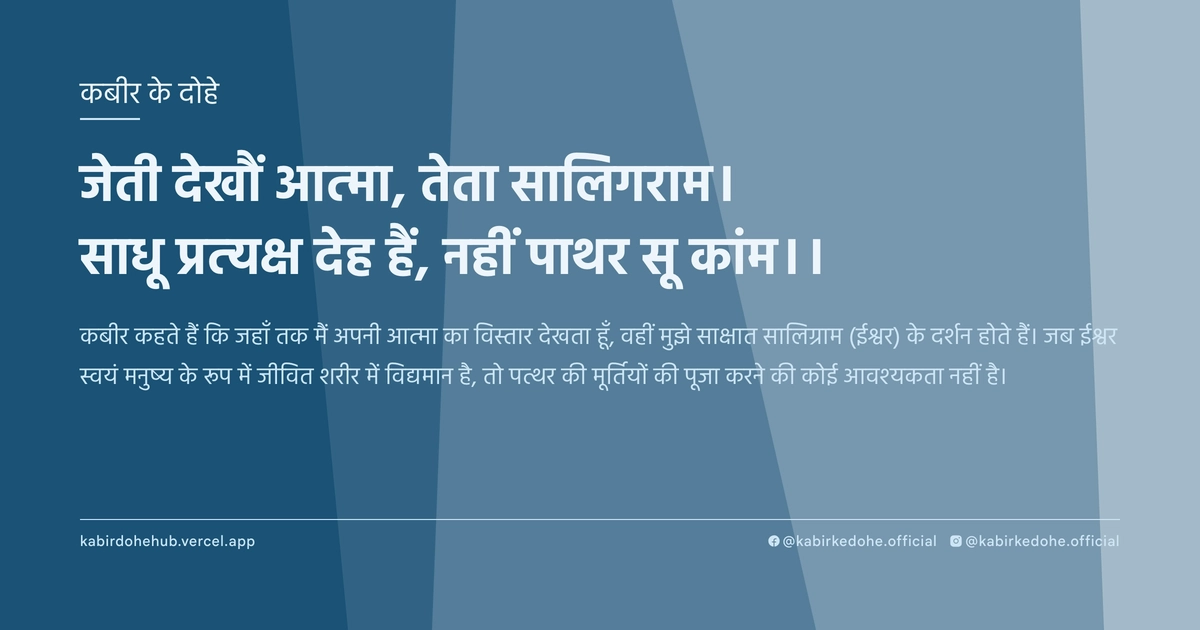
जेती देखौं आत्मा, तेता सालिगराम।
साधू प्रत्यक्ष देह हैं, नहीं पाथर सू कांम।।
Jeti dekhon aatma, teta saligram. Sadhu pratyaksh deh hain, nahi pathar su kaam.
इस पृष्ठ पर इस कबीर दोहे का अर्थ (meaning), हिंदी व्याख्या और अंग्रेज़ी अनुवाद, दार्शनिक विश्लेषण और व्यावहारिक जीवन सीख दी गई है। यह दोहा अंतर ज्योति (The Inner Light) विषय से जुड़ा है — Kabir doha meaning and explanation in Hindi and English.
अर्थ (Meaning):
कबीर कहते हैं कि जहाँ तक मैं अपनी आत्मा का विस्तार देखता हूँ, वहीं मुझे साक्षात सालिग्राम (ईश्वर) के दर्शन होते हैं। जब ईश्वर स्वयं मनुष्य के रूप में जीवित शरीर में विद्यमान है, तो पत्थर की मूर्तियों की पूजा करने की कोई आवश्यकता नहीं है।
Kabir asserts that wherever he perceives the expanse of the soul, there he finds the Saligram (the divine stone/God). Since the Divine is directly present within the living body of a realized soul, there is no longer any need to seek God in inanimate stones or idols.
व्याख्या (Interpretation):
इस दोहे का शाब्दिक अर्थ है कि आत्मा और परमात्मा एक ही हैं। कबीर यहाँ 'सालिग्राम' का उपयोग एक रूपक के रूप में करते हैं, जो पारंपरिक रूप से विष्णु का प्रतीक पत्थर है। वे तर्क देते हैं कि यदि ईश्वर सर्वव्यापी है, तो वह पत्थर से अधिक जीवित मनुष्य के भीतर होना चाहिए। यह निर्गुण भक्ति का सार है, जहाँ ईश्वर किसी बाहरी आकार में नहीं, बल्कि अंतरात्मा के शुद्ध स्वरूप में निवास करता है। यहाँ 'साधु' का अर्थ केवल संन्यासी नहीं, बल्कि वह व्यक्ति है जिसने अपनी आत्मा को पहचान लिया है। यह द्वैत (मनुष्य और ईश्वर का अलग होना) को समाप्त कर अद्वैत (एकता) की स्थापना करता है, जहाँ शरीर ही मंदिर बन जाता है।
The literal meaning posits that the soul and the Divine are identical. Kabir uses 'Saligram'—traditionally a sacred stone representing Vishnu—as a metaphor to challenge external worship. He argues that if the Divine is omnipresent, it must reside more potently within a living human than in a cold stone. This is the essence of Nirgun Bhakti, where God is not a shaped entity but the formless essence within the self. Here, 'Sadhu' does not merely refer to an ascetic, but to any awakened soul who has realized their true nature. It dismantles the duality between the seeker and the sought, establishing the Advaita principle that the body itself is the ultimate temple.
दार्शनिक विश्लेषण (Philosophical Analysis):
कबीर का यह विचार उनके युग के गहरे सामाजिक और धार्मिक संघर्षों से उपजा है। उन्होंने देखा कि लोग बाहरी कर्मकांडों और मूर्तियों में इतने लीन थे कि वे अपने भीतर के मानवीय मूल्य और दैवीय अंश को भूल गए थे। यह दृष्टिकोण सीधे तौर पर अद्वैत वेदांत से जुड़ा है, जो कहता है कि 'अहं ब्रह्मास्मि' (मैं ही ब्रह्म हूँ)। कबीर पत्थर की पूजा का विरोध करके वास्तव में उस मानसिक गुलामी का विरोध कर रहे थे जो मनुष्य को ईश्वर से दूर करती है।
सूफीवाद के प्रभाव में, कबीर 'इश्क-ए-हकीकी' या परमात्मा के प्रति प्रेम की बात करते हैं, जो किसी मंदिर या मस्जिद का मोहताज नहीं है। उनके लिए, शरीर की पवित्रता मन की पवित्रता से आती है, न कि बाहरी स्नान या अनुष्ठानों से। वे तर्क देते हैं कि यदि आप एक पत्थर में ईश्वर देख सकते हैं, तो आप एक जीवित, सांस लेते हुए मनुष्य में क्यों नहीं देख सकते?
यह दर्शन अहंकार के विनाश की मांग करता है। जब तक 'मैं' (अहंकार) जीवित है, तब तक हम ईश्वर को बाहर खोजते हैं। जैसे ही अहंकार मिटता है, आत्मा का विस्तार होता है और व्यक्ति को अनुभव होता है कि वह स्वयं वही है जिसे वह खोज रहा था। यह मनोवैज्ञानिक रूपांतरण है जहाँ बाहरी निर्भरता आंतरिक स्वावलंबन में बदल जाती है।
कबीर का यह प्रहार जाति व्यवस्था पर भी था। यदि ईश्वर हर आत्मा में है, तो कोई भी व्यक्ति जन्म के आधार पर छोटा या बड़ा नहीं हो सकता। यह एक क्रांतिकारी सामाजिक संदेश था जिसने धर्म को कर्मकांड से निकालकर करुणा और आत्म-साक्षात्कार की ओर मोड़ा।
अंततः, यह दोहा हमें यह सिखाता है कि सत्य कोई वस्तु नहीं जिसे पाया जाए, बल्कि एक स्थिति है जिसे अनुभव किया जाए। पत्थर की पूजा एक मानसिक बैसाखी है, जबकि आत्म-साक्षात्कार वह उड़ान है जो मनुष्य को वास्तव में मुक्त करती है।
Kabir's perspective emerges from the profound social and religious frictions of his era. He observed a society deeply entrenched in external rituals and idol worship, which blinded individuals to the divine spark within their own humanity. This viewpoint aligns directly with Advaita Vedanta, which proclaims 'Aham Brahmasmi' (I am Brahman). By opposing the worship of stones, Kabir was fundamentally challenging the mental bondage that separates the seeker from the Source.
Influenced by Sufism, Kabir speaks of 'Ishq-e-Haqiqi'—the longing for the Absolute Truth that transcends the boundaries of temples and mosques. For him, the sanctity of the body is derived from the purity of the mind, not from ritualistic ablutions. He poses a piercing logical question: if one can perceive the Divine in a lifeless stone, why is it impossible to see it in a living, breathing human being?
This philosophy demands the annihilation of the ego. As long as the 'I' (the false ego) persists, we seek God externally. Once the ego dissolves, the soul expands, and the seeker realizes that they are the very essence they were searching for. This is a psychological shift from external dependence to internal sovereignty.
Furthermore, this teaching was a direct assault on the caste system. If the Divine resides in every soul, then no human can be superior or inferior based on birth. This was a revolutionary social message that shifted religion from the realm of ritual to the realm of compassion and self-realization.
Ultimately, this Doha teaches that Truth is not an object to be acquired, but a state of being to be experienced. Idol worship is a psychological crutch; self-realization is the flight that leads to genuine liberation.
मूल संदेश (Core Message):
- बाहरी मूर्तियों का मोह वास्तव में आंतरिक शून्यता का प्रतिबिंब है।
- परमात्मा कोई बाहरी वस्तु नहीं, बल्कि हमारी अपनी शुद्ध चेतना है।
- मानवता की सेवा ही सबसे बड़ी और वास्तविक पूजा है।
- अहंकार का विसर्जन ही आत्मा को साक्षात ईश्वर में बदल देता है।
- सत्य शरीर के भीतर है, उसे बाहर खोजना समय की बर्बादी है।
- Attachment to external idols is a reflection of internal emptiness.
- The Divine is not an external object, but our own pure consciousness.
- Service to humanity is the highest and most authentic form of worship.
- The dissolution of ego transforms the soul into the living Divine.
- Truth resides within the body; seeking it outside is a futile pursuit.
व्यावहारिक उदाहरण (Practical Example):
एक समय की बात है, वाराणसी के घाटों पर माधव नाम का एक वृद्ध बुनकर रहता था। माधव अपनी पूरी जिंदगी भगवान की मूर्तियों के लिए रेशमी वस्त्र बुनने में बिता चुका था। वह बहुत धार्मिक था और हर सुबह घंटों मंदिर में पत्थर की प्रतिमा के सामने सिर झुकाता था। उसे विश्वास था कि उसकी मुक्ति केवल इन अनुष्ठानों से ही संभव है।
उसी शहर में एक फकीर आया, जिसकी आँखों में एक अजीब सी चमक थी। एक दिन माधव ने देखा कि वह फकीर एक बीमार और मरणासन्न व्यक्ति की सेवा कर रहा था, जो समाज द्वारा बहिष्कृत था। माधव ने फकीर से पूछा, "आप इस अशुद्ध व्यक्ति की सेवा क्यों कर रहे हैं? क्या आपको मंदिर जाकर भगवान की पूजा नहीं करनी चाहिए?"
फकीर मुस्कुराया और माधव की ओर देखते हुए कहा, "मैं इसी शरीर में अपने ईश्वर की पूजा कर रहा हूँ। क्या पत्थर की मूर्ति मुझे यह बता सकती है कि इस आदमी का दर्द क्या है? क्या वह मूर्ति इस प्यासे को पानी पिला सकती है?"
माधव को यह बात अजीब लगी, लेकिन उसने गौर किया कि फकीर के चेहरे पर जो शांति थी, वह उसे मंदिर के पुजारियों में कभी नहीं दिखी। माधव ने महसूस किया कि वह सालों से पत्थर को पूज रहा था, जबकि उसके बगल में रहने वाले इंसानों के दुख को अनदेखा कर रहा था।
कुछ दिनों बाद, माधव के घर में एक गंभीर संकट आया। उसकी बेटी बहुत बीमार हो गई और उसके पास इलाज के पैसे नहीं थे। वह मंदिर गया और मूर्ति के सामने रोया, लेकिन पत्थर ने कोई जवाब नहीं दिया। तभी वही फकीर वहां आया। उसने न केवल अपनी जमा पूंजी माधव को दी, बल्कि रात-दिन उसकी बेटी की सेवा की।
माधव की आँखें खुल गईं। उसने देखा कि जिस 'पत्थर' को वह पूज रहा था, वह मौन था, लेकिन जिस 'इंसान' को वह तुच्छ समझ रहा था, उसमें साक्षात ईश्वर का प्रेम और करुणा बह रही थी।
उस दिन माधव ने अपनी सोच बदल ली। उसने मूर्तियों के लिए वस्त्र बुनना बंद नहीं किया, क्योंकि वह उसका पेशा था, लेकिन उसने अपना दृष्टिकोण बदल लिया। अब वह हर उस व्यक्ति में ईश्वर देखने लगा जो मदद मांगता था।
उसने सीखा कि सच्ची भक्ति मंदिर की दीवारों में नहीं, बल्कि मानवता की सेवा में है। उसका जीवन अब केवल अनुष्ठानों का संग्रह नहीं था, बल्कि प्रेम का एक जीवंत उदाहरण बन गया।
माधव अब केवल पत्थर को नहीं पूजता था, बल्कि वह हर आत्मा को 'सालिग्राम' मानने लगा। उसकी शांति अब बाहरी नहीं, आंतरिक थी।
इस प्रकार, माधव ने कबीर के उस सत्य को जी लिया कि ईश्वर शरीर के भीतर है, बाहर नहीं।
Once, in the ghats of Varanasi, lived an elderly weaver named Madhav. Madhav had spent his entire life weaving exquisite silk cloths for the idols of gods. He was deeply religious, spending hours every morning bowing before stone statues, convinced that his liberation depended solely on these rituals.
Into the city came a wandering dervish with a strange, luminous spark in his eyes. One day, Madhav noticed the dervish tending to a sick, dying man who had been cast out by society. Madhav asked the dervish, "Why do you serve this impure man? Should you not be in the temple worshipping the Lord?"
The dervish smiled and looked at Madhav, saying, "I am worshipping my God within this very body. Can the stone idol tell me the depth of this man's pain? Can that statue give water to this thirsty soul?"
Madhav found this strange, but he noticed a peace on the dervish's face that he had never seen in the temple priests. Madhav realized he had spent years worshipping stones while ignoring the suffering of the humans around him.
Shortly after, a crisis struck Madhav's home. His daughter fell gravely ill, and he lacked the money for her treatment. He went to the temple and wept before the idol, but the stone remained silent. Then, the dervish appeared. He not only gave his meager savings to Madhav but served the girl day and night.
Madhav's eyes were opened. He saw that the 'stone' he worshipped was mute, but the 'human' he had overlooked was overflowing with the love and compassion of the Divine.
From that day, Madhav changed his way of thinking. He did not stop weaving for idols, for that was his craft, but his perspective shifted. He began to see God in every person who sought help.
He learned that true devotion does not reside within temple walls, but in the service of humanity. His life was no longer a collection of rituals, but a living example of love.
Madhav no longer worshipped only the stone; he began to treat every soul as a 'Saligram'. His peace was no longer external, but internal.
Thus, Madhav lived the truth of Kabir: that God is within the body, not outside it.
अभ्यास मार्गदर्शन (Practice Guidance):
- प्रतिदिन 15 मिनट मौन ध्यान करें, जहाँ आप अपने शरीर के भीतर एक प्रकाश की कल्पना करें और महसूस करें कि वह प्रकाश ही सार्वभौमिक चेतना है।
- एक 'मानवता डायरी' लिखें: प्रतिदिन कम से कम एक ऐसे व्यक्ति की मदद करें जिसे आप नापसंद करते हैं, और यह महसूस करें कि आप वास्तव में ईश्वर की ही सेवा कर रहे हैं।
- आत्म-पूछताछ: जब भी आप किसी के प्रति क्रोध या घृणा महसूस करें, तो रुकें और पूछें, "क्या मैं इस व्यक्ति के भीतर छिपे उस साक्षात सालिग्राम को देख पा रहा हूँ?"
- निदान चेकलिस्ट: क्या मैं अभी भी बाहरी प्रतीकों (पद, प्रतिष्ठा, धर्म) के बिना खुद को अधूरा महसूस करता हूँ? यदि हाँ, तो मैं अभी भी 'पत्थर' की खोज में हूँ, 'आत्मा' की नहीं।
- Practice 15 minutes of silent meditation daily, visualizing a light within your body and realizing that this light is the universal consciousness.
- Maintain a 'Humanity Journal': Help at least one person you dislike every day, consciously feeling that you are serving the Divine within them.
- Self-Inquiry: Whenever you feel anger or hatred toward someone, stop and ask, "Am I failing to see the living Saligram residing within this person?"
- Diagnostic Checklist: Do I still feel incomplete without external symbols (status, titles, religious rituals)? If yes, I am still searching for the 'stone' rather than the 'soul'.
चिंतन प्रश्न (Reflection Questions):
- मैं अपनी पहचान किन बाहरी प्रतीकों से जोड़ता हूँ, और यदि वे छीन लिए जाएँ, तो क्या मैं स्वयं को 'ईश्वर' के रूप में देख पाऊँगा?
- क्या मेरी धार्मिकता दूसरों को नीचा दिखाने का एक माध्यम बन गई है?
- मैं उन लोगों में ईश्वर को देखने में विफल क्यों रहता हूँ जिनके विचार मेरे विपरीत हैं?
- क्या मैं अपनी आत्मा की शांति के लिए बाहरी अनुष्ठानों पर निर्भर हूँ, या मेरे भीतर एक अखंड केंद्र है?
- मेरे जीवन का कौन सा हिस्सा अभी भी 'पत्थर' (जड़ता) की तरह है, जिसे मुझे 'जीवंत' बनाने की आवश्यकता है?
- Which external symbols do I tie my identity to, and if they were stripped away, would I still see the Divine in myself?
- Has my religiosity become a tool to feel superior to others?
- Why do I fail to see the Divine in those whose ideologies clash with my own?
- Am I dependent on external rituals for peace, or do I possess an unbreakable internal center?
- Which part of my life is still like a 'stone' (inert), and how can I make it 'living' and conscious?