
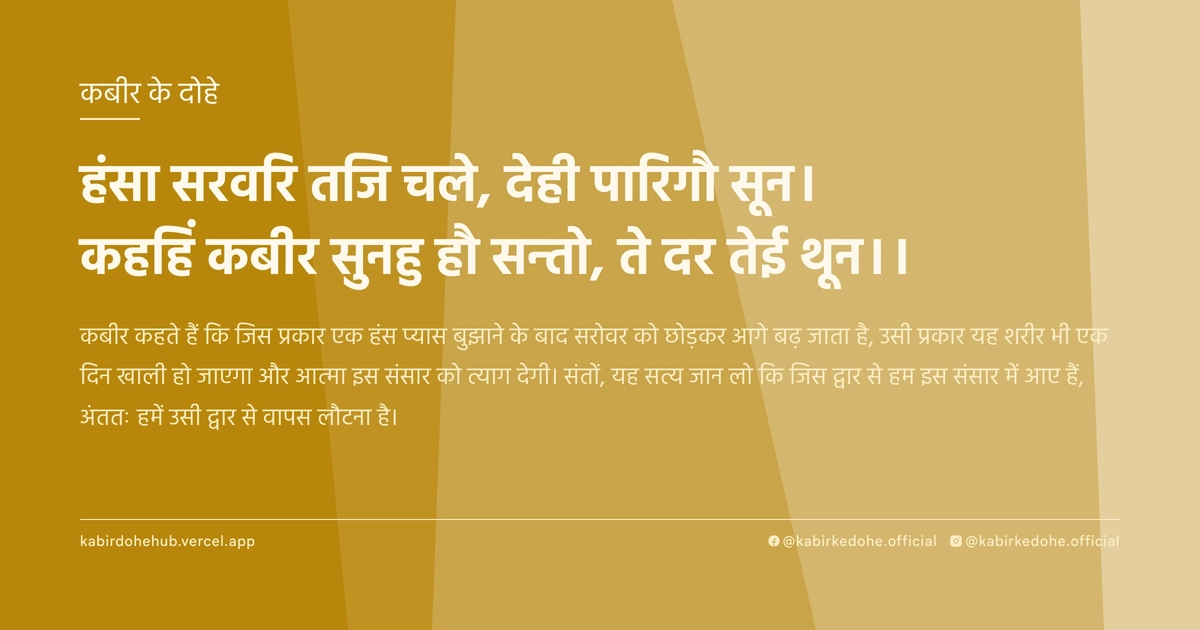
हंसा सरवरि तजि चले, देही पारिगौ सून।
कहहिं कबीर सुनहु हौ सन्तो, ते दर तेई थून।।
Hansa sarvari taji chale, dehi parigau soon. Kahahin kabir sunhu hau santo, te dar tei thoon.
इस पृष्ठ पर इस कबीर दोहे का अर्थ (meaning), हिंदी व्याख्या और अंग्रेज़ी अनुवाद, दार्शनिक विश्लेषण और व्यावहारिक जीवन सीख दी गई है। यह दोहा मुक्ति (Liberation) विषय से जुड़ा है — Kabir doha meaning and explanation in Hindi and English.
अर्थ (Meaning):
कबीर कहते हैं कि जिस प्रकार एक हंस प्यास बुझाने के बाद सरोवर को छोड़कर आगे बढ़ जाता है, उसी प्रकार यह शरीर भी एक दिन खाली हो जाएगा और आत्मा इस संसार को त्याग देगी। संतों, यह सत्य जान लो कि जिस द्वार से हम इस संसार में आए हैं, अंततः हमें उसी द्वार से वापस लौटना है।
Kabir explains that just as a swan departs from a lake after quenching its thirst, the physical body will eventually become void and the soul will leave this world. He urges the seekers to realize that the same gateway through which we entered this earthly existence is the only exit we shall eventually traverse.
व्याख्या (Interpretation):
यहाँ 'हंस' शुद्ध आत्मा का प्रतीक है और 'सरवरि' इस भौतिक संसार का। कबीर संकेत देते हैं कि आत्मा का इस दुनिया में आना एक अस्थायी प्रवास है। 'देही पारिगौ सून' का अर्थ है कि शरीर अंततः शून्य हो जाएगा, जो माया के क्षणभंगुर स्वभाव को दर्शाता है। यह निर्गुण भक्ति का सार है जहाँ ईश्वर को किसी मूर्ति में नहीं बल्कि उस चेतना में देखा जाता है जो शरीर से परे है। यह अद्वैत वेदांत के उस सत्य को उजागर करता है जहाँ जीव और ब्रह्म एक हैं, और मृत्यु केवल एक आवरण का हटना है। विरोधाभास यह है कि मनुष्य इस अस्थायी घर को स्थायी मानकर मोह में फंसा रहता है, जबकि वह केवल एक यात्री है।
In this verse, the 'Hansa' (swan) symbolizes the pure soul, and the 'Sarvari' (lake) represents the material world. Kabir suggests that the soul's descent into the physical realm is merely a temporary sojourn. The phrase 'dehi parigau soon' implies that the body will eventually become a void, highlighting the ephemeral nature of Maya (illusion). This aligns with Nirgun Bhakti, where the Divine is not found in idols but in the consciousness transcending the flesh. It echoes Advaita Vedanta's non-duality, suggesting that death is not an end but the removal of a veil. The central paradox lies in the human tendency to mistake a transit lounge for a permanent home, clinging to a transient identity while ignoring the eternal essence.
दार्शनिक विश्लेषण (Philosophical Analysis):
कबीर का यह दोहा उनके समय के धार्मिक पाखंड और मृत्यु के भय के विरुद्ध एक सशक्त प्रहार है। उन्होंने देखा कि लोग कर्मकांडों और बाहरी आडंबरों में उलझे हुए थे, जबकि जीवन की नश्वरता को पूरी तरह भुला चुके थे। कबीर का दर्शन सूफीवाद के 'फना' (अहंकार का विनाश) और वेदांत के 'मोक्ष' का संगम है। वे तर्क देते हैं कि यदि हम यह जान लें कि हमारा अस्तित्व इस शरीर से परे है, तो जाति, धर्म और सामाजिक प्रतिष्ठा के सारे बंधन टूट जाते हैं।
यहाँ 'द्वार' का उल्लेख जन्म और मृत्यु के चक्र (संसार) को दर्शाता है। कबीर का दृष्टिकोण यह है कि मुक्ति किसी बाहरी तीर्थयात्रा से नहीं, बल्कि आंतरिक जागरण से मिलती है। वे ritualism का विरोध करते हुए कहते हैं कि असली पूजा स्वयं के भीतर के 'हंस' (आत्मा) को पहचानना है। यह विश्लेषण हमें बताता है कि मृत्यु डरावनी नहीं, बल्कि एक स्वाभाविक वापसी है।
मनोवैज्ञानिक स्तर पर, यह दोहा 'अहंकार' के विसर्जन की बात करता है। जब व्यक्ति यह स्वीकार कर लेता है कि वह केवल एक यात्री है, तो उसकी पकड़ भौतिक वस्तुओं पर ढीली हो जाती है। यह मानसिक रूपांतरण उसे भय से मुक्त कर शांति की ओर ले जाता है।
ऐतिहासिक रूप से, कबीर ने समाज के सबसे निचले तबके को यह एहसास दिलाया कि आध्यात्मिक सत्य किसी विशेष जाति या धर्म की बपौती नहीं है। उन्होंने यह स्थापित किया कि आत्मा की यात्रा सार्वभौमिक है और इसका गंतव्य एक ही है।
अंततः, यह दोहा हमें यह सिखाता है कि जीवन का उद्देश्य संचय करना नहीं, बल्कि तैयारी करना है। जिस प्रकार एक बुद्धिमान यात्री अपनी यात्रा के अंत को ध्यान में रखकर चलता है, उसी प्रकार एक साधक को अपनी चेतना को शुद्ध करना चाहिए ताकि वह बिना किसी मोह के उस मूल द्वार से वापस लौट सके।
This couplet serves as a profound critique of the religious hypocrisy and the existential dread prevalent during Kabir's era. He observed people entangled in elaborate rituals and external displays of piety, completely oblivious to the inherent transience of life. Kabir's philosophy is a synthesis of the Sufi concept of 'Fana' (annihilation of the ego) and the Vedantic pursuit of 'Moksha' (liberation). He argues that once one realizes the soul transcends the physical vessel, all shackles of caste, creed, and social status dissolve.
The reference to the 'door' signifies the cyclical nature of birth and death (Samsara). Kabir posits that liberation is not achieved through external pilgrimages but through internal awakening. By rejecting ritualism, he asserts that true worship is the recognition of the 'Hansa' (the divine spark) within oneself. This analysis reveals that death is not a catastrophe but a natural homecoming.
Psychologically, the verse addresses the dissolution of the ego. When an individual accepts their status as a mere traveler, their grip on material possessions loosens. This mental transformation shifts the consciousness from a state of fear to a state of profound serenity.
Historically, Kabir empowered the marginalized by declaring that spiritual truth is not the monopoly of any specific caste or religion. He established that the journey of the soul is universal and its destination is singular.
Ultimately, the teaching emphasizes that the purpose of life is not accumulation, but preparation. Just as a wise traveler plans for the end of their journey, a seeker must purify their consciousness to return through the original gateway without the burden of attachment.
मूल संदेश (Core Message):
- शरीर एक अस्थायी वस्त्र है, इसे स्थायी घर न समझें।
- मोह ही वह जंजीर है जो आत्मा को मुक्त होने से रोकती है।
- मृत्यु अंत नहीं, बल्कि मूल स्रोत की ओर एक वापसी है।
- अहंकार का विसर्जन ही वास्तविक आध्यात्मिक उपलब्धि है।
- संसार के प्रति उदासीनता नहीं, बल्कि तटस्थता विकसित करें।
- The body is a temporary garment; do not mistake it for a permanent home.
- Attachment is the chain that prevents the soul from achieving liberation.
- Death is not an end, but a return to the primordial source.
- The dissolution of the ego is the only true spiritual achievement.
- Develop not indifference, but a state of neutral observation toward the world.
व्यावहारिक उदाहरण (Practical Example):
वाराणसी के एक पुराने घाट पर माधव नाम का एक वृद्ध नाविक रहता था। माधव का पूरा जीवन नाव चलाने और लोगों को नदी पार कराने में बीता था। वह स्वभाव से बहुत क्रोधी था और अपनी छोटी सी नाव और घाट के एक छोटे से हिस्से पर अपना पूरा अधिकार समझता था। वह अक्सर अन्य नाविकों से झगड़ता और अपनी संपत्ति के प्रति अत्यधिक मोह रखता था।
एक दिन, उसने एक फकीर को देखा जो किनारे पर बैठकर मुस्कुरा रहा था, जबकि उसके पास पहनने को केवल एक फटे हुए कपड़े का टुकड़ा था। माधव ने उससे पूछा, "तुम्हारे पास कुछ नहीं है, फिर भी तुम इतने शांत कैसे हो?" फकीर ने माधव की नाव की ओर इशारा किया और कहा, "यह नाव तुम्हें नदी पार कराती है, लेकिन क्या तुम जानते हो कि तुम स्वयं एक नाव हो जो इस जीवन रूपी नदी को पार कर रही है?"
माधव को पहले तो यह बात समझ नहीं आई। लेकिन फकीर ने आगे कहा, "जिस दिन यह नाव टूटेगी, तुम उसे बचाने की कोशिश करोगे, लेकिन जिस दिन तुम्हारा शरीर टूटेगा, तुम क्या साथ ले जाओगे? तुम जिस घाट के टुकड़े के लिए लड़ रहे हो, वह अंत में तुम्हें छोड़ देगा।"
यह बात माधव के हृदय में गहरे तक उतर गई। उसने महसूस किया कि उसने अपना पूरा जीवन उन चीजों को पकड़ने में बिता दिया जो वास्तव में उसकी थीं ही नहीं। उसने अपनी नाव को केवल एक साधन माना, अपनी पहचान नहीं।
अगले कुछ महीनों में, माधव का व्यवहार पूरी तरह बदल गया। उसने अन्य नाविकों के साथ लड़ना बंद कर दिया और उनकी मदद करना शुरू किया। उसने महसूस किया कि जब वह दूसरों के बोझ को हल्का करता है, तो उसका अपना बोझ भी कम हो जाता है।
वह अब घाट पर बैठकर लोगों को केवल नदी पार नहीं कराता था, बल्कि उन्हें जीवन की नश्वरता और प्रेम के बारे में छोटी-छोटी बातें बताने लगा। उसका क्रोध अब करुणा में बदल चुका था।
एक शाम, जब वह अपनी नाव बांध रहा था, उसने महसूस किया कि वह अब उस 'द्वार' से नहीं डरता जहाँ उसे एक दिन जाना है। उसने अपनी सारी छोटी-मोटी जमापूंजी उन गरीब बच्चों की शिक्षा के लिए दे दी जो घाट पर रहते थे।
माधव की यह रूपांतरण यात्रा एक 'कबीर ट्विस्ट' थी। उसने यह जान लिया कि असली स्वामित्व वस्तुओं का नहीं, बल्कि उस शांति का है जो मोह के त्याग से आती है। वह अब एक नाविक नहीं, बल्कि एक मुक्त आत्मा बन चुका था।
On an ancient ghat in Varanasi lived an elderly boatman named Madhav. Madhav had spent his entire life rowing boats and ferrying passengers across the river. He was naturally irritable and viewed his small boat and a tiny patch of the ghat as his absolute domain. He frequently clashed with other boatmen, clinging fiercely to his meager possessions.
One day, he noticed a dervish sitting by the shore, smiling serenely despite wearing nothing but a tattered piece of cloth. Madhav asked, "You possess nothing, yet how are you so peaceful?" The dervish pointed to Madhav's boat and replied, "This boat helps you cross the river, but do you realize that you yourself are a boat crossing the river of existence?"
At first, Madhav was perplexed. But the dervish continued, "The day this boat breaks, you will try to fix it. But the day your body breaks, what will you carry with you? The patch of land you fight for will eventually leave you behind."
These words pierced Madhav's heart. He realized he had spent his entire life clutching things that never truly belonged to him. He began to view his boat as a mere tool, not as his identity.
Over the following months, Madhav's behavior underwent a complete transformation. He stopped fighting with other boatmen and began helping them instead. He discovered that by lightening others' burdens, his own burden became lighter.
He no longer just ferried people across the water; he began sharing small insights about the transience of life and the power of love. His anger had evolved into compassion.
One evening, while mooring his boat, he felt that he no longer feared the 'gateway' he would one day have to pass through. He donated all his modest savings to the education of the impoverished children living on the ghats.
Madhav's journey was a true 'Kabir Twist.' He understood that real ownership is not about possessing objects, but about possessing the peace that comes from letting go. He was no longer just a boatman; he had become a liberated soul.
अभ्यास मार्गदर्शन (Practice Guidance):
- प्रतिदिन 15 मिनट मौन ध्यान करें, जिसमें आप स्वयं को एक 'यात्री' के रूप में देखें और अपनी भौतिक पहचान (नाम, पद, संबंध) को धीरे-धीरे विसर्जित करें।
- एक 'नश्वरता जर्नल' लिखें: हर सप्ताह एक ऐसी वस्तु या विचार लिखें जिससे आप बहुत जुड़े हुए हैं, और फिर विचार करें कि यदि वह कल गायब हो जाए, तो आपकी आत्मा पर क्या प्रभाव पड़ेगा।
- व्यवहार परिवर्तन: दिन में कम से कम एक बार किसी ऐसी स्थिति में रहें जहाँ आपका अहंकार चोटिल हो, और सचेत रूप से प्रतिक्रिया देने के बजाय मुस्कुराकर उसे स्वीकार करें।
- डायग्नोस्टिक चेकलिस्ट: क्या मैं छोटी बातों पर अत्यधिक क्रोधित होता हूँ? क्या मैं अपनी उपलब्धियों का श्रेय केवल स्वयं को देता हूँ? क्या मृत्यु का विचार मुझे भयभीत करता है? यदि हाँ, तो आप अभी भी 'मोह' के जाल में हैं।
- Practice 15 minutes of silent meditation daily, visualizing yourself as a 'traveler' and gradually dissolving your material identities (name, rank, relationships).
- Maintain a 'Transience Journal': Each week, list an object or idea you are deeply attached to, and reflect on how your essence would remain unchanged if it vanished tomorrow.
- Behavioral Shift: Once a day, consciously place yourself in a situation where your ego is bruised, and instead of reacting, smile and accept the moment with equanimity.
- Diagnostic Checklist: Do I get excessively angry over trivial matters? Do I take sole credit for my achievements? Does the thought of death evoke fear? If yes, you are still entangled in the web of attachment.
चिंतन प्रश्न (Reflection Questions):
- यदि आज आपकी सारी सामाजिक पहचान (डिग्री, पैसा, पद) छीन ली जाए, तो आपके पास 'स्वयं' के रूप में क्या बचेगा?
- आप अपनी डिजिटल छवि (Social Media Ego) को बनाए रखने के लिए अपनी वास्तविक शांति का कितना बलिदान कर रहे हैं?
- क्या आपका धर्म और विश्वास आपको वास्तव में मुक्त कर रहा है, या यह केवल एक नया मानसिक बंधन बन गया है?
- आप किन गुप्त पूर्वाग्रहों को अपनी 'पवित्रता' के पीछे छिपा रहे हैं?
- क्या आप वास्तव में प्रेम करते हैं, या आप केवल उस छवि से प्रेम करते हैं जो दूसरा व्यक्ति आपके बारे में रखता है?
- If all your social identities (degrees, wealth, status) were stripped away today, what would remain of 'you'?
- How much of your inner peace are you sacrificing to maintain your digital persona (Social Media Ego)?
- Is your religion and faith truly liberating you, or has it simply become a new form of mental bondage?
- What hidden biases are you concealing behind your mask of 'spiritual purity'?
- Do you truly love others, or do you only love the image that others hold of you?