
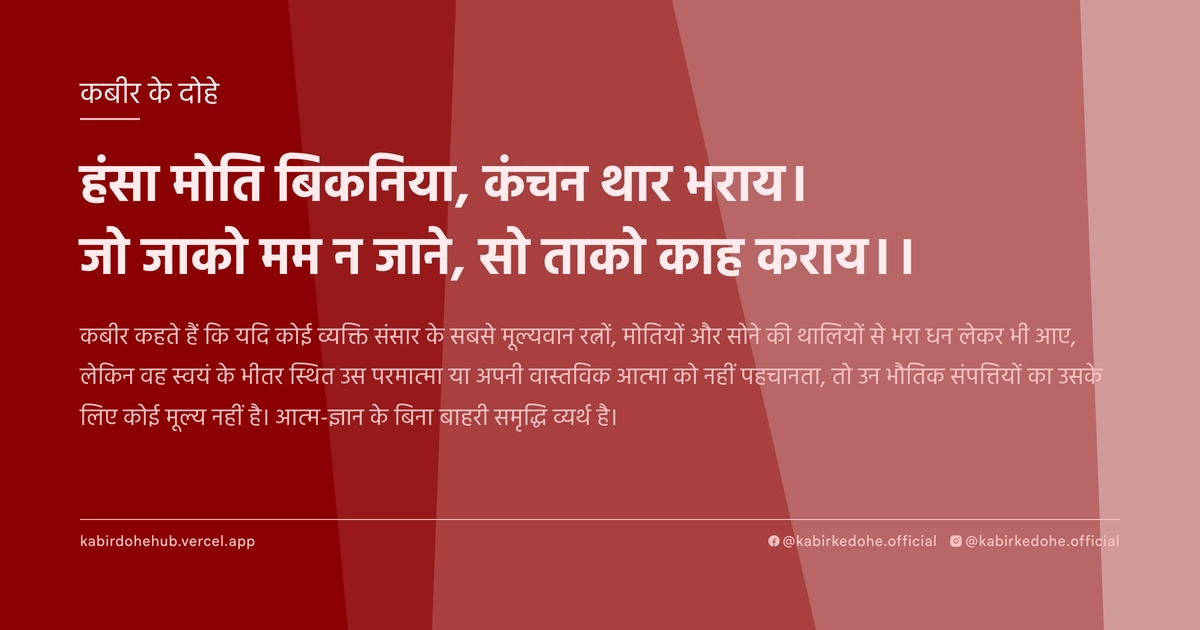
हंसा मोति बिकनिया, कंचन थार भराय।
जो जाको मम न जाने, सो ताको काह कराय।।
Hansa moti bikaniya, kanchan thar bharay. Jo jako mam na jaane, so tako kah karay.
इस पृष्ठ पर इस कबीर दोहे का अर्थ (meaning), हिंदी व्याख्या और अंग्रेज़ी अनुवाद, दार्शनिक विश्लेषण और व्यावहारिक जीवन सीख दी गई है। यह दोहा निर्गुण ब्रह्म (Nirguna Brahman) विषय से जुड़ा है — Kabir doha meaning and explanation in Hindi and English.
अर्थ (Meaning):
कबीर कहते हैं कि यदि कोई व्यक्ति संसार के सबसे मूल्यवान रत्नों, मोतियों और सोने की थालियों से भरा धन लेकर भी आए, लेकिन वह स्वयं के भीतर स्थित उस परमात्मा या अपनी वास्तविक आत्मा को नहीं पहचानता, तो उन भौतिक संपत्तियों का उसके लिए कोई मूल्य नहीं है। आत्म-ज्ञान के बिना बाहरी समृद्धि व्यर्थ है।
Kabir asserts that even if one possesses the most exquisite pearls and trays overflowing with gold, such material abundance remains utterly meaningless if the individual fails to recognize the Divine presence within themselves. Without the realization of the Self, all external wealth is a void.
व्याख्या (Interpretation):
इस दोहे का शाब्दिक अर्थ है कि भौतिक संपदा की कोई कीमत नहीं है यदि आत्म-साक्षात्कार न हुआ हो। यहाँ 'हंसा' आत्मा का प्रतीक है और 'मोति' व 'कंचन' सांसारिक मोह-माया के उच्चतम रूप हैं। कबीर निर्गुण भक्ति के माध्यम से समझाते हैं कि मनुष्य माया के जाल में फंसकर बाहरी चमक-धमक को ही सत्य मान लेता है, जबकि वास्तविक सत्य 'अद्वैत' है—जहाँ आत्मा और परमात्मा एक हैं। यह विरोधाभास है कि हम जिसे खोजने बाहर जाते हैं, वह हमारे भीतर ही है। जब तक 'मैं' (अहंकार) जीवित है, तब तक हम उस 'मम' (परमात्मा/स्वयं) को नहीं जान सकते।
Literally, the verse posits that material riches are worthless without self-realization. The 'Hansa' (Swan) symbolizes the pure soul, while 'pearls' and 'gold' represent the pinnacle of worldly attachments. Through the lens of Nirgun Bhakti, Kabir illustrates how humans are ensnared by Maya, mistaking external luster for ultimate truth. The central paradox is that the seeker searches externally for that which resides internally—the non-duality of Atman and Brahman. Until the ego is annihilated, the realization of the Divine 'I' remains obscured by the illusion of the separate self.
दार्शनिक विश्लेषण (Philosophical Analysis):
कबीर का यह दृष्टिकोण उनके युग के कर्मकांडीय आडंबरों और जातिगत श्रेष्ठता पर एक कड़ा प्रहार है। उस समय समाज में यह धारणा थी कि दान-पुण्य और बाहरी अनुष्ठानों से मोक्ष प्राप्त किया जा सकता है। कबीर इस विचार को नकारते हुए कहते हैं कि मोक्ष किसी वस्तु या बाहरी क्रिया से नहीं, बल्कि आंतरिक चेतना के जागरण से आता है।
यह दर्शन अद्वैत वेदांत के करीब है, जहाँ यह माना जाता है कि जीव और ब्रह्म एक ही हैं। कबीर यहाँ 'माया' को एक पर्दे के रूप में देखते हैं जो मनुष्य को उसकी वास्तविक प्रकृति से दूर रखता है। सोने और मोतियों का उल्लेख केवल धन के लिए नहीं, बल्कि उन सभी मानसिक और सामाजिक उपलब्धियों के लिए है जिन्हें हम अपनी पहचान मान लेते हैं।
सूफी मत के 'फना' (अहंकार का विनाश) के सिद्धांत के साथ इसका गहरा संबंध है। जब तक व्यक्ति अपनी सीमित पहचान (नाम, पद, संपत्ति) से चिपका रहता है, वह उस अनंत सत्य का अनुभव नहीं कर सकता। कबीर का तर्क है कि आध्यात्मिक शून्यता को भौतिकता से नहीं भरा जा सकता।
ऐतिहासिक रूप से, कबीर ने एक बुनकर के रूप में जीवन जिया, जिससे उन्हें यह समझ मिली कि जैसे धागों से कपड़ा बनता है, वैसे ही यह संसार माया के धागों से बुना है। उन्होंने सिखाया कि वास्तविक 'संपत्ति' वह शांति और बोध है जो ध्यान और प्रेम से प्राप्त होता है।
अंततः, यह दोहा मनोवैज्ञानिक रूपांतरण की बात करता है। यह हमें बाहरी सत्यापन (External Validation) की भूख को छोड़कर आंतरिक पूर्णता की ओर ले जाने का आह्वान है। यह उस मानसिक दासता से मुक्ति है जहाँ मनुष्य अपनी कीमत अपनी वस्तुओं से आंकता है।
Kabir's perspective serves as a scathing critique of the ritualistic pomposity and caste-based hierarchies of his era. During his time, the prevailing belief was that salvation could be purchased through lavish donations or achieved via rigid external rituals. Kabir dismantles this notion, asserting that liberation is not a commodity but an awakening of internal consciousness.
This philosophy aligns closely with Advaita Vedanta, which posits the fundamental identity of the individual soul (Atman) and the universal absolute (Brahman). Kabir views 'Maya' as a veil that obscures this truth. The mention of gold and pearls transcends mere currency; it symbolizes all social status, intellectual pride, and material accolades that humans mistake for their true identity.
There is a profound resonance here with the Sufi concept of 'Fana'—the annihilation of the ego. Kabir argues that as long as one clings to a limited, separate identity, the experience of the Infinite remains impossible. Spiritual void cannot be filled with material abundance.
Historically, Kabir's life as a weaver provided him with a visceral metaphor: just as cloth is woven from threads, the world is woven from the threads of illusion. He championed the idea that true wealth is the inner stillness and gnosis attained through love and meditation.
Ultimately, this verse advocates for a psychological transformation. It calls for a shift from seeking external validation to discovering internal wholeness, liberating the human spirit from the fallacy of equating self-worth with possession.
मूल संदेश (Core Message):
- बाहरी चमक अक्सर आंतरिक अंधकार को छिपाने का एक पर्दा होती है।
- सच्ची संपत्ति वह है जिसे कोई चोर चुरा नहीं सकता और कोई समय मिटा नहीं सकता।
- अहंकार का विसर्जन ही परमात्मा के मिलन का एकमात्र द्वार है।
- स्वयं को जानना ही ब्रह्मांड के सबसे बड़े रहस्य को सुलझाना है।
- पद और प्रतिष्ठा केवल सामाजिक मुखौटे हैं; आत्मा ही एकमात्र सत्य है।
- External luster is often a veil hiding internal darkness.
- True wealth is that which no thief can steal and no time can erode.
- The dissolution of ego is the only gateway to Divine union.
- Knowing the Self is the resolution of the universe's greatest mystery.
- Status and prestige are mere social masks; the Soul is the only truth.
व्यावहारिक उदाहरण (Practical Example):
एक समय की बात है, वाराणसी के घाटों पर रहने वाला एक वृद्ध मूर्तिकार था, जिसका नाम माधव था। माधव अपनी कला में इतना निपुण था कि उसके बनाए पत्थर के विग्रह जीवित प्रतीत होते थे। उसकी ख्याति इतनी बढ़ गई कि दूर-दराज के राजा और सेठ उसे सोने की अशर्फियाँ और कीमती रत्न भेंट करते थे। माधव का घर धीरे-धीरे विलासिता से भर गया, लेकिन उसके मन की बेचैनी बढ़ती गई।
वह रात भर जागता और सोचता कि क्या उसकी कला वास्तव में उसे शांति दे रही है? वह अपनी सोने की थालियों को देखता और महसूस करता कि वे उसके अकेलेपन को और गहरा कर रही हैं। उसे लगता था कि वह केवल पत्थरों को आकार दे रहा है, लेकिन अपने स्वयं के जीवन को आकार देने में असफल रहा है।
एक दिन, एक फकीर उसके पास आया। फकीर के पास न तो जूते थे और न ही कोई धन, लेकिन उसके चेहरे पर एक ऐसी चमक थी जिसे माधव ने अपने सबसे महंगे रत्नों में भी नहीं देखा था। माधव ने गर्व से अपनी स्वर्ण मुद्राएं दिखाईं और पूछा, "स्वामी, मेरे पास सब कुछ है, फिर भी मैं अधूरा क्यों हूँ?"
फकीर मुस्कुराया और बोला, "माधव, तूने पत्थर को तो भगवान बना दिया, लेकिन अपने भीतर के भगवान को पत्थर बना दिया। तूने बाहरी दुनिया को सजाया, पर अपनी आत्मा को भुला दिया। ये सोने की थालियाँ तब तक बोझ हैं, जब तक तू यह नहीं जान लेता कि तू स्वयं वह अनमोल रत्न है।"
यह सुनकर माधव के भीतर कुछ टूट गया। उसे अहसास हुआ कि वह अपनी पहचान अपनी प्रसिद्धि और धन में खोज रहा था, जबकि वास्तविक शांति उसके भीतर की मौन उपस्थिति में थी।
अगले ही दिन, माधव ने अपनी विलासिता का त्याग नहीं किया, बल्कि उसके प्रति अपना मोह छोड़ दिया। उसने अपनी कला को अहंकार की संतुष्टि के बजाय सेवा का माध्यम बनाया।
अब वह मूर्तियों को केवल बेचने के लिए नहीं, बल्कि भक्ति भाव से बनाने लगा। उसने गरीब बच्चों को मुफ्त में कला सिखानी शुरू कर दी।
उसका जीवन बदल गया। अब वह सोने की थालियों को नहीं, बल्कि अपने भीतर के उस 'हंसा' (शुद्ध आत्मा) को निहारता था।
माधव ने पाया कि जब उसने स्वयं को जान लिया, तो दुनिया की हर छोटी चीज उसे कीमती लगने लगी, क्योंकि अब वह सब कुछ उसी एक परमात्मा का प्रतिबिंब था।
उसकी कला में अब एक नई गहराई थी, क्योंकि वह अब पत्थर को नहीं, बल्कि अपनी आत्मा को तराश रहा था।
Once, in the sacred lanes of Varanasi, lived an elderly sculptor named Madhav. Madhav was a master of his craft; the stone idols he carved seemed to breathe with life. His fame grew such that kings and wealthy merchants showered him with gold coins and precious gems. His home gradually filled with luxury, yet his inner restlessness only intensified.
He would spend sleepless nights wondering if his art truly brought him peace. He looked at his golden platters and felt they only deepened his loneliness. He realized he was shaping stones, but failing to shape his own existence.
One day, a wandering dervish arrived. The dervish possessed neither shoes nor wealth, yet his face radiated a luminosity that Madhav had never seen in his most expensive jewels. Madhav proudly displayed his gold and asked, "Swami, I possess everything, yet why do I feel incomplete?"
The dervish smiled and replied, "Madhav, you have turned stone into God, but you have turned the God within you into stone. You decorated the external world but forgot your own soul. These golden trays are merely burdens until you realize that you yourself are the priceless jewel."
Upon hearing this, something shattered within Madhav. He realized he had been seeking his identity in fame and wealth, while true peace lay in the silent presence within him.
The next day, Madhav did not necessarily discard his luxuries, but he discarded his attachment to them. He transformed his art from a tool of ego-satisfaction into a medium of service.
He began teaching art to underprivileged children for free. His life shifted fundamentally.
He no longer gazed at the golden platters; instead, he contemplated the 'Hansa' (the pure soul) within.
Madhav discovered that once he knew himself, every small thing in the world became precious, for everything was now a reflection of the one Divine Truth.
His art acquired a new depth, for he was no longer carving stone, but carving his own soul.
अभ्यास मार्गदर्शन (Practice Guidance):
- दैनिक मौन अभ्यास: प्रतिदिन 20 मिनट पूर्ण मौन में बैठें। बाहरी शोर को छोड़कर अपने भीतर की गूँज को सुनने का प्रयास करें।
- आत्म-पूछताछ जर्नल: हर रात लिखें—'आज मैंने अपनी पहचान किन बाहरी चीजों (पद, प्रशंसा, वस्तु) से जोड़ी?' और फिर पूछें—'यदि ये सब छीन लिए जाएं, तो मैं कौन हूँ?'
- अनासक्ति का प्रयोग: सप्ताह में एक बार किसी ऐसी वस्तु का त्याग करें जिससे आप बहुत अधिक जुड़े हों, यह महसूस करने के लिए कि आपकी खुशी वस्तु पर निर्भर नहीं है।
- निदान चेकलिस्ट: क्या मैं दूसरों की प्रशंसा से उत्साहित और आलोचना से दुखी होता हूँ? क्या मैं अपनी शांति बाहरी परिस्थितियों में खोज रहा हूँ? यदि हाँ, तो मैं अभी भी 'सोने की थालियों' के मोह में हूँ।
- Daily Silence Practice: Sit in absolute silence for 20 minutes daily. Attempt to ignore external noise and listen to the internal resonance of your being.
- Self-Inquiry Journaling: Every night, record: 'Which external markers (status, praise, possessions) did I tie my identity to today?' Then ask: 'If these were stripped away, who would I be?'
- Detachment Experiment: Once a week, consciously let go of a possession you are overly attached to, realizing that your joy is independent of material objects.
- Diagnostic Checklist: Do I feel elated by praise and devastated by criticism? Am I seeking peace in external circumstances? If yes, I am still clinging to the 'golden platters'.
चिंतन प्रश्न (Reflection Questions):
- यदि मेरी सारी डिग्रियां, बैंक बैलेंस और सामाजिक प्रतिष्ठा आज छीन ली जाए, तो मेरे पास ऐसा क्या बचेगा जिसे मैं 'मैं' कह सकूँ?
- मैं अपनी डिजिटल पहचान (सोशल मीडिया) को संवारने में जितना समय लगाता हूँ, क्या उसका दसवां हिस्सा भी मैं अपने आंतरिक मौन को समझने में लगाता हूँ?
- क्या मेरी उदारता वास्तव में निस्वार्थ है, या यह मेरे भीतर के 'दाता' वाले अहंकार को संतुष्ट करने का एक तरीका है?
- मैं किन ऐसी 'सोने की थालियों' (अपेक्षाओं) को ढो रहा हूँ जो मुझे वास्तव में मेरे अपने स्वरूप से दूर ले जा रही हैं?
- क्या मैं वास्तव में स्वतंत्र हूँ, या मैं अपनी सुख-सुविधाओं का एक परिष्कृत कैदी हूँ?
- If all my degrees, bank balance, and social prestige were stripped away today, what would remain that I could truly call 'I'?
- Do I spend even a tenth of the time I devote to curating my digital identity on understanding my internal silence?
- Is my generosity truly selfless, or is it a mechanism to satisfy the ego of being a 'giver'?
- Which 'golden platters' (expectations) am I carrying that are actually distancing me from my true nature?
- Am I truly free, or am I merely a sophisticated prisoner of my own comforts?