
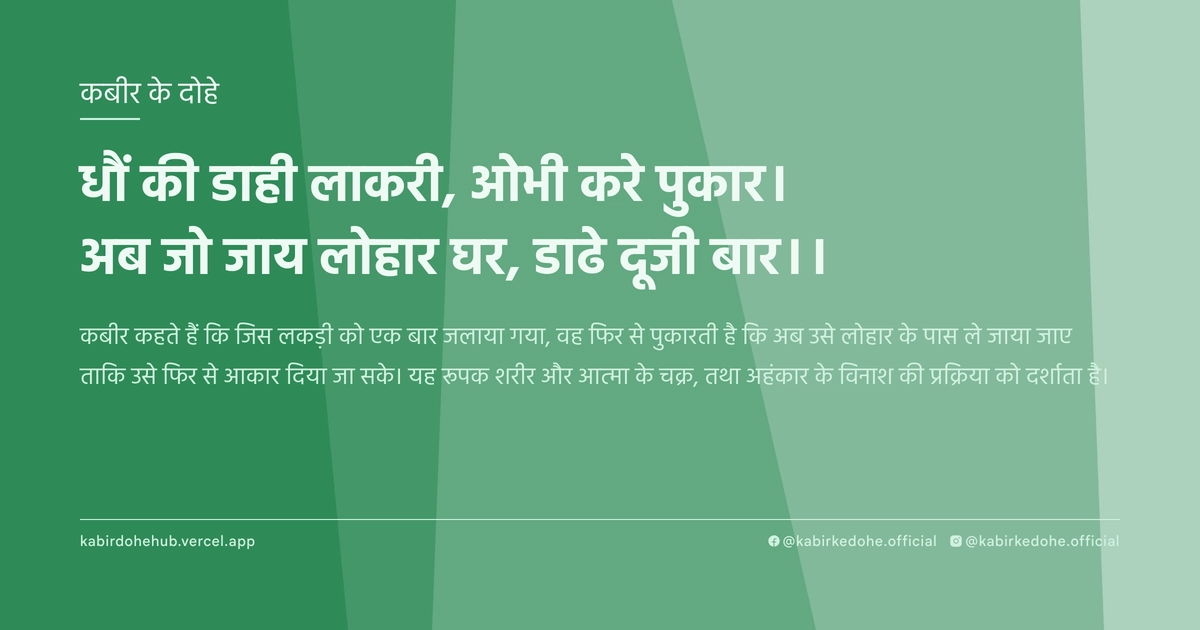
धौं की डाही लाकरी, ओभी करे पुकार।
अब जो जाय लोहार घर, डाढे दूजी बार।।
Dhaun ki dahi lakari, obhi kare pukar. Ab jo jaaye lohar ghar, dadhe dooji baar.
इस पृष्ठ पर इस कबीर दोहे का अर्थ (meaning), हिंदी व्याख्या और अंग्रेज़ी अनुवाद, दार्शनिक विश्लेषण और व्यावहारिक जीवन सीख दी गई है। यह दोहा कर्म (Karma) विषय से जुड़ा है — Kabir doha meaning and explanation in Hindi and English.
अर्थ (Meaning):
कबीर कहते हैं कि जिस लकड़ी को एक बार जलाया गया, वह फिर से पुकारती है कि अब उसे लोहार के पास ले जाया जाए ताकि उसे फिर से आकार दिया जा सके। यह रूपक शरीर और आत्मा के चक्र, तथा अहंकार के विनाश की प्रक्रिया को दर्शाता है।
Kabir speaks of a piece of wood that has been burnt and now cries out to be taken to the blacksmith. This serves as a profound metaphor for the human soul and body, illustrating the cycle of suffering and the desperate need for a spiritual transformation to break the loop of ego.
व्याख्या (Interpretation):
शाब्दिक अर्थ में यह एक जली हुई लकड़ी की व्यथा है, परंतु आध्यात्मिक स्तर पर 'लकड़ी' मानव शरीर और 'अग्नि' सांसारिक दुखों और वासनाओं का प्रतीक है। Nirgun Bhakti के अनुसार, जब तक आत्मा माया के प्रभाव में रहती है, वह जन्म-मृत्यु के चक्र में फंसी रहती है। 'लोहार' यहाँ उस सद्गुरु का प्रतीक है जो कठोर प्रहारों (ज्ञान) के माध्यम से अहंकार को तोड़ता है। यह दोहा अद्वैत वेदांत के उस सत्य को उजागर करता है जहाँ जीव को यह अहसास होता है कि उसकी वर्तमान स्थिति केवल एक भ्रम है और मुक्ति के लिए आत्म-विनाश (ego-death) आवश्यक है। यह विरोधाभास है कि जिसे हम विनाश समझते हैं, वही वास्तव में वास्तविक स्वरूप की प्राप्ति है।
Literally, it describes the plight of burnt wood, but spiritually, the 'wood' represents the human vessel and the 'fire' symbolizes worldly desires and suffering. In the context of Nirgun Bhakti, as long as the soul remains under the spell of Maya, it is trapped in the cycle of Samsara. The 'blacksmith' represents the Satguru, whose strikes of wisdom shatter the hardened ego. This aligns with Advaita Vedanta, where the realization dawns that the individual self is an illusion. The central paradox is that only through the 'destruction' of the false identity can the eternal Atman-Brahman non-duality be realized. The cry of the wood is the soul's awakening to its own fragmentation.
दार्शनिक विश्लेषण (Philosophical Analysis):
कबीर का यह दोहा उनके युग के कर्मकांडीय आडंबरों पर एक तीखा प्रहार है। उन्होंने देखा कि लोग बाहरी पूजा-पाठ में लीन थे, जबकि आंतरिक रूपांतरण की प्रक्रिया पूरी तरह उपेक्षित थी। कबीर यहाँ यह स्पष्ट करते हैं कि केवल प्रार्थना करने से मुक्ति नहीं मिलती, बल्कि एक 'लोहार' जैसी कठोर प्रक्रिया से गुजरना पड़ता है, जहाँ अहंकार को जलाया और पीटा जाता है।
यह दर्शन सूफी मत के 'फना' (annihilation) के सिद्धांत से मेल खाता है, जहाँ साधक को ईश्वर में विलीन होने के लिए अपने 'मैं' को पूरी तरह मिटाना पड़ता है। कबीर का तर्क है कि जब तक पुराना ढांचा (अहंकार) पूरी तरह नष्ट नहीं होता, तब तक नया आध्यात्मिक स्वरूप जन्म नहीं ले सकता।
अद्वैत वेदांत के दृष्टिकोण से, यह लकड़ी वह अविद्या है जो सत्य को ढके हुए है। जब ज्ञान की अग्नि इसे जलाती है, तो जो शेष बचता है वह शुद्ध चेतना है। कबीर यहाँ यह चेतावनी देते हैं कि यदि हम केवल सतही सुधार चाहते हैं, तो हम बार-बार उसी दुखद चक्र में लौटेंगे।
ऐतिहासिक रूप से, कबीर ने जाति और धर्म के भेदों को नकारते हुए यह संदेश दिया कि आध्यात्मिक पीड़ा सार्वभौमिक है। चाहे कोई ब्राह्मण हो या बुनकर, अहंकार की अग्नि सबको समान रूप से जलाती है। मुक्ति का मार्ग केवल आंतरिक शुद्धि और गुरु के मार्गदर्शन में निहित है।
मनोवैज्ञानिक स्तर पर, यह दोहा संज्ञानात्मक विसंगति (cognitive dissonance) की बात करता है। जब व्यक्ति को अपनी त्रुटियों का अहसास होता है, तो वह एक आंतरिक पुकार सुनता है। यह पुकार ही उसे परिवर्तन की ओर ले जाती है, बशर्ते वह लोहार के प्रहारों (कठिन आत्म-निरीक्षण) को सहने के लिए तैयार हो।
This couplet is a sharp critique of the ritualistic pomposity of Kabir's era. He observed people immersed in external worship while ignoring the internal alchemy of transformation. Kabir asserts that liberation is not achieved through mere prayer, but through a rigorous process akin to a blacksmith's forge, where the ego is burned and hammered into a new shape.
This philosophy mirrors the Sufi concept of 'Fana' (annihilation), where the seeker must completely erase the 'I' to merge with the Divine. Kabir argues that unless the old structure of the ego is utterly destroyed, the true spiritual essence cannot emerge. The process is inherently painful but necessary.
From the lens of Advaita Vedanta, the wood represents 'Avidya' (ignorance) masking the Truth. When the fire of knowledge consumes this ignorance, only pure consciousness remains. Kabir warns that seeking superficial improvements only ensures a return to the same cycle of suffering.
Historically, by rejecting caste and creed, Kabir emphasized that spiritual agony is universal. Whether a priest or a weaver, the fire of ego burns all equally. The only path to liberation lies in internal purification and the guidance of a Satguru who is unafraid to be rigorous.
Psychologically, this speaks to the moment of crisis or 'dark night of the soul.' When a person recognizes their fragmentation, they hear an internal cry. This cry is the catalyst for change, provided the individual is willing to endure the 'strikes' of honest self-examination and the dismantling of their false persona.
मूल संदेश (Core Message):
- अहंकार का विनाश ही वास्तविक आध्यात्मिक जन्म है।
- दुख केवल पीड़ा नहीं, बल्कि रूपांतरण का उपकरण है।
- गुरु का कठोर ज्ञान ही आत्मा की जंग हटाता है।
- बाहरी पहचान को खोना आंतरिक सत्य को पाना है।
- माया का भ्रम टूटने पर ही अद्वैत का अनुभव होता है।
- समर्पण वह अग्नि है जो अशुद्धियों को जला देती है।
- The annihilation of ego is the only true spiritual birth.
- Suffering is not mere pain, but a tool for transformation.
- The rigorous wisdom of a Guru removes the rust of the soul.
- Losing the external identity is the key to finding the internal truth.
- The experience of non-duality occurs only when the illusion of Maya breaks.
- Surrender is the fire that incinerates all spiritual impurities.
व्यावहारिक उदाहरण (Practical Example):
वाराणसी के एक पुराने घाट पर रामदीन नाम का एक वृद्ध नाविक रहता था। वह अपनी नाव और अपनी कुशलता पर बहुत गर्व करता था और अन्य नाविकों को तुच्छ समझता था। उसका अहंकार उसकी नाव की तरह ही मजबूत हो चुका था।
एक दिन एक भीषण तूफान आया जिसने उसकी नाव को पूरी तरह नष्ट कर दिया। रामदीन के पास अब न नाव थी और न ही वह सम्मान जो उसे अपनी श्रेष्ठता से मिलता था। वह टूट गया और अवसाद में डूब गया।
वह घाट की सीढ़ियों पर बैठा अपनी किस्मत को कोस रहा था, तभी उसकी मुलाकात एक मौन साधु से हुई। साधु ने उसे केवल एक बात कही, 'जब तक तुम्हारी पुरानी नाव बची थी, तुम केवल लहरों पर तैर रहे थे; अब जब नाव डूब गई है, तुम गहराई को देख सकते हो।'
रामदीन को महसूस हुआ कि उसकी नाव का टूटना वास्तव में उसके अहंकार का टूटना था। वह अब तक जिसे अपनी 'कुशलता' समझ रहा था, वह केवल एक मुखौटा था जिसने उसे दूसरों से अलग कर दिया था।
उसने महसूस किया कि वह उस 'जली हुई लकड़ी' की तरह है जिसे अब फिर से आकार लेने की जरूरत है। उसने अपना शेष जीवन अन्य नाविकों की मदद करने और उन्हें निस्वार्थ भाव से सिखाने में लगा दिया।
उसने पाया कि जब उसने अपनी श्रेष्ठता का दावा छोड़ दिया, तो उसे एक ऐसी शांति मिली जो उसने अपनी सबसे महंगी नाव के समय भी महसूस नहीं की थी।
उसका व्यवहार बदल गया; वह अब दूसरों की आलोचना करने के बजाय उनकी कठिनाइयों को समझने लगा। वह अब केवल एक नाविक नहीं, बल्कि एक मार्गदर्शक बन गया था।
यह 'कबीर ट्विस्ट' था—विनाश के माध्यम से सृजन। उसकी बाहरी हानि ने उसे आंतरिक समृद्धि प्रदान की, और उसने जान लिया कि लोहार के प्रहार (जीवन के दुख) वास्तव में उसे निखारने के लिए थे।
On an ancient ghat in Varanasi lived an elderly boatman named Ramdeen. He took immense pride in his boat and his navigation skills, often looking down upon other boatmen. His ego had become as rigid and hardened as the hull of his boat.
One day, a violent storm struck, completely smashing his boat into splinters. Ramdeen was left with nothing—no vessel, no livelihood, and no status derived from his perceived superiority. He collapsed into a deep state of despair.
While sitting on the stone steps of the ghat, cursing his fate, he encountered a silent monk. The monk spoke only one sentence: 'As long as your old boat existed, you were merely floating on the surface; now that it has sunk, you can finally see the depths.'
Ramdeen realized that the destruction of his boat was actually the destruction of his ego. What he had termed 'skill' was merely a mask that had isolated him from his fellow humans.
He felt like that 'burnt piece of wood' which now needed to be reshaped. He spent the remainder of his days helping other boatmen and teaching them without any desire for recognition or reward.
He discovered that by relinquishing his claim to superiority, he attained a peace that had eluded him even when he owned the finest boat on the river.
His behavior transformed; instead of criticizing others, he began to empathize with their struggles. He ceased being just a boatman and became a spiritual guide for his community.
This was the 'Kabir Twist'—creation through destruction. His external loss granted him internal abundance, and he understood that the blacksmith's strikes (life's tragedies) were actually refining his soul.
अभ्यास मार्गदर्शन (Practice Guidance):
- प्रतिदिन 20 मिनट मौन बैठें और विचार करें कि आपके जीवन में कौन सी 'पुरानी पहचान' या अहंकार है जो अब नष्ट होने की मांग कर रहा है।
- एक डायरी लिखें जिसमें उन घटनाओं का विवरण हो जब आपको अपमानित महसूस हुआ; विश्लेषण करें कि क्या वह दर्द आपके अहंकार का 'लोहार' था जो आपको बदल रहा था।
- व्यवहार परिवर्तन: जब भी आप किसी को नीचा दिखाने की इच्छा करें, रुकें और स्वयं से पूछें, 'क्या मैं अभी भी उसी पुरानी जली हुई लकड़ी के टुकड़े जैसा व्यवहार कर रहा हूँ?'
- निदान चेकलिस्ट: यदि आप अभी भी दूसरों की सफलता से जलते हैं या अपनी गलतियों को स्वीकार करने में कठिनाई महसूस करते हैं, तो समझें कि आपका अहंकार अभी भी 'कठोर' है और उसे और अधिक प्रहारों की आवश्यकता है।
- Spend 20 minutes in daily silence, contemplating which 'old identity' or egoic structure in your life is currently demanding to be dismantled.
- Maintain a journal documenting moments of perceived insult or failure; analyze whether that pain was the 'blacksmith' of your ego, attempting to reshape you.
- Behavioral Shift: Whenever the urge to belittle another arises, pause and ask, 'Am I still acting as that burnt piece of wood, clinging to a dead form?'
- Diagnostic Checklist: If you still experience jealousy toward others' success or struggle to admit mistakes, recognize that your ego remains 'hardened' and requires further refinement through awareness.
चिंतन प्रश्न (Reflection Questions):
- वह कौन सा मुखौटा है जिसे आप दुनिया के सामने पहनते हैं, और यदि वह आज छिन जाए, तो आपके पास क्या बचेगा?
- क्या आप अपने जीवन के संकटों को 'सजा' के रूप में देखते हैं या 'लोहार के प्रहार' के रूप में जो आपको निखार रहे हैं?
- आपकी डिजिटल पहचान (सोशल मीडिया) आपके वास्तविक स्वरूप को कितना छिपाती है और कितना बढ़ा-चढ़ाकर पेश करती है?
- क्या आप वास्तव में परिवर्तन चाहते हैं, या आप केवल अपनी वर्तमान स्थिति के साथ 'समझौता' करना चाहते हैं?
- वह कौन सा गुप्त पूर्वाग्रह है जो आपको दूसरों से श्रेष्ठ या निम्न महसूस कराता है, और वह आपकी मुक्ति में कैसे बाधा है?
- यदि आपका पूरा अस्तित्व एक पल में शून्य हो जाए, तो क्या आप उस शून्यता में शांति पाएंगे या भय?
- What is the mask you wear for the world, and if it were stripped away today, what would actually remain of you?
- Do you perceive the crises of your life as 'punishments' or as the 'blacksmith's strikes' refining your essence?
- To what extent does your digital persona hide your true self or amplify a curated illusion of your identity?
- Do you truly desire transformation, or are you merely seeking a 'comfortable compromise' with your current state?
- What hidden bias makes you feel superior or inferior to others, and how is this hindering your liberation?
- If your entire constructed identity vanished in a moment, would you find peace in that void or overwhelming terror?