
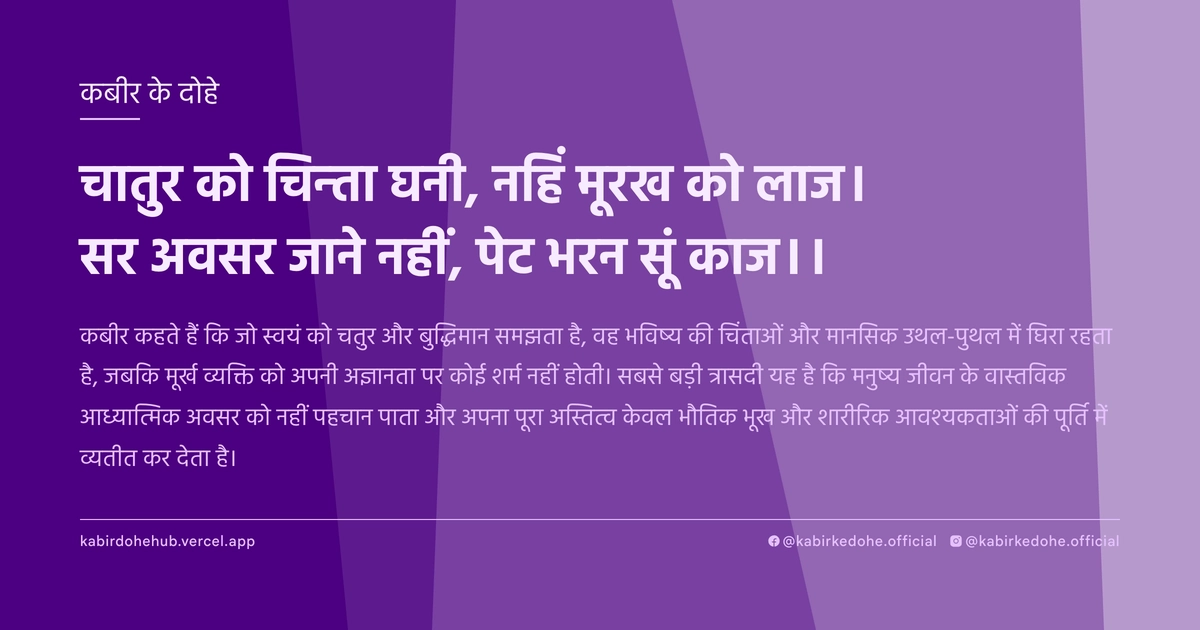
चातुर को चिन्ता घनी, नहिं मूरख को लाज।
सर अवसर जाने नहीं, पेट भरन सूं काज।।
Chatur ko chinta ghani, nahin moorakh ko laaj. Sar avsar jaane nahi, pet bharan sun kaaj.
इस पृष्ठ पर इस कबीर दोहे का अर्थ (meaning), हिंदी व्याख्या और अंग्रेज़ी अनुवाद, दार्शनिक विश्लेषण और व्यावहारिक जीवन सीख दी गई है। यह दोहा अहंकार (The Ego) विषय से जुड़ा है — Kabir doha meaning and explanation in Hindi and English.
अर्थ (Meaning):
कबीर कहते हैं कि जो स्वयं को चतुर और बुद्धिमान समझता है, वह भविष्य की चिंताओं और मानसिक उथल-पुथल में घिरा रहता है, जबकि मूर्ख व्यक्ति को अपनी अज्ञानता पर कोई शर्म नहीं होती। सबसे बड़ी त्रासदी यह है कि मनुष्य जीवन के वास्तविक आध्यात्मिक अवसर को नहीं पहचान पाता और अपना पूरा अस्तित्व केवल भौतिक भूख और शारीरिक आवश्यकताओं की पूर्ति में व्यतीत कर देता है।
Kabir observes that the self-proclaimed clever person is consumed by endless anxieties and mental turmoil, while the fool remains blissfully unaware of their own ignorance. The core tragedy lies in the human inability to recognize the supreme spiritual opportunity of life, spending one's entire existence merely in the pursuit of satiating physical hunger and material needs.
व्याख्या (Interpretation):
यह दोहा मानवीय चेतना के दो छोरों—अहंकारी बुद्धि और जड़ अज्ञान—का विश्लेषण करता है। 'चातुर' यहाँ उस व्यक्ति का प्रतीक है जो माया के जाल में उलझा है और अपनी बुद्धि के अहंकार के कारण निरंतर तनाव में रहता है। 'मूरख' वह है जो अपनी आध्यात्मिक रिक्तता से अनजान है। कबीर यहाँ 'सर अवसर' (श्रेष्ठ अवसर) का उल्लेख करते हैं, जो मानव जन्म है। जब तक मनुष्य केवल 'पेट भरन' यानी इंद्रिय सुखों और भौतिक उत्तरजीविता तक सीमित रहता है, वह उस अद्वैत सत्य को नहीं देख पाता जहाँ आत्मा और परमात्मा एक हैं। यह विरोधाभास है कि बुद्धिमान व्यक्ति चिंता में और मूर्ख व्यक्ति निर्लज्जता में अपनी मुक्ति का मार्ग अवरुद्ध कर लेता है।
This couplet analyzes two extremes of human consciousness: the egoic intellect and inert ignorance. The 'clever' person symbolizes one entangled in the web of Maya, living in constant stress due to the pride of their own intellect. The 'fool' is one oblivious to their spiritual void. Kabir refers to the 'Sar Avsar' (supreme opportunity), which is the human birth itself. As long as a human remains confined to 'pet bharan'—the satiation of sensory pleasures and material survival—they fail to perceive the Advaita truth where the Atman and Brahman are one. It is a paradox that while the intellectual is blocked by anxiety, the fool is blocked by shamelessness, both missing the gateway to liberation.
दार्शनिक विश्लेषण (Philosophical Analysis):
कबीर का यह प्रहार उस सामाजिक और धार्मिक पाखंड पर है जहाँ बाहरी विद्वत्ता को वास्तविक ज्ञान माना जाता है। उनके युग में, पंडितों और मुल्लाओं की 'चतुराई' केवल शास्त्रों के रटने तक सीमित थी, जो उन्हें वास्तविक सत्य से दूर ले गई। यह विश्लेषण अद्वैत वेदांत के उस सिद्धांत से मेल खाता है जहाँ 'अविद्या' (अज्ञान) ही सभी दुखों का मूल कारण है। चाहे वह बुद्धिमान की चिंता हो या मूर्ख की निर्लज्जता, दोनों ही माया के विभिन्न रूप हैं।
सूफी मत के नजरिए से, यह 'नफ्स' (अहंकार) का संघर्ष है। जब तक व्यक्ति अपनी भौतिक आवश्यकताओं (पेट भरन) को ही जीवन का अंतिम लक्ष्य मानता है, वह 'इश्क-ए-हकीकी' (ईश्वरीय प्रेम) का अनुभव नहीं कर सकता। कबीर यहाँ यह स्पष्ट करते हैं कि बौद्धिक क्षमता और आध्यात्मिक प्रज्ञा (Intuition) दो अलग चीजें हैं। बुद्धि विभाजित करती है, जबकि प्रज्ञा एकीकृत करती है।
निर्गुण भक्ति का मार्ग यह सिखाता है कि ईश्वर किसी मंदिर या मस्जिद में नहीं, बल्कि उस जागरूकता में है जो भौतिकता से ऊपर उठती है। कबीर का विरोध उन लोगों से है जो धर्म को केवल एक सामाजिक औपचारिकता या जीविका का साधन बना लेते हैं। उनके लिए, वास्तविक चतुराई वह है जो व्यक्ति को शून्य की ओर ले जाए, न कि वह जो उसे संसार के मोह में और गहराई से फंसा दे।
मनोवैज्ञानिक स्तर पर, 'चिंता' उस डर का परिणाम है जो भविष्य के नियंत्रण की इच्छा से पैदा होता है। यह नियंत्रण की इच्छा ही अहंकार का मूल है। जब व्यक्ति यह समझ जाता है कि वह केवल एक निमित्त है और वास्तविक कर्ता परमात्मा है, तब चिंता समाप्त हो जाती है। यह 'अहं' का विसर्जन ही मोक्ष की पहली सीढ़ी है।
अंततः, कबीर यह संदेश देते हैं कि जीवन का उद्देश्य केवल जैविक उत्तरजीविता नहीं है। यदि हम केवल पेट भरने के लिए जी रहे हैं, तो हम पशुवत जीवन जी रहे हैं। मनुष्य होने का अर्थ है उस 'अवसर' को पहचानना जहाँ चेतना स्वयं को पहचान सके और द्वैत के पर्दे को हटाकर अद्वैत की अनुभूति कर सके।
Kabir's critique targets the social and religious hypocrisy where external erudition is mistaken for true wisdom. In his era, the 'cleverness' of pundits and mullahs was limited to rote memorization of scriptures, which distanced them from actual truth. This analysis aligns with the Advaita Vedanta principle that 'Avidya' (ignorance) is the root cause of all suffering. Whether it is the anxiety of the intellectual or the shamelessness of the fool, both are manifestations of Maya.
From a Sufi perspective, this is the struggle of the 'Nafs' (ego). As long as a person considers material needs (pet bharan) as the ultimate goal of life, they cannot experience 'Ishq-e-Haqiqi' (Divine Love). Kabir clarifies that intellectual capacity and spiritual intuition are distinct. The intellect divides, whereas intuition integrates.
The path of Nirgun Bhakti teaches that the Divine resides not in temples or mosques, but in the awareness that transcends materiality. Kabir opposes those who turn religion into a mere social formality or a means of livelihood. For him, true cleverness is that which leads one toward the Void (Shunya), not that which binds one deeper into worldly attachments.
On a psychological level, 'anxiety' is the result of a desire to control the future. This desire for control is the root of the ego. When an individual realizes they are merely an instrument and the true actor is the Divine, anxiety vanishes. This dissolution of the 'I' is the first step toward liberation.
Ultimately, Kabir messages that the purpose of life is not merely biological survival. If we live only to fill our stomachs, we are living an animalistic existence. To be human is to recognize the 'opportunity' where consciousness can recognize itself and lift the veil of duality to experience non-duality.
मूल संदेश (Core Message):
- बौद्धिक अहंकार केवल मानसिक तनाव और चिंता को जन्म देता है।
- अज्ञानता की निर्लज्जता और बुद्धि की चिंता दोनों ही बंधन हैं।
- जीवन का वास्तविक उद्देश्य भौतिक उत्तरजीविता से परे आध्यात्मिक जागृति है।
- सच्ची चतुराई अहंकार का विसर्जन और सहजता को अपनाना है।
- मानव जन्म एक दुर्लभ अवसर है, इसे केवल भौतिकता में न गँवाएँ।
- जब 'मैं' का बोध मिटता है, तब चिंता का अस्तित्व समाप्त हो जाता है।
- Intellectual ego only gives birth to mental stress and anxiety.
- The shamelessness of ignorance and the anxiety of intellect are both bonds.
- The true purpose of life is spiritual awakening beyond material survival.
- True cleverness is the dissolution of ego and the adoption of spontaneity.
- Human birth is a rare opportunity; do not waste it solely on materiality.
- When the sense of 'I' vanishes, the existence of anxiety ceases.
व्यावहारिक उदाहरण (Practical Example):
वाराणसी के एक पुराने घाट पर रामदीन नाम का एक वृद्ध नाविक रहता था। वह अपनी चतुराई के लिए प्रसिद्ध था; वह जानता था कि किस यात्री से कितने पैसे लेने हैं और किस समय नाव की सवारी महंगी करनी है। उसकी बुद्धि केवल लाभ-हानि के गणित में चलती थी। इस चतुराई के कारण वह हमेशा तनाव में रहता था—उसे डर था कि कोई दूसरा नाविक उसके ग्राहक छीन लेगा या सरकार उसके घाट का स्थान बदल देगी। उसकी रातें चिंताओं में बीतती थीं।
उसी घाट के किनारे एक साधारण सा व्यक्ति बैठता था, जिसे लोग 'पागल' कहते थे क्योंकि वह बिना किसी लाभ के लोगों की मदद करता था और घंटों मौन रहता था। रामदीन उसे देखकर अक्सर हंसता और कहता, 'यह मूर्ख है, इसे नहीं पता कि दुनिया कैसे चलती है।' रामदीन की नजर में वह व्यक्ति वास्तव में एक मूर्ख था जिसे अपनी स्थिति की कोई लाज नहीं थी।
एक दिन, एक महान संत उस घाट पर आए। उन्होंने देखा कि रामदीन अपनी नाव की मरम्मत करते हुए भी लगातार हिसाब लगा रहा था और उसके चेहरे पर गहरी चिंता की लकीरें थीं। संत ने उससे पूछा, 'तुम इतने परेशान क्यों हो?' रामदीन ने अपनी सारी योजनाएं और डर गिना दिए। संत मुस्कुराए और बोले, 'तुमने अपनी नाव तो संभाल ली, लेकिन उस नाव को भूल गए जो तुम्हें इस संसार के पार ले जाएगी।'
रामदीन को लगा कि संत उसकी आर्थिक स्थिति की बात कर रहे हैं। उसने कहा, 'महाराज, मैं तो बहुत चतुर हूँ, मैंने भविष्य के लिए बहुत धन जमा किया है।' संत ने जवाब दिया, 'यही तुम्हारी सबसे बड़ी मूर्खता है। तुम पेट भरने के साधन जुटाने में इतने व्यस्त हो कि तुमने उस अवसर को खो दिया जब तुम्हारी आत्मा जाग सकती थी। तुम्हारी चतुराई तुम्हें केवल और अधिक चिंता दे रही है।'
रामदीन को पहली बार महसूस हुआ कि उसकी 'चतुराई' वास्तव में एक मानसिक जेल थी। उसने देखा कि वह 'पागल' व्यक्ति, जिसे वह मूर्ख समझता था, वास्तव में परम शांति में था क्योंकि उसने अपनी इच्छाओं का त्याग कर दिया था। रामदीन ने महसूस किया कि वह केवल शरीर को खिलाने के लिए जी रहा था, जबकि उसकी आत्मा भूखी थी।
उस रात रामदीन सो नहीं सका। उसने सोचा कि उसने जीवन के तीस साल केवल इस डर में बिता दिए कि वह कुछ खो न दे। उसने महसूस किया कि वह 'अवसर' (जीवन) को केवल एक व्यापार समझ बैठा था। उसने तय किया कि वह अब अपनी चतुराई का उपयोग दूसरों के उत्थान के लिए करेगा, न कि केवल अपने संचय के लिए।
अगले कुछ महीनों में, रामदीन का व्यवहार बदलने लगा। उसने अपनी नाव का उपयोग उन गरीब यात्रियों के लिए मुफ्त में करना शुरू किया जो तीर्थयात्रा पर आए थे। जैसे ही उसने 'पेट भरने' की चिंता छोड़ी, उसकी आंतरिक चिंता गायब हो गई। वह अब पहले से कहीं अधिक शांत और प्रसन्न था।
गाँव के लोग हैरान थे। वे पूछते थे कि यह चतुर व्यापारी अब इतना सरल कैसे हो गया? रामदीन बस मुस्कुराता और कहता, 'मैं अब तक मूर्ख था कि मैं खुद को चतुर समझ रहा था। असली चतुराई तो उस शून्य में है जहाँ कोई चिंता नहीं बचती।' उसने अंततः उस 'सर अवसर' को पहचान लिया था।
On an old ghat in Varanasi lived an elderly boatman named Ramdeen. He was famous for his cleverness; he knew exactly how much to charge each passenger and when to hike the prices. His intellect operated solely on the mathematics of profit and loss. Because of this cleverness, he lived in constant stress—fearing that another boatman would steal his clients or the government would change his berth. His nights were consumed by anxiety.
By the edge of the same ghat sat a simple man whom people called 'mad' because he helped others without any gain and remained silent for hours. Ramdeen often laughed at him, saying, 'He is a fool; he doesn't know how the world works.' In Ramdeen's eyes, this man was truly a fool who had no shame about his lowly state.
One day, a great saint arrived at the ghat. He noticed Ramdeen repairing his boat while constantly calculating accounts, deep lines of worry etched on his face. The saint asked, 'Why are you so troubled?' Ramdeen listed all his plans and fears. The saint smiled and said, 'You have managed your boat well, but you have forgotten the boat that will take you across this world of existence.'
Ramdeen thought the saint was talking about his financial status. He replied, 'Maharaj, I am very clever; I have accumulated much wealth for the future.' The saint replied, 'That is your greatest folly. You are so busy gathering means to fill your stomach that you have missed the opportunity for your soul to awaken. Your cleverness is only giving you more anxiety.'
For the first time, Ramdeen felt that his 'cleverness' was actually a mental prison. He realized that the 'mad' man, whom he deemed a fool, was actually in supreme peace because he had renounced his desires. Ramdeen realized he had been living only to feed the body, while his soul remained starving.
Ramdeen could not sleep that night. He reflected that he had spent thirty years of his life in the fear of losing something. He realized he had mistaken the 'opportunity' (life) for a mere business transaction. He decided that he would now use his cleverness for the upliftment of others, not just for his own accumulation.
Over the next few months, Ramdeen's behavior began to change. He started using his boat for free for poor pilgrims. As soon as he let go of the anxiety of 'filling the stomach,' his internal turmoil vanished. He was now calmer and happier than ever before.
The villagers were astonished. They asked how this clever merchant had become so simple. Ramdeen would simply smile and say, 'I was a fool all along, thinking I was clever. True cleverness lies in that Void where no anxiety remains.' He had finally recognized the 'supreme opportunity.'
अभ्यास मार्गदर्शन (Practice Guidance):
- प्रतिदिन 20 मिनट का मौन अभ्यास करें, जहाँ आप अपने विचारों को केवल एक साक्षी (Observer) की तरह देखें, बिना उन्हें 'सही' या 'गलत' के लेबल किए।
- एक 'चिंता पत्रिका' (Anxiety Journal) बनाएँ। जब भी कोई चिंता हो, लिखें: 'क्या यह चिंता मेरे पेट को भरने के लिए है या मेरी आत्मा की वृद्धि के लिए?'
- सचेत उपभोग का अभ्यास करें: भोजन करते समय केवल स्वाद और पोषण पर ध्यान दें, न कि उस भोजन को प्राप्त करने के संघर्ष या भविष्य की कमी के डर पर।
- निदान चेकलिस्ट: यदि आप दिन भर में 5 से अधिक बार भविष्य की चिंता करते हैं या अपनी उपलब्धियों पर गर्व महसूस करते हैं, तो आप अभी भी 'चातुर' (अहंकारी बुद्धि) के जाल में हैं।
- Practice 20 minutes of daily silence, observing your thoughts as a witness without labeling them as 'right' or 'wrong'.
- Maintain an 'Anxiety Journal'. Whenever a worry arises, write: 'Is this anxiety for filling my stomach or for the growth of my soul?'
- Practice mindful consumption: while eating, focus only on the taste and nourishment, not on the struggle to acquire the food or the fear of future scarcity.
- Diagnostic Checklist: If you worry about the future more than 5 times a day or feel pride in your achievements, you are still trapped in the web of the 'clever' (egoic intellect).
चिंतन प्रश्न (Reflection Questions):
- मेरी कौन सी 'चतुराई' वास्तव में मुझे मानसिक शांति से दूर रख रही है?
- क्या मैं अपनी सामाजिक छवि (Public Identity) को बनाए रखने के लिए अपनी आंतरिक सच्चाई का बलिदान दे रहा हूँ?
- यदि आज मेरी सारी भौतिक उपलब्धियाँ छीन ली जाएँ, तो मेरे पास ऐसा क्या बचेगा जिसे मैं 'मैं' कह सकूँ?
- मैं किन क्षेत्रों में 'मूर्ख' होने का नाटक करता हूँ ताकि मैं अपनी जिम्मेदारियों से बच सकूँ?
- क्या मेरी प्रार्थनाएँ केवल मेरी भौतिक इच्छाओं (पेट भरने) की पूर्ति के लिए हैं, या वे सत्य की खोज के लिए हैं?
- मेरे जीवन का वह 'सर अवसर' क्या है जिसे मैं अपनी दैनिक भागदौड़ में अनदेखा कर रहा हूँ?
- Which of my 'clevernesses' is actually keeping me away from mental peace?
- Am I sacrificing my internal truth to maintain my public identity?
- If all my material achievements were taken away today, what would remain that I could call 'I'?
- In which areas do I pretend to be a 'fool' just to avoid my responsibilities?
- Are my prayers merely for the fulfillment of material desires (filling the stomach), or are they for the search for Truth?
- What is that 'supreme opportunity' in my life that I am ignoring in my daily hustle?