
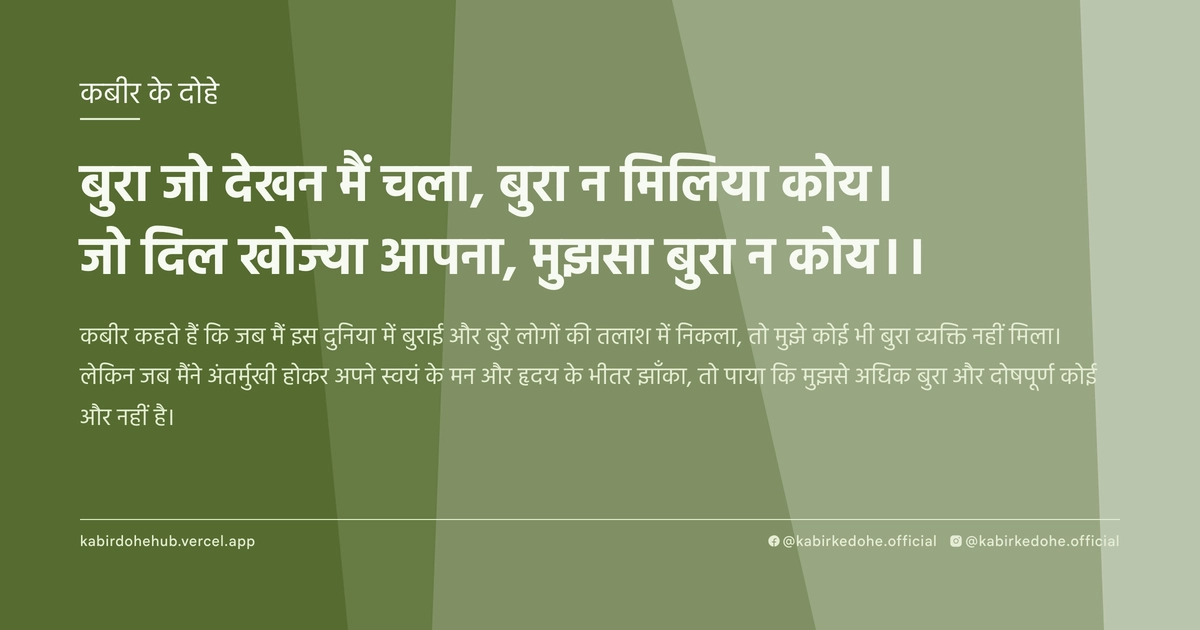
बुरा जो देखन मैं चला, बुरा न मिलिया कोय।
जो दिल खोज्या आपना, मुझसा बुरा न कोय।।
Bura jo dekhan main chala, bura na miliya koy. Jo dil khojya aapna, mujhsa bura na koy.
इस पृष्ठ पर इस कबीर दोहे का अर्थ (meaning), हिंदी व्याख्या और अंग्रेज़ी अनुवाद, दार्शनिक विश्लेषण और व्यावहारिक जीवन सीख दी गई है। यह दोहा आत्मनिरीक्षण (Self-introspection) विषय से जुड़ा है — Kabir doha meaning and explanation in Hindi and English.
अर्थ (Meaning):
कबीर कहते हैं कि जब मैं इस दुनिया में बुराई और बुरे लोगों की तलाश में निकला, तो मुझे कोई भी बुरा व्यक्ति नहीं मिला। लेकिन जब मैंने अंतर्मुखी होकर अपने स्वयं के मन और हृदय के भीतर झाँका, तो पाया कि मुझसे अधिक बुरा और दोषपूर्ण कोई और नहीं है।
Kabir asserts that when he ventured out into the world to seek out evil and flawed individuals, he found no one truly wicked. However, the moment he turned his gaze inward to examine his own heart and consciousness, he discovered that he himself was the most flawed of all.
व्याख्या (Interpretation):
यह दोहा बाहरी दुनिया के प्रति हमारे दृष्टिकोण और आंतरिक वास्तविकता के बीच के विरोधाभास को दर्शाता है। प्रारंभ में, मनुष्य अपनी कमियों को छिपाने के लिए दूसरों में दोष ढूँढता है, जो माया का एक सूक्ष्म रूप है। 'बुरा' यहाँ केवल नैतिक पाप नहीं, बल्कि अहंकार और अज्ञानता का प्रतीक है। जब साधक अपनी बाहरी दृष्टि को आंतरिक दृष्टि में बदलता है, तो उसे आभास होता है कि जिसे वह बाहर खोज रहा था, वह वास्तव में उसके अपने अहंकार का प्रतिबिंब था। यह अद्वैत वेदांत के उस सत्य की ओर संकेत करता है जहाँ ज्ञाता और ज्ञेय एक हो जाते हैं। अंततः, यह बोध कि 'मैं ही बुरा हूँ', अहंकार के विसर्जन की पहली सीढ़ी है, जिससे शुद्ध आत्मा का उदय होता है।
This couplet illustrates the paradox between our perception of the external world and our internal reality. Initially, the human mind seeks flaws in others as a defense mechanism to mask its own imperfections, a subtle manifestation of Maya (illusion). 'Evil' here does not merely denote moral sin, but symbolizes the ego and spiritual ignorance. When the seeker shifts their gaze from the external to the internal, they realize that the 'evil' they were hunting was merely a projection of their own ego. This aligns with the Advaita Vedanta principle where the observer and the observed merge. Ultimately, the realization 'I am the most flawed' is the first step toward the annihilation of the ego, paving the way for the emergence of the pure Atman.
दार्शनिक विश्लेषण (Philosophical Analysis):
कबीर का यह दर्शन उनके समय के सामाजिक और धार्मिक पाखंड के विरुद्ध एक सशक्त प्रहार है। उन्होंने देखा कि लोग धर्म, जाति और कर्मकांडों के नाम पर दूसरों को 'अपवित्र' या 'बुरा' घोषित करते हैं, जबकि उनकी अपनी आत्मा अज्ञानता से ढकी होती है। यह दोहा कर्मकांडीय शुद्धता के बजाय आत्म-साक्षात्कार की वकालत करता है।
दार्शनिक स्तर पर, यह सूफीवाद के 'नफ्स' (अहंकार) के संघर्ष से मेल खाता है, जहाँ साधक को पहले अपने भीतर के अंधकार को पहचानना होता है। कबीर यहाँ यह समझा रहे हैं कि बाहरी दुनिया केवल एक दर्पण है। यदि हम दूसरों में क्रोध या ईर्ष्या देखते हैं, तो वह वास्तव में हमारे अपने भीतर मौजूद उन प्रवृत्तियों का प्रतिबिंब है।
अद्वैत वेदांत के परिप्रेक्ष्य में, यह 'अहं' का विलोपन है। जब तक 'मैं' (अहंकार) मौजूद है, तब तक द्वैत (मैं और तुम) बना रहता है। जब व्यक्ति यह स्वीकार कर लेता है कि सारा दोष उसके अपने सीमित दृष्टिकोण में है, तो वह द्वैत से मुक्त होकर उस निर्गुण ब्रह्म की ओर बढ़ता है जो दोषरहित है।
मनोवैज्ञानिक रूप से, यह 'प्रोजेक्शन' (प्रक्षेपण) की प्रक्रिया को उजागर करता है। मनुष्य अक्सर अपनी उन प्रवृत्तियों से घृणा करता है जिन्हें वह दूसरों में देखता है। कबीर इस मनोवैज्ञानिक जाल को तोड़कर व्यक्ति को आत्म-निरीक्षण की ओर ले जाते हैं, जो वास्तविक मानसिक शांति का एकमात्र मार्ग है।
अंततः, यह दोहा हमें सिखाता है कि आध्यात्मिक प्रगति का मार्ग बाहरी सुधार से नहीं, बल्कि आंतरिक समर्पण से शुरू होता है। जब हम अपनी बुराई को स्वीकार कर लेते हैं, तो हम दूसरों के प्रति करुणा से भर जाते हैं, क्योंकि हम समझते हैं कि हर मनुष्य उसी आंतरिक संघर्ष से जूझ रहा है।
Kabir's philosophy serves as a potent critique of the social and religious hypocrisy of his era. He observed people labeling others as 'impure' or 'evil' based on caste, creed, and rituals, while their own souls remained shrouded in ignorance. This couplet advocates for self-realization over ritualistic purity.
On a philosophical level, this resonates with the Sufi struggle against the 'Nafs' (the lower self/ego), where the seeker must first acknowledge their own inner darkness. Kabir explains that the external world is merely a mirror. If we perceive anger or jealousy in others, it is actually a reflection of those tendencies residing within us.
From the perspective of Advaita Vedanta, this is the dissolution of 'Aham' (the ego). As long as the 'I' exists, duality (I vs. You) persists. When an individual accepts that all flaws lie within their own limited perception, they move beyond duality toward the Nirgun Brahman, which is devoid of all attributes and flaws.
Psychologically, this highlights the process of 'projection.' Humans often hate in others the traits they refuse to acknowledge in themselves. Kabir breaks this psychological trap, guiding the individual toward introspection, which is the only path to genuine mental peace.
Ultimately, this couplet teaches that spiritual progress begins not with external reform, but with internal surrender. By accepting our own flaws, we develop profound compassion for others, realizing that every human being is fighting the same internal battle.
मूल संदेश (Core Message):
- बाहरी दोष केवल आंतरिक अज्ञानता का प्रतिबिंब हैं।
- सच्ची आध्यात्मिक यात्रा बाहर से भीतर की ओर है।
- अहंकार का विसर्जन ही वास्तविक पवित्रता का मार्ग है।
- जब हम स्वयं को जानते हैं, तो दुनिया बदल जाती है।
- करुणा तब जन्म लेती है जब हम अपनी त्रुटियों को स्वीकार करते हैं।
- द्वैत का अंत ही सत्य की प्राप्ति है।
- External flaws are merely reflections of internal ignorance.
- The true spiritual journey is a movement from the outside in.
- The dissolution of ego is the only path to genuine purity.
- When we truly know ourselves, the world transforms.
- Compassion is born from the acceptance of our own imperfections.
- The end of duality is the attainment of Truth.
व्यावहारिक उदाहरण (Practical Example):
वाराणसी के घाटों पर रहने वाली एक वृद्ध विधवा, जानकी, का जीवन कड़वाहट से भरा था। वह अपने आस-पड़ोस की महिलाओं को हमेशा उनके व्यवहार, उनके पहनावे और उनकी बातों के लिए कोसती रहती थी। उसका मानना था कि वह इस मोहल्ले की सबसे पवित्र और धर्मपरायण स्त्री है, जबकि बाकी सब पाखंडी और बुरी हैं।
वह हर दिन मंदिर जाती और प्रार्थना करती कि ईश्वर उसे इन 'बुरे' लोगों से बचाए। वह अपनी छोटी-छोटी बातों पर दूसरों की आलोचना करती और खुद को श्रेष्ठ मानती। उसकी यह श्रेष्ठता उसे अकेला कर गई थी; कोई भी उससे बात करना पसंद नहीं करता था।
एक दिन, वह एक साधु के पास गई और शिकायत की कि उसके आस-पास के लोग कितने बुरे हैं। साधु ने उसे एक साफ दर्पण दिया और कहा, 'इसमें देखो, तुम्हें क्या दिखता है?' जानकी ने अपना चेहरा देखा। साधु ने कहा, 'यदि दर्पण पर धूल जमी हो, तो तुम्हें अपना चेहरा धुंधला दिखेगा, चाहे तुम कितने भी सुंदर क्यों न हो। ठीक वैसे ही, तुम्हारी दृष्टि धूल से भरी है।'
जानकी को पहले तो गुस्सा आया, लेकिन फिर उसने गहराई से सोचा। उसने महसूस किया कि जिस क्रोध और घृणा को वह दूसरों में देख रही थी, वह वास्तव में उसके अपने भीतर की कड़वाहट थी। वह दूसरों को बुरा इसलिए कह रही थी क्योंकि वह अपनी आंतरिक रिक्तता को भरना चाहती थी।
उस रात जानकी सो नहीं पाई। उसने पहली बार यह स्वीकार किया कि उसकी 'पवित्रता' वास्तव में एक अहंकार था, जो उसे दूसरों से अलग कर रहा था। उसने महसूस किया कि वह खुद ही वह 'बुरी' स्त्री थी जिसे वह दुनिया में खोज रही थी।
अगली सुबह, जानकी का व्यवहार बदल गया। उसने दूसरों की गलतियों को नजरअंदाज करना शुरू किया और अपनी कमियों पर काम किया। उसने उन महिलाओं से माफी मांगी जिन्हें उसने नीचा दिखाया था।
धीरे-धीरे, लोग उसकी ओर आकर्षित होने लगे। जिस मोहल्ले को वह 'नर्क' समझती थी, वह अब प्रेम और सद्भाव का केंद्र बन गया। उसकी आंतरिक शांति ने बाहरी दुनिया को बदल दिया।
जानकी ने सीखा कि दुनिया वैसी नहीं है जैसी वह है, बल्कि वैसी है जैसे हम स्वयं हैं। जब उसने अपने भीतर की बुराई को स्वीकार किया और उसे प्रेम में बदला, तो उसे दुनिया में कोई बुरा नहीं मिला।
Janaki, an elderly widow living on the ghats of Varanasi, lived a life filled with bitterness. She constantly criticized the women in her neighborhood for their behavior, their attire, and their speech. She believed she was the most pious and righteous woman in the colony, while everyone else was a hypocrite and evil.
Every day, she visited the temple and prayed for God to protect her from these 'wicked' people. Her sense of superiority isolated her; no one enjoyed her company or wished to speak with her.
One day, she approached a wandering monk and complained about the toxicity of her neighbors. The monk handed her a clean mirror and asked, 'Look into this; what do you see?' Janaki saw her own reflection. The monk said, 'If the mirror is covered in dust, your face will appear blurred, no matter how beautiful you are. Similarly, your vision is clouded by dust.'
Janaki was initially offended, but then she reflected deeply. She realized that the anger and hatred she perceived in others were actually reflections of the bitterness within her own heart. She called others evil because she was trying to mask her own internal void.
That night, Janaki could not sleep. For the first time, she admitted that her 'piety' was actually an ego that separated her from humanity. She realized she was the very 'evil' person she had been searching for in the world.
The next morning, Janaki's behavior shifted. She began ignoring the mistakes of others and focused on correcting her own flaws. She apologized to the women she had belittled.
Gradually, people were drawn to her. The neighborhood she once considered 'hell' became a center of love and harmony. Her internal peace transformed her external environment.
Janaki learned that the world is not as it is, but as we are. Once she accepted the darkness within and transmuted it into love, she found no one in the world who was truly evil.
अभ्यास मार्गदर्शन (Practice Guidance):
- प्रतिदिन 15 मिनट मौन रहकर 'साक्षी भाव' का अभ्यास करें। जब भी किसी दूसरे व्यक्ति में कोई बुराई दिखे, तो तुरंत रुकें और पूछें, 'क्या यह गुण मेरे भीतर भी कहीं मौजूद है?'
- एक 'दर्पण पत्रिका' (Mirror Journal) बनाएँ। प्रतिदिन एक ऐसी घटना लिखें जहाँ आपने किसी की आलोचना की, और फिर विश्लेषण करें कि वह आलोचना आपके किस आंतरिक डर या असुरक्षा से उपजी थी।
- व्यवहारिक परिवर्तन: अगले सात दिनों तक किसी की भी बुराई न करें। यदि कोई आपको बुरा कहता है, तो उसे प्रतिक्रिया देने के बजाय यह सोचें कि वह आपके किस छिपे हुए पहलू को प्रतिबिंबित कर रहा है।
- निदान चेकलिस्ट: (1) क्या मैं दूसरों की गलतियों पर तुरंत प्रतिक्रिया देता हूँ? (2) क्या मैं खुद को दूसरों से नैतिक रूप से श्रेष्ठ मानता हूँ? (3) क्या मेरी शांति दूसरों के व्यवहार पर निर्भर है? यदि हाँ, तो आप अभी भी बाहरी दुनिया में 'बुराई' खोज रहे हैं।
- Practice 'Witness Consciousness' (Sakshi Bhava) for 15 minutes daily in silence. Whenever you perceive a flaw in another, stop immediately and ask, 'Does this trait exist within me in any form?'
- Maintain a 'Mirror Journal.' Every day, record an instance where you criticized someone, then analyze which internal fear or insecurity triggered that judgment.
- Behavioral Shift: For the next seven days, refrain from speaking ill of anyone. If someone criticizes you, instead of reacting, contemplate which hidden aspect of yourself they are reflecting.
- Diagnostic Checklist: (1) Do I react instantly to others' mistakes? (2) Do I consider myself morally superior to others? (3) Is my peace dependent on the behavior of others? If yes, you are still searching for 'evil' in the external world.
चिंतन प्रश्न (Reflection Questions):
- वह कौन सी बात है जिसे मैं दूसरों में सबसे अधिक नापसंद करता हूँ, और वह मेरे अपने व्यक्तित्व का कौन सा हिस्सा है?
- क्या मेरी 'नैतिकता' वास्तव में करुणा है, या यह केवल दूसरों को छोटा दिखाकर खुद को श्रेष्ठ महसूस कराने का एक तरीका है?
- यदि आज मेरा सामाजिक मुखौटा (Digital/Social Ego) उतर जाए, तो क्या मैं अपनी वास्तविक छवि को स्वीकार करने का साहस रखूँगा?
- मैं किन लोगों को 'बुरा' मानता हूँ, और क्या मेरा यह निर्णय मेरे अपने पूर्वाग्रहों पर आधारित है?
- क्या मैं अपनी गलतियों को सुधारने की कोशिश करता हूँ, या मैं उन्हें सही ठहराने के लिए तर्क गढ़ता हूँ?
- मेरे जीवन का वह कौन सा अंधेरा कोना है जिसे मैं कभी नहीं देखना चाहता?
- What is the trait I dislike most in others, and which part of my own personality does it mirror?
- Is my 'morality' truly compassion, or is it just a tool to feel superior by belittling others?
- If my social mask (Digital/Social Ego) were stripped away today, would I have the courage to accept my authentic self?
- Who do I label as 'evil,' and is this judgment based on my own deep-seated biases?
- Do I strive to correct my mistakes, or do I construct elaborate rationalizations to justify them?
- What is that dark corner of my life that I am most afraid to examine?