
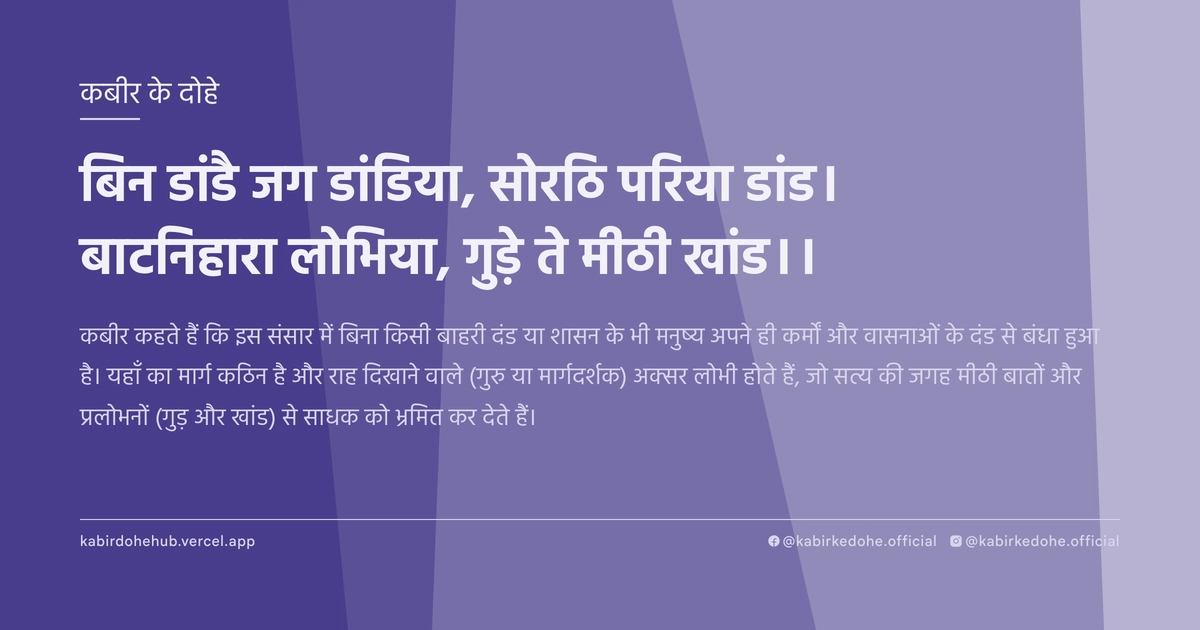
बिन डांडै जग डांडिया, सोरठि परिया डांड।
बाटनिहारा लोभिया, गुड़े ते मीठी खांड।।
Bin dande jag dandiya, sorathi pariya dand. Baatnihara lobhiya, gude te meethi khand.
इस पृष्ठ पर इस कबीर दोहे का अर्थ (meaning), हिंदी व्याख्या और अंग्रेज़ी अनुवाद, दार्शनिक विश्लेषण और व्यावहारिक जीवन सीख दी गई है। यह दोहा लोभ (Greed) विषय से जुड़ा है — Kabir doha meaning and explanation in Hindi and English.
अर्थ (Meaning):
कबीर कहते हैं कि इस संसार में बिना किसी बाहरी दंड या शासन के भी मनुष्य अपने ही कर्मों और वासनाओं के दंड से बंधा हुआ है। यहाँ का मार्ग कठिन है और राह दिखाने वाले (गुरु या मार्गदर्शक) अक्सर लोभी होते हैं, जो सत्य की जगह मीठी बातों और प्रलोभनों (गुड़ और खांड) से साधक को भ्रमित कर देते हैं।
Kabir asserts that although there may be no visible physical shackles, the world itself is a place of punishment driven by one's own karmic debts. The spiritual path is treacherous because those who claim to be guides are often consumed by greed, offering sweet temptations and superficial comforts rather than the rigorous truth required for liberation.
व्याख्या (Interpretation):
इस दोहे का शाब्दिक अर्थ है कि दुनिया एक जेल की तरह है जहाँ दंड अदृश्य है। रूपकात्मक स्तर पर, 'डांडिया' अहंकार और माया के उस बंधन को दर्शाता है जो आत्मा को मुक्त नहीं होने देता। यह निर्गुण भक्ति का संकेत है, जहाँ बाहरी कर्मकांडों के बजाय आंतरिक शुद्धि पर जोर दिया गया है। अद्वैत वेदांत के अनुसार, जब तक जीव स्वयं को शरीर और मन मानता है, वह माया के दंड के अधीन रहता है। यहाँ 'गुड़' और 'खांड' सांसारिक सुखों और झूठे आध्यात्मिक वादों के प्रतीक हैं। कबीर चेतावनी देते हैं कि सत्य कड़वा हो सकता है, लेकिन वह मुक्त करता है, जबकि लोभी मार्गदर्शक केवल अहंकार को पुष्ट करने वाले मीठे शब्द बोलते हैं। यह विरोधाभास है कि जिसे हम सुख समझते हैं, वही वास्तव में हमारी मुक्ति में सबसे बड़ी बाधा है।
Literally, the verse speaks of a world that punishes without a physical rod. Metaphorically, the 'dandiya' represents the invisible shackles of ego and Maya that bind the soul to the cycle of birth and death. This aligns with Nirgun Bhakti, emphasizing internal purity over external rituals. From the perspective of Advaita Vedanta, as long as the individual identifies with the limited ego, they remain imprisoned by the illusion of duality. The 'jaggery' and 'sugar' symbolize the seductive nature of worldly pleasures and the hollow promises of opportunistic spiritual teachers. Kabir highlights a central paradox: the sweetness of the world is the very poison that keeps the soul enslaved. True liberation requires the courage to reject these superficial sweetnesses in favor of the stark, formless truth of the Atman-Brahman non-duality.
दार्शनिक विश्लेषण (Philosophical Analysis):
कबीर का यह दोहा उनके समय के सामाजिक और धार्मिक पाखंड पर एक तीखा प्रहार है। मध्यकालीन भारत में, धर्म के नाम पर कई लोग स्वयं को गुरु घोषित कर आम जनता का शोषण कर रहे थे। कबीर ने इस 'लोभी बाटनिहारा' (लालची मार्गदर्शक) की अवधारणा के माध्यम से यह समझाया कि आध्यात्मिक ज्ञान का व्यापार करना सबसे बड़ा पाप है। वे ritualism (कर्मकांड) को पूरी तरह नकारते हैं क्योंकि उनका मानना था कि ईश्वर किसी मंदिर, मस्जिद या किसी विशेष जाति के पुरोहित के माध्यम से नहीं, बल्कि स्वयं के भीतर 'सहज' अवस्था में मिलता है।
दार्शनिक रूप से, यह सूफी मत के 'फना' (अहंकार का विनाश) और अद्वैत वेदांत के 'माया' सिद्धांत का संगम है। कबीर तर्क देते हैं कि मनुष्य अपनी इच्छाओं (लोभ) के कारण ही इस संसार के अदृश्य दंड का भागी बनता है। जब तक साधक बाहरी पुरस्कारों या स्वर्ग के प्रलोभन में रहता है, वह वास्तव में बंधन में ही है। मुक्ति केवल तभी संभव है जब व्यक्ति 'मीठी खांड' यानी मानसिक सुखों के मोह को त्याग कर शून्य में विलीन हो जाए।
यहाँ 'दंड' का अर्थ शारीरिक पीड़ा नहीं, बल्कि चेतना का संकुचन है। जब हम केवल अपनी इंद्रियों की तृप्ति के लिए जीते हैं, तो हम अनजाने में अपने लिए एक मानसिक कारागार बना लेते हैं। कबीर का दर्शन मनोवैज्ञानिक रूपांतरण पर आधारित है; वे चाहते हैं कि मनुष्य बाहरी सहारे छोड़कर आत्म-साक्षात्कार करे।
यह दोहा जाति व्यवस्था और धार्मिक श्रेष्ठता के दावों को ध्वस्त करता है। यदि मार्गदर्शक स्वयं लोभी है, तो उसकी जाति या पद का कोई मूल्य नहीं है। सत्य केवल उसी को मिल सकता है जो निष्काम भाव से सत्य की खोज करे।
अंततः, कबीर यह संदेश देते हैं कि आध्यात्मिक यात्रा में सबसे बड़ी बाधा बाहरी शत्रु नहीं, बल्कि वह आंतरिक लोभ है जो हमें गलत मार्गदर्शकों की ओर ले जाता है। यह एक चेतावनी है कि सत्य की खोज में प्रलोभनों से सावधान रहना चाहिए, क्योंकि जो मार्ग बहुत आसान और मीठा लगता है, वह अक्सर भटकाव का मार्ग होता है।
This Doha is a scathing critique of the social and religious hypocrisy prevalent during Kabir's era. In medieval India, many claimed spiritual authority to exploit the masses. By introducing the concept of the 'greedy guide' (lobhiya batnihara), Kabir exposes the commercialization of spirituality, arguing that trading in divine knowledge is a profound betrayal of truth. He rejects ritualism entirely, asserting that the Divine is not found in temples, mosques, or through a specific caste of priests, but within the 'Sahaj' (natural) state of one's own being.
Philosophically, this verse represents a synthesis of the Sufi concept of 'Fana' (annihilation of the ego) and the Advaita Vedanta doctrine of 'Maya'. Kabir argues that humans are imprisoned by their own desires. As long as a seeker pursues spiritual practice for the sake of rewards or the promise of heaven, they remain bound. Liberation is only possible when one transcends the 'sweet sugar' of mental gratifications and merges into the formless void.
The 'punishment' mentioned here is not physical torture but the contraction of consciousness. When we live solely for sensory gratification, we inadvertently construct a mental prison. Kabir's philosophy is rooted in psychological transformation; he urges the individual to cease relying on external crutches and instead pursue self-realization.
Furthermore, the verse dismantles the validity of caste hierarchies and religious superiority. If the guide is driven by greed, their social status or lineage is irrelevant. Truth is accessible only to those who seek it with a selfless heart, devoid of expectation.
Ultimately, Kabir warns that the greatest obstacle on the spiritual path is not an external enemy, but the internal greed that blinds us to the authenticity of a teacher. He cautions that any path appearing too easy or overly sweet is likely a diversion from the rigorous process of ego-death required for true enlightenment.
मूल संदेश (Core Message):
- बाहरी बंधन अदृश्य होते हैं, लेकिन आंतरिक लोभ सबसे बड़ी जेल है।
- सत्य कड़वा हो सकता है, लेकिन वह एकमात्र मार्ग है जो मुक्त करता है।
- मीठे वादे अक्सर आध्यात्मिक प्रगति के सबसे बड़े अवरोध होते हैं।
- गुरु की पहचान उसके पद से नहीं, बल्कि उसकी निस्वार्थता से करें।
- मुक्ति का अर्थ पुरस्कार पाना नहीं, बल्कि पुरस्कार की इच्छा को मिटाना है।
- External bonds are invisible, but internal greed is the ultimate prison.
- Truth may be bitter, but it is the only path that truly liberates.
- Sweet promises are often the greatest obstacles to spiritual progress.
- Identify a guide by their selflessness, not by their status or title.
- Liberation is not about attaining a reward, but about erasing the desire for one.
व्यावहारिक उदाहरण (Practical Example):
एक समय की बात है, वाराणसी के घाटों पर माधव नाम का एक वृद्ध बुनकर रहता था। माधव जीवन भर ईमानदारी से कपड़े बुनता रहा, लेकिन उसके मन में हमेशा एक अधूरापन था। वह शांति की तलाश में था।
एक दिन उसकी मुलाकात एक भव्य वस्त्र पहने हुए एक कथित 'महात्मा' से हुई। उस महात्मा ने माधव को बताया कि यदि वह अपनी सारी जमापूंजी उसे दान कर दे और उसके बताए कठिन अनुष्ठान करे, तो उसे मोक्ष का मार्ग मिल जाएगा। महात्मा की बातें शहद जैसी मीठी थीं और वह माधव को स्वर्ग के सुखों के सपने दिखा रहा था।
माधव ने अपनी जीवन भर की कमाई उस महात्मा को दे दी। वह महीनों तक उन अनुष्ठानों में लगा रहा, लेकिन उसे शांति के बजाय केवल थकान और मानसिक तनाव महसूस हुआ। उसे लगा कि वह अब भी किसी अदृश्य बंधन में है, जबकि महात्मा उसे और अधिक दान देने के लिए प्रेरित करता रहा।
एक शाम, माधव घाट पर बैठा एक साधारण से व्यक्ति को देख रहा था जो चुपचाप ध्यान में लीन था। वह व्यक्ति न तो कोई उपदेश दे रहा था और न ही कुछ मांग रहा था। माधव ने उससे पूछा, "मुक्ति का सरल मार्ग क्या है?"
उस व्यक्ति ने मुस्कुराकर कहा, "मुक्ति किसी के दिए हुए मार्ग में नहीं, बल्कि अपनी इच्छाओं के त्याग में है। तुमने उस महात्मा को धन दिया क्योंकि तुम स्वर्ग की 'मीठी खांड' चाहते थे। तुम्हारी यही चाहत तुम्हारा दंड बन गई।"
यह सुनकर माधव को एक गहरा झटका लगा। उसे समझ आया कि वह अब तक केवल अपने लोभ को संतुष्ट कर रहा था, जिसे वह भक्ति समझ बैठा था। उसने महसूस किया कि वह महात्मा केवल एक 'लोभी बाटनिहारा' था जिसने उसकी कमजोरी का फायदा उठाया।
माधव ने उसी क्षण तय किया कि वह अब किसी बाहरी चमत्कार या मीठे वादों के पीछे नहीं भागेगा। उसने अपने काम को ही पूजा बना लिया और हर कपड़े के धागे में ईश्वर को देखने का प्रयास करने लगा।
उसने पाया कि जब उसने स्वर्ग की लालसा छोड़ी, तो वह वास्तव में मुक्त हो गया। उसका जीवन अब किसी बाहरी दंड या पुरस्कार का मोह नहीं करता था।
माधव की कहानी यह सिखाती है कि जब हम आध्यात्मिक लाभ की उम्मीद करते हैं, तो हम वास्तव में अपने अहंकार को और मजबूत करते हैं। वास्तविक शांति केवल तब आती है जब हम 'मीठे' प्रलोभनों को पहचान कर उन्हें त्याग देते हैं।
Once, on the ghats of Varanasi, lived an elderly weaver named Madhav. Though he spent his life weaving clothes with honesty, a persistent sense of incompleteness haunted him. He yearned for inner peace.
One day, he encountered a 'Mahatma' dressed in opulent robes. The Mahatma claimed that if Madhav donated all his savings and performed specific complex rituals, he would be granted the path to salvation. The Mahatma's words were as sweet as honey, painting vivid pictures of heavenly bliss.
Driven by this promise, Madhav handed over his life's earnings. He spent months performing the rituals, but instead of peace, he felt only exhaustion and mental turmoil. He felt as though he were still trapped in an invisible prison, while the Mahatma continued to urge him to give more.
One evening, while sitting by the river, Madhav noticed a simple man sitting in silent meditation. This man neither preached nor asked for anything. Madhav approached him and asked, "What is the simple path to liberation?"
The man smiled and replied, "Liberation is not found in a path given by another, but in the relinquishing of your own desires. You gave your wealth to that Mahatma because you craved the 'sweet sugar' of heaven. That very craving became your punishment."
These words struck Madhav like a bolt of lightning. He realized that he had been feeding his own greed, mistaking it for devotion. He saw that the Mahatma was merely a 'greedy guide' who had exploited his vulnerability.
In that moment, Madhav decided he would no longer chase external miracles or sweet promises. He transformed his daily work into worship, attempting to see the Divine in every thread he wove.
He discovered that once he abandoned the longing for a celestial reward, he became truly free. His life was no longer governed by the desire for external punishment or reward.
Madhav's story illustrates that when we seek spiritual 'profit,' we only strengthen our ego. True peace arrives only when we recognize and discard the 'sweet' temptations of the mind.
अभ्यास मार्गदर्शन (Practice Guidance):
- दैनिक आत्म-निरीक्षण: प्रतिदिन 15 मिनट मौन बैठें और विचार करें कि आज आपने कितनी बार किसी बाहरी प्रशंसा या 'मीठे' लाभ के लिए कार्य किया।
- लोभ का विश्लेषण: एक जर्नल लिखें जिसमें उन प्रलोभनों की सूची हो जो आपको आपके वास्तविक लक्ष्यों से भटकाते हैं।
- व्यवहार परिवर्तन: किसी भी आध्यात्मिक गुरु या मार्गदर्शक के प्रति अंधभक्ति करने के बजाय, उनके शब्दों को तर्क और अनुभव की कसौटी पर कसें।
- निदान चेकलिस्ट: क्या आप धर्म का पालन केवल डर (दंड) या लालच (स्वर्ग) के कारण कर रहे हैं? यदि हाँ, तो आप अभी भी 'माया के दंड' में हैं।
- Daily Self-Inquiry: Sit in silence for 15 minutes daily and observe how many times you acted for external validation or 'sweet' rewards.
- Greed Mapping: Maintain a journal listing the specific temptations that distract you from your authentic spiritual growth.
- Behavioral Shift: Instead of blind faith in a spiritual guide, evaluate their teachings through the lens of logic and personal experience.
- Diagnostic Checklist: Are you practicing spirituality out of fear (punishment) or greed (heaven)? If yes, you are still under the 'shackles of Maya'.
चिंतन प्रश्न (Reflection Questions):
- मेरे जीवन में वह कौन सी 'मीठी खांड' (प्रलोभन) है जो मुझे सत्य की कठिन राह पर चलने से रोक रही है?
- क्या मैं अपनी आध्यात्मिक पहचान का उपयोग दूसरों से श्रेष्ठ दिखने के लिए कर रहा हूँ?
- मेरे वे कौन से डर हैं जिन्हें मैं धर्म या परंपरा के नाम पर छिपा रहा हूँ?
- यदि मुझे कोई पुरस्कार न मिले, तो क्या मैं फिर भी सत्य के मार्ग पर चलूँगा?
- मैं अपनी डिजिटल पहचान (सोशल मीडिया ईगो) में कितना 'मीठा' और कृत्रिम बन गया हूँ?
- What is the 'sweet sugar' (temptation) in my life that prevents me from walking the rigorous path of truth?
- Am I using my spiritual identity as a tool to feel superior to others?
- What fears am I masking under the guise of religion or tradition?
- Would I still pursue the truth if there were absolutely no reward at the end?
- How much 'sweetness' and artificiality have I integrated into my digital ego?