
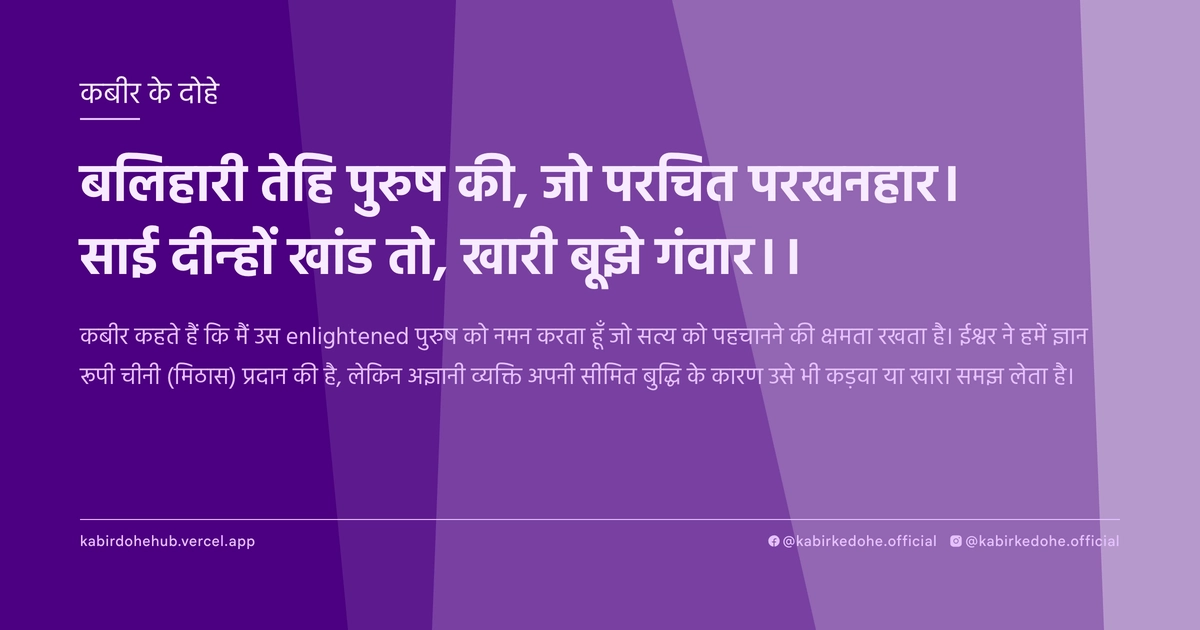
बलिहारी तेहि पुरुष की, जो परचित परखनहार।
साई दीन्हों खांड तो, खारी बूझे गंवार।।
Balihari tehi purush ki, jo parchit parkhannaar. Sai deenho khaand to, khaari booje ganvaar.
इस पृष्ठ पर इस कबीर दोहे का अर्थ (meaning), हिंदी व्याख्या और अंग्रेज़ी अनुवाद, दार्शनिक विश्लेषण और व्यावहारिक जीवन सीख दी गई है। यह दोहा आत्मनिरीक्षण (Self-introspection) विषय से जुड़ा है — Kabir doha meaning and explanation in Hindi and English.
अर्थ (Meaning):
कबीर कहते हैं कि मैं उस enlightened पुरुष को नमन करता हूँ जो सत्य को पहचानने की क्षमता रखता है। ईश्वर ने हमें ज्ञान रूपी चीनी (मिठास) प्रदान की है, लेकिन अज्ञानी व्यक्ति अपनी सीमित बुद्धि के कारण उसे भी कड़वा या खारा समझ लेता है।
Kabir expresses deep reverence for the rare individual who possesses the discernment to recognize the Divine. He asserts that while the Almighty has bestowed the sweetness of spiritual truth (symbolized by sugar) upon all, the ignorant soul, blinded by ego and lack of awareness, perceives this divine grace as bitter or salty.
व्याख्या (Interpretation):
इस दोहे का शाब्दिक अर्थ है कि केवल वही व्यक्ति धन्य है जो सत्य की परख करना जानता है। रूपक के स्तर पर, 'खांड' (चीनी) उस परमानंद और आत्म-ज्ञान का प्रतीक है जो हर मनुष्य के भीतर मौजूद है। 'खारी' का अनुभव करना माया और अज्ञानता के प्रभाव को दर्शाता है। यह निरगुण भक्ति का सार है, जहाँ ईश्वर किसी बाहरी मूर्ति में नहीं, बल्कि अंतर्मन की शुद्धता में है। जब तक साधक का मन अहंकार से भरा रहता है, वह सत्य के मधुर अनुभव को भी कष्ट या कड़वाहट के रूप में देखता है। यह द्वैत (duality) की स्थिति है जहाँ आत्मा स्वयं को ब्रह्म से अलग मानकर भ्रमित रहती है।
Literally, the verse praises the discerning soul who can identify the essence of truth. Metaphorically, 'khand' (sugar) represents the bliss of self-realization and the omnipresent Divine grace available to all. To perceive it as 'khari' (salty/bitter) signifies the distorting lens of Maya (illusion) and Avidya (ignorance). This aligns with Nirgun Bhakti, emphasizing that the Formless Divine is not found in external rituals but within. The central paradox is that the very truth that liberates is often rejected or misidentified as suffering because the ego filters reality. It highlights the transition from the illusion of separation to the non-dual realization of Atman-Brahman.
दार्शनिक विश्लेषण (Philosophical Analysis):
कबीर का यह दोहा मध्यकालीन भारत के उस दौर का है जब धर्म केवल कर्मकांडों और बाहरी आडंबरों तक सीमित था। कबीर ने पुरोहितवाद और जातिगत श्रेष्ठता को चुनौती देते हुए यह स्थापित किया कि आध्यात्मिक पात्रता जन्म से नहीं, बल्कि 'परख' (discernment) से आती है। यह विचार अद्वैत वेदांत के करीब है, जहाँ यह माना जाता है कि ब्रह्म सत्य है और जगत मिथ्या है; समस्या यह है कि हम मिथ्या को सत्य और सत्य को मिथ्या समझ लेते हैं।
सूफी मत के 'इश्क-ए-हकीकी' (ईश्वरीय प्रेम) के संदर्भ में, यह दोहा बताता है कि ईश्वर का प्रेम सबके लिए उपलब्ध है, लेकिन उसे ग्रहण करने के लिए हृदय का शुद्ध होना आवश्यक है। यदि हृदय में नफरत या अहंकार की खारापन है, तो प्रेम की मिठास भी कड़वी लगेगी। कबीर यहाँ मनोवैज्ञानिक रूपांतरण की बात कर रहे हैं, जहाँ साधक को अपनी धारणाओं (perceptions) को बदलना पड़ता है।
यहाँ 'गंवार' शब्द केवल अनपढ़ व्यक्ति के लिए नहीं, बल्कि उस मानसिक अवस्था के लिए है जो सत्य के प्रति अंधी है। यह बौद्धिक ज्ञान बनाम अनुभवजन्य ज्ञान (experiential knowledge) का संघर्ष है। कबीर तर्क देते हैं कि शास्त्र पढ़ने से कोई ज्ञानी नहीं होता, बल्कि जो अनुभव की कसौटी पर सत्य को परख ले, वही वास्तविक पुरुष है।
यह विश्लेषण स्पष्ट करता है कि आध्यात्मिक पतन का कारण ईश्वर की अनुपस्थिति नहीं, बल्कि मनुष्य की अपनी समझने की अक्षमता है। जब हम अपनी पूर्वग्रहों (prejudices) के चश्मे से दुनिया को देखते हैं, तो हम ईश्वरीय कृपा को भी दुर्भाग्य समझ लेते हैं।
अंततः, यह दोहा अहंकार के विसर्जन का आह्वान है। जब 'मैं' मिटता है, तभी 'वह' (परमात्मा) दिखाई देता है। यह एक ऐसी प्रक्रिया है जिसमें व्यक्ति को अपनी सीमित पहचान को छोड़कर सार्वभौमिक चेतना में विलीन होना पड़ता है, जिससे स्वाद का भ्रम समाप्त होता है और केवल शुद्ध सत्य शेष रहता है।
This couplet emerges from the socio-religious turbulence of medieval India, where spirituality was often reduced to rigid rituals and caste hierarchies. Kabir disrupts this by asserting that spiritual eligibility is not a birthright but a result of 'parakh' (discernment). This mirrors Advaita Vedanta, which posits that while Brahman is the only reality, the human mind perceives the world through the veil of Maya, mistaking the transient for the eternal.
Connecting this to Sufism, specifically 'Ishq-e-Haqiqi' (Divine Love), the verse suggests that the Beloved's grace is omnipresent. However, the capacity to taste this sweetness depends on the purity of the heart. If the heart is encrusted with the salt of ego and hatred, even the most sublime divine love is perceived as bitter. Kabir focuses on a psychological shift—the movement from conceptual knowledge to direct experience.
The term 'ganwar' (ignorant/rustic) does not refer to a lack of formal education but to a lack of spiritual intuition. It highlights the tension between intellectualism and realization. Kabir argues that scholarly mastery of texts is useless if one cannot recognize the Divine in the present moment. True wisdom is the ability to distinguish the essence from the appearance.
Philosophically, the verse addresses the failure of human perception. The 'saltiness' is not in the gift (the sugar) but in the taster's palate. This shifts the responsibility of spiritual failure from the Divine to the individual's lack of awareness, urging a rigorous internal cleansing of biases.
Ultimately, the doha calls for the annihilation of the ego (Fana in Sufism). Only when the narrow 'I' is dissolved can the universal 'Truth' be tasted. It is a call to transcend the duality of subject and object, moving toward a state where the seeker and the sought become one, ending the illusion of bitterness and revealing the inherent sweetness of existence.
मूल संदेश (Core Message):
- अहंकार सत्य के अनुभव में सबसे बड़ी बाधा है।
- ईश्वरीय कृपा सर्वव्यापी है, लेकिन उसे पहचानने के लिए पात्रता चाहिए।
- सत्य को बाहरी कर्मकांडों में नहीं, आंतरिक अनुभव में खोजें।
- दृष्टिकोण का परिवर्तन ही वास्तविक आध्यात्मिक रूपांतरण है।
- जो अपनी त्रुटियों को पहचानता है, वही सत्य की मिठास चख सकता है।
- आत्मा और परमात्मा का मिलन केवल अज्ञानता के मिटने से संभव है।
- The ego is the primary obstacle to experiencing the Absolute Truth.
- Divine grace is omnipresent, but discernment is required to recognize it.
- Seek truth in internal experience rather than external ritualism.
- The transformation of perception is the only true spiritual evolution.
- Only those who recognize their own blindness can taste the sweetness of Truth.
- The union of Atman and Brahman occurs only when ignorance dissolves.
व्यावहारिक उदाहरण (Practical Example):
वाराणसी के एक पुराने घाट पर रहने वाले माधव नाम के एक वृद्ध बुनकर थे। माधव अपनी पूरी जिंदगी केवल रेशमी धागों और बारीकियों में उलझे रहे। वे मानते थे कि ईश्वर केवल मंदिर के गर्भगृह में मिलता है और आम इंसानों की जिंदगी केवल संघर्ष और कड़वाहट से भरी है। वे हर छोटी बात पर चिड़चिड़े होते और दुनिया को एक बेरहम जगह मानते थे।
एक दिन उनके पास एक फकीर आया, जिसने उन्हें एक साधारण सा सफेद टुकड़ा दिया और कहा, 'इसे चखो और बताओ यह क्या है।' माधव ने उसे चखा और कहा, 'यह तो चीनी है, मीठी है।' फकीर मुस्कुराया और बोला, 'जिस तरह तुमने इस छोटे से टुकड़े की मिठास को तुरंत पहचान लिया, वैसे ही तुम्हारे जीवन के हर पल में ईश्वर की मिठास छिपी है। तुम बस कड़वाहट ढूंढने के आदी हो गए हो।'
माधव को यह बात चुभी, लेकिन उन्होंने गौर किया कि वे कैसे अपने पड़ोसियों की मदद को भी शक की नजर से देखते थे। उन्हें याद आया कि कैसे एक छोटे बच्चे ने उन्हें रास्ता बताया था, लेकिन उन्होंने उसे 'बदतमीज' कहकर डांट दिया था। उन्हें एहसास हुआ कि चीनी तो वही थी, लेकिन उनका मन 'खारा' था।
अगले कुछ हफ्तों में माधव ने एक प्रयोग किया। जब भी उन्हें किसी पर गुस्सा आता या जीवन कड़वा लगता, वे खुद से पूछते, 'क्या यहाँ कोई मिठास छिपी है जिसे मैं नहीं देख पा रहा?'
एक दोपहर, जब एक राहगीर ने उनके हाथ से कपड़ा गिरा दिया, माधव चिल्लाने ही वाले थे, लेकिन तभी उन्हें फकीर की बात याद आई। उन्होंने देखा कि वह राहगीर वास्तव में बहुत बीमार था और लड़खड़ा रहा था। माधव का गुस्सा अचानक करुणा में बदल गया।
उन्होंने उस व्यक्ति को सहारा दिया और उसे पानी पिलाया। उस क्षण माधव को एक ऐसी आंतरिक शांति और मिठास महसूस हुई जो उन्होंने कभी मंदिर की पूजा में नहीं पाई थी।
उन्होंने महसूस किया कि ईश्वर कोई बाहरी व्यक्ति नहीं है जो पुरस्कार देता है, बल्कि वह एक दृष्टि है जिससे हम दुनिया को देखते हैं।
माधव अब केवल रेशम नहीं बुनते थे, बल्कि वे लोगों के बीच प्रेम के संबंध बुनने लगे। उनकी चिड़चिड़ाहट गायब हो गई और उनके चेहरे पर एक स्थायी मुस्कान आ गई।
गाँव के लोग हैरान थे कि जो माधव सबसे कड़वे इंसान थे, वे अब सबसे मधुर बन गए हैं। माधव समझ चुके थे कि 'परखनहार' बनना क्या होता है।
उन्होंने जान लिया कि जीवन खारा नहीं है, बस हमारी परखने की दृष्टि धुंधली थी।
In the ancient ghats of Varanasi lived an elderly weaver named Madhav. Madhav had spent his entire life entangled in the fine threads of silk and the rigidities of tradition. He believed that God resided only within the sanctum of temples and that the lives of ordinary men were nothing but a series of bitter struggles. He was chronically irritable and viewed the world as a cruel, thankless place.
One day, a wandering dervish visited him and handed him a small, plain white crystal. 'Taste this and tell me what it is,' the dervish commanded. Madhav tasted it and replied, 'It is sugar; it is sweet.' The dervish smiled and said, 'Just as you instantly recognized the sweetness of this tiny piece, the sweetness of the Divine is hidden in every moment of your life. You have simply become addicted to finding the bitterness.'
Madhav felt stung by the remark, but he began to reflect on his perceptions. He realized how he had dismissed acts of kindness from neighbors as ulterior motives. He remembered a young child who had tried to help him find a lost tool, whom he had dismissed as 'impertinent' and scolded.
He realized that the 'sugar' of grace was always present, but his own heart had become 'salty' with cynicism.
Over the next few weeks, Madhav conducted an experiment. Whenever he felt anger or perceived life as bitter, he would ask himself, 'Is there a hidden sweetness here that I am failing to see?'
One afternoon, a passerby accidentally knocked over a piece of fabric Madhav was working on. Madhav was about to scream, but the dervish's words echoed in his mind. He looked closer and saw that the man was frail, trembling with illness, and barely able to stand.
In that instant, Madhav's rage transformed into profound compassion. He helped the man sit down and offered him water.
At that moment, Madhav experienced an internal surge of bliss and sweetness far more potent than any he had felt during ritualistic temple prayers.
He understood that God is not an external entity granting rewards, but a quality of perception through which we view existence.
Madhav stopped merely weaving silk; he began weaving bonds of love among the people of the ghats. His irritability vanished, replaced by a serene, enduring smile.
The villagers were astonished that the most caustic man in the colony had become the most gentle. Madhav had finally learned what it meant to be a 'discernment-seeker' (parkhannahar).
He realized that life was never salty; it was only his vision that had been clouded.
अभ्यास मार्गदर्शन (Practice Guidance):
- दैनिक चिंतन: प्रतिदिन 15 मिनट मौन बैठें और विचार करें कि आज आपने किन स्थितियों को 'खारा' (नकारात्मक) माना और उनमें छिपी 'मिठास' (ईश्वरीय कृपा) क्या हो सकती थी।
- आत्म-पूछताछ जर्नल: एक डायरी लिखें जिसमें आप अपनी उन धारणाओं को चुनौती दें जो आपको दूसरों के प्रति कठोर बनाती हैं। लिखें: 'मैं इसे कड़वा देख रहा हूँ क्योंकि...'
- व्यवहारिक परिवर्तन: जब भी किसी अजनबी या विपरीत स्वभाव वाले व्यक्ति से मिलें, सचेत रूप से उनके भीतर मौजूद उस 'दिव्य अंश' को खोजने का प्रयास करें जिसे अहंकार छिपा देता है।
- डायग्नोस्टिक चेकलिस्ट: क्या आप छोटी बातों पर जल्दी उत्तेजित होते हैं? क्या आप दूसरों की अच्छाई पर संदेह करते हैं? क्या आप केवल बाहरी नियमों में सत्य ढूंढ रहे हैं? यदि हाँ, तो आपकी 'परख' अभी भी खारी है।
- Daily Contemplation: Spend 15 minutes in silence daily, reflecting on the situations you labeled as 'salty' (negative) today and identifying the hidden 'sweetness' (divine grace) within them.
- Self-Inquiry Journaling: Maintain a journal to challenge the biases that make you harsh toward others. Prompt: 'I am perceiving this as bitter because my ego feels...'
- Behavioral Shift: When encountering a stranger or someone with a conflicting personality, consciously attempt to find the 'divine spark' within them that your prejudices usually obscure.
- Diagnostic Checklist: Do you react with immediate irritation to minor inconveniences? Do you instinctively distrust the kindness of others? Do you seek truth only in external rituals? If yes, your discernment is still clouded by 'salt'.
चिंतन प्रश्न (Reflection Questions):
- क्या मेरी 'नैतिकता' वास्तव में करुणा है, या यह केवल दूसरों को छोटा दिखाने का एक तरीका है?
- मैं किन लोगों को 'गंवार' या 'अज्ञानी' मानता हूँ, और क्या यह निर्णय मेरे अपने अहंकार का प्रतिबिंब है?
- मेरे जीवन के सबसे कड़वे अनुभव में वह कौन सा सबक था जो वास्तव में मेरे लिए 'मिठास' या विकास लेकर आया?
- यदि मैं अपनी सामाजिक पहचान (पद, जाति, धर्म) को हटा दूँ, तो क्या मैं अभी भी सत्य को पहचानने की क्षमता रखूँगा?
- क्या मैं ईश्वर को अपनी इच्छाओं के अनुसार ढालने की कोशिश कर रहा हूँ, या मैं स्वयं को ईश्वर की इच्छा में ढाल रहा हूँ?
- मेरी डिजिटल पहचान (social media ego) मुझे वास्तविक मानवीय संबंधों की मिठास से कितना दूर ले जा रही है?
- Is my 'morality' truly based on compassion, or is it merely a tool to feel superior to others?
- Whom do I label as 'ignorant,' and is this judgment merely a reflection of my own ego?
- In the bitterest experience of my life, what was the hidden lesson that actually brought growth or 'sweetness'?
- If I stripped away my social identity (status, caste, religion), would I still possess the capacity to recognize Truth?
- Am I trying to mold the Divine to fit my desires, or am I molding myself to fit the Divine Will?
- To what extent is my digital ego distancing me from the raw, authentic sweetness of human connection?