
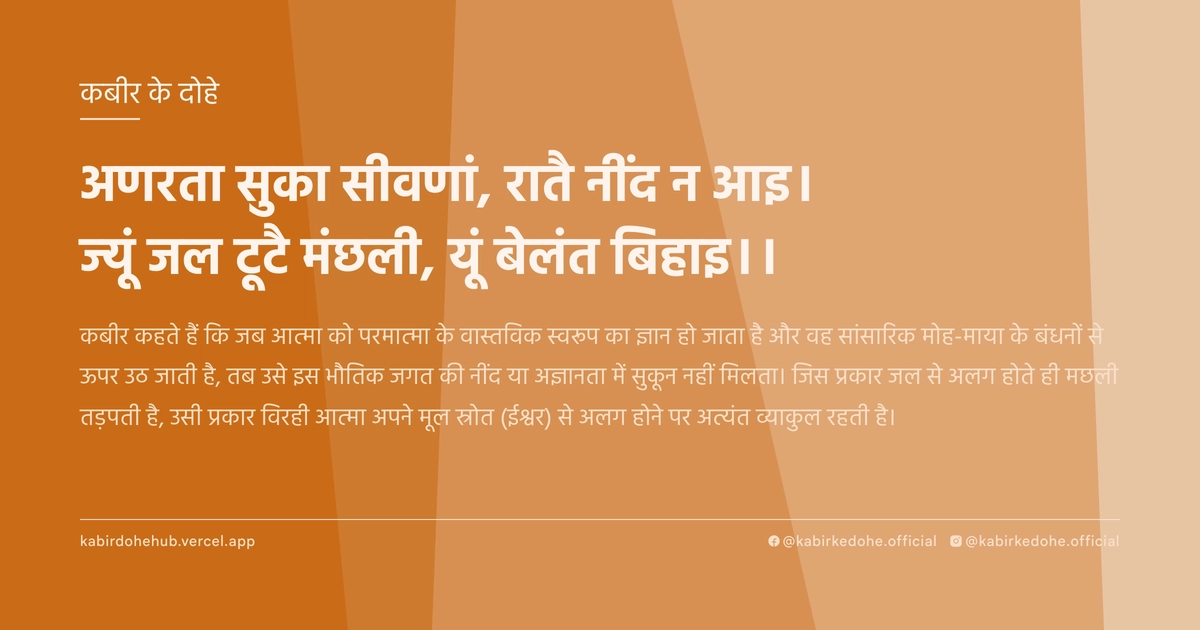
अणरता सुका सीवणां, रातै नींद न आइ।
ज्यूं जल टूटै मंछली, यूं बेलंत बिहाइ।।
Anrata suka seevna, raatai neend na aai. Jyoon jal tutai manchhali, yoon belant bihai.
इस पृष्ठ पर इस कबीर दोहे का अर्थ (meaning), हिंदी व्याख्या और अंग्रेज़ी अनुवाद, दार्शनिक विश्लेषण और व्यावहारिक जीवन सीख दी गई है। यह दोहा वैराग्य (Detachment) विषय से जुड़ा है — Kabir doha meaning and explanation in Hindi and English.
अर्थ (Meaning):
कबीर कहते हैं कि जब आत्मा को परमात्मा के वास्तविक स्वरूप का ज्ञान हो जाता है और वह सांसारिक मोह-माया के बंधनों से ऊपर उठ जाती है, तब उसे इस भौतिक जगत की नींद या अज्ञानता में सुकून नहीं मिलता। जिस प्रकार जल से अलग होते ही मछली तड़पती है, उसी प्रकार विरही आत्मा अपने मूल स्रोत (ईश्वर) से अलग होने पर अत्यंत व्याकुल रहती है।
Kabir expresses that once the soul awakens to the true nature of the Divine and transcends the bonds of worldly attachment, the sleep of ignorance no longer provides solace. Just as a fish gasps in agony when torn away from the water, the longing soul suffers an unbearable restlessness when separated from its primordial source, the Eternal Truth.
व्याख्या (Interpretation):
यहाँ 'नींद' अज्ञानता और माया के प्रभाव का प्रतीक है। जब साधक जागृत होता है, तो वह पाता है कि जिसे वह जीवन समझ रहा था, वह केवल एक स्वप्न था। 'मछली और जल' का रूपक आत्मा और परमात्मा के अविभाज्य संबंध को दर्शाता है। निर्गुण भक्ति के परिप्रेक्ष्य में, यह विरह केवल दुख नहीं, बल्कि एक तीव्र आध्यात्मिक प्यास है जो साधक को अहंकार के विसर्जन की ओर ले जाती है। यह अद्वैत वेदांत के उस सत्य को उजागर करता है जहाँ जीव और ब्रह्म वास्तव में एक हैं, परंतु माया के कारण अलग प्रतीत होते हैं। यह विरह ही वह अग्नि है जो अशुद्धियों को जलाकर आत्मा को शुद्ध करती है।
Here, 'sleep' symbolizes the state of spiritual ignorance and the veil of Maya. When the seeker awakens, they realize that what was perceived as life was merely a dream. The metaphor of the 'fish and water' illustrates the indivisible relationship between the Atman and Brahman. In the context of Nirgun Bhakti, this longing is not mere sorrow but an intense spiritual thirst that drives the seeker toward the annihilation of the ego. It highlights the Advaita Vedanta truth that the individual soul and the Universal Consciousness are one, though they appear separate due to illusion. This yearning is the transformative fire that purifies the soul by burning away all worldly impurities.
दार्शनिक विश्लेषण (Philosophical Analysis):
कबीर का यह दोहा उस युग की उपज है जहाँ धर्म कर्मकांडों और बाहरी आडंबरों में जकड़ा हुआ था। कबीर ने मंदिर, मस्जिद और तीर्थयात्राओं के बजाय 'हृदय के भीतर' के मंदिर पर जोर दिया। यह विश्लेषण सूफी मत के 'इश्क-ए-हकीकी' (ईश्वरीय प्रेम) से मेल खाता है, जहाँ प्रेमी अपने प्रिय (ईश्वर) से अलग होने की तड़प में स्वयं को मिटा देता है।
दार्शनिक स्तर पर, यह दोहा 'अस्तित्व की त्रासदी' को संबोधित करता है। मनुष्य संसार में रहकर भी अकेला महसूस करता है क्योंकि उसकी आत्मा का वास्तविक घर यह भौतिक जगत नहीं है। कबीर यहाँ यह समझा रहे हैं कि यह बेचैनी वास्तव में एक वरदान है, क्योंकि जो संतुष्ट है, वह कभी खोज नहीं करेगा।
अद्वैत वेदांत के अनुसार, यह विरह 'माया' का परिणाम है। जब तक हम स्वयं को शरीर या मन मानते हैं, हम अलग महसूस करते हैं। जैसे ही यह बोध होता है कि 'अहं ब्रह्मास्मि', विरह समाप्त हो जाता है और मिलन घटित होता है।
कबीर का विरोध केवल बाहरी रीति-रिवाजों से नहीं था, बल्कि उस मानसिक जड़ता से था जो मनुष्य को उसकी अपनी दिव्यता से दूर रखती है। वे कहते हैं कि जब तक आप अपनी पहचान को सामाजिक श्रेणियों (जाति, धर्म) से जोड़कर रखेंगे, आप उस सार्वभौमिक जल (परमात्मा) से अलग रहेंगे।
अंततः, यह दोहा अहंकार के विसर्जन की प्रक्रिया है। मछली का जल से अलग होना मृत्यु है, लेकिन जल में विलीन होना जीवन है। इसी प्रकार, जब व्यक्तिगत अहंकार (Small I) समाप्त होता है, तब सार्वभौमिक चेतना (Big I) का उदय होता है।
This couplet emerges from an era where religion was shackled by rituals and external displays. Kabir emphasized the 'temple within the heart' over mosques, temples, and pilgrimages. This analysis aligns with the Sufi concept of 'Ishq-e-Haqiqi' (Divine Love), where the lover annihilates their existence in the longing for the Beloved.
Philosophically, the verse addresses the 'tragedy of existence.' Humans feel a profound loneliness even amidst crowds because the soul's true home is not this material realm. Kabir suggests that this restlessness is actually a blessing; for he who is complacent in illusion will never seek the Truth.
According to Advaita Vedanta, this separation is the result of 'Maya.' As long as we identify with the body or mind, we feel separate. The moment the realization 'Aham Brahmasmi' (I am Brahman) dawns, the longing ceases and union occurs.
Kabir's rebellion was not merely against external rituals but against the mental inertia that distances man from his own divinity. He asserts that as long as identity is tied to social categories like caste or creed, one remains severed from the universal water of the Divine.
Ultimately, this is a process of ego-dissolution. For a fish, separation from water is death, but merging into it is life. Similarly, when the individual ego (the small 'i') is extinguished, the universal consciousness (the cosmic 'I') emerges.
मूल संदेश (Core Message):
- अज्ञान की नींद से जागना ही वास्तविक आध्यात्मिक जन्म है।
- बाहरी अनुष्ठान केवल प्यास बढ़ाते हैं, तृप्ति केवल भीतर मिलती है।
- विरह की तड़प ही वह मार्ग है जो आत्मा को परमात्मा तक ले जाती है।
- अहंकार का विसर्जन ही वह जल है जिसमें आत्मा को विलीन होना है।
- द्वैत का भ्रम टूटने पर ही अद्वैत का आनंद प्राप्त होता है।
- Awakening from the sleep of ignorance is the true spiritual birth.
- External rituals only increase thirst; satisfaction is found only within.
- The agony of separation is the very path that leads the soul to the Divine.
- The dissolution of ego is the water into which the soul must merge.
- The joy of non-duality is attained only when the illusion of separation breaks.
व्यावहारिक उदाहरण (Practical Example):
एक समय की बात है, बनारस के घाटों पर रहने वाली एक वृद्ध विधवा, जानकी, थी। जानकी का पूरा जीवन दूसरों की सेवा और धार्मिक अनुष्ठानों में बीता था। वह हर दिन घंटों गंगा स्नान करती और माला जपती, लेकिन उसके मन में एक गहरी शून्यता थी। उसे लगता था कि वह ईश्वर के बहुत करीब है, फिर भी वह भीतर से प्यासी थी।
एक दिन उसकी मुलाकात एक घुमक्कड़ फकीर से हुई, जिसने उसे कबीर का यह दोहा सुनाया। फकीर ने उससे पूछा, "माँ, तुम जल में डुबकी लगाती हो, पर क्या तुम जल बन गई हो?" जानकी को पहले तो यह बात समझ नहीं आई, लेकिन वह सोचने लगी कि वह अब तक केवल 'प्रार्थना' कर रही थी, 'अनुभव' नहीं।
उसने महसूस किया कि उसकी भक्ति वास्तव में एक सामाजिक ढाल थी। वह इसलिए पूजा करती थी ताकि समाज उसे एक 'पवित्र विधवा' के रूप में देखे। उसकी भक्ति में ईश्वर नहीं, बल्कि उसकी अपनी छवि (Ego) थी। यह अहसास उसे अंदर से झकझोर गया।
उसे महसूस हुआ कि वह उस मछली की तरह थी जो जल के किनारे खड़ी होकर केवल पानी को देख रही थी, लेकिन उसमें कूदी नहीं थी। उसने अपनी सारी बाहरी रीतियों को त्याग दिया और मौन का अभ्यास शुरू किया।
अब वह केवल माला नहीं जपती थी, बल्कि हर जीव में उसी परमात्मा को देखने लगी। उसने देखा कि जिस गंगा को वह पवित्र मानती थी, वह उसी मिट्टी और कचरे से बनी है जिसे वह नापसंद करती थी।
उसने अपने घर के दरवाजे उन लोगों के लिए खोल दिए जिन्हें समाज 'अछूत' कहता था। उसने पाया कि जब वह दूसरों के दुखों में अपनी तड़प को मिलाती है, तो उसकी अपनी बेचैनी कम होने लगती है।
धीरे-धीरे, उसकी आंतरिक तड़प एक गहरे आनंद में बदल गई। वह अब मंदिर जाने के लिए व्याकुल नहीं होती थी, क्योंकि उसने अपने भीतर ही उस अनंत जल को पा लिया था।
एक दिन, जब वह शांत बैठी थी, उसे महसूस हुआ कि वह और वह अनंत शून्य एक ही हैं। उसकी पहचान 'विधवा' या 'भक्त' से मिटकर केवल 'चेतना' रह गई।
जानकी का जीवन अब एक उदाहरण था कि कैसे बाहरी धर्म से आंतरिक आध्यात्मिकता की ओर संक्रमण होता है। उसने सीखा कि वास्तविक मिलन अनुष्ठानों में नहीं, बल्कि अहंकार के पूर्ण विसर्जन में है।
अंत में, वह उसी शांति में विलीन हो गई जिसे वह जीवन भर बाहर खोज रही थी, यह जानते हुए कि मछली और जल कभी अलग थे ही नहीं।
Once, on the ghats of Varanasi, lived an elderly widow named Janaki. Janaki's entire life was spent in the service of others and religious rituals. She spent hours every day bathing in the Ganges and chanting beads, yet a profound emptiness lingered within her. She believed she was close to God, yet she remained inwardly thirsty.
One day, she met a wandering fakir who recited this doha of Kabir to her. The fakir asked, "Mother, you dip yourself in the water, but have you become the water?" Janaki didn't understand at first, but she began to reflect on whether she had been merely 'praying' rather than 'experiencing.'
She realized that her devotion had actually been a social shield. She prayed so that society would perceive her as a 'pious widow.' Her devotion was not centered on God, but on her own image—her ego. This realization shook her to the core.
She felt like a fish standing on the shore, merely staring at the water without ever diving in. She abandoned all her external rituals and began the practice of profound silence.
No longer did she just chant beads; she began to see the Divine in every living being. She realized that the Ganges she deemed holy was composed of the same earth and silt that she had previously looked down upon.
She opened her home to those whom society labeled 'untouchables.' She discovered that when she merged her own longing with the suffering of others, her internal restlessness began to subside.
Gradually, her inner agony transformed into a deep, abiding bliss. She was no longer desperate to visit temples because she had found the infinite water within herself.
One day, while sitting in stillness, she felt that she and the infinite void were one. Her identity as a 'widow' or a 'devotee' dissolved, leaving only pure consciousness.
Janaki's life became a testament to the transition from external religion to internal spirituality. She learned that true union is not found in rituals, but in the complete dissolution of the ego.
Ultimately, she merged into the very peace she had spent her life searching for, knowing that the fish and the water were never truly separate.
अभ्यास मार्गदर्शन (Practice Guidance):
- दैनिक मौन अभ्यास: प्रतिदिन 30 मिनट पूर्ण मौन में बैठें, जहाँ आप न केवल शब्दों का, बल्कि मानसिक विचारों का भी त्याग करें।
- आत्म-पूछताछ जर्नल: प्रतिदिन लिखें कि आज किस क्षण में आपके 'अहंकार' ने आपको दूसरों से अलग महसूस कराया और वह 'मैं' कौन था?
- सेवा का मार्ग: किसी ऐसे व्यक्ति की निस्वार्थ मदद करें जिससे आपका कोई वैचारिक या सामाजिक मतभेद हो, ताकि आपकी पहचान की सीमाएं टूटें।
- डायग्नोस्टिक चेकलिस्ट: क्या आप अभी भी अपनी शांति के लिए बाहरी परिस्थितियों पर निर्भर हैं? क्या आप दूसरों की आलोचना करते समय स्वयं को श्रेष्ठ महसूस करते हैं? यदि हाँ, तो आप अभी भी 'नींद' में हैं।
- Daily Silence Practice: Spend 30 minutes daily in absolute silence, relinquishing not only words but also the internal mental chatter.
- Self-Inquiry Journaling: Record daily instances where your 'ego' made you feel separate from others. Ask: "Who is this 'I' that feels isolated?"
- Path of Service: Perform selfless service for someone with whom you have a deep ideological or social conflict to break the boundaries of your identity.
- Diagnostic Checklist: Are you still dependent on external circumstances for your peace? Do you feel superior while criticizing others? If yes, you are still in the 'sleep' of ignorance.
चिंतन प्रश्न (Reflection Questions):
- वह कौन सा मुखौटा है जिसे मैं दुनिया के सामने पहनता हूँ, और वह मेरे वास्तविक स्वरूप को कैसे छुपाता है?
- क्या मेरी आध्यात्मिक साधना वास्तव में ईश्वर की खोज है, या केवल मेरी श्रेष्ठता सिद्ध करने का एक साधन?
- यदि मेरी सारी सामाजिक पहचान (नाम, पद, धर्म) छीन ली जाए, तो मेरे भीतर क्या बचेगा?
- मैं किन लोगों को 'अशुद्ध' मानता हूँ, और क्या यह मेरी अपनी आंतरिक अशुद्धि का प्रतिबिंब है?
- क्या मैं अपनी तड़प और दुख से भाग रहा हूँ, या मैं इसे परमात्मा तक पहुँचने की सीढ़ी बना रहा हूँ?
- What is the mask I wear before the world, and how does it conceal my true essence?
- Is my spiritual practice a genuine search for the Divine, or merely a tool to validate my own superiority?
- If all my social identities (name, rank, religion) were stripped away, what would remain within me?
- Whom do I perceive as 'impure,' and is this a reflection of my own internal impurities?
- Am I fleeing from my longing and suffering, or am I using them as a ladder to reach the Divine?