
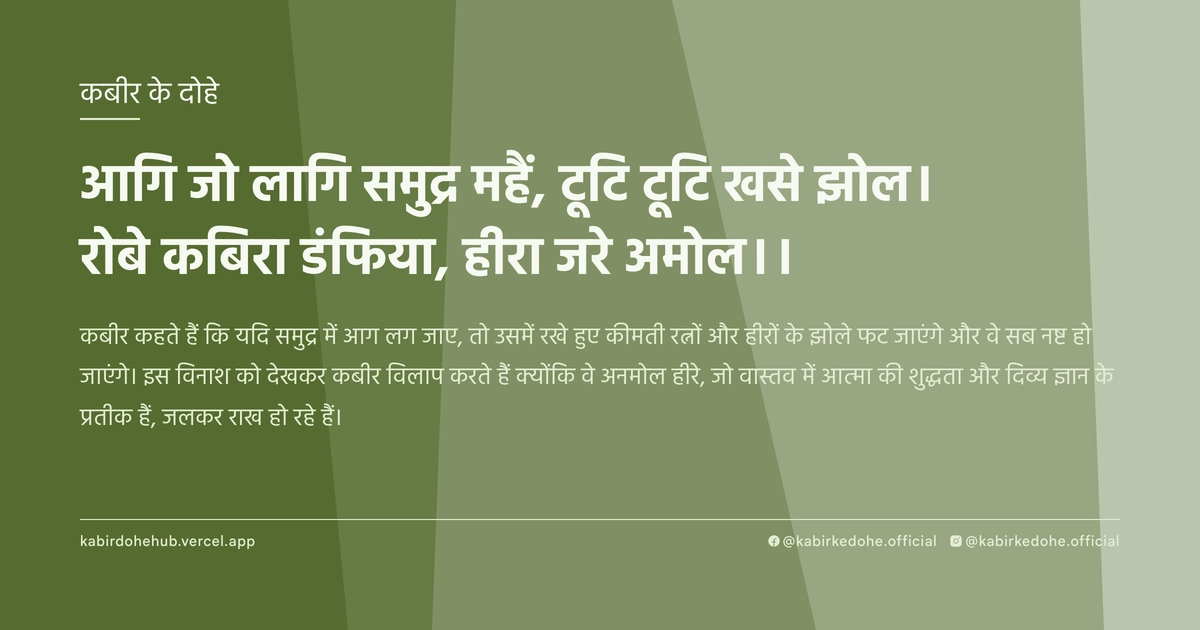
आगि जो लागि समुद्र महैं, टूटि टूटि खसे झोल।
रोबे कबिरा डंफिया, हीरा जरे अमोल।।
Aagi jo laagi samudra mahain, tuti tuti khase jhol. Robe kabira damphiya, heera jare amol.
इस पृष्ठ पर इस कबीर दोहे का अर्थ (meaning), हिंदी व्याख्या और अंग्रेज़ी अनुवाद, दार्शनिक विश्लेषण और व्यावहारिक जीवन सीख दी गई है। यह दोहा मोह (Attachment) विषय से जुड़ा है — Kabir doha meaning and explanation in Hindi and English.
अर्थ (Meaning):
कबीर कहते हैं कि यदि समुद्र में आग लग जाए, तो उसमें रखे हुए कीमती रत्नों और हीरों के झोले फट जाएंगे और वे सब नष्ट हो जाएंगे। इस विनाश को देखकर कबीर विलाप करते हैं क्योंकि वे अनमोल हीरे, जो वास्तव में आत्मा की शुद्धता और दिव्य ज्ञान के प्रतीक हैं, जलकर राख हो रहे हैं।
Kabir posits a surreal scenario: if fire were to ignite within the ocean, the bags containing priceless gems would tear and fall, leading to their destruction. Kabir weeps in this vision, for the 'priceless diamonds'—symbolizing the pure soul and divine consciousness—are being consumed by the flames of ignorance and worldly attachment.
व्याख्या (Interpretation):
यह दोहा एक शक्तिशाली विरोधाभास का उपयोग करता है जहाँ जल (समुद्र) और अग्नि का मिलन होता है। यहाँ समुद्र मन की गहराई और संसार का प्रतीक है, जबकि आग वासना, क्रोध और अहंकार की तीव्रता है। 'झोल' या झोले उन सांसारिक बंधनों और पहचानों को दर्शाते हैं जिनमें मनुष्य ने अपनी आत्मा को कैद कर रखा है। जब अहंकार की अग्नि प्रज्वलित होती है, तो वह केवल बाहरी आवरण को नहीं जलाती, बल्कि उस आंतरिक दिव्यता (हीरे) को भी नष्ट कर देती है जिसे मनुष्य ने पहचाना ही नहीं था। यह निर्गुण भक्ति का सार है, जहाँ आत्मा (Atman) और परमात्मा (Brahman) की एकता केवल तभी संभव है जब माया का पर्दा जल जाए, लेकिन यहाँ चेतावनी है कि यदि हम अज्ञान में डूबे रहे, तो हम अपनी वास्तविक क्षमता को खो देंगे। यह विरोधाभास दर्शाता है कि कैसे विपरीत प्रवृत्तियाँ मनुष्य के भीतर द्वंद्व पैदा करती हैं।
This couplet employs a powerful paradox where water (the ocean) and fire coexist. The ocean symbolizes the depths of the mind and the material world, while the fire represents the intensity of passion, anger, and ego. The 'jhol' or bags signify the worldly attachments and identities in which humans have imprisoned their souls. When the fire of ego ignites, it does not merely burn the outer shell but consumes the internal divinity (the diamonds)—the latent spiritual potential that the individual fails to recognize. This aligns with Nirgun Bhakti, where the union of Atman and Brahman is possible only when the veil of Maya is lifted; however, Kabir warns that if one remains steeped in ignorance, the very essence of the soul is jeopardized. The paradox highlights the internal conflict of the human condition, where the search for truth is often incinerated by the heat of worldly desires.
दार्शनिक विश्लेषण (Philosophical Analysis):
कबीर का यह दोहा उनके समय के धार्मिक पाखंड और कर्मकांडों के प्रति उनके कड़े विरोध को दर्शाता है। वे उस युग में थे जहाँ लोग बाहरी पूजा-पाठ में इतने लीन थे कि उन्होंने अपने भीतर की 'हीरे' जैसी आत्मा को पूरी तरह भुला दिया था। दार्शनिक स्तर पर, यह अद्वैत वेदांत के उस सिद्धांत से जुड़ता है जहाँ माया को एक भ्रम माना गया है, लेकिन यह भ्रम इतना प्रबल है कि यह सत्य को ढक लेता है। कबीर यहाँ चेतावनी दे रहे हैं कि यदि हम केवल बाहरी स्वरूप (झोले) से चिपके रहे, तो हम उस वास्तविक सत्य को खो देंगे जो हमारे भीतर है।
सूफीवाद के संदर्भ में, यह 'फना' (अहंकार का विनाश) की प्रक्रिया जैसा है। लेकिन यहाँ एक सूक्ष्म अंतर है: यदि विनाश केवल क्रोध या मोह के कारण है, तो वह विनाशकारी है; यदि वह ईश्वर के प्रेम में है, तो वह मुक्तिदायी है। कबीर यहाँ उस विनाश की बात कर रहे हैं जो अज्ञानता के कारण होता है। वे समझाते हैं कि मनुष्य अपनी पहचान को जाति, धर्म और पद के 'झोलों' में ढूंढता है, जबकि उसकी असली कीमत उसकी आत्मा की शुद्धता में है।
ऐतिहासिक रूप से, कबीर ने समाज के सबसे निचले तबके के लोगों को यह एहसास दिलाया कि उनकी आध्यात्मिक कीमत किसी भी राजा या पंडित से अधिक है। वे ritualism (कर्मकांड) को एक ऐसे झोले की तरह देखते थे जो वास्तव में आत्मा को कैद करता है। जब यह झोला फटता है, तो यदि व्यक्ति जागरूक नहीं है, तो वह केवल नुकसान महसूस करेगा, लेकिन यदि वह जागृत है, तो वह मुक्त हो जाएगा।
मनोवैज्ञानिक स्तर पर, यह दोहा 'संज्ञानात्मक विसंगति' (cognitive dissonance) को दर्शाता है। हम जिसे अपना सबसे कीमती धन (संपत्ति, प्रतिष्ठा) समझते हैं, वह वास्तव में वह आग है जो हमारी शांति को जला रही है। कबीर हमें यह सोचने पर मजबूर करते हैं कि क्या हम उन चीजों को बचाने की कोशिश कर रहे हैं जो वास्तव में जलने के लिए बनी हैं, या हम उस हीरे को बचाने की कोशिश कर रहे हैं जो अविनाशी है।
अंततः, यह रचना इस बात पर जोर देती है कि आध्यात्मिक जागृति के बिना जीवन केवल एक त्रासदी है। यदि हम अपनी आंतरिक दिव्यता को नहीं पहचानते, तो हम दुनिया के सबसे अमीर व्यक्ति होकर भी आध्यात्मिक रूप से कंगाल हैं। कबीर का विलाप वास्तव में मानवता के प्रति उनकी करुणा है, जो अपनी ही अज्ञानता की आग में जल रही है।
Kabir’s couplet reflects his fierce opposition to the religious hypocrisy and ritualism of his era. He lived in a time where people were so consumed by external worship that they completely forgot the 'diamond-like' soul within. Philosophically, this connects to the Advaita Vedanta principle where Maya is viewed as an illusion, yet an illusion so potent that it obscures the ultimate truth. Kabir warns that if we cling solely to the external shell (the bags), we risk losing the actual truth residing within us.
In the context of Sufism, this mirrors the process of 'Fana' (the annihilation of the ego). However, there is a subtle distinction: if the destruction is caused by anger or attachment, it is catastrophic; if it is caused by divine love, it is liberating. Kabir here speaks of the destruction born of ignorance. He explains that humans seek identity in the 'bags' of caste, religion, and status, whereas their true value lies in the purity of the soul.
Historically, Kabir empowered the marginalized by making them realize that their spiritual worth exceeded that of any king or priest. He viewed ritualism as a bag that effectively imprisoned the soul. When this bag tears, the unaware person feels only loss, but the awakened soul finds liberation. This shift from external form to internal essence was the cornerstone of the Bhakti movement's social revolution.
Psychologically, the poem illustrates 'cognitive dissonance.' What we perceive as our most precious assets—wealth, reputation—are often the very fires consuming our inner peace. Kabir forces us to question whether we are attempting to save things destined to burn, or if we are protecting the indestructible diamond of consciousness.
Ultimately, the work emphasizes that life without spiritual awakening is a tragedy. If we fail to recognize our internal divinity, we remain spiritually bankrupt despite material abundance. Kabir’s weeping is not a sign of weakness, but a profound expression of compassion for humanity, which continues to perish in the flames of its own ignorance.
मूल संदेश (Core Message):
- बाहरी पहचान केवल एक आवरण है, जो अंततः नष्ट होना ही है।
- अहंकार की अग्नि आत्मा की वास्तविक चमक को धुंधला कर देती है।
- सच्ची संपत्ति वह नहीं जो संचित की जाए, बल्कि वह है जो अनुभव की जाए।
- जब तक 'मैं' का झोला नहीं फटता, तब तक 'परमात्मा' का अनुभव नहीं होता।
- विनाश अक्सर नए और शुद्ध सृजन का पहला कदम होता है।
- आंतरिक दिव्यता को पहचानना ही जीवन का एकमात्र वास्तविक उद्देश्य है।
- External identity is merely a veil, destined to be destroyed.
- The fire of ego obscures the authentic radiance of the soul.
- True wealth is not that which is accumulated, but that which is realized.
- Until the bag of 'I' is torn, the experience of the Divine remains hidden.
- Destruction is often the first step toward a new and pure creation.
- Recognizing internal divinity is the only true purpose of human existence.
व्यावहारिक उदाहरण (Practical Example):
वाराणसी के घाटों पर रहने वाला एक वृद्ध बुनकर था, जिसका नाम माधव था। माधव अपनी कला में निपुण था और उसने जीवन भर रेशमी वस्त्रों के सबसे सुंदर झोले और कपड़े बनाए। वह अपनी कला और अपनी सामाजिक प्रतिष्ठा को ही अपनी सबसे बड़ी उपलब्धि मानता था। वह मानता था कि उसकी पहचान उसके द्वारा बनाए गए उन महंगे कपड़ों से है जिन्हें बड़े व्यापारी खरीदते थे।
माधव का अहंकार उसके काम की प्रशंसा के साथ बढ़ता गया। वह अब केवल उन लोगों से बात करता था जो उसकी कला की कद्र करते थे। उसने अपने परिवार और पड़ोसियों को तुच्छ समझना शुरू कर दिया। उसके लिए उसका 'हुनर' ही उसका सबसे बड़ा हीरा था, लेकिन वास्तव में वह हुनर उसके अहंकार का एक झोला बन गया था।
एक समय ऐसा आया जब शहर में भीषण आग लगी। माधव के घर और उसकी कार्यशाला में आग लग गई। देखते ही देखते उसके सारे कीमती रेशमी कपड़े, उसके द्वारा संचित धन और उसके गौरव के प्रतीक सब जलकर राख हो गए। माधव पागलों की तरह चिल्ला रहा था, वह अपने उन 'हीरों' (कपड़ों) को बचाने की कोशिश कर रहा था जो आग की लपटों में घिरे थे।
जब आग शांत हुई, तो माधव सड़क पर बैठा रो रहा था। तभी वहां से एक फकीर गुजरा, जिसने माधव की हालत देखी और मुस्कुराते हुए कहा, 'बेटा, तू उन कपड़ों के लिए रो रहा है जो जल गए, या उस शांति के लिए जो तूने उन कपड़ों के पीछे छिपा दी थी?'
माधव को पहले तो गुस्सा आया, लेकिन फिर उसने गौर किया कि जिस अहंकार के कारण उसने सबको छोटा समझा था, वह अहंकार भी उस आग में जल चुका था। अब उसके पास खोने के लिए कुछ नहीं था, और पहली बार उसने महसूस किया कि वह वास्तव में स्वतंत्र है।
उसने महसूस किया कि वह अब तक जिस 'हीरे' को संजो रहा था, वह केवल बाहरी चमक थी। असली हीरा तो उसकी वह करुणा थी जो उसने वर्षों से दबा रखी थी। उसने देखा कि उसके पड़ोसी, जिन्हें उसने तुच्छ समझा था, वही उसकी मदद के लिए सबसे पहले आगे आए थे।
माधव ने अपनी पूरी जिंदगी की कमाई को एक झोले की तरह देखा जो फट चुका था। लेकिन उस फटे हुए झोले से जो बाहर निकला, वह था एक नया इंसान। उसने अब कपड़े केवल पैसे के लिए नहीं, बल्कि सेवा के लिए बनाने शुरू किए।
वह अब अपनी पहचान अपने काम से नहीं, बल्कि अपनी विनम्रता से करने लगा। माधव ने जान लिया कि जब तक अहंकार का झोला नहीं फटता, तब तक भीतर का असली हीरा कभी नहीं चमकता।
In the ghats of Varanasi lived an elderly weaver named Madhav. Madhav was a master of his craft, spending his life creating the most exquisite silk bags and garments. He viewed his technical skill and the resulting social prestige as his greatest achievements, believing his identity was defined by the expensive fabrics bought by wealthy merchants.
Madhav's ego grew in tandem with the praise for his art. He began speaking only to those who appreciated his skill, gradually viewing his family and neighbors as insignificant. For him, his 'talent' was the diamond of his life, but in reality, that talent had become a bag of arrogance.
One day, a devastating fire swept through the city. Madhav's home and workshop were engulfed. In a matter of moments, all his precious silk fabrics, his accumulated wealth, and the symbols of his pride were reduced to ash. Madhav screamed in agony, desperately trying to save the 'diamonds' (his fabrics) from the flames.
When the fire subsided, Madhav sat on the street, weeping. A wandering fakir passed by, saw his condition, and smiled, asking, 'Son, are you mourning the clothes that burned, or the peace you had hidden behind those clothes?'
Madhav was initially angered, but then he realized that the ego which had led him to despise others had also been incinerated in the fire. For the first time in decades, he had nothing left to lose, and he felt a strange, sudden sense of freedom.
He understood that the 'diamond' he had been polishing was merely an external glitter. The true diamond was the compassion he had suppressed for years. He noticed that the very neighbors he had looked down upon were the first to offer him food and shelter.
Madhav viewed his life's achievements as a bag that had finally torn open. But what emerged from that torn bag was a new human being. He began weaving not for profit or prestige, but as a service to others.
He no longer defined himself by his craft, but by his humility. Madhav realized that until the bag of ego is torn asunder, the true internal diamond can never truly shine.
अभ्यास मार्गदर्शन (Practice Guidance):
- प्रतिदिन 20 मिनट मौन ध्यान करें, जहाँ आप अपने विचारों को 'झोलों' की तरह देखें और उन्हें धीरे-धीरे छूटते हुए महसूस करें।
- एक डायरी लिखें जिसमें आप अपनी उन पहचानों (जैसे पद, डिग्री, संपत्ति) की सूची बनाएं जिन्हें आप अपना 'हीरा' समझते हैं, और फिर विश्लेषण करें कि यदि ये सब कल चले जाएं, तो आपके भीतर क्या बचेगा।
- व्यवहार परिवर्तन: दिन में कम से कम एक बार किसी ऐसे व्यक्ति की मदद करें जिससे आप सामाजिक या मानसिक रूप से खुद को श्रेष्ठ समझते हैं, ताकि अहंकार की दीवारें टूट सकें।
- नैदानिक चेकलिस्ट (Diagnostic Checklist): क्या आप अपनी प्रशंसा सुनकर उत्तेजित होते हैं? क्या किसी की आलोचना आपको विचलित करती है? यदि हाँ, तो आपका 'अहंकार का झोला' अभी भी सुरक्षित है और आपको उसे जलाने की आवश्यकता है।
- Practice 20 minutes of silent meditation daily, visualizing your thoughts as 'bags' of identity and feeling them slowly detach and dissolve.
- Maintain a journal listing the identities (status, degrees, wealth) you consider your 'diamonds,' then analyze what would remain of your essence if these were all gone tomorrow.
- Behavioral Shift: Once a day, consciously serve someone you subconsciously perceive as 'inferior' to you, effectively dismantling the walls of ego.
- Diagnostic Checklist: Do you feel a surge of ego upon receiving praise? Does criticism deeply disturb your peace? If yes, your 'bag of ego' is still intact and needs to be incinerated.
चिंतन प्रश्न (Reflection Questions):
- मेरे जीवन का वह कौन सा 'झोला' है जिसे मैं सबसे अधिक पकड़े हुए हूँ और जिसके खोने के डर से मैं डरा रहता हूँ?
- क्या मेरी डिजिटल पहचान (सोशल मीडिया प्रोफाइल) मेरे वास्तविक स्वरूप का हीरा है या केवल एक चमकता हुआ झोला?
- जब मैं दूसरों की मदद करता हूँ, तो क्या मैं वास्तव में उनकी मदद कर रहा हूँ या अपने 'परोपकारी' होने के अहंकार को पोषण दे रहा हूँ?
- यदि आज मेरी सारी सामाजिक प्रतिष्ठा छीन ली जाए, तो क्या मैं खुद को स्वीकार कर पाऊँगा?
- मेरे भीतर की वह कौन सी 'अग्नि' है जो मेरी मानसिक शांति को लगातार जला रही है?
- क्या मैं सत्य की खोज कर रहा हूँ, या केवल सत्य जैसा दिखने का प्रयास कर रहा हूँ?
- Which 'bag' of identity am I clinging to most tightly, and what fear drives this attachment?
- Is my digital persona a reflection of my soul's diamond, or merely a glittering, empty bag?
- When I help others, am I truly serving them, or am I feeding the ego of being a 'benefactor'?
- If all my social prestige were stripped away today, would I still be able to accept myself?
- What is the specific 'fire' within me that continuously incinerates my mental peace?
- Am I genuinely seeking the Truth, or am I merely striving to appear truthful?