
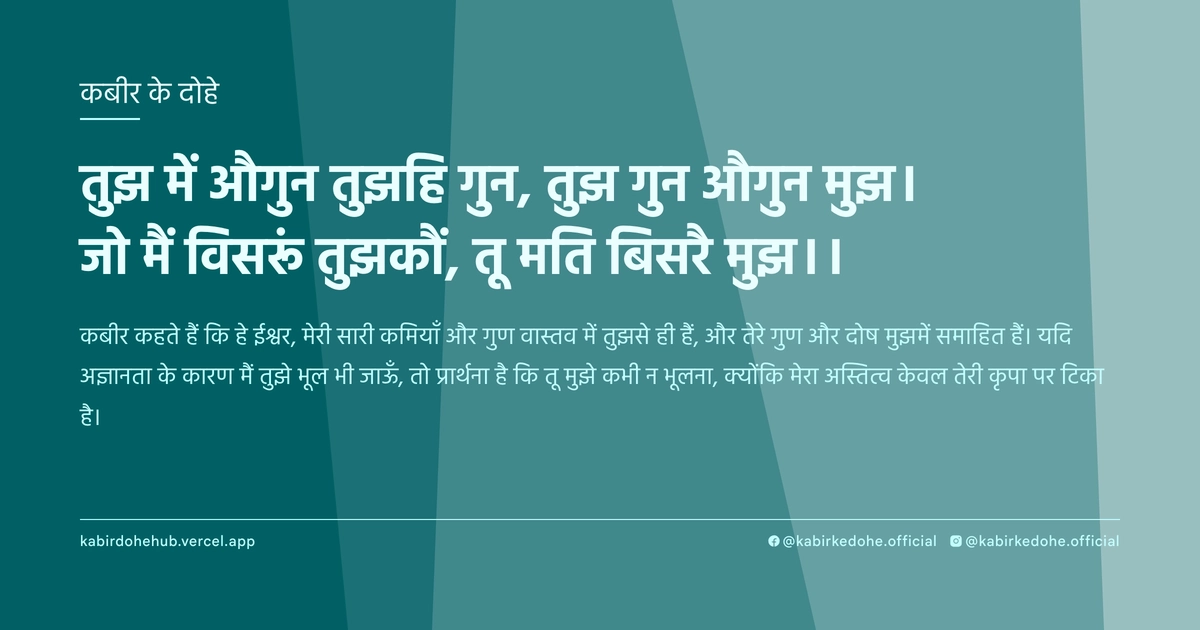
तुझ में औगुन तुझहि गुन, तुझ गुन औगुन मुझ।
जो मैं विसरूं तुझकौं, तू मति बिसरै मुझ।।
Tujh me augun tujhi gun, tujh gun augun mujh. Jo main visrun tujhkaun, tu mati bisrai mujh.
इस पृष्ठ पर इस कबीर दोहे का अर्थ (meaning), हिंदी व्याख्या और अंग्रेज़ी अनुवाद, दार्शनिक विश्लेषण और व्यावहारिक जीवन सीख दी गई है। यह दोहा भक्ति (Bhakti) विषय से जुड़ा है — Kabir doha meaning and explanation in Hindi and English.
अर्थ (Meaning):
कबीर कहते हैं कि हे ईश्वर, मेरी सारी कमियाँ और गुण वास्तव में तुझसे ही हैं, और तेरे गुण और दोष मुझमें समाहित हैं। यदि अज्ञानता के कारण मैं तुझे भूल भी जाऊँ, तो प्रार्थना है कि तू मुझे कभी न भूलना, क्योंकि मेरा अस्तित्व केवल तेरी कृपा पर टिका है।
Kabir addresses the Divine, stating that all his flaws and virtues are reflections of the Divine, and vice versa. He acknowledges a profound unity where the distinction between the seeker and the Sought vanishes. He prays that even if he forgets the Divine due to worldly illusion, the Divine should never forget him.
व्याख्या (Interpretation):
यह दोहा द्वैत से अद्वैत की यात्रा है। प्रारंभ में, कवि स्वयं को और ईश्वर को अलग मानकर 'तुझ' और 'मुझ' का प्रयोग करता है, जो जीव और ब्रह्म के बीच के शुरुआती अलगाव को दर्शाता है। फिर वह इस विरोधाभास को प्रस्तुत करता है कि गुण और दोष वास्तव में एक ही चेतना के दो पहलू हैं। यह निर्गुण भक्ति का सार है, जहाँ ईश्वर किसी बाहरी मूर्ति में नहीं, बल्कि स्वयं की आत्मा के भीतर स्थित है। 'भूलना' यहाँ माया के प्रभाव को दर्शाता है, जो आत्मा को उसके वास्तविक स्वरूप से अलग करता है। अंततः, यह समर्पण की पराकाष्ठा है जहाँ भक्त अपनी अहंकारपूर्ण पहचान को मिटाकर पूर्णतः परमात्मा में विलीन होना चाहता है।
This couplet traces the journey from duality to non-duality. Initially, the poet uses 'You' and 'I', reflecting the perceived separation between the Jiva (individual soul) and Brahman (Universal Consciousness). He then presents the paradox that virtues and flaws are merely two sides of the same consciousness. This is the essence of Nirgun Bhakti, where the Divine is not an external idol but the innermost core of existence. 'Forgetting' symbolizes the veil of Maya, which obscures the soul's realization of its own divinity. Ultimately, it is a pinnacle of surrender, where the devotee seeks the annihilation of the ego to merge completely into the Absolute.
दार्शनिक विश्लेषण (Philosophical Analysis):
कबीर का यह दृष्टिकोण अद्वैत वेदांत के 'अहं ब्रह्मास्मि' (मैं ही ब्रह्म हूँ) के सिद्धांत से गहराई से प्रेरित है। वे यहाँ यह तर्क दे रहे हैं कि यदि ईश्वर सर्वव्यापी है, तो मनुष्य के भीतर की बुराइयाँ और अच्छाइयाँ भी उसी एक ऊर्जा का विस्तार हैं। यह विचार पारंपरिक धार्मिक नैतिकता को चुनौती देता है जो पाप और पुण्य को अलग-अलग श्रेणियों में बांटता है। कबीर के लिए, दोष और गुण केवल सापेक्ष धारणाएं हैं; वास्तविक सत्य वह निराकार तत्व है जो इन दोनों से परे है।
सूफी मत के 'फना' (अहंकार का विनाश) की अवधारणा यहाँ स्पष्ट रूप से झलकती है। जब भक्त कहता है कि 'तू मति बिसरै मुझ', तो वह वास्तव में अपनी व्यक्तिगत पहचान को मिटाने की विनती कर रहा है। वह जानता है कि जब तक 'मैं' (अहंकार) जीवित है, तब तक 'तू' (परमात्मा) का अनुभव असंभव है। यह एक मनोवैज्ञानिक रूपांतरण है जहाँ व्यक्ति अपनी कमियों पर शोक करने के बजाय उन्हें उस विराट चेतना के हिस्से के रूप में स्वीकार करता है।
कबीर के समय में, धर्म केवल कर्मकांडों और बाहरी दिखावे तक सीमित था। उन्होंने इस दोहे के माध्यम से यह समझाया कि ईश्वर को पाने के लिए तीर्थों या कठिन अनुष्ठानों की आवश्यकता नहीं है, बल्कि आत्म-साक्षात्कार और पूर्ण समर्पण की आवश्यकता है। वे जाति और वर्ग के भेदों को नकारते हुए यह संदेश देते हैं कि आत्मा की तड़प ही सबसे बड़ा धर्म है।
दार्शनिक रूप से, यह दोहा 'साक्षी भाव' की बात करता है। जब हम अपनी कमियों को 'ईश्वर का हिस्सा' मानते हैं, तो हम उनके प्रति आसक्त नहीं होते और न ही उनसे घबराते हैं। यह तटस्थता ही हमें मानसिक शांति और आध्यात्मिक ऊंचाई प्रदान करती है। यह मनुष्य को स्वयं के प्रति अधिक दयालु और दूसरों के प्रति अधिक क्षमाशील बनाता है।
अंततः, यह रचना इस सत्य को उद्घाटित करती है कि भक्त और भगवान के बीच का अंतर एक भ्रम है। जैसे समुद्र की लहर खुद को समुद्र से अलग मानती है, लेकिन वास्तव में वह केवल जल है, वैसे ही मनुष्य स्वयं को ईश्वर से अलग मानता है। इस भ्रम का टूटना ही मोक्ष है।
Kabir's perspective is deeply rooted in the Advaita Vedanta principle of 'Aham Brahmasmi' (I am Brahman). He argues that if the Divine is omnipresent, then the flaws and virtues within a human are merely extensions of that single, universal energy. This challenges traditional religious morality that categorizes sin and virtue into rigid binaries. For Kabir, merit and flaw are relative perceptions; the ultimate truth is the formless element that transcends both.
The Sufi concept of 'Fana' (the annihilation of the self) is vividly reflected here. When the devotee prays, 'May You not forget me,' he is actually pleading for the dissolution of his separate identity. He recognizes that as long as the 'I' (ego) persists, the experience of the 'Thou' (Divine) remains elusive. This is a psychological transformation where the individual stops mourning their shortcomings and instead accepts them as part of the cosmic play.
During Kabir's era, religion was largely reduced to rituals and external displays. Through this doha, he explains that reaching the Divine requires neither pilgrimages nor rigorous rituals, but rather self-realization and absolute surrender. By rejecting caste and class distinctions, he asserts that the soul's longing is the only true religion.
Philosophically, this couplet speaks to the 'Witness Consciousness' (Sakshi Bhava). When we perceive our flaws as part of the Divine's manifestation, we cease to be attached to them or terrified by them. This neutrality grants mental peace and spiritual elevation. It makes a person more compassionate toward themselves and more forgiving toward others.
Ultimately, the work reveals that the distinction between the devotee and the Deity is an illusion. Just as a wave of the ocean perceives itself as separate from the sea, yet is fundamentally just water, the human perceives a separation from God. The shattering of this illusion is liberation (Moksha).
मूल संदेश (Core Message):
- अहंकार वह पर्दा है जो हमें हमारी दिव्यता देखने से रोकता है।
- गुण और दोष केवल सिक्के के दो पहलू हैं; सत्य इन दोनों से परे है।
- पूर्ण समर्पण ही वह एकमात्र मार्ग है जिससे 'मैं' मिटता है और 'तू' प्रकट होता है।
- ईश्वर को बाहर खोजना भ्रम है; वह स्वयं के भीतर की गहराई में स्थित है।
- जब हम स्वयं को स्वीकार करते हैं, तभी हम संपूर्ण ब्रह्मांड से जुड़ पाते हैं।
- The ego is the veil that prevents us from seeing our own divinity.
- Virtue and flaw are merely two sides of a coin; Truth transcends both.
- Absolute surrender is the only path where the 'I' vanishes and the 'Thou' emerges.
- Seeking God externally is an illusion; He resides in the depths of one's own being.
- Only through total self-acceptance can we connect with the universal consciousness.
व्यावहारिक उदाहरण (Practical Example):
वाराणसी के एक पुराने मोहल्ले में माधव नाम का एक बुनकर रहता था। वह अपने काम में निपुण था, लेकिन स्वभाव से अत्यंत क्रोधी और अहंकारी था। वह मानता था कि उसकी श्रेष्ठता उसकी कला के कारण है, और जो उससे कम कुशल हैं, वे तुच्छ हैं।
एक दिन उसकी मुलाकात एक भ्रमणकारी संत से हुई, जिन्होंने माधव के अहंकार को पहचान लिया। संत ने उसे कबीर का यह दोहा सुनाया और कहा, "माधव, तुम्हारी यह कला जिसे तुम अपना गुण मानते हो, और तुम्हारा यह क्रोध जिसे तुम अपनी कमजोरी मानते हो, दोनों ही उस एक परमात्मा की अभिव्यक्ति हैं।"
माधव को पहले यह बात समझ नहीं आई। उसने तर्क दिया कि क्रोध तो बुरा है, वह परमात्मा का कैसे हो सकता है? संत मुस्कुराए और बोले, "जैसे अंधेरा प्रकाश की अनुपस्थिति है, वैसे ही क्रोध प्रेम की अनुपस्थिति है। दोनों ही उस एक सत्य के खेल हैं। यदि तुम अपने क्रोध को भी उसी ईश्वर का हिस्सा मानोगे, तो तुम उससे लड़ना छोड़ दोगे और उसे प्रेम में बदल पाओगे।"
माधव गहरे चिंतन में डूब गया। उसने महसूस किया कि वह अब तक अपनी 'श्रेष्ठता' के बोझ तले दबा था और अपनी 'कमियों' से लड़ रहा था। उसने यह समझना शुरू किया कि उसका अहंकार वास्तव में उसकी सबसे बड़ी कमी थी, जिसे वह गुण समझ बैठा था।
अगले कुछ महीनों तक, माधव ने हर बार क्रोध आने पर स्वयं से कहा, "यह मेरा दोष नहीं, बल्कि उस परमात्मा की एक लहर है जो मुझे शुद्ध करने आई है।" उसने अपने क्रोध को दबाया नहीं, बल्कि उसे साक्षी भाव से देखना शुरू किया।
धीरे-धीरे उसका व्यवहार बदलने लगा। वह अब अपने साथी बुनकरों की गलतियों पर चिल्लाने के बजाय उनकी मदद करने लगा। उसने महसूस किया कि जब वह दूसरों के दोष देखता है, तो वह वास्तव में अपने ही भीतर के प्रतिबिंब को देख रहा होता है।
एक दिन, एक युवा बुनकर ने उसकी सबसे महंगी साड़ी पर रंग गिरा दिया। पुराने माधव ने उसे बुरी तरह फटकारा होता, लेकिन नए माधव ने मुस्कुराकर कहा, "कोई बात नहीं, इस गलती ने इस साड़ी को एक अनोखा रूप दे दिया है।"
उसकी कार्यशाला अब केवल कपड़ों के उत्पादन का केंद्र नहीं, बल्कि शांति और प्रेम का केंद्र बन गई थी। माधव ने जान लिया था कि जब हम स्वयं को और दूसरों को ईश्वर के रूप में देखते हैं, तो दोष समाप्त हो जाते हैं और केवल गुण शेष रह जाते हैं।
उसका जीवन अब एक निरंतर प्रार्थना बन गया था। वह अब अपनी कला का श्रेय स्वयं नहीं लेता था, बल्कि उसे परमात्मा का उपहार मानकर समर्पित कर देता था।
अंततः, माधव ने पाया कि जिस ईश्वर को वह मंदिर और मस्जिदों में खोज रहा था, वह वास्तव में उसके अपने स्वभाव के रूपांतरण में छिपा था।
In an old neighborhood of Varanasi lived a weaver named Madhav. He was exceptionally skilled in his craft but was notoriously angry and arrogant. He believed his superiority stemmed from his art, and those less skilled were beneath him.
A wandering saint once met Madhav and recognized his ego. The saint recited this doha of Kabir and said, "Madhav, this art you consider your virtue, and this anger you consider your flaw, are both expressions of the one Divine."
Madhav didn't understand at first. He argued that anger is evil; how could it be part of the Divine? The saint smiled and replied, "Just as darkness is the absence of light, anger is the absence of love. Both are parts of the same cosmic play. If you view your anger as a manifestation of the Divine, you will stop fighting it and begin transforming it into love."
Madhav sank into deep contemplation. He realized he had been burdened by his 'superiority' and exhausted by fighting his 'flaws.' He understood that his arrogance was actually his greatest flaw, which he had mistaken for a virtue.
For the next few months, whenever anger arose, Madhav told himself, "This is not my fault, but a wave of the Divine coming to purify me." He did not suppress his anger but began to observe it with a witness consciousness.
Gradually, his behavior shifted. Instead of shouting at fellow weavers for their mistakes, he began helping them. He realized that when he saw flaws in others, he was merely seeing a reflection of his own internal state.
One day, a young apprentice spilled dye on one of Madhav's most expensive sarees. The old Madhav would have screamed, but the new Madhav smiled and said, "It is alright; this mistake has given the saree a unique character."
His workshop ceased to be just a place of production and became a sanctuary of peace and love. Madhav had learned that when we see ourselves and others as the Divine, flaws vanish and only virtues remain.
His life became a continuous prayer. He no longer took credit for his art but offered it as a gift from the Divine.
Ultimately, Madhav discovered that the God he had been searching for in temples and mosques was hidden within the transformation of his own nature.
अभ्यास मार्गदर्शन (Practice Guidance):
- प्रतिदिन 20 मिनट मौन ध्यान करें, जहाँ आप अपने भीतर उठने वाले हर विचार (चाहे वह अच्छा हो या बुरा) को बिना किसी निर्णय के केवल एक 'साक्षी' के रूप में देखें।
- एक 'छाया जर्नल' (Shadow Journal) बनाएँ। प्रतिदिन अपनी एक ऐसी कमी लिखें जिससे आप नफरत करते हैं, और फिर उसे इस विचार के साथ लिखें: "यह भी उस विराट चेतना का एक हिस्सा है, जो मुझे पूर्णता की ओर ले जा रहा है।"
- जब भी किसी दूसरे व्यक्ति में कोई दोष दिखे, तो तुरंत रुकें और स्वयं से पूछें: "क्या यह वही दोष है जो मेरे भीतर भी कहीं छिपा है?" इस अभ्यास से अहंकार का क्षय होगा।
- निदान चेकलिस्ट: यदि आप अभी भी अपनी गलतियों के लिए दूसरों को दोष दे रहे हैं या अपनी सफलताओं पर गर्व कर रहे हैं, तो इसका अर्थ है कि आप अभी भी 'द्वैत' में जी रहे हैं। यदि आप शांति और करुणा महसूस करते हैं, तो आप इस ज्ञान को जी रहे हैं।
- Practice 20 minutes of silent meditation daily, observing every arising thought (whether positive or negative) as a mere 'witness' without judgment.
- Maintain a 'Shadow Journal.' Each day, write down one flaw you dislike about yourself, then reframe it: "This too is a part of the vast consciousness, guiding me toward wholeness."
- Whenever you perceive a flaw in another, stop immediately and ask: "Is this the same flaw hidden within me?" This practice systematically erodes the ego.
- Diagnostic Checklist: If you still blame others for your failures or feel pride in your successes, you are living in 'duality.' If you feel an abiding sense of peace and compassion, you are embodying this wisdom.
चिंतन प्रश्न (Reflection Questions):
- आपकी वह कौन सी 'अच्छाई' है जिसे आप वास्तव में अपनी श्रेष्ठता सिद्ध करने के लिए एक हथियार की तरह उपयोग करते हैं?
- यदि आपकी सभी कमियाँ अचानक गायब हो जाएँ, तो क्या आपका वर्तमान व्यक्तित्व बचेगा, या वह केवल आपकी त्रुटियों का एक संग्रह है?
- आप डिजिटल दुनिया में अपनी जो छवि (Image) बनाते हैं, वह आपकी वास्तविक आत्मा से कितनी दूर है?
- क्या आप वास्तव में ईश्वर से जुड़ना चाहते हैं, या आप केवल अपनी इच्छाओं की पूर्ति के लिए एक 'शक्तिशाली सहारे' की तलाश में हैं?
- जब आप किसी की निंदा करते हैं, तो आप वास्तव में किस आंतरिक डर को छिपाने की कोशिश कर रहे होते हैं?
- Which of your 'virtues' do you actually use as a weapon to prove your superiority over others?
- If all your flaws suddenly vanished, would your current personality still exist, or is it merely a collection of your errors?
- How far is the digital persona you curate from the reality of your internal soul?
- Do you truly seek union with the Divine, or are you merely searching for a 'powerful support' to fulfill your desires?
- When you criticize someone, what internal fear are you actually attempting to conceal?