
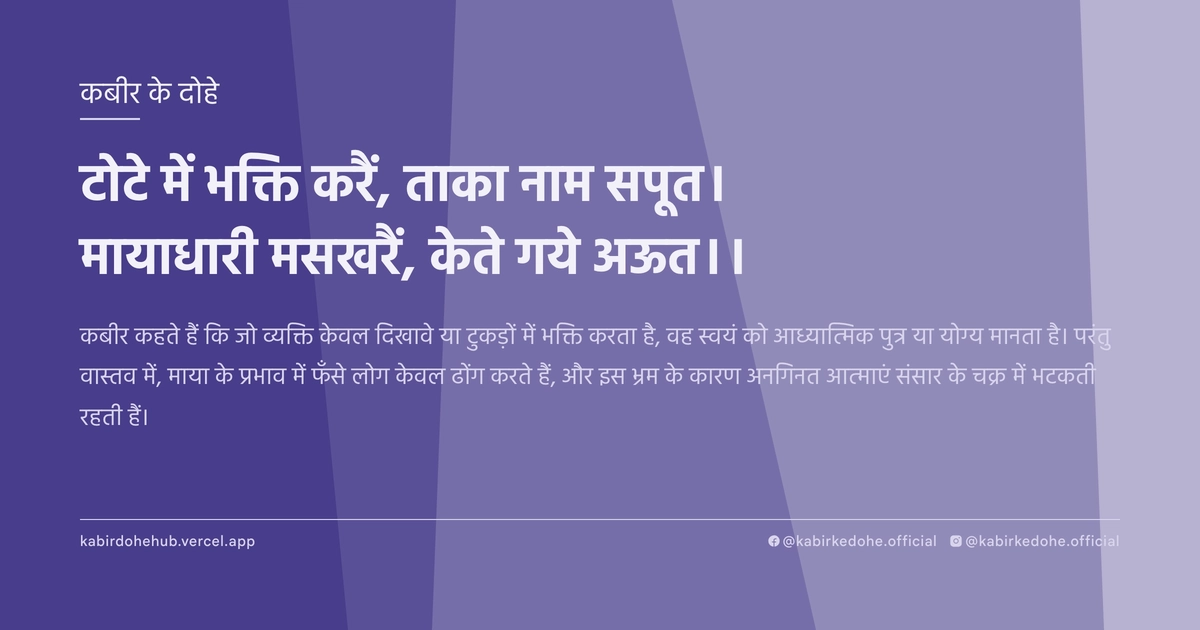
टोटे में भक्ति करैं, ताका नाम सपूत।
मायाधारी मसखरैं, केते गये अऊत।।
Tote me bhakti karain, taka naam saput. Mayadhari maskharain, kete gaye aut.
इस पृष्ठ पर इस कबीर दोहे का अर्थ (meaning), हिंदी व्याख्या और अंग्रेज़ी अनुवाद, दार्शनिक विश्लेषण और व्यावहारिक जीवन सीख दी गई है। यह दोहा माया (Maya) विषय से जुड़ा है — Kabir doha meaning and explanation in Hindi and English.
अर्थ (Meaning):
कबीर कहते हैं कि जो व्यक्ति केवल दिखावे या टुकड़ों में भक्ति करता है, वह स्वयं को आध्यात्मिक पुत्र या योग्य मानता है। परंतु वास्तव में, माया के प्रभाव में फँसे लोग केवल ढोंग करते हैं, और इस भ्रम के कारण अनगिनत आत्माएं संसार के चक्र में भटकती रहती हैं।
Kabir asserts that those who practice devotion in fragments or through superficial displays falsely claim the status of a spiritual heir. In reality, those blinded by Maya are merely pretenders, and countless souls remain lost in the cycle of existence due to this illusory approach to spirituality.
व्याख्या (Interpretation):
इस दोहे का शाब्दिक अर्थ है कि खंडित भक्ति सच्ची नहीं होती। यहाँ 'टोटे' का अर्थ केवल बाहरी कर्मकांडों से है। कबीर निर्गुण भक्ति की बात करते हैं, जहाँ ईश्वर किसी मूर्ति या मंदिर में नहीं, बल्कि अंतरात्मा में है। माया यहाँ उस पर्दे की तरह है जो सत्य को ढक लेता है। जब साधक केवल बाहरी दिखावे को ही धर्म मान लेता है, तो वह 'मसखरा' या विदूषक बन जाता है। यह अद्वैत वेदांत के उस सिद्धांत को दर्शाता है जहाँ अज्ञानता के कारण जीव स्वयं को ब्रह्म से अलग मानता है। अंततः, यह विरोधाभास है कि जो सबसे अधिक धार्मिक दिखने का प्रयास करता है, वही सत्य से सबसे दूर होता है।
The literal meaning suggests that fragmented or superficial devotion is devoid of truth. 'Tote' refers to the ritualistic shards of practice rather than a holistic surrender. Kabir emphasizes Nirgun Bhakti, where the Divine is not found in idols but within the consciousness. Maya acts as the veil of illusion, obscuring the non-dual reality. When a seeker mistakes external performance for internal realization, they become a 'maskhara' or a jester. This aligns with Advaita Vedanta, where ignorance (Avidya) creates the false sense of separation between Atman and Brahman. The central paradox is that the one most desperate to appear religious is often the furthest from the Truth.
दार्शनिक विश्लेषण (Philosophical Analysis):
कबीर का यह दोहा उस सामाजिक और धार्मिक परिवेश की प्रतिक्रिया है जहाँ मध्यकालीन भारत में कर्मकांड और बाहरी आडंबर चरम पर थे। उन्होंने देखा कि लोग तीर्थयात्रा, माला जपने और विशेष वस्त्र धारण करने को ही मोक्ष का मार्ग मान बैठे थे। कबीर ने इस 'टुकड़ों वाली भक्ति' का खंडन किया और 'सहज' मार्ग का प्रस्ताव दिया। उनका दर्शन सूफी मत के 'फना' (अहंकार का विनाश) और वेदांत के 'अहं ब्रह्मास्मि' का संगम है।
यहाँ 'मायाधारी' शब्द केवल धन-संपत्ति के लिए नहीं, बल्कि उस मानसिक स्थिति के लिए है जहाँ व्यक्ति अपनी सामाजिक पहचान (Ego) को ही अपनी वास्तविकता मान लेता है। कबीर तर्क देते हैं कि जब तक भक्ति में अहंकार का मिश्रण है, वह भक्ति नहीं बल्कि एक मानसिक खेल है। यह मनोवैज्ञानिक रूपांतरण की मांग करता है, जहाँ साधक अपनी बाहरी छवि को नष्ट कर आंतरिक शून्यता को अपनाए।
ritualism का विरोध करते हुए कबीर यह स्पष्ट करते हैं कि ईश्वर को पाने के लिए किसी मध्यस्थ या बाहरी उपकरण की आवश्यकता नहीं है। वे जाति और धर्म के बंधनों को तोड़कर एक सार्वभौमिक सत्य की बात करते हैं। उनके लिए 'सपूत' वह नहीं है जिसने शास्त्र रटे हैं, बल्कि वह है जिसने अपने भीतर के अंधकार को मिटा दिया है।
यह विश्लेषण हमें बताता है कि आध्यात्मिक प्रगति का मापदंड बाहरी व्यवहार नहीं, बल्कि आंतरिक ईमानदारी है। माया का प्रभाव तब समाप्त होता है जब व्यक्ति यह समझ जाता है कि वह जिसे 'मेरा' कह रहा है, वह वास्तव में एक भ्रम है। यह विखंडन ही आत्मा को परमात्मा में विलीन होने से रोकता है।
अंततः, कबीर चेतावनी देते हैं कि जो लोग धर्म को एक सामाजिक प्रतिष्ठा या दिखावे के रूप में उपयोग करते हैं, वे केवल समय व्यर्थ करते हैं। सत्य की खोज के लिए पूर्ण समर्पण की आवश्यकता होती है, न कि किस्तों में की गई भक्ति की। यह पूर्णता ही जीव को जन्म-मृत्यु के चक्र से मुक्त करती है।
This couplet is a sharp critique of the socio-religious climate of medieval India, where ritualism and external displays of piety had reached a peak. Kabir observed people treating pilgrimages, rosaries, and specific attire as guaranteed tickets to salvation. He rejected this 'fragmented devotion' and proposed the path of 'Sahaja' or spontaneous, natural realization. His philosophy is a confluence of the Sufi concept of 'Fana' (annihilation of the ego) and the Vedantic realization of 'Aham Brahmasmi'.
The term 'Mayadhari' does not merely refer to material wealth, but to a psychological state where an individual mistakes their social identity (Ego) for their ultimate reality. Kabir argues that as long as devotion is laced with ego, it is not spirituality but a mental game. This requires a psychological transformation where the seeker destroys their external image to embrace the internal void.
By opposing ritualism, Kabir clarifies that no intermediary or external tool is necessary to reach the Divine. He transcends caste and creed to speak of a universal truth. For him, a 'true son' (Sapoot) is not one who has memorized scriptures, but one who has extinguished the darkness within.
This analysis reveals that the metric of spiritual progress is not external behavior, but internal honesty. The influence of Maya ceases when the individual realizes that what they call 'mine' is an illusion. This fragmentation of consciousness is precisely what prevents the Atman from merging with Brahman.
Ultimately, Kabir warns that those who use religion as a tool for social prestige or performance are merely wasting their existence. The quest for Truth demands total surrender, not devotion paid in installments. Only this wholeness liberates the soul from the cycle of birth and death.
मूल संदेश (Core Message):
- दिखावे की भक्ति केवल अहंकार को पोषित करती है, आत्मा को नहीं।
- सच्ची आध्यात्मिकता बाहरी कर्मकांडों के त्याग और आंतरिक ईमानदारी में है।
- माया वह भ्रम है जो हमें स्वयं को दूसरों से श्रेष्ठ दिखाने पर मजबूर करता है।
- पूर्ण समर्पण ही वह एकमात्र मार्ग है जो जीव को मोक्ष की ओर ले जाता है।
- धर्म कोई पोशाक नहीं है जिसे पहना जाए, बल्कि एक अनुभव है जिसे जिया जाए।
- Performative devotion nourishes the ego, not the soul.
- True spirituality lies in the abandonment of rituals and the embrace of internal honesty.
- Maya is the illusion that compels us to project a superior version of ourselves.
- Total surrender is the only path that leads the soul toward liberation.
- Religion is not a garment to be worn, but an experience to be lived.
व्यावहारिक उदाहरण (Practical Example):
वाराणसी के एक पुराने मोहल्ले में रामदीन नाम का एक बुनकर रहता था। रामदीन शहर का सबसे 'धार्मिक' व्यक्ति माना जाता था। वह हर सुबह सबसे पहले मंदिर जाता, लंबी माला फेरता और सफेद वस्त्र पहनकर सबको उपदेश देता। वह अपनी भक्ति के प्रदर्शन में इतना लीन था कि लोग उसे 'परम भक्त' कहने लगे। लेकिन घर के भीतर, रामदीन अत्यंत कठोर था। वह अपने सहायकों को उनके मामूली गलतियों पर गालियाँ देता और अपने परिवार के साथ संवेदनहीन व्यवहार करता।
एक दिन, उसके मोहल्ले में एक फकीर आया, जिसने रामदीन के दिखावे को पहचान लिया। फकीर ने रामदीन से कहा, 'तुम्हारी माला के दाने तो चमक रहे हैं, लेकिन तुम्हारा हृदय काला है।' रामदीन ने क्रोधित होकर कहा, 'मैं घंटों ईश्वर का नाम लेता हूँ, तुम मेरी भक्ति पर सवाल कैसे उठा सकते हो?'
फकीर ने मुस्कुराते हुए एक छोटा सा प्रयोग किया। उसने रामदीन को एक कटोरे में पानी दिया और कहा, 'इसमें एक बूंद स्याही डालो।' जैसे ही स्याही गिरी, पूरा पानी काला हो गया। फकीर ने कहा, 'तुम्हारी भक्ति उस पानी की तरह है, और तुम्हारा अहंकार वह स्याही है। जब तक अहंकार की एक बूंद भी बाकी है, तुम्हारी सारी भक्ति केवल एक दिखावा है।'
रामदीन को पहली बार अपनी स्थिति का एहसास हुआ। उसे समझ आया कि वह मंदिर में जो करता था, वह ईश्वर के लिए नहीं, बल्कि अपनी सामाजिक छवि को बनाए रखने के लिए था। वह 'टोटे में भक्ति' कर रहा था—अर्थात, धर्म का केवल वह हिस्सा अपना रहा था जो उसे समाज में सम्मान दिलाता था, लेकिन उस हिस्से को छोड़ दिया था जिसमें करुणा और विनम्रता थी।
अगले कुछ महीनों तक रामदीन ने माला फेरना कम कर दिया और अपने सहायकों की मदद करना शुरू किया। उसने सीखा कि किसी भूखे को रोटी खिलाना, मंदिर में घंटों बैठने से अधिक बड़ी भक्ति है। उसने अपने क्रोध पर नियंत्रण पाया और अपने परिवार के प्रति नरम हुआ।
उसने महसूस किया कि जब वह चुपचाप किसी की सेवा करता था, तो उसे जो शांति मिलती थी, वह उसे हज़ारों मंत्रों के जाप में नहीं मिली थी। उसका अहंकार धीरे-धीरे गलने लगा। अब वह उपदेश देना बंद कर चुका था, लेकिन उसके व्यवहार में एक ऐसी चमक आ गई थी जिसे लोग महसूस कर सकते थे।
एक दिन उसका एक पुराना प्रतिद्वंद्वी उससे पूछने आया, 'तुमने मंदिर जाना कम क्यों कर दिया?' रामदीन ने बस इतना कहा, 'मैं अब मंदिर के बाहर वाले ईश्वर को नहीं, बल्कि अपने भीतर बैठे उस ईश्वर को खोजने की कोशिश कर रहा हूँ जो हर इंसान में है।'
यह बदलाव रामदीन के जीवन में एक वास्तविक क्रांति लाया। वह अब एक 'मसखरा' नहीं था जो धर्म का मुखौटा पहनकर घूमता था, बल्कि वह एक सच्चा साधक बन गया था जिसने भक्ति को टुकड़ों में नहीं, बल्कि संपूर्णता में जिया।
In an old neighborhood of Varanasi lived a weaver named Ramdeen. Ramdeen was considered the most 'religious' man in the city. He was the first to reach the temple every morning, chanted with long rosaries, and wore pristine white robes while preaching to everyone. He was so absorbed in the performance of his piety that people began calling him a 'Param Bhakt'. However, inside his home, Ramdeen was incredibly harsh. He would abuse his assistants for minor mistakes and treat his family with cold indifference.
A fakir arrived in his neighborhood one day and immediately saw through Ramdeen's facade. The fakir told him, 'Your rosary beads are shining, but your heart is black.' Ramdeen replied angrily, 'I spend hours chanting the name of God; how dare you question my devotion?'
The fakir smiled and performed a small experiment. He gave Ramdeen a bowl of water and asked him to drop a single drop of ink into it. As soon as the ink hit the water, the entire bowl turned black. The fakir said, 'Your devotion is like this water, and your ego is that ink. As long as a single drop of ego remains, all your devotion is merely a performance.'
For the first time, Ramdeen realized his condition. He understood that what he did in the temple was not for God, but to maintain his social image. He was practicing 'devotion in fragments'—adopting only the parts of religion that brought him social prestige, while discarding the parts that required compassion and humility.
Over the next few months, Ramdeen reduced his time with the rosary and began helping his assistants. He learned that feeding a hungry person was a greater act of devotion than sitting in a temple for hours. He gained control over his anger and became gentle with his family.
He noticed that when he silently served others, he felt a peace that thousands of mantras had never provided. His ego began to dissolve slowly. He stopped giving sermons, but a radiance appeared in his behavior that people could actually feel.
One day, an old rival came to ask, 'Why have you stopped visiting the temple so frequently?' Ramdeen simply replied, 'I am no longer searching for the God outside the temple, but for the God within me who resides in every human being.'
This shift brought a real revolution to Ramdeen's life. He was no longer a 'jester' wearing the mask of religion, but a true seeker who lived his devotion not in fragments, but in totality.
अभ्यास मार्गदर्शन (Practice Guidance):
- दैनिक आत्म-निरीक्षण: प्रतिदिन 15 मिनट मौन बैठें और विचार करें कि आपके आज के किन कार्यों में 'दिखावा' था और किनमें 'सत्य' था।
- अहंकार का विसर्जन: दिन में कम से कम एक ऐसा कार्य करें जहाँ आप अपनी पहचान गुप्त रखें और किसी की निस्वार्थ मदद करें।
- जर्नलिंग प्रॉम्प्ट: लिखें कि 'यदि मेरी धार्मिक पहचान छीन ली जाए, तो मेरे व्यक्तित्व में क्या बचेगा?'
- डायग्नोस्टिक चेकलिस्ट: क्या मैं दूसरों की आलोचना करते समय अपनी धार्मिक श्रेष्ठता का उपयोग करता हूँ? क्या मेरी शांति केवल एकांत में है या भीड़ में भी? क्या मैं केवल उन नियमों का पालन करता हूँ जो मुझे 'अच्छा' दिखाते हैं?
- Daily Self-Inquiry: Sit in silence for 15 minutes daily and reflect on which of your actions today were for 'show' and which were rooted in 'truth'.
- Ego Dissolution: Perform at least one act of selfless service daily where your identity remains anonymous.
- Journaling Prompt: Write about: 'If my religious and social identity were stripped away, what would remain of my personality?'
- Diagnostic Checklist: Do I use my religious superiority to criticize others? Is my peace present only in solitude or also in a crowd? Do I only follow rules that make me 'look good' to others?
चिंतन प्रश्न (Reflection Questions):
- मेरे जीवन का वह कौन सा 'धार्मिक मुखौटा' है जिसे मैं समाज के सामने पहनता हूँ?
- क्या मेरी भक्ति वास्तव में ईश्वर के प्रति है, या यह मेरी अपनी 'अच्छे इंसान' होने की छवि की पुष्टि है?
- मैं उन लोगों के प्रति कैसा व्यवहार करता हूँ जो मेरी मान्यताओं से पूरी तरह अलग हैं?
- मेरे भीतर का वह कौन सा हिस्सा है जो अभी भी 'टुकड़ों में' सत्य को स्वीकार कर रहा है?
- यदि दुनिया में कोई मुझे देखने वाला न हो, तो क्या मेरी प्रार्थनाएँ वैसी ही होंगी?
- What is the 'religious mask' I wear in my social interactions?
- Is my devotion truly toward the Divine, or is it a confirmation of my image as a 'good person'?
- How do I treat those whose beliefs are diametrically opposite to mine?
- Which part of my being is still accepting the Truth only in 'fragments'?
- If there were no one in the world to witness me, would my prayers remain the same?