
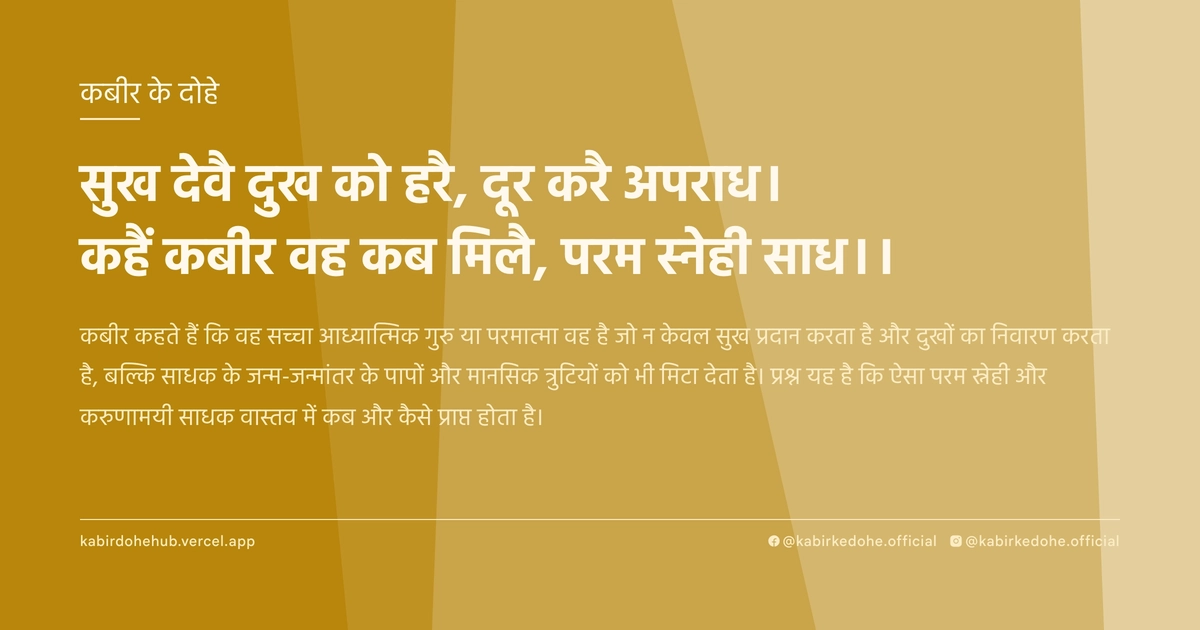
सुख देवै दुख को हरै, दूर करै अपराध।
कहैं कबीर वह कब मिलै, परम स्नेही साध।।
Sukh devai dukh ko harai, door karai aparadh. Kahen Kabir vah kab milai, param snehi sadh.
इस पृष्ठ पर इस कबीर दोहे का अर्थ (meaning), हिंदी व्याख्या और अंग्रेज़ी अनुवाद, दार्शनिक विश्लेषण और व्यावहारिक जीवन सीख दी गई है। यह दोहा सत्संग (Satsang) विषय से जुड़ा है — Kabir doha meaning and explanation in Hindi and English.
अर्थ (Meaning):
कबीर कहते हैं कि वह सच्चा आध्यात्मिक गुरु या परमात्मा वह है जो न केवल सुख प्रदान करता है और दुखों का निवारण करता है, बल्कि साधक के जन्म-जन्मांतर के पापों और मानसिक त्रुटियों को भी मिटा देता है। प्रश्न यह है कि ऐसा परम स्नेही और करुणामयी साधक वास्तव में कब और कैसे प्राप्त होता है।
Kabir inquires about the rarity and nature of a true spiritual guide or the Divine. Such a being is one who bestows eternal bliss, eradicates the root of suffering, and cleanses the soul of its accumulated transgressions. The poet wonders when one truly encounters such a profoundly loving and compassionate master.
व्याख्या (Interpretation):
इस दोहे का शाब्दिक अर्थ एक ऐसे गुरु की खोज है जो दुखों को हर ले। लेकिन आध्यात्मिक स्तर पर, 'सुख' का अर्थ इंद्रिय सुख नहीं, बल्कि 'आनंद' है जो आत्मा के परमात्मा से मिलन से आता है। 'अपराध' यहाँ केवल सामाजिक पाप नहीं, बल्कि 'अज्ञान' (Avidya) है, जो हमें हमारी वास्तविक प्रकृति से दूर रखता है। कबीर निर्गुण भक्ति के माध्यम से समझाते हैं कि जब अहंकार का विसर्जन होता है, तब वह 'परम स्नेही साध' बाहर नहीं, बल्कि भीतर ही प्रकट होता है। यह द्वैत से अद्वैत की यात्रा है, जहाँ खोजने वाला और खोजा जाने वाला एक हो जाते हैं। यह विरोधाभास है कि हम जिसे बाहर खोज रहे हैं, वह हमारे भीतर की जागृति ही है।
Literally, the verse seeks a savior who removes pain. Metaphorically, 'Sukh' refers not to worldly pleasure but to 'Ananda'—the bliss of the soul's union with the Absolute. 'Apradh' (transgression) symbolizes 'Avidya' or spiritual ignorance, the primary veil that obscures the Atman. Within the framework of Nirgun Bhakti, the 'Param Snehi Saadh' (the supremely loving saint) is not merely a physical person but the awakened consciousness. The paradox lies in the search: the seeker believes the guide is external, while the guide is actually the dormant divinity within. This transition from duality to non-duality (Advaita) reveals that the longing for a savior is the first step toward realizing one's own inherent wholeness.
दार्शनिक विश्लेषण (Philosophical Analysis):
कबीर का यह दोहा उस युग की उपज है जहाँ धर्म कर्मकांडों और बाहरी आडंबरों में जकड़ा हुआ था। उन्होंने स्पष्ट किया कि मोक्ष किसी मंदिर, मस्जिद या तीर्थयात्रा से नहीं, बल्कि एक आंतरिक रूपांतरण से मिलता है। यहाँ 'साध' शब्द केवल एक संन्यासी को नहीं, बल्कि उस 'सत्य' को दर्शाता है जो प्रेम (Sufi concept of Ishq) और ज्ञान का संगम है।
अद्वैत वेदांत के परिप्रेक्ष्य में, दुख का कारण 'माया' है, जो हमें यह विश्वास दिलाती है कि हम शरीर हैं। जब यह भ्रम टूटता है, तो 'अपराध' (अज्ञान) समाप्त हो जाता है। कबीर यहाँ सूफी मत के 'फना' (अहंकार का विनाश) और भक्ति मार्ग के 'शरणागति' भाव को जोड़ते हैं।
वे इस बात पर जोर देते हैं कि केवल किताबी ज्ञान या शास्त्र पढ़ने से कोई 'साध' नहीं बनता। वास्तविक गुरु वह है जो साधक के भीतर के अंधकार को मिटा सके। यह सामाजिक जाति व्यवस्था पर भी एक प्रहार है, क्योंकि प्रेम और करुणा किसी विशेष जाति या वर्ग की बपौती नहीं हैं।
मनोवैज्ञानिक स्तर पर, यह दोहा एक गहरे भावनात्मक अभाव और पूर्णता की खोज को दर्शाता है। मनुष्य हमेशा एक ऐसे सहारे की तलाश करता है जो उसे बिना शर्त स्वीकार करे। कबीर इस मानवीय आवश्यकता को आध्यात्मिक उत्थान के साधन में बदल देते हैं।
अंततः, यह विश्लेषण हमें इस निष्कर्ष पर ले जाता है कि 'परम स्नेही' का मिलना वास्तव में स्वयं के प्रेम में डूबने की प्रक्रिया है। जब हम स्वयं को और दूसरों को उसी करुणा से देखते हैं, तब हम स्वयं उस 'साध' के स्वरूप में ढल जाते हैं।
This Doha emerges from an era where spirituality was stifled by rigid ritualism and institutionalized religion. Kabir dismantles the notion that liberation is achieved through external pilgrimages or priestly intermediaries. The term 'Saadh' here transcends the definition of a monk; it represents the embodiment of Truth, blending the Sufi concept of 'Ishq' (divine love) with the Vedantic pursuit of knowledge.
From the lens of Advaita Vedanta, suffering is a byproduct of 'Maya'—the cosmic illusion that convinces the individual they are separate from the Whole. The 'apradh' or sin mentioned is essentially 'Avidya' (ignorance). By removing this veil, the seeker realizes that the Atman and Brahman are one, thereby eradicating the root of all misery.
Kabir integrates the Sufi path of 'Fana' (annihilation of the ego) with the Bhakti tradition of total surrender. He argues that scholarly knowledge of scriptures is sterile if it does not lead to an experiential transformation of the heart. The 'Param Snehi' is the catalyst for this alchemy.
Socially, this verse is a subtle critique of the caste system. By defining the ideal guide through 'Sneha' (love) and 'Karuna' (compassion) rather than lineage or ritual purity, Kabir democratizes spirituality. He asserts that the highest spiritual authority is grounded in love, not in social hierarchy.
Psychologically, the verse addresses the universal human longing for unconditional acceptance. Kabir pivots this emotional need toward a spiritual goal, suggesting that the search for a loving savior is actually the soul's yearning to return to its original, blissful state of oneness.
मूल संदेश (Core Message):
- बाहरी खोज को आंतरिक यात्रा में बदलें।
- सच्चा सुख केवल निस्वार्थ प्रेम में निहित है।
- अज्ञान ही सबसे बड़ा अपराध है, जिसे केवल ज्ञान मिटा सकता है।
- गुरु वह नहीं जो रास्ता दिखाए, बल्कि वह है जो स्वयं रास्ता बन जाए।
- करुणा ही वह सेतु है जो जीव को शिव से जोड़ता है।
- Transform the external search into an internal journey.
- True bliss resides exclusively in selfless love.
- Ignorance is the only true sin; only awareness can erase it.
- The true Guru does not just show the way but becomes the way.
- Compassion is the bridge that connects the individual to the Universal.
व्यावहारिक उदाहरण (Practical Example):
वाराणसी के एक पुराने घाट पर रहने वाली एक वृद्ध विधवा, जानकी, का जीवन अकेलेपन और पुराने दुखों की यादों से भरा था। वह हर दिन गंगा किनारे बैठकर किसी ऐसे चमत्कार या गुरु की प्रतीक्षा करती थी जो उसके जीवन के कष्टों को मिटा दे और उसे शांति प्रदान करे।
वह अक्सर मंदिर के पुजारियों से अपनी व्यथा कहती, लेकिन उन्हें उसकी गरीबी और उसकी सामाजिक स्थिति में कोई रुचि नहीं थी। वे उसे केवल दान देने और कर्मकांड करने की सलाह देते थे, जिससे जानकी का मन और अधिक बोझिल हो जाता था।
एक दिन, घाट पर एक साधारण सा बुनकर बैठा था, जो कबीर की वाणी गा रहा था। उसने जानकी को देखा और बिना किसी औपचारिक परिचय के, उसकी आँखों में छिपे दर्द को पहचान लिया। उसने जानकी से कहा, 'माँ, आप जिसे बाहर खोज रही हैं, वह आपके भीतर की करुणा में छिपा है।'
जानकी को पहले यह बात समझ नहीं आई। उसने पूछा, 'मेरे भीतर तो केवल दुख है, सुख कहाँ है?' बुनकर ने मुस्कुराते हुए कहा, 'दुख वह पर्दा है जिसके पीछे सुख छिपा है। जिस दिन आप अपने दुखों को दूसरों के दुख मिटाने का जरिया बना लेंगी, आप स्वयं उस साध को पा लेंगी।'
जानकी ने इस बात पर विचार किया। उसने देखा कि घाट पर कई अन्य लावारिस और बीमार लोग थे जो उससे भी अधिक दुखी थे। उसने अपनी सीमित सामर्थ्य के बावजूद, अपने हिस्से की एक रोटी उन लोगों के साथ बाँटना शुरू किया।
जैसे-जैसे वह दूसरों की सेवा में लगी, उसका अपना अकेलापन गायब होने लगा। वह अब किसी बाहरी चमत्कार की प्रतीक्षा नहीं कर रही थी। उसने पाया कि जब वह किसी और के आँसू पोंछती, तो उसके अपने मन का बोझ हल्का हो जाता था।
एक शाम, जब वह एक बीमार बच्चे की देखभाल कर रही थी, उसे अचानक एक असीम शांति का अनुभव हुआ। उसे महसूस हुआ कि वह 'परम स्नेही साध' कोई व्यक्ति नहीं, बल्कि वह निस्वार्थ प्रेम था जो उसके और उस बच्चे के बीच बह रहा था।
जानकी का रूपांतरण पूर्ण था। उसने जान लिया कि अपराधों का निवारण पश्चाताप से नहीं, बल्कि करुणा के सक्रिय अभ्यास से होता है। वह अब वाराणसी की गलियों में एक ऐसी स्त्री के रूप में जानी जाने लगी, जिसकी उपस्थिति मात्र से दूसरों को सुख मिलता था।
In the ancient ghats of Varanasi lived Janaki, an elderly widow whose life was a tapestry of loneliness and lingering grief. Every day, she sat by the Ganges, yearning for a miracle or a divine guru who could erase her sorrows and grant her eternal peace.
She often shared her anguish with the temple priests, but they were indifferent to her poverty and social standing. They offered her only ritualistic prescriptions and told her to donate more, which only left Janaki feeling more burdened and alienated.
One afternoon, she encountered a humble weaver sitting on the steps, singing the verses of Kabir. He looked at Janaki and, without any formal introduction, recognized the profound sorrow etched in her eyes. He told her, 'Mother, the one you seek outside is hidden within your own capacity for compassion.'
Janaki was confused. She replied, 'Within me, there is only pain. Where is this peace of which you speak?' The weaver smiled and said, 'Pain is merely the veil behind which bliss hides. The day you turn your suffering into a tool to alleviate the pain of others, you will find that Divine Guide within yourself.'
Janaki pondered these words. She noticed many other destitute and ailing souls on the ghats who were suffering even more than she was. Despite her meager means, she began sharing her small portion of food and offering comfort to those in need.
As she immersed herself in the service of others, her own loneliness began to dissolve. She stopped waiting for an external miracle. She discovered that every time she wiped away another's tear, a layer of her own mental burden vanished.
One evening, while tending to a sick child, she was suddenly overcome by a sense of boundless peace. She realized that the 'Param Snehi Saadh' was not a person to be found, but the selfless love flowing between her and the child.
Janaki's transformation was complete. She understood that the cleansing of 'sins' or errors does not happen through ritual penance, but through the active practice of compassion. She became known in the alleys of Varanasi as a woman whose mere presence brought solace to the broken.
अभ्यास मार्गदर्शन (Practice Guidance):
- प्रतिदिन 20 मिनट मौन ध्यान करें, जहाँ आप बाहरी दुनिया की अपेक्षाओं को छोड़कर केवल अपनी सांसों और आंतरिक शांति पर ध्यान केंद्रित करें।
- एक 'करुणा पत्रिका' (Compassion Journal) लिखें: प्रतिदिन एक ऐसी घटना दर्ज करें जहाँ आपने अपने अहंकार को त्यागकर किसी की निस्वार्थ मदद की हो।
- व्यवहार परिवर्तन: जब भी क्रोध या दुख महसूस हो, तो स्वयं से पूछें, 'क्या यह मेरा अहंकार बोल रहा है या मेरी आत्मा?'
- निदान चेकलिस्ट: यदि आप अभी भी दूसरों में दोष खोज रहे हैं या सुख को बाहरी वस्तुओं में ढूंढ रहे हैं, तो समझें कि आप अभी भी 'माया' के प्रभाव में हैं। यदि आप दूसरों के दुख में अपना दुख भूल जाते हैं, तो आप सही मार्ग पर हैं।
- Practice 20 minutes of silent meditation daily, stripping away external expectations and focusing solely on the breath and the stillness within.
- Maintain a 'Compassion Journal': Record one daily instance where you consciously set aside your ego to help someone without expecting anything in return.
- Behavioral Shift: Whenever anger or grief arises, ask yourself, 'Is this my ego speaking, or is this my soul?'
- Diagnostic Checklist: If you are still searching for faults in others or seeking happiness in external acquisitions, you are still under the influence of Maya. If you find your own sorrows fading while alleviating the pain of others, you are aligning with the wisdom of the Saadh.
चिंतन प्रश्न (Reflection Questions):
- क्या मैं वास्तव में एक गुरु की तलाश कर रहा हूँ, या मैं केवल अपनी जिम्मेदारियों से बचने के लिए एक रक्षक चाहता हूँ?
- मेरे जीवन में ऐसा कौन सा 'अपराध' या पछतावा है जिसे मैं केवल बाहरी अनुष्ठानों से मिटाने की कोशिश कर रहा हूँ?
- यदि मेरा पूरा सामाजिक परिचय (नाम, पद, जाति) छीन लिया जाए, तो मेरे भीतर क्या बचेगा?
- क्या मेरा 'प्रेम' वास्तव में निस्वार्थ है, या यह केवल मेरी अपनी भावनात्मक जरूरतों को पूरा करने का एक तरीका है?
- मैं अपनी डिजिटल पहचान (Social Media Ego) को बनाए रखने के लिए अपनी वास्तविक आंतरिक शांति का कितना बलिदान कर रहा हूँ?
- Am I truly seeking a spiritual guide, or am I merely looking for a savior to escape my own responsibilities?
- What is the 'transgression' or regret in my life that I am trying to erase through external rituals instead of internal transformation?
- If my entire social identity—name, rank, caste—were stripped away, what would remain of me?
- Is my 'love' truly selfless, or is it simply a mechanism to satisfy my own emotional voids?
- How much of my authentic inner peace am I sacrificing to maintain my digital persona and social media ego?