
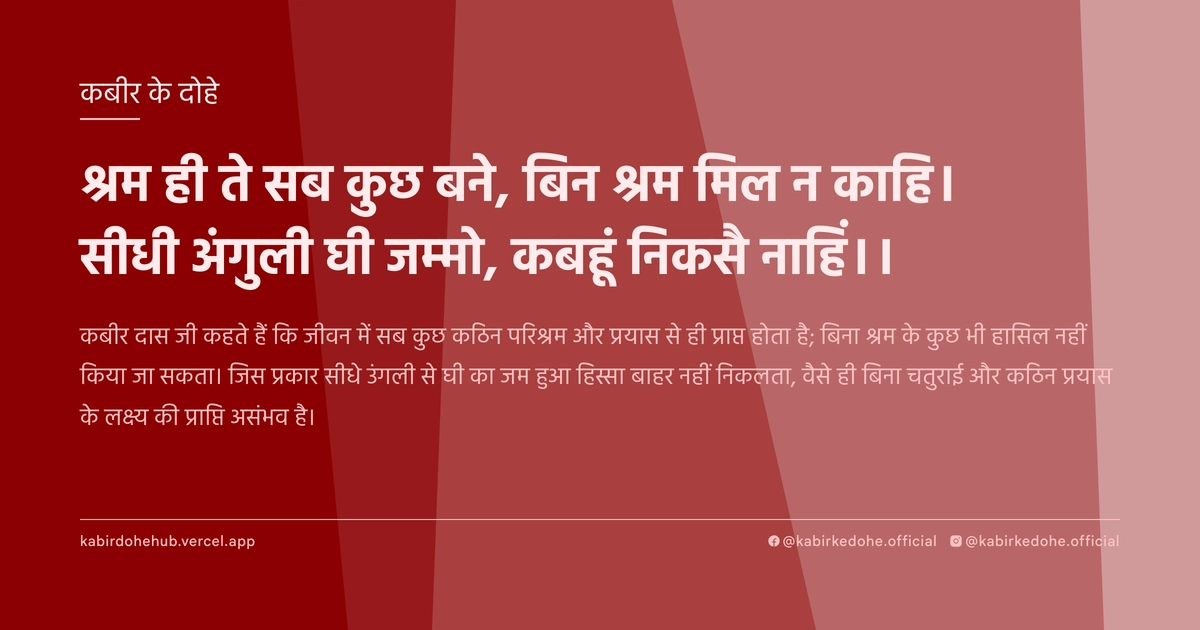
श्रम ही ते सब कुछ बने, बिन श्रम मिल न काहि।
सीधी अंगुली घी जम्मो, कबहूं निकसै नाहिं।।
Shram hi te sab kuch bane, bin shram mil na kahi. Seedhi anguli ghee jammo, kabahun niksai nahin.
इस पृष्ठ पर इस कबीर दोहे का अर्थ (meaning), हिंदी व्याख्या और अंग्रेज़ी अनुवाद, दार्शनिक विश्लेषण और व्यावहारिक जीवन सीख दी गई है। यह दोहा कर्म (Karma) विषय से जुड़ा है — Kabir doha meaning and explanation in Hindi and English.
अर्थ (Meaning):
कबीर दास जी कहते हैं कि जीवन में सब कुछ कठिन परिश्रम और प्रयास से ही प्राप्त होता है; बिना श्रम के कुछ भी हासिल नहीं किया जा सकता। जिस प्रकार सीधे उंगली से घी का जम हुआ हिस्सा बाहर नहीं निकलता, वैसे ही बिना चतुराई और कठिन प्रयास के लक्ष्य की प्राप्ति असंभव है।
Kabir asserts that everything in existence is achieved through diligent effort and hard work; nothing is granted without labor. Just as a straight finger cannot scoop out solidified ghee from a narrow jar, success and spiritual liberation cannot be attained without strategic effort and persistent exertion.
व्याख्या (Interpretation):
इस दोहे का शाब्दिक अर्थ है कि मेहनत के बिना फल नहीं मिलता। लेकिन आध्यात्मिक स्तर पर, 'श्रम' केवल शारीरिक कार्य नहीं, बल्कि 'साधना' है। यहाँ 'सीधी उंगली' उस सरल लेकिन निष्क्रिय दृष्टिकोण का प्रतीक है जो केवल भाग्य या चमत्कार की प्रतीक्षा करता है। 'घी' उस परम सत्य या मोक्ष का प्रतीक है जो हमारे भीतर जमा है, लेकिन उसे निकालने के लिए 'उंगली को मोड़ना' पड़ता है, जिसका अर्थ है अहंकार का त्याग और आत्म-परिवर्तन। यह निर्गुण भक्ति के उस मार्ग को दर्शाता है जहाँ साधक को स्वयं को तपाना पड़ता है। माया के प्रभाव को मिटाने के लिए केवल इच्छा पर्याप्त नहीं है, बल्कि तीव्र पुरुषार्थ की आवश्यकता है। यह अद्वैत वेदांत के उस सिद्धांत से जुड़ता है जहाँ अज्ञान की परतें हटाने के लिए ज्ञान-योग और कर्म-योग का समन्वय अनिवार्य है।
Literally, the verse emphasizes that rewards follow effort. Metaphorically, 'shram' (labor) transcends physical toil to represent 'Sadhana'—the disciplined spiritual practice. The 'straight finger' symbolizes a naive or passive approach that relies on fate or external miracles. 'Ghee' represents the latent divine truth or liberation residing within the soul, which cannot be extracted without 'bending the finger'—a metaphor for the necessary ego-death and internal transformation. In the context of Nirgun Bhakti, this suggests that the formless Divine is not reached through passive longing but through active spiritual alchemy. Maya, the cosmic illusion, is not dissolved by mere wishful thinking but by the rigorous application of discernment (Viveka). This aligns with Advaita Vedanta, where the realization of Atman-Brahman non-duality requires the active dismantling of the superimposed ego through focused effort.
दार्शनिक विश्लेषण (Philosophical Analysis):
कबीर का यह दोहा उस सामाजिक और धार्मिक परिवेश में लिखा गया था जहाँ कर्मकांडों और बाहरी दिखावे को मोक्ष का मार्ग माना जाता था। कबीर ने पुरोहितवाद और भाग्यवादी सोच का खंडन किया, जो यह सिखाते थे कि केवल मंत्रोच्चार या भाग्य से मुक्ति मिल सकती है। उनके लिए, वास्तविक धर्म 'कर्म' में निहित है, न कि कर्मकांड में। यह दृष्टिकोण सूफी मत के 'मुजाहदा' (आंतरिक संघर्ष) के समान है, जहाँ साधक अपनी वासनाओं के विरुद्ध युद्ध करता है।
दार्शनिक रूप से, यह दोहा 'पुरुषार्थ' की अवधारणा को पुष्ट करता है। कबीर यह स्पष्ट करते हैं कि आध्यात्मिक प्रगति कोई आकस्मिक घटना नहीं है, बल्कि एक सचेत प्रक्रिया है। वे बताते हैं कि जब तक मनुष्य अपने स्वभाव को नहीं बदलता (उंगली नहीं मोड़ता), तब तक वह सत्य का स्वाद नहीं ले सकता। यह अहंकार के विसर्जन की प्रक्रिया है; जब तक 'मैं' का सीधा और कठोर भाव रहता है, तब तक ईश्वरीय कृपा का अनुभव नहीं होता।
अद्वैत वेदांत के परिप्रेक्ष्य में, अज्ञान (Avidya) एक जमी हुई परत की तरह है। जैसे घी जम जाता है, वैसे ही अज्ञान आत्मा पर जम जाता है। इसे हटाने के लिए केवल प्रार्थना नहीं, बल्कि 'साधना' का श्रम चाहिए। कबीर यहाँ यह चेतावनी देते हैं कि जो लोग केवल शास्त्रों को पढ़कर या माला जपकर सोचते हैं कि वे मुक्त हो जाएंगे, वे उस सीधी उंगली की तरह हैं जो घी तक नहीं पहुँच पाती।
यह दोहा श्रम को पवित्रता से जोड़ता है। कबीर स्वयं एक बुनकर थे, और उनके लिए बुनाई का कार्य ही उनकी प्रार्थना थी। वे सिखाते हैं कि धर्म और संसार अलग नहीं हैं। यदि आप अपने दैनिक कार्य को पूरी निष्ठा और श्रम के साथ करते हैं, तो वही कार्य योग बन जाता है। यह 'कर्म योग' का वह रूप है जहाँ फल की इच्छा के बिना किया गया कठिन परिश्रम ही आत्मा को शुद्ध करता है।
अंततः, कबीर यह संदेश देते हैं कि सत्य तक पहुँचने का मार्ग सरल नहीं है। इसमें आत्म-निरीक्षण का श्रम, धैर्य का श्रम और निरंतरता का श्रम शामिल है। वे उन लोगों पर प्रहार करते हैं जो शॉर्टकट की तलाश करते हैं। उनके अनुसार, जिस सत्य की कीमत श्रम नहीं है, वह सत्य वास्तव में भ्रम है। वास्तविक रूपांतरण केवल तभी होता है जब साधक अपनी सुख-सुविधाओं के दायरे से बाहर निकलकर संघर्ष करने का साहस दिखाता है।
This Doha emerged during an era dominated by rigid ritualism and a fatalistic belief system that suggested liberation was a product of caste birth or mechanical recitation of mantras. Kabir vehemently rejected this priestly hegemony, asserting that spiritual attainment is not a gift of birth or a miracle of fate, but a result of conscious effort. His philosophy aligns with the Sufi concept of 'Mujahada'—the internal struggle against the lower self (Nafs) to reach divine union.
Philosophically, the verse reinforces the concept of 'Purushartha' (human effort). Kabir clarifies that spiritual evolution is not a random occurrence but a deliberate process. The metaphor of 'bending the finger' signifies the necessity of psychological flexibility and the dismantling of the rigid ego. If one remains stiff in their convictions and identity, the 'ghee' of divine realization remains inaccessible.
From the lens of Advaita Vedanta, ignorance (Avidya) is viewed as a solidified layer covering the true Self. Just as ghee hardens, the ego hardens around the soul. Removing this layer requires the 'shram' of Jnana (knowledge) and Vairagya (detachment). Kabir warns against the 'spiritual bypass'—the tendency to use rituals or superficial practices to avoid the hard work of internal transformation. Those who seek liberation through mere rote repetition are like the straight finger that fails to reach the prize.
Kabir elevates labor to a form of worship. As a weaver, his loom was his altar. He collapses the dichotomy between the sacred and the profane, suggesting that when work is performed with total presence and effort, it becomes Yoga. This is the essence of Karma Yoga, where the act of labor becomes the medium for purifying the consciousness and dissolving the sense of separation from the Whole.
Ultimately, Kabir posits that the path to Truth is inherently demanding. It requires the labor of self-inquiry, the labor of patience, and the labor of consistency. He critiques the modern obsession with shortcuts. To Kabir, any truth attained without effort is a delusion. True transformation occurs only when the seeker dares to step out of their comfort zone and engage in the rigorous struggle of self-realization.
मूल संदेश (Core Message):
- आलस्य और भाग्यवादिता आध्यात्मिक प्रगति के सबसे बड़े अवरोध हैं।
- सत्य की प्राप्ति के लिए केवल इच्छा नहीं, बल्कि तीव्र पुरुषार्थ आवश्यक है।
- अहंकार की जड़ता को तोड़ना ही वास्तविक 'उंगली मोड़ना' है।
- श्रम केवल शारीरिक नहीं, बल्कि चेतना का परिष्करण है।
- जब कर्म ही पूजा बन जाता है, तब मोक्ष सहज हो जाता है।
- Inertia and fatalism are the primary obstacles to spiritual evolution.
- Realization requires intense effort (Purushartha), not mere longing.
- Bending the finger means breaking the rigidity of the ego.
- Labor is not just physical toil, but the refinement of consciousness.
- When action becomes worship, liberation becomes a natural outcome.
व्यावहारिक उदाहरण (Practical Example):
एक समय की बात है, वाराणसी के घाटों पर माधव नाम का एक वृद्ध कुम्हार रहता था। माधव अपनी कला में निपुण था, लेकिन वह बहुत निराश था। वह मानता था कि उसकी गरीबी उसकी किस्मत है और वह भगवान से केवल चमत्कार की प्रार्थना करता था कि उसके जीवन के दुख अचानक समाप्त हो जाएं। वह घंटों मंदिर में बैठकर रोता और कहता, 'हे प्रभु, मुझे कोई ऐसा रास्ता दिखाओ जिससे मुझे बिना संघर्ष के सुख मिल जाए।'
एक दिन उसने कबीर के एक अनुयायी को देखा जो मिट्टी के बर्तनों की मरम्मत कर रहा था। माधव ने उससे पूछा, 'क्या ईश्वर हमें बिना मेहनत के सब कुछ नहीं दे सकते?' उस व्यक्ति ने मुस्कुराते हुए माधव को एक मिट्टी का कच्चा घड़ा दिखाया और कहा, 'माधव, इस घड़े को देखो। क्या यह बिना आग में तपे मजबूत बन सकता है? क्या यह बिना चाक पर घूमने के आकार ले सकता है?'
माधव चुप रहा। तब उस व्यक्ति ने कबीर का यह दोहा सुनाया कि सीधी उंगली से घी नहीं निकलता। उसने समझाया कि माधव की प्रार्थना 'सीधी उंगली' की तरह है—सरल लेकिन निष्प्रभावी। उसने कहा, 'तुमने प्रार्थना तो की, लेकिन अपनी कला को नया रूप देने का श्रम नहीं किया। तुम पुराने तरीकों से वही घड़े बना रहे हो जो अब कोई नहीं खरीदता।'
माधव को अपनी गलती का एहसास हुआ। उसने तय किया कि वह अब केवल चमत्कार की प्रतीक्षा नहीं करेगा। उसने अपनी उंगली 'मोड़ने' का निर्णय लिया, यानी अपनी सोच बदलने का। उसने नए डिजाइनों का अध्ययन करना शुरू किया और मिट्टी के मिश्रण के साथ प्रयोग किए। यह उसके लिए मानसिक और शारीरिक श्रम था।
शुरुआत में उसे बहुत कठिनाई हुई। कई घड़े टूट गए, उसकी पीठ दर्द करने लगी और कई रातें वह बिना सोए काम करता रहा। लेकिन उसने हार नहीं मानी। उसने अपनी कला में वह 'श्रम' डाला जिसकी बात कबीर ने की थी। उसने साधारण बर्तनों के बजाय ऐसी कलाकृतियाँ बनानी शुरू कीं जिनमें आध्यात्मिकता और प्रकृति का संगम था।
धीरे-धीरे, उसके काम की चर्चा पूरे शहर में फैल गई। लोग दूर-दूर से उसके अनोखे बर्तनों को खरीदने आने लगे। उसकी आर्थिक स्थिति सुधर गई, लेकिन सबसे बड़ा बदलाव उसके भीतर आया। उसे समझ आया कि सुख केवल धन में नहीं, बल्कि उस प्रक्रिया में है जहाँ वह अपनी पूरी क्षमता को झोंक देता है।
अब माधव मंदिर में जाकर रोता नहीं था, बल्कि अपने चाक को ही अपना मंदिर मानने लगा। उसने महसूस किया कि जब वह पूरी तन्मयता से मिट्टी को आकार देता है, तो वह वास्तव में अपने अहंकार को आकार दे रहा होता है। उसका श्रम ही उसकी सबसे बड़ी प्रार्थना बन गया था।
माधव की कहानी हमें सिखाती है कि ईश्वर की कृपा उन पर बरसती है जो स्वयं प्रयास करते हैं। जो केवल हाथ फैलाकर बैठते हैं, उन्हें केवल रिक्तता मिलती है। जब हमने अपनी जड़ता को छोड़ा और श्रम को अपनाया, तभी हम जीवन के वास्तविक 'घी' यानी आनंद को प्राप्त कर सके।
Once in the ghats of Varanasi, there lived an elderly potter named Madhav. Madhav was skilled in his craft, but he was deeply despondent. He believed his poverty was destiny and spent his days praying for a miracle to suddenly erase his hardships. He would weep in the temple, pleading, 'O Lord, show me a path where I may find happiness without struggle.'
One day, he noticed a follower of Kabir repairing earthen pots. Madhav asked him, 'Can God not grant us everything without the need for toil?' The man smiled and pointed to a raw clay pot, asking, 'Madhav, look at this pot. Can it become strong without the fire of the kiln? Can it take shape without the spinning of the wheel?'
Madhav remained silent. The man then recited Kabir's verse about the straight finger and the ghee. He explained that Madhav's prayers were like the 'straight finger'—simple, yet ineffective. He told him, 'You have prayed, but you have not exerted the labor to evolve your art. You continue to make the same old pots that no one desires anymore.'
Madhav realized his error. He decided he would no longer wait for a miracle. He chose to 'bend his finger'—meaning, he decided to change his mindset. He began studying new designs and experimenting with different clay mixtures. This was a period of intense mental and physical labor.
Initially, it was grueling. Many pots cracked, his back ached, and he spent sleepless nights perfecting his technique. But he did not surrender. He poured the 'shram' into his work that Kabir had spoken of. Instead of ordinary utility ware, he began creating sculptures that blended spirituality with nature.
Gradually, word of his unique art spread throughout the city. People traveled from afar to buy his creations. His financial situation improved, but the most profound change was internal. He discovered that happiness lay not in the money, but in the process of dedicating his entire being to his craft.
Madhav no longer wept in the temple; instead, he viewed his potter's wheel as his sanctuary. He realized that as he shaped the clay with total mindfulness, he was actually shaping his own ego. His labor became his highest form of prayer.
Madhav's story teaches us that divine grace descends upon those who strive. Those who merely hold out their hands receive only emptiness. Only when we abandon our inertia and embrace labor can we taste the true 'ghee' of existence—the joy of self-actualization.
अभ्यास मार्गदर्शन (Practice Guidance):
- दैनिक साधना: प्रतिदिन 20 मिनट मौन रहकर यह विचार करें कि आपके जीवन में कौन सी 'सीधी उंगली' (जड़ता या आलस्य) है जो आपको लक्ष्य से रोक रही है।
- आत्म-पूछताछ जर्नल: लिखें कि आप किन क्षेत्रों में केवल 'भाग्य' या 'चमत्कार' पर निर्भर हैं और उन क्षेत्रों में आवश्यक 'श्रम' (क्रिया) क्या हो सकती है।
- व्यवहारिक परिवर्तन: किसी ऐसे कार्य को चुनें जिसे आप कठिन मानकर टाल रहे हैं। उसे छोटे हिस्सों में बांटें और बिना परिणाम की चिंता किए पूर्ण समर्पण के साथ पूरा करें।
- निदान चेकलिस्ट: क्या मैं समस्या आने पर शिकायत करता हूँ? (विफलता) क्या मैं समाधान के लिए अपनी रणनीति बदलता हूँ? (सफलता) क्या मैं केवल प्रार्थना करता हूँ या प्रार्थना के साथ प्रयास भी? (जागरूकता)
- Daily Contemplation: Spend 20 minutes in silence identifying the 'straight finger' (inertia or rigidity) in your life that is preventing you from reaching your goal.
- Self-Inquiry Journaling: Document the areas where you are relying solely on 'fate' or 'miracles' and define the specific 'shram' (action) required to move forward.
- Behavioral Shift: Identify a task you have been avoiding due to its difficulty. Break it into small steps and execute it with total surrender, detached from the immediate result.
- Diagnostic Checklist: Do I complain when a problem arises? (Failure). Do I adapt my strategy to find a solution? (Success). Do I only pray, or do I combine prayer with persistent effort? (Awareness).
चिंतन प्रश्न (Reflection Questions):
- मेरा वह कौन सा विश्वास है जिसे मैं 'सत्य' मानकर पकड़ कर बैठा हूँ, जबकि वह केवल मेरी मानसिक जड़ता है?
- क्या मैं अपनी आध्यात्मिक यात्रा में 'शॉर्टकट' खोज रहा हूँ, और यह खोज मेरे अहंकार को कैसे बढ़ा रही है?
- मेरे जीवन का वह कौन सा 'जमा हुआ घी' है जिसे निकालने के लिए मैं अपनी सुख-सुविधाओं का त्याग करने को तैयार नहीं हूँ?
- यदि आज मेरे जीवन से सभी बाहरी सहायता हटा ली जाए, तो मेरे भीतर कितना वास्तविक 'श्रम' शेष रहेगा?
- क्या मेरी प्रार्थनाएं ईश्वर को बदलने का प्रयास हैं या स्वयं को बदलने का संकल्प?
- Which of my beliefs do I cling to as 'Truth' when they are actually just manifestations of mental rigidity?
- Am I seeking 'shortcuts' in my spiritual journey, and how is this search inflating my ego?
- What is the 'solidified ghee' in my life that I refuse to extract because I am unwilling to sacrifice my comfort?
- If all external support were removed from my life today, how much genuine 'effort' would remain within me?
- Are my prayers an attempt to change God, or a commitment to change myself?