
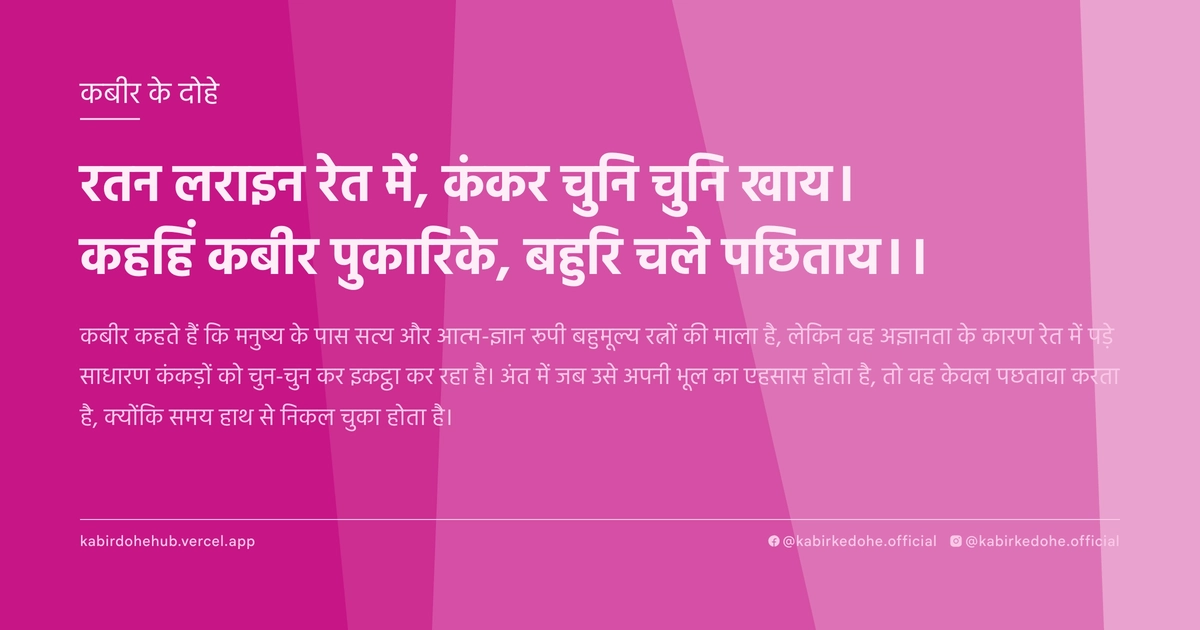
रतन लराइन रेत में, कंकर चुनि चुनि खाय।
कहहिं कबीर पुकारिके, बहुरि चले पछिताय।।
Ratan larain ret me, kankar chuni chuni khaay. Kahahin Kabir pukarike, bahuri chale pachhitay.
इस पृष्ठ पर इस कबीर दोहे का अर्थ (meaning), हिंदी व्याख्या और अंग्रेज़ी अनुवाद, दार्शनिक विश्लेषण और व्यावहारिक जीवन सीख दी गई है। यह दोहा माया (Maya) विषय से जुड़ा है — Kabir doha meaning and explanation in Hindi and English.
अर्थ (Meaning):
कबीर कहते हैं कि मनुष्य के पास सत्य और आत्म-ज्ञान रूपी बहुमूल्य रत्नों की माला है, लेकिन वह अज्ञानता के कारण रेत में पड़े साधारण कंकड़ों को चुन-चुन कर इकट्ठा कर रहा है। अंत में जब उसे अपनी भूल का एहसास होता है, तो वह केवल पछतावा करता है, क्योंकि समय हाथ से निकल चुका होता है।
Kabir observes that humans possess a priceless string of jewels representing spiritual truth and self-realization, yet in their ignorance, they painstakingly collect worthless pebbles from the sand. When the realization finally dawns upon them, they are left only with profound regret, as the opportunity for awakening has passed.
व्याख्या (Interpretation):
इस दोहे में 'रतन लराइन' (रत्नों की माला) आत्मा की शुद्धता और परमात्मा के साथ एकात्मता का प्रतीक है, जो हर मनुष्य के भीतर जन्मजात है। 'रेत' इस भौतिक संसार और माया के भ्रम को दर्शाती है, जहाँ सत्य ओझल हो जाता है। 'कंकर' उन क्षणभंगुर इच्छाओं, सांसारिक उपलब्धियों और अहंकार का प्रतीक हैं जिन्हें हम जीवन भर संचित करते हैं। कबीर यहाँ निर्गुण भक्ति के माध्यम से यह समझा रहे हैं कि हम बाहरी कर्मकांडों और भौतिक सुखों में इतने लीन हैं कि अपने भीतर के 'ब्रह्म' को पहचानना भूल गए हैं। यह विरोधाभास है कि जो सबसे मूल्यवान है वह हमारे पास है, फिर भी हम तुच्छ वस्तुओं के पीछे भाग रहे हैं। अंततः, यह अज्ञानता ही मनुष्य को जन्म-मृत्यु के चक्र में बांधे रखती है और अंत समय में केवल पश्चाताप शेष रहता है।
In this couplet, the 'string of jewels' symbolizes the inherent purity of the soul and its oneness with the Divine, a treasure latent within every human. The 'sand' represents the material world and the veil of Maya, where the ultimate truth remains obscured. The 'pebbles' are metaphors for transient desires, worldly achievements, and the ego that we spend our entire lives accumulating. Through the lens of Nirgun Bhakti, Kabir illustrates that we are so consumed by external rituals and material pursuits that we forget to recognize the 'Brahman' within. It is a poignant paradox: the most valuable asset is already ours, yet we strive for the trivial. Ultimately, this ignorance binds the human spirit to the cycle of birth and death, leaving only the bitterness of regret at the threshold of eternity.
दार्शनिक विश्लेषण (Philosophical Analysis):
कबीर का यह दोहा मध्यकालीन भारत के उस सामाजिक-धार्मिक परिवेश की प्रतिक्रिया है जहाँ धर्म केवल बाहरी आडंबरों, जातिगत श्रेष्ठता और जटिल अनुष्ठानों तक सीमित हो गया था। कबीर ने 'कंकर' के माध्यम से उन सभी औपचारिकताओं पर प्रहार किया है जो व्यक्ति को वास्तविक आत्म-साक्षात्कार से दूर ले जाती हैं। उनका दर्शन अद्वैत वेदांत के करीब है, जहाँ वे मानते हैं कि आत्मा और परमात्मा अलग नहीं हैं, बल्कि अज्ञानता की परतें उन्हें अलग दिखाती हैं।
सूफी मत के 'फना' (अहंकार का विनाश) के सिद्धांत की तरह, कबीर यहाँ संकेत देते हैं कि जब तक व्यक्ति अपनी सांसारिक पहचान (कंकड़) को पकड़े रहेगा, वह अपनी दैवीय पहचान (रत्न) को नहीं पा सकेगा। वे तर्क देते हैं कि ईश्वर मंदिर, मस्जिद या तीर्थों में नहीं, बल्कि स्वयं के भीतर है। यह एक मनोवैज्ञानिक रूपांतरण का आह्वान है—बाहरी खोज को आंतरिक अन्वेषण में बदलना।
कबीर की अस्वीकृति केवल धर्म के प्रति नहीं, बल्कि उस मानसिक जड़ता के प्रति है जो मनुष्य को यह विश्वास दिलाती है कि सुख बाहरी वस्तुओं के संचय में है। वे स्पष्ट करते हैं कि भौतिक संचय वास्तव में आध्यात्मिक रिक्तता को भरने का एक असफल प्रयास है।
दार्शनिक स्तर पर, यह दोहा 'विवेक' (Discrimination) की आवश्यकता पर बल देता है। विवेक वह क्षमता है जिससे मनुष्य नित्य (eternal) और अनित्य (transient) के बीच अंतर कर सके। बिना विवेक के, मनुष्य केवल समय की बर्बादी करता है।
अंततः, कबीर यह चेतावनी देते हैं कि समय सीमित है। आध्यात्मिक जागृति के लिए 'अभी और यहीं' का भाव आवश्यक है। यदि हम केवल सामाजिक प्रतिष्ठा और भौतिक लाभों को ही सफलता मानेंगे, तो हम उस शाश्वत सत्य को खो देंगे जो हमारी वास्तविक पहचान है।
This couplet is a visceral reaction to the socio-religious climate of medieval India, where spirituality had been reduced to external pomp, caste hierarchies, and complex rituals. Through the metaphor of 'pebbles,' Kabir attacks all formalities that distract the seeker from genuine self-realization. His philosophy aligns closely with Advaita Vedanta, asserting that the Atman and Brahman are non-dual, separated only by the veil of ignorance (Avidya).
Mirroring the Sufi concept of 'Fana' (the annihilation of the ego), Kabir suggests that as long as an individual clings to their worldly identity—the pebbles—they cannot experience their divine essence—the jewels. He argues that the Divine is not found in temples, mosques, or pilgrimages, but within the silent depths of one's own being. This is a call for a psychological shift: transforming an outward search into an inward exploration.
Kabir's rejection is not merely of organized religion, but of the mental inertia that convinces humans that happiness lies in the accumulation of external objects. He posits that material hoarding is an unsuccessful attempt to fill a spiritual void.
On a philosophical level, the verse emphasizes the necessity of 'Viveka' (spiritual discrimination). Viveka is the faculty that allows a seeker to distinguish between the Nitya (eternal) and the Anitya (transient). Without this discernment, human effort is merely a waste of precious time.
Ultimately, Kabir warns that time is finite. Spiritual awakening requires an 'here and now' urgency. If we equate success solely with social prestige and material gain, we forfeit the eternal truth that constitutes our true identity.
मूल संदेश (Core Message):
- बाहरी चमक अक्सर आंतरिक अंधकार को छिपाने का एक माध्यम होती है।
- सच्ची संपत्ति वह नहीं जो संचित की जाए, बल्कि वह है जो अनुभव की जाए।
- अहंकार का त्याग ही आत्म-ज्ञान के रत्नों को खोजने की पहली शर्त है।
- सांसारिक सफलता एक भ्रम है यदि वह आत्मा की शांति की कीमत पर मिले।
- परमात्मा कहीं बाहर नहीं, बल्कि हमारे स्वयं के शुद्ध स्वरूप में निहित है।
- जागृति में देरी केवल अंत समय के पश्चाताप को जन्म देती है।
- External brilliance is often a veil used to hide internal darkness.
- True wealth is not that which is accumulated, but that which is realized.
- The surrender of ego is the primary condition for finding the jewels of self-knowledge.
- Worldly success is a mirage if achieved at the cost of spiritual peace.
- The Divine is not located elsewhere, but resides in our own purest essence.
- Delay in awakening leads only to the bitterness of final regret.
व्यावहारिक उदाहरण (Practical Example):
वाराणसी के घाटों पर रहने वाला एक वृद्ध विधवा, जिन्हें समाज ने हाशिए पर धकेल दिया था, अपना पूरा जीवन दूसरों की सेवा और धार्मिक अनुष्ठानों के कठोर पालन में बिता रही थीं। उनका मानना था कि यदि वह हर दिन घंटों तक कठिन व्रत रखेंगी और केवल शास्त्रों के शब्दों को रटेंगी, तो उन्हें मोक्ष मिल जाएगा। वह अपनी पूरी ऊर्जा इस बात में लगाती थीं कि लोग उन्हें 'परम भक्त' कहें, और इसी सामाजिक मान्यता को वह अपने जीवन का 'रत्न' मानती थीं।
एक दिन उनकी मुलाकात एक घुमंतू साधु से हुई, जिसने उन्हें देखा और मुस्कुराते हुए पूछा, "माता, आप इन शब्दों को रट रही हैं, लेकिन क्या आपने उस प्रेम को महसूस किया है जिसके लिए ये शब्द लिखे गए थे?"
वृद्ध महिला ने गर्व से कहा, "मैंने सभी नियमों का पालन किया है, मैं शुद्ध हूँ।"
साधु ने रेत की एक मुट्ठी उठाई और कहा, "यह रेत के कण आपकी उन रीतियों की तरह हैं जिन्हें आप चुन-चुन कर इकट्ठा कर रही हैं। वे दिखने में तो बहुत हैं, लेकिन क्या वे आपकी आत्मा की प्यास बुझा सकते हैं? असली रत्न तो आपके भीतर की करुणा और उस परमात्मा के साथ मौन संवाद में है, जिसे आपने नियमों के शोर में दबा दिया है।"
यह बात उस महिला के हृदय में गहरे तक उतर गई। उन्हें एहसास हुआ कि उन्होंने जीवन भर 'पवित्रता' का मुखौटा पहना, लेकिन कभी अपने भीतर के शून्य से संवाद नहीं किया। उन्होंने पाया कि उनकी भक्ति केवल एक सामाजिक प्रदर्शन थी, एक कंकड़ जिसे उन्होंने रत्न समझ लिया था।
उस दिन के बाद, उन्होंने बाहरी दिखावे और कठोर नियमों को त्याग दिया। उन्होंने अपनी सेवा को केवल 'धर्म' नहीं, बल्कि 'प्रेम' बनाया। अब वह केवल पूजा नहीं करती थीं, बल्कि हर दुखी व्यक्ति में उसी परमात्मा को देखती थीं।
उनकी आंतरिक शांति अब इस बात पर निर्भर नहीं थी कि समाज उन्हें क्या कहता है, बल्कि इस बात पर कि वह स्वयं को कितना जानती हैं।
उन्होंने पाया कि जब अहंकार का बोझ उतरा, तो उनके भीतर वह 'रतन लराइन' स्वतः प्रकट हो गई जिसे वह बाहर खोज रही थीं।
अंततः, उन्होंने अपनी अंतिम सांसें एक गहरी मुस्कान और पूर्ण संतोष के साथ लीं, क्योंकि अब उनके पास पछतावा नहीं, बल्कि आत्म-साक्षात्कार का प्रकाश था।
In the ancient ghats of Varanasi lived an elderly widow, pushed to the margins of society. She spent her entire existence in the rigorous pursuit of religious rituals, believing that hours of stringent fasting and the rote memorization of scriptures were the only keys to salvation. She invested all her energy into being perceived as a 'param bhakta' (supreme devotee), treating this social validation as the ultimate jewel of her life.
One day, she encountered a wandering ascetic who looked at her and asked with a gentle smile, "Mother, you recite these words with such precision, but have you felt the love for which these words were originally written?"
The widow replied with pride, "I have followed every rule; I am pure."
The ascetic picked up a handful of sand and said, "These grains of sand are like the rituals you have painstakingly collected. They are many in number, but can they quench the thirst of your soul? The true jewels lie in the compassion within you and the silent dialogue with the Divine, which you have drowned out with the noise of rules."
These words pierced her heart. She realized she had worn the mask of 'purity' for a lifetime but had never communicated with the void within. She saw that her devotion was merely a social performance—a pebble she had mistaken for a diamond.
From that day forward, she abandoned the external pretense and the rigid dogmas. She transformed her service from a 'religious duty' into an act of 'unconditional love.' She no longer just performed puja; she saw the Divine in every suffering soul she encountered.
Her inner peace no longer depended on societal labels, but on her own self-awareness.
She discovered that once the burden of ego was lifted, the 'string of jewels' she had been searching for externally manifested spontaneously within her.
Ultimately, she breathed her last with a profound smile and complete contentment, for she no longer carried the weight of regret, but the light of self-realization.
अभ्यास मार्गदर्शन (Practice Guidance):
- दैनिक मौन अभ्यास: प्रतिदिन 20 मिनट पूर्ण मौन में बैठें। बाहरी शोर को नहीं, बल्कि अपने भीतर उठने वाले विचारों के 'कंकड़ों' को देखें और उन्हें बिना निर्णय के जाने दें।
- आत्म-पूछताछ जर्नल: हर रात लिखें—"आज मैंने किन सांसारिक उपलब्धियों (कंकड़ों) को अपनी पहचान बनाया? क्या इनमें से कुछ मुझे मेरे वास्तविक स्वरूप (रत्न) से दूर ले जा रहे हैं?"
- व्यवहार परिवर्तन: किसी भी कार्य को करते समय यह पूछें—"क्या मैं यह कार्य प्रशंसा (बाहरी रत्न) के लिए कर रहा हूँ या आंतरिक संतोष और प्रेम के लिए?"
- निदान चेकलिस्ट: यदि आप दूसरों की राय से अत्यधिक प्रभावित हैं, छोटी असफलताओं पर गहरा दुख महसूस करते हैं, या केवल भौतिक संचय में खुशी ढूंढ रहे हैं, तो आप 'कंकड़' चुन रहे हैं। यदि आप एकांत में सहज हैं और दूसरों के प्रति बिना शर्त करुणा महसूस करते हैं, तो आप 'रत्नों' की ओर बढ़ रहे हैं।
- Daily Silence Practice: Sit in absolute silence for 20 minutes daily. Observe the 'pebbles' of rising thoughts within you without judgment, letting them pass like clouds.
- Self-Inquiry Journaling: Every night, reflect and write: "Which worldly achievements (pebbles) did I identify with today? Are any of these distancing me from my true essence (the jewel)?"
- Behavioral Shift: Before any action, ask yourself: "Am I doing this for external validation (fake jewels) or for internal peace and authentic love?"
- Diagnostic Checklist: You are 'collecting pebbles' if you are overly affected by others' opinions, feel deep distress over minor failures, or find joy only in material accumulation. You are 'finding jewels' if you are comfortable in solitude and feel unconditional compassion for others.
चिंतन प्रश्न (Reflection Questions):
- मेरे जीवन की वे कौन सी 'उपलब्धियां' हैं जिन्हें मैं रत्न समझ रहा हूँ, लेकिन वास्तव में वे केवल सामाजिक अपेक्षाओं के कंकड़ हैं?
- यदि आज मेरी सारी भौतिक पहचान और पद छीन लिए जाएं, तो मेरे भीतर क्या बचेगा?
- क्या मेरी धार्मिकता वास्तव में ईश्वर से जुड़ाव है, या यह केवल मेरी श्रेष्ठता सिद्ध करने का एक तरीका है?
- मैं अपने एकांत से डरता हूँ या उसमें आनंद पाता हूँ? यह डर किस 'कंकड़' के खो जाने का है?
- मेरे भीतर का वह कौन सा हिस्सा है जो अभी भी बाहरी दुनिया से मान्यता मांग रहा है, और वह क्या है जिसे मैं स्वीकार नहीं कर पा रहा हूँ?
- क्या मैं वास्तव में सत्य की खोज कर रहा हूँ, या मैं केवल सत्य की 'छवि' को संचित कर रहा हूँ?
- Which 'achievements' in my life am I treating as jewels, when they are actually just pebbles of social expectation?
- If all my material identities and titles were stripped away today, what would remain within me?
- Is my religiosity a genuine connection to the Divine, or is it merely a tool to establish my own superiority?
- Do I fear my solitude or find joy in it? What 'pebble' am I afraid of losing in that silence?
- Which part of me is still craving validation from the external world, and what is it that I am unable to accept about myself?
- Am I truly seeking the Truth, or am I merely accumulating the 'image' of Truth?