
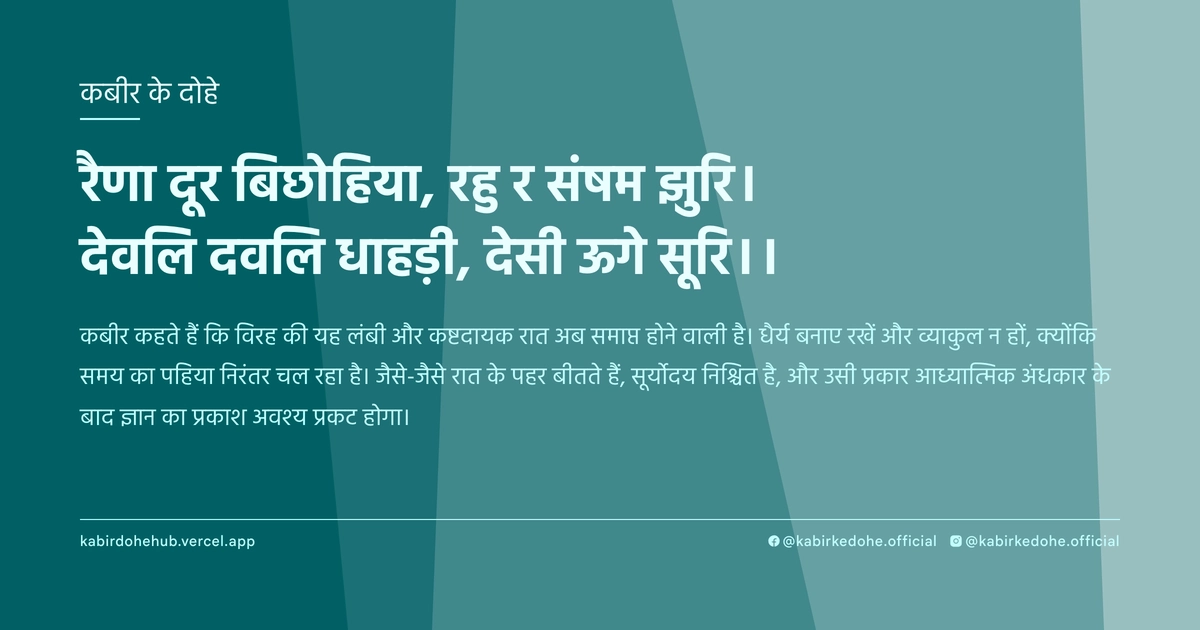
रैणा दूर बिछोहिया, रहु र संषम झुरि।
देवलि दवलि धाहड़ी, देसी ऊगे सूरि।।
Raina door bichohiya, rahu ra sansham jhuri. Devali davali dhaahadi, desi ooge soori.
इस पृष्ठ पर इस कबीर दोहे का अर्थ (meaning), हिंदी व्याख्या और अंग्रेज़ी अनुवाद, दार्शनिक विश्लेषण और व्यावहारिक जीवन सीख दी गई है। यह दोहा जागृति (The Wake-up Call) विषय से जुड़ा है — Kabir doha meaning and explanation in Hindi and English.
अर्थ (Meaning):
कबीर कहते हैं कि विरह की यह लंबी और कष्टदायक रात अब समाप्त होने वाली है। धैर्य बनाए रखें और व्याकुल न हों, क्योंकि समय का पहिया निरंतर चल रहा है। जैसे-जैसे रात के पहर बीतते हैं, सूर्योदय निश्चित है, और उसी प्रकार आध्यात्मिक अंधकार के बाद ज्ञान का प्रकाश अवश्य प्रकट होगा।
Kabir asserts that the long, agonizing night of separation is nearing its end. He urges the seeker to remain steady and not succumb to despair, for time is relentless. Just as the passing of the night's watches inevitably leads to the dawn, the darkness of spiritual ignorance will soon be dispelled by the rising sun of divine realization.
व्याख्या (Interpretation):
यहाँ 'रैणा' (रात) केवल समय की इकाई नहीं, बल्कि अज्ञान और माया के उस आवरण का प्रतीक है जो आत्मा को परमात्मा से अलग रखता है। 'बिछोहिया' उस विरह वेदना को दर्शाता है जो एक साधक तब महसूस करता है जब वह अपनी वास्तविक प्रकृति को भूल जाता है। यह दोहा निरगुण भक्ति के उस मार्ग को दर्शाता है जहाँ विरह की अग्नि वास्तव में अहंकार को जलाने का साधन बनती है। जब साधक इस विरह में पूरी तरह डूब जाता है, तो वह 'द्वैत' (दो होने का भाव) से मुक्त होकर 'अद्वैत' की ओर बढ़ता है। सूर्य का उगना आत्मा और परमात्मा के मिलन का संकेत है, जहाँ व्यक्तिगत पहचान ब्रह्मांडीय चेतना में विलीन हो जाती है। यह विरोधाभास है कि मिलन की खुशी पाने के लिए पहले विरह की गहन पीड़ा से गुजरना अनिवार्य है।
In this verse, 'Raina' (night) is not merely a temporal unit but a metaphor for the veil of Maya and ignorance that separates the Atman from the Brahman. 'Bichohiya' represents the existential angst and longing experienced by a seeker who has awakened to their separation from the Divine. This aligns with Nirgun Bhakti, where the fire of longing serves as a purgative force to incinerate the ego. As the seeker immerses themselves in this longing, they transition from the illusion of duality to the realization of non-duality (Advaita). The rising of the sun symbolizes the dawn of Enlightenment, where the individual identity dissolves into the universal consciousness. It presents the spiritual paradox that the intensity of the pain of separation is the very catalyst required for the ecstasy of union.
दार्शनिक विश्लेषण (Philosophical Analysis):
कबीर का यह दोहा उस कालखंड की उपज है जब समाज कर्मकांडों और बाहरी आडंबरों में उलझा था। कबीर ने स्पष्ट किया कि ईश्वर किसी मंदिर या मस्जिद में नहीं, बल्कि भीतर के विरह और तड़प में मिलता है। यह दृष्टिकोण सूफी मत के 'इश्क-ए-हकीकी' (दिव्य प्रेम) के अत्यंत निकट है, जहाँ प्रेमी (साधक) और प्रियतम (ईश्वर) के बीच का विरह ही वास्तविक इबादत है।
अद्वैत वेदांत के परिप्रेक्ष्य में, यह 'रात' वह अविद्या है जो हमें यह विश्वास दिलाती है कि हम अलग हैं। कबीर तर्क देते हैं कि यह अलगाव वास्तविक नहीं बल्कि एक भ्रम है। जब साधक 'संषम' (धैर्य) के साथ प्रतीक्षा करता है, तो वह वास्तव में अपनी मानसिक उथल-पुथल को शांत कर रहा होता है, जिससे अंतरात्मा की आवाज स्पष्ट सुनाई देती है।
यहाँ ritualism का पूर्ण खंडन है। कबीर यह नहीं कहते कि कोई विशेष पूजा करें, बल्कि वे 'धाहड़ी' (समय की गणना/प्रतीक्षा) पर जोर देते हैं। यह मनोवैज्ञानिक रूपांतरण की प्रक्रिया है; जब मनुष्य अपनी लाचारी को स्वीकार कर लेता है, तभी वह वास्तव में समर्पित होता है। अहंकार का विसर्जन ही वह बिंदु है जहाँ 'रात' समाप्त होती है।
सांस्कृतिक रूप से, कबीर ने जाति और धर्म की दीवारों को तोड़कर एक सार्वभौमिक मानवीय अनुभव—'विरह'—को केंद्र में रखा। उनके लिए विरह कोई कमजोरी नहीं, बल्कि एक आध्यात्मिक योग्यता है। जो रो सकता है, वही जाग सकता है।
अंततः, यह दोहा समय की चक्रीय प्रकृति और आध्यात्मिक विकास के अपरिहार्य नियम को समझाता है। जिस प्रकार प्रकृति में रात के बाद दिन आता है, उसी प्रकार चेतना के विकास में अंधकार के बाद प्रकाश का आना निश्चित है, बशर्ते साधक अपनी साधना में अडिग रहे।
This Doha emerges from an era dominated by rigid ritualism and external religious displays. Kabir pivots the focus from the external temple to the internal landscape of longing, suggesting that the Divine is found not in stone idols but in the ache of separation. This perspective mirrors the Sufi concept of 'Ishq-e-Haqiqi' (Divine Love), where the yearning of the lover for the Beloved is the highest form of worship.
From the lens of Advaita Vedanta, the 'night' represents Avidya (ignorance)—the cosmic illusion that convinces the individual soul it is separate from the Whole. Kabir suggests that this separation is an optical illusion of the ego. By urging the seeker to remain steady ('Sansham'), he is advocating for the stabilization of the mind, which allows the subtle vibration of the Atman to become audible over the noise of worldly desires.
There is a profound rejection of ritualism here. Kabir does not prescribe a specific prayer or pilgrimage; instead, he emphasizes the process of enduring the 'watches of the night.' This is a psychological transformation: only when a human acknowledges their absolute helplessness and longing does true surrender (Prapatti) occur. The annihilation of the ego is the precise moment the 'night' ends.
Culturally, Kabir transcends caste and creed by centering the universal human experience of longing. For him, spiritual grief is not a liability but a qualification. The capacity to feel the void is the first step toward filling it with Divine Light.
Ultimately, the verse explains the cyclical nature of time and the inevitability of spiritual evolution. Just as the laws of physics guarantee the dawn, the laws of consciousness guarantee enlightenment, provided the seeker remains steadfast in their internal discipline.
मूल संदेश (Core Message):
- अंधकार केवल प्रकाश की अनुपस्थिति है, अंत नहीं।
- विरह की तड़प ही मिलन की पहली सीढ़ी है।
- धैर्य वह सेतु है जो दुख को आनंद में बदलता है।
- बाहरी खोज को छोड़कर आंतरिक मौन को अपनाएं।
- परिवर्तन अटल है; सुबह का आना निश्चित है।
- Darkness is but the absence of light, not the end.
- The ache of separation is the first step toward union.
- Patience is the bridge that transforms sorrow into bliss.
- Abandon the external search and embrace internal silence.
- Change is inevitable; the dawn is a certainty.
व्यावहारिक उदाहरण (Practical Example):
वाराणसी के एक पुराने घाट पर रहने वाली एक वृद्ध विधवा, जानकी, का जीवन अकेलेपन की एक लंबी रात जैसा था। उनके पति का देहांत वर्षों पहले हो गया था और उनके बच्चे विदेश जाकर उन्हें भूल चुके थे। जानकी हर दिन गंगा किनारे बैठतीं, लेकिन उनके मन में एक गहरी टीस थी—एक ऐसा खालीपन जिसे दुनिया की कोई भी वस्तु नहीं भर सकती थी।
वह अक्सर मंदिर के पुजारियों से शिकायत करतीं कि उनकी प्रार्थनाएं सुनी नहीं जा रही हैं। उन्हें लगता था कि ईश्वर ने उन्हें दंड दिया है। वह विरह की उस अवस्था में थीं जहाँ दुख ही उनकी पहचान बन गया था। वह घंटों अंधेरे कमरे में बैठकर अपनी किस्मत को कोसती रहती थीं।
एक दिन उनकी मुलाकात एक घुमक्कड़ फकीर से हुई, जिसने कबीर का यही दोहा सुनाया। फकीर ने उनसे कहा, "माई, यह दुख तुम्हारी सजा नहीं, बल्कि तुम्हारी तैयारी है। यह रात जितनी लंबी होगी, सुबह का सूरज उतना ही चमकदार होगा। बस इस दर्द को शिकायत मत बनाओ, इसे अपनी प्रार्थना बना लो।"
जानकी ने पहली बार अपनी पीड़ा को एक अलग नजरिए से देखा। उन्होंने पुजारियों के पीछे भागना छोड़ दिया और अपने अकेलेपन को एक 'साधना' के रूप में स्वीकार किया। उन्होंने अपने घर के छोटे से आंगन में पक्षियों को दाना डालना शुरू किया और चुपचाप बैठकर अपनी सांसों को महसूस करने लगीं।
धीरे-धीरे, उनकी व्याकुलता शांत होने लगी। उन्होंने महसूस किया कि जिस 'ईश्वर' को वह बाहर ढूंढ रही थीं, वह वास्तव में उनके भीतर के उसी खालीपन में निवास करता था। वह विरह, जो पहले उन्हें तोड़ रहा था, अब उन्हें भीतर से जोड़ रहा था।
एक सुबह, जब सूरज की पहली किरण उनके चेहरे पर पड़ी, जानकी को एक अद्भुत शांति का अनुभव हुआ। उन्हें महसूस हुआ कि अब उन्हें किसी के आने या लौटने का इंतज़ार नहीं है, क्योंकि वह स्वयं पूर्ण हो चुकी हैं।
उनके व्यवहार में बदलाव आया; वह अब दूसरों के दुख को देखकर विलाप नहीं करती थीं, बल्कि उन्हें धीरज बंधाती थीं। उनके चेहरे पर एक ऐसी चमक थी जो किसी बाहरी श्रृंगार से नहीं, बल्कि आंतरिक संतोष से आई थी।
यह 'कबीर ट्विस्ट' था—दुख का अंत दुख को मिटाने की कोशिश से नहीं, बल्कि दुख को स्वीकार कर उसमें विलीन हो जाने से हुआ। जानकी अब उस रात से पार पा चुकी थीं और उनके जीवन में ज्ञान का सूर्य उग चुका था।
In the ancient ghats of Varanasi lived Janaki, an elderly widow whose life felt like one long, unending night. Her husband had passed away years ago, and her children, settled abroad, had become strangers to her. Janaki spent her days by the Ganges, carrying a profound ache—a void that no worldly comfort could fill.
She often lamented to the temple priests that her prayers went unanswered, believing she was being punished by the Divine. She existed in a state of spiritual bereavement where sorrow had become her primary identity, spending hours in a dim room cursing her fate.
One day, she encountered a wandering fakir who recited this specific Doha of Kabir. The fakir told her, "Mother, this sorrow is not your punishment; it is your preparation. The longer the night, the more brilliant the dawn. Stop turning your pain into a complaint; turn it into your prayer."
For the first time, Janaki viewed her suffering through a different lens. She stopped chasing the priests for answers and accepted her loneliness as a form of 'Sadhana' (spiritual practice). She began feeding birds in her small courtyard and practiced sitting in silence, observing her own breath.
Gradually, her agitation subsided. She realized that the 'God' she had been searching for externally actually resided within the very void she had been dreading. The longing that once tore her apart began to knit her soul back together.
One morning, as the first ray of the sun touched her face, Janaki experienced an overwhelming sense of peace. She realized she no longer needed anyone to return or arrive, for she had become complete within herself.
Her behavior transformed; she no longer wept for the suffering of others but became a pillar of patience for them. A radiance emerged on her face—not from any external adornment, but from an inner contentment.
This was the 'Kabir Twist'—the end of suffering came not by trying to erase the pain, but by accepting it and dissolving into it. Janaki had finally crossed the night, and the sun of realization had risen in her life.
अभ्यास मार्गदर्शन (Practice Guidance):
- प्रतिदिन 20 मिनट 'मौन विरह' का अभ्यास करें: अपनी आंतरिक कमी या दुख को बिना किसी निर्णय के महसूस करें और उसे ब्रह्मांडीय ऊर्जा को समर्पित कर दें।
- जर्नलिंग प्रॉम्प्ट: "मेरे जीवन की वह कौन सी 'रात' है जिसे मैं खत्म करना चाहता हूँ? यदि यह रात मेरी आध्यात्मिक वृद्धि के लिए आवश्यक है, तो यह मुझे क्या सिखा रही है?"
- व्यवहार परिवर्तन: जब भी मन में व्याकुलता या अधीरता आए, तो स्वयं को याद दिलाएं कि 'समय का पहिया घूम रहा है' और वर्तमान क्षण को पूर्ण स्वीकृति दें।
- डायग्नोस्टिक चेकलिस्ट: क्या मैं अभी भी अपनी समस्याओं के लिए दूसरों को दोष दे रहा हूँ? (विफलता) | क्या मैं अपने दुख में एक गहरे अर्थ और शांति को खोज पा रहा हूँ? (सफलता)
- Practice 20 minutes of 'Silent Longing' daily: Feel your internal void or sorrow without judgment and surrender it to the universal energy.
- Journaling Prompt: "What is the 'night' in my life that I am desperate to end? If this darkness is necessary for my spiritual growth, what is it teaching me?"
- Behavioral Shift: Whenever restlessness or impatience arises, remind yourself that 'the wheel of time is turning' and offer total acceptance to the present moment.
- Diagnostic Checklist: Am I still blaming external factors for my misery? (Failure) | Am I able to find a deeper meaning and stillness within my pain? (Success)
चिंतन प्रश्न (Reflection Questions):
- क्या मेरा 'दुख' वास्तव में एक समस्या है, या यह मेरी आत्मा की पुकार है जो मुझे जगाने की कोशिश कर रही है?
- मैं अपनी सार्वजनिक छवि में खुद को 'सफल' दिखाता हूँ, लेकिन मेरे भीतर की वह कौन सी 'रात' है जिसे मैं दुनिया से छिपाता हूँ?
- यदि मुझे पता हो कि मेरा कष्ट एक निश्चित समय के बाद समाप्त होगा, तो क्या मेरा वर्तमान व्यवहार बदल जाएगा?
- क्या मैं वास्तव में ईश्वर से मिलना चाहता हूँ, या मैं केवल अपनी वर्तमान परिस्थितियों से छुटकारा पाना चाहता हूँ?
- मेरे अहंकार का वह कौन सा हिस्सा है जो इस 'रात' को लंबा खींच रहा है?
- Is my 'suffering' truly a problem, or is it the cry of my soul attempting to wake me up?
- I present a 'successful' image to the world, but what is the 'night' within me that I desperately hide from others?
- If I knew for certain that my agony would end after a fixed time, would my current behavior change?
- Do I truly desire union with the Divine, or am I merely seeking an escape from my current circumstances?
- Which part of my ego is stubbornly prolonging this 'night' of separation?