
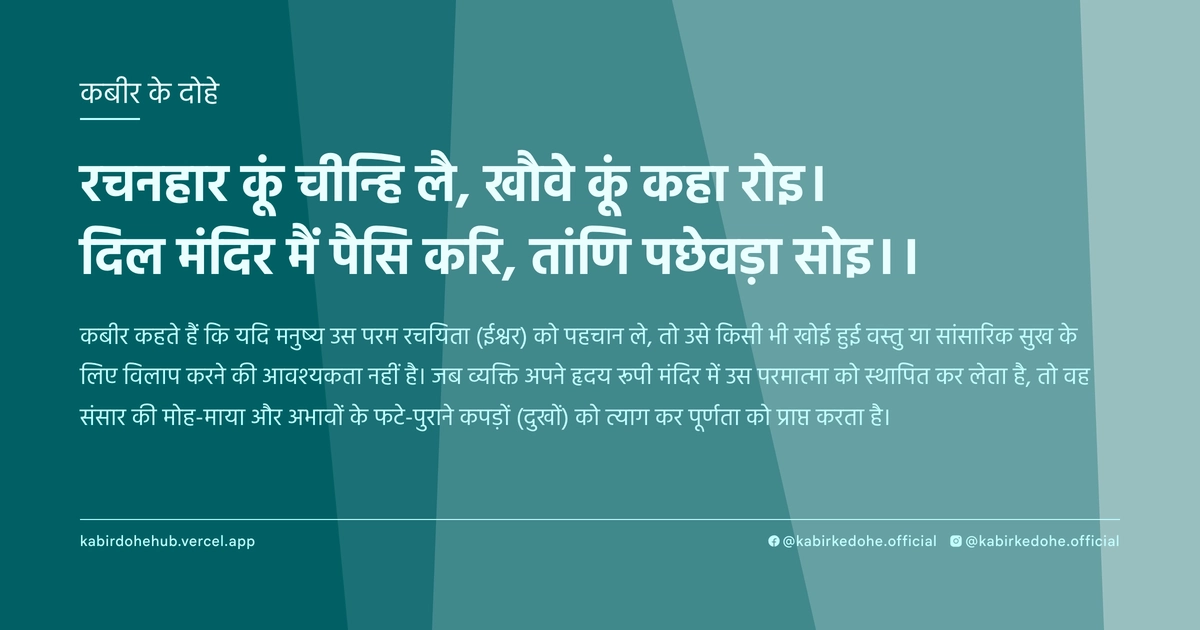
रचनहार कूं चीन्हि लै, खौवे कूं कहा रोइ।
दिल मंदिर मैं पैसि करि, तांणि पछेवड़ा सोइ।।
Rachanhaar kun cheenhi lai, khauve kun kaha roi. Dil mandir main paisi kari, taani pachevada soi.
इस पृष्ठ पर इस कबीर दोहे का अर्थ (meaning), हिंदी व्याख्या और अंग्रेज़ी अनुवाद, दार्शनिक विश्लेषण और व्यावहारिक जीवन सीख दी गई है। यह दोहा अंतर ज्योति (The Inner Light) विषय से जुड़ा है — Kabir doha meaning and explanation in Hindi and English.
अर्थ (Meaning):
कबीर कहते हैं कि यदि मनुष्य उस परम रचयिता (ईश्वर) को पहचान ले, तो उसे किसी भी खोई हुई वस्तु या सांसारिक सुख के लिए विलाप करने की आवश्यकता नहीं है। जब व्यक्ति अपने हृदय रूपी मंदिर में उस परमात्मा को स्थापित कर लेता है, तो वह संसार की मोह-माया और अभावों के फटे-पुराने कपड़ों (दुखों) को त्याग कर पूर्णता को प्राप्त करता है।
Kabir asserts that if one truly recognizes the Divine Creator, there is no need to weep over losses or missing worldly possessions. By establishing the Eternal Presence within the temple of the heart, the seeker transcends the tattered rags of worldly suffering and material lack, finding an absolute fulfillment that renders external loss irrelevant.
व्याख्या (Interpretation):
इस दोहे का शाब्दिक अर्थ है कि रचयिता को जानने के बाद शोक व्यर्थ है। आध्यात्मिक स्तर पर, 'खौवे' (खोना) केवल भौतिक वस्तुओं का नहीं, बल्कि अपनी वास्तविक आत्मा को भूल जाने का प्रतीक है। 'दिल मंदिर' वह आंतरिक शून्य है जहाँ अहंकार विलीन होता है और केवल शुद्ध चेतना बचती है। 'पछेवड़ा' या फटा हुआ कपड़ा माया और अज्ञानता के उस आवरण को दर्शाता है जिसे हम अपनी पहचान मानते हैं। जब आत्मा का मिलन परमात्मा से होता है, तो यह द्वैत समाप्त हो जाता है। यह निर्गुण भक्ति का सार है, जहाँ ईश्वर बाहर नहीं, बल्कि भीतर स्थित है। यह अद्वैत वेदांत के उस सत्य की पुष्टि करता है कि आत्मा और ब्रह्म एक ही हैं।
Literally, the verse suggests that recognizing the Creator renders grief obsolete. Metaphorically, 'loss' refers not just to material goods, but to the primordial forgetting of one's own divine nature. The 'temple of the heart' represents the internal sanctuary where the ego dissolves, leaving only pure consciousness. The 'tattered cloth' (pachevda) symbolizes the veil of Maya and the fragmented identity we cling to. When the Atman merges with the Brahman, the paradox of loss vanishes because the Infinite cannot be lost. This aligns with Nirgun Bhakti, emphasizing a formless God residing within. It mirrors the Advaita Vedanta realization that the seeker and the sought are identical, rendering the 'rags' of worldly sorrow meaningless.
दार्शनिक विश्लेषण (Philosophical Analysis):
कबीर का यह विचार उनके युग के कर्मकांडीय आडंबरों पर एक गहरा प्रहार है। उस समय लोग ईश्वर को खोजने के लिए तीर्थों और बाहरी मंदिरों में भटकते थे, जबकि कबीर 'दिल मंदिर' की बात कर रहे हैं। यह दृष्टिकोण सूफी मत के 'इन्सान-ए-कामिल' और अद्वैत वेदांत के 'अहं ब्रह्मास्मि' के करीब है। वे तर्क देते हैं कि जब तक हम बाहरी दुनिया में सुख खोजते हैं, हम वास्तव में 'खोए हुए' हैं।
यहाँ 'रचनहार' कोई बाहरी व्यक्ति नहीं, बल्कि वह सार्वभौमिक चेतना है जो हर कण में व्याप्त है। कबीर का दर्शन यह है कि दुःख का मूल कारण 'अज्ञान' (Avidya) है। जब हम स्वयं को शरीर या सामाजिक स्थिति मानते हैं, तो हम अभाव महसूस करते हैं। लेकिन जब हम अपनी पहचान उस अविनाशी तत्व से जोड़ते हैं, तो अभाव समाप्त हो जाता है।
यह विश्लेषण मनोवैज्ञानिक रूपांतरण की बात करता है। अहंकार का विसर्जन ही वह प्रक्रिया है जिसे कबीर 'पछेवड़ा सोइ' (कपड़ा सिलना या त्यागना) कहते हैं। यह केवल एक आध्यात्मिक क्रिया नहीं, बल्कि एक मानसिक क्रांति है जहाँ व्यक्ति बाहरी निर्भरता को समाप्त कर आंतरिक स्वावलंबन प्राप्त करता है।
कबीर जाति और धर्म के बंधनों को तोड़कर एक ऐसी सार्वभौमिक भाषा का उपयोग करते हैं जो सीधे अनुभव (Anubhava) पर आधारित है। उनके लिए सत्य वह नहीं है जो शास्त्रों में लिखा है, बल्कि वह है जिसे हृदय की गहराई में महसूस किया गया हो।
अंततः, यह दोहा हमें सिखाता है कि संसार की हर हानि वास्तव में एक लाभ है, यदि वह हमें हमारे आंतरिक केंद्र की ओर ले जाए। यह विरक्ति (Detachment) का मार्ग नहीं है, बल्कि पूर्णता (Wholeness) का मार्ग है, जहाँ प्रेम और ज्ञान एक हो जाते हैं।
Kabir's insight is a profound critique of the ritualistic ostentation of his era. While the masses wandered to distant shrines and external temples, Kabir redirected the gaze toward the 'temple of the heart.' This perspective converges with the Sufi concept of the 'Perfect Human' and the Advaita Vedanta realization of 'Aham Brahmasmi' (I am Brahman). He argues that as long as we seek fulfillment in the external world, we are fundamentally 'lost.'
The 'Creator' here is not a distant deity but the universal consciousness permeating every atom. Kabir's philosophy posits that the root of all suffering is 'Avidya' or spiritual ignorance. When we identify ourselves with the transient body or a social status, we experience lack. However, by aligning our identity with the indestructible Eternal, the sensation of loss evaporates.
This analysis emphasizes a psychological transformation. The dissolution of the ego is the process Kabir refers to as mending or discarding the 'tattered cloth.' This is not merely a spiritual exercise but a mental revolution where the individual shifts from external dependency to internal sovereignty.
Kabir transcends the boundaries of caste and creed, utilizing a language of direct experience (Anubhava). For him, truth is not a scriptural dogma but a lived reality felt in the depths of the heart. He challenges the literalist interpretation of religion, replacing fear of God with the love of the Divine Presence.
Ultimately, this Doha teaches that every worldly loss is actually a gain if it propels the seeker toward their internal center. It is not a path of mere asceticism or detachment, but a path toward Wholeness, where divine love and transcendental knowledge merge into one singular experience.
मूल संदेश (Core Message):
- बाहरी खोज व्यर्थ है, सत्य केवल भीतर है।
- अभाव केवल तब तक है जब तक अहंकार जीवित है।
- परमात्मा का ज्ञान ही समस्त दुखों की औषधि है।
- सांसारिक हानि वास्तव में आध्यात्मिक लाभ का द्वार है।
- आत्मा की पूर्णता किसी भी भौतिक वस्तु की मोहताज नहीं।
- External searching is futile; Truth resides only within.
- Scarcity exists only as long as the ego survives.
- Knowledge of the Divine is the only cure for all suffering.
- Worldly loss is actually a gateway to spiritual gain.
- The soul's wholeness is independent of any material possession.
व्यावहारिक उदाहरण (Practical Example):
वाराणसी के एक पुराने घाट पर माधव नाम का एक वृद्ध बुनकर रहता था। माधव अपनी पूरी जिंदगी बेहतरीन रेशमी साड़ियाँ बुनने में बिता चुका था, लेकिन एक भीषण आग में उसकी पूरी दुकान, उसके औजार और उसकी जीवन भर की जमापूंजी जलकर राख हो गई। उसके पास अब केवल एक फटा हुआ सूती अंगोछा बचा था।
शुरुआत में माधव गहरे अवसाद में डूब गया। वह हर रात गंगा के किनारे बैठकर रोता और पूछता, "हे ईश्वर, तूने मुझसे सब कुछ क्यों छीन लिया? मैं अब क्या पहनूंगा, क्या खाऊंगा?"
एक दिन वह एक संत के पास गया और अपनी व्यथा सुनाई। संत ने उसकी ओर देखा और मुस्कुराते हुए कहा, "माधव, तू उस कपड़े के लिए रो रहा है जो जल गया, लेकिन तू उस बुनकर को भूल गया जिसने तुझे बनाया है। तू खुद एक अद्भुत रचना है, फिर तू एक मामूली कपड़े के टुकड़े के लिए क्यों विलाप कर रहा है?"
माधव को यह बात समझ नहीं आई। संत ने आगे कहा, "अपनी आँखें बंद कर और देख कि तेरे भीतर एक ऐसा मंदिर है जहाँ कभी आग नहीं लगती। वहां वह रचनहार बैठा है। जब तू उसे पहचान लेगा, तो तुझे लगेगा कि तूने कुछ खोया नहीं, बल्कि तूने उस बोझ को खो दिया है जिसने तुझे अब तक जकड़ा हुआ था।"
माधव ने अगले कुछ महीनों तक मौन साधना की। उसने महसूस किया कि उसकी पहचान उसकी दुकान या उसकी साड़ियों से नहीं थी, बल्कि उस शांति से थी जो उसके भीतर हमेशा मौजूद थी।
धीरे-धीरे उसका दुख गायब होने लगा। उसने देखा कि वह अब पहले से अधिक खुश था, जबकि उसके पास कुछ नहीं था। उसने अपने फटे हुए कपड़ों की चिंता करना छोड़ दिया और दूसरों की मदद करने में समय बिताने लगा।
उसने पाया कि जब उसने अपने आंतरिक 'रचनहार' को पहचान लिया, तो बाहरी अभाव उसके लिए एक खेल बन गया। वह अब गरीबी में भी सम्राट की तरह महसूस करता था।
एक दिन एक अमीर व्यापारी उसके पास आया और उसे फिर से दुकान खोलने का प्रस्ताव दिया। माधव ने विनम्रता से मना कर दिया। उसने कहा, "मैंने वह पा लिया है जिसे दुनिया खोने से डरती है। अब मुझे किसी बाहरी रेशम की जरूरत नहीं, मेरा हृदय ही मेरा सबसे कीमती वस्त्र है।"
इस प्रकार, माधव का जीवन 'अभाव' से 'पूर्णता' की ओर बदल गया। उसने सीखा कि वास्तविक संपत्ति वह नहीं है जिसे हम तिजोरियों में रखते हैं, बल्कि वह है जिसे हम अपने भीतर महसूस करते हैं।
On an ancient ghat in Varanasi lived an elderly weaver named Madhav. Madhav had spent his entire life weaving the finest silk sarees, but a devastating fire reduced his shop, his tools, and his life's savings to ashes. He was left with nothing but a single, tattered cotton shawl.
Initially, Madhav sank into a deep depression. Every night, he sat by the Ganges, weeping and asking, "O Lord, why did You strip me of everything? What will I wear? How will I survive?"
One day, he approached a wandering saint and shared his grief. The saint looked at him and smiled, saying, "Madhav, you weep for the cloth that burned, but you have forgotten the Weaver who created you. You yourself are a divine masterpiece; why lament over a mere piece of fabric?"
Madhav did not understand. The saint continued, "Close your eyes and see that within you is a temple where no fire can ever reach. The Creator resides there. Once you recognize Him, you will realize you haven't lost anything; rather, you have lost the burden that held you captive."
For the next few months, Madhav practiced silent contemplation. He realized that his identity was not tied to his shop or his sarees, but to the profound peace that had always existed within him.
Slowly, his sorrow vanished. He noticed he was happier than ever, despite having nothing. He stopped worrying about his torn clothes and began spending his time helping others in the community.
He discovered that once he recognized the internal 'Rachnahar,' external scarcity became a mere play of shadows. He felt like an emperor even in the midst of poverty.
One day, a wealthy merchant approached him and offered to fund a new shop. Madhav politely declined. He said, "I have found that which the world fears losing. I no longer need external silk; my heart is now my most precious garment."
Thus, Madhav's life transformed from 'lack' to 'fullness.' He learned that true wealth is not what we store in vaults, but what we realize within our own being.
अभ्यास मार्गदर्शन (Practice Guidance):
- प्रतिदिन 20 मिनट के लिए 'हृदय ध्यान' करें: अपनी चेतना को छाती के केंद्र में केंद्रित करें और महसूस करें कि वहां एक प्रकाश पुंज है जो कभी नहीं बुझता।
- आत्म-पूछताछ जर्नल: प्रतिदिन एक ऐसी चीज़ लिखें जिसे आपने खोया है और फिर यह विश्लेषण करें कि क्या वह वास्तव में आपकी आत्मा का हिस्सा था या केवल एक बाहरी आवरण।
- व्यवहार परिवर्तन: जब भी किसी भौतिक वस्तु के खोने पर दुख हो, तो तुरंत स्वयं से कहें, "मैं वह नहीं हूँ जो खो गया है, मैं वह हूँ जो देख रहा है।"
- निदान चेकलिस्ट: क्या आप अभी भी अपनी खुशी को बाहरी परिस्थितियों से जोड़ रहे हैं? क्या आप दूसरों की संपत्ति देखकर ईर्ष्या महसूस करते हैं? यदि हाँ, तो आप अभी भी 'पछेवड़ा' (माया) से चिपके हुए हैं।
- Practice 'Heart Meditation' for 20 minutes daily: Focus your awareness on the center of your chest and visualize an eternal flame of consciousness that never flickers.
- Self-Inquiry Journaling: Write down one thing you have lost each day and analyze whether it was truly a part of your essence or merely an external shell.
- Behavioral Shift: Whenever you feel grief over a material loss, immediately affirm to yourself, "I am not that which was lost; I am the Witness who observes the loss."
- Diagnostic Checklist: Are you still linking your happiness to external circumstances? Do you feel envy when seeing others' possessions? If yes, you are still clinging to the 'pachevda' (illusion).
चिंतन प्रश्न (Reflection Questions):
- यदि आज आपकी सारी सामाजिक पहचान और संपत्ति छीन ली जाए, तो आपके भीतर क्या बचेगा?
- आप किन 'फटे हुए कपड़ों' (पुरानी यादों, कड़वाहटों) को अपनी पहचान मानकर ढो रहे हैं?
- क्या आपका 'दिल मंदिर' वास्तव में खाली है, या आपने उसे बाहरी शोर से भर दिया है?
- आपकी डिजिटल पहचान (सोशल मीडिया) आपके वास्तविक आंतरिक स्वरूप को कितना ढक रही है?
- क्या आप वास्तव में ईश्वर को खोज रहे हैं, या केवल अपनी इच्छाओं की पूर्ति का साधन?
- If all your social identities and assets were stripped away today, what would remain of you?
- Which 'tattered clothes' (old grudges, past traumas) are you still carrying as your identity?
- Is your 'heart temple' truly empty and open, or have you filled it with external noise?
- To what extent does your digital persona mask your authentic internal reality?
- Are you truly seeking the Divine, or are you merely seeking a means to fulfill your desires?