
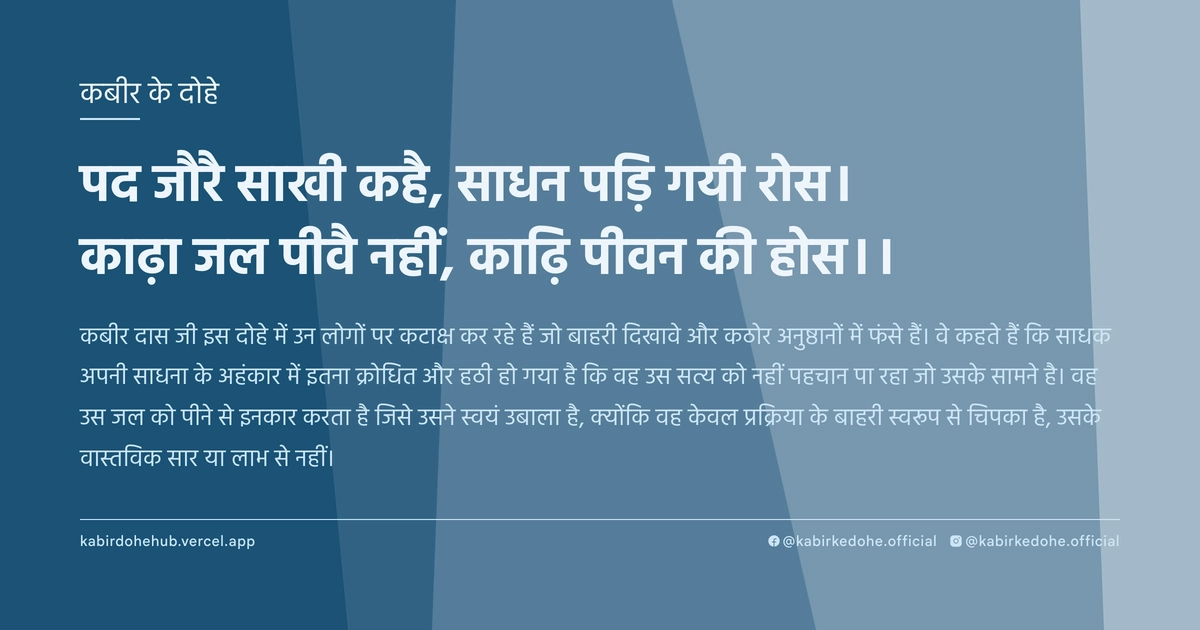
पद जौरै साखी कहै, साधन पड़ि गयी रोस।
काढ़ा जल पीवै नहीं, काढ़ि पीवन की होस।।
Pad jaurai sakhi kahai, sadhan pad gayi ros. Kadha jal pivai nahi, kadh pivan ki hos.
इस पृष्ठ पर इस कबीर दोहे का अर्थ (meaning), हिंदी व्याख्या और अंग्रेज़ी अनुवाद, दार्शनिक विश्लेषण और व्यावहारिक जीवन सीख दी गई है। यह दोहा संयम (Self-discipline) विषय से जुड़ा है — Kabir doha meaning and explanation in Hindi and English.
अर्थ (Meaning):
कबीर दास जी इस दोहे में उन लोगों पर कटाक्ष कर रहे हैं जो बाहरी दिखावे और कठोर अनुष्ठानों में फंसे हैं। वे कहते हैं कि साधक अपनी साधना के अहंकार में इतना क्रोधित और हठी हो गया है कि वह उस सत्य को नहीं पहचान पा रहा जो उसके सामने है। वह उस जल को पीने से इनकार करता है जिसे उसने स्वयं उबाला है, क्योंकि वह केवल प्रक्रिया के बाहरी स्वरूप से चिपका है, उसके वास्तविक सार या लाभ से नहीं।
Kabir satirizes those trapped in external displays and rigid rituals. He observes that the seeker, blinded by the arrogance of their own spiritual discipline, has become resentful and stubborn. They refuse to drink the water they have painstakingly boiled, failing to realize that the purpose of the process was the result. They are so obsessed with the ritual of 'boiling' that they forget the actual goal: quenching the thirst with the purified essence.
व्याख्या (Interpretation):
यहाँ 'काढ़ा जल' उस ज्ञान या सत्य का प्रतीक है जिसे प्राप्त करने के लिए साधक ने कठिन तपस्या की है। शाब्दिक अर्थ यह है कि व्यक्ति ने पानी उबाला, लेकिन अब वह उसे पी नहीं रहा। रूपकात्मक रूप से, यह उस विरोधाभास को दर्शाता है जहाँ एक व्यक्ति आध्यात्मिक मार्ग पर चलता तो है, लेकिन 'साधना' के अहंकार (Ego of Practice) में इतना डूब जाता है कि वह उस प्रेम और सहजता को खो देता है जो उस साधना का उद्देश्य था। यह निर्गुण भक्ति का मूल सिद्धांत है कि ईश्वर किसी कठिन क्रिया में नहीं, बल्कि हृदय की सरलता में है। माया यहाँ वह भ्रम है जो साधक को विश्वास दिलाता है कि उसकी कठोरता ही उसकी पवित्रता है। अंततः, यह आत्मा और ब्रह्म के बीच के उस कृत्रिम पर्दे की बात करता है जिसे हमने स्वयं अपनी 'धार्मिकता' से बनाया है।
The 'boiled water' symbolizes the wisdom or truth that the seeker has spent years striving to achieve. Literally, the person boils the water but refuses to drink it. Metaphorically, this illustrates the paradox where a practitioner becomes so enamored with the 'act of seeking' that they forget the 'goal of finding.' This is a critique of the 'Ego of Practice,' where the discipline itself becomes a new form of Maya (illusion). In the context of Nirgun Bhakti, Kabir emphasizes that the Formless Divine is not reached through rigid austerity but through spontaneous love. The central paradox is that the very tools used to reach liberation—rituals and strictures—become the final obstacles when they are held onto with pride. The non-duality of Atman and Brahman is obscured not by ignorance, but by the pride of 'knowing' how to be holy.
दार्शनिक विश्लेषण (Philosophical Analysis):
कबीर का यह दोहा उनके युग के धार्मिक पाखंड और कर्मकांडीय कट्टरता पर एक गहरा प्रहार है। 15वीं शताब्दी में, धर्म केवल बाहरी प्रतीकों, जैसे कि तीर्थयात्रा, कठिन उपवास और जटिल अनुष्ठानों तक सीमित हो गया था। कबीर ने देखा कि लोग 'साधन' (means) को ही 'साध्य' (end) मान बैठे हैं। वे इस बात की आलोचना करते हैं कि कैसे धर्म एक सामाजिक पहचान और श्रेष्ठता का साधन बन गया है, जिससे व्यक्ति के भीतर क्रोध और अहंकार का जन्म होता है।
अद्वैत वेदांत के दृष्टिकोण से, यह दोहा 'अविद्या' के एक सूक्ष्म रूप को दर्शाता है। जब साधक यह सोचने लगता है कि उसकी तपस्या उसे दूसरों से अलग या श्रेष्ठ बनाती है, तो वह वास्तव में अपनी पृथकता (separation) को बढ़ा रहा होता है, जबकि अद्वैत का लक्ष्य एकता है। कबीर यहाँ यह समझा रहे हैं कि यदि साधना आपको कठोर, क्रोधित या अहंकारी बनाती है, तो वह साधना व्यर्थ है क्योंकि वह आत्मा के वास्तविक स्वभाव—जो कि प्रेम और शांति है—के विपरीत है।
सूफी मत के 'फना' (अहंकार का विनाश) के सिद्धांत से जोड़कर देखें तो, कबीर कह रहे हैं कि जब तक 'मैं' (साधक का अहंकार) जीवित है, तब तक सत्य का अनुभव असंभव है। जिस प्रकार उबला हुआ पानी ठंडा होने पर ही पिया जा सकता है, वैसे ही ज्ञान तब तक उपयोगी नहीं होता जब तक वह अहंकार की तपिश से मुक्त होकर विनम्रता में न बदल जाए।
कबीर का विरोध किसी विशिष्ट धर्म से नहीं, बल्कि उस मानसिक स्थिति से है जहाँ मनुष्य सत्य की खोज को एक प्रतियोगिता या प्रदर्शन बना लेता है। वे 'साधन' की पवित्रता के बजाय 'साधना' के फल (करुणा और विनम्रता) पर जोर देते हैं। उनके लिए, वास्तविक धर्म वह है जो मनुष्य को सरल बनाए, न कि वह जो उसे जटिल अनुष्ठानों का कैदी बना दे।
अंततः, यह विश्लेषण हमें यह सिखाता है कि आध्यात्मिक मार्ग पर सबसे बड़ा अवरोध बाहरी बाधाएं नहीं, बल्कि हमारा अपना 'आध्यात्मिक अहंकार' है। यह वह सूक्ष्म जाल है जिसमें फंसकर व्यक्ति यह सोचने लगता है कि वह सत्य के करीब है, जबकि वह वास्तव में अपनी ही बनाई हुई धारणाओं की दीवारों के पीछे कैद हो जाता है।
This Doha is a profound critique of the religious hypocrisy and ritualistic rigidity prevalent during Kabir's era. In the 15th century, spirituality had largely devolved into a series of external performances—pilgrimages, extreme fasting, and complex rites. Kabir observes a dangerous shift where the 'Sadhana' (the means) is mistaken for the 'Sadhya' (the goal). He argues that when religion becomes a tool for social identity or a badge of superiority, it breeds resentment and ego rather than liberation.
From the lens of Advaita Vedanta, this verse highlights a subtle form of 'Avidya' (ignorance). When a practitioner believes their austerity makes them superior to others, they are reinforcing the illusion of duality and separation, which is the exact opposite of the Vedantic goal of realizing oneness. Kabir suggests that any spiritual practice that results in anger or rigidity is counter-productive, as it contradicts the inherent nature of the Atman, which is pure consciousness, peace, and love.
Connecting this to the Sufi concept of 'Fana' (the annihilation of the self), Kabir posits that as long as the 'I'—the ego of the practitioner—remains intact, the experience of the Divine is impossible. Just as boiled water must cool before it can be consumed, spiritual knowledge is useless until it is stripped of the heat of pride and transformed into the coolness of humility.
Kabir's opposition is not directed at any specific faith, but at the psychological state where the search for truth becomes a performance. He emphasizes the fruit of the practice (compassion and simplicity) over the purity of the ritual. For Kabir, true religion is that which simplifies the human heart, not that which imprisons it in a labyrinth of rules.
Ultimately, this analysis reveals that the greatest obstacle on the spiritual path is not external interference, but 'spiritual ego.' This is a subtle trap where the seeker believes they are nearing the truth, while they are actually becoming more entrenched in the walls of their own conceptual constructs and self-righteousness.
मूल संदेश (Core Message):
- साधना का उद्देश्य अहंकार को मिटाना है, उसे बढ़ाना नहीं।
- कठोरता सत्य नहीं है; सहजता और प्रेम ही वास्तविक मार्ग हैं।
- जब साधन ही लक्ष्य बन जाए, तो वह बंधन बन जाता है।
- ज्ञान तब तक व्यर्थ है जब तक वह विनम्रता में न बदले।
- ईश्वर अनुष्ठानों में नहीं, बल्कि शुद्ध हृदय की सरलता में बसता है।
- The purpose of practice is to dissolve the ego, not to inflate it.
- Rigidity is not truth; spontaneity and love are the real paths.
- When the means become the goal, they turn into a prison.
- Knowledge is useless until it is transformed into humility.
- The Divine dwells not in rituals, but in the simplicity of a pure heart.
व्यावहारिक उदाहरण (Practical Example):
वाराणसी के घाटों पर रहने वाले एक वृद्ध बुनकर थे, जिनका नाम माधव था। माधव अपनी कला में निपुण थे, लेकिन वे अपनी 'शुद्धता' और 'नियमों' के लिए पूरे मोहल्ले में जाने जाते थे। वे मानते थे कि ईश्वर केवल उन्हीं को मिलता है जो अत्यंत कठोर नियमों का पालन करते हैं। माधव ने अपने जीवन में कई कठिन व्रत रखे, घंटों तक बिना हिले-डुले ध्यान लगाया और केवल सात्विक भोजन किया। वे अक्सर अन्य बुनकरों को ताना मारते थे कि वे 'अशुद्ध' हैं क्योंकि वे जीवन को सहजता से जीते हैं।
माधव का अहंकार उनकी साधना की ओट में छिपा था। वे जितने अधिक 'धार्मिक' होते गए, उतने ही चिड़चिड़े और क्रोधित होते गए। यदि कोई उनके ध्यान के समय उनके पास से गुजर जाता, तो वे उस पर चिल्लाते। उनकी साधना ने उन्हें शांति नहीं, बल्कि एक ऐसा मानसिक ढांचा दिया था जिसमें वे खुद को सर्वश्रेष्ठ और दूसरों को पापी समझते थे।
एक दिन, उनके घर के पास एक छोटा बच्चा आया जो बहुत प्यासा था। उसने माधव से पानी माँगा। माधव ने उसे पानी दिया, लेकिन साथ ही उसे यह उपदेश देना शुरू कर दिया कि कैसे उसे भी अपनी इंद्रियों पर नियंत्रण करना चाहिए और कठोर नियमों का पालन करना चाहिए। बच्चा चुपचाप सुनता रहा, लेकिन उसकी आँखों में केवल प्यास थी।
तभी माधव की नजर अपने पास रखे एक पात्र पर पड़ी, जिसे उन्होंने विशेष अनुष्ठान के लिए पवित्र जल के रूप में उबाला और रखा था। वह जल अब ठंडा हो चुका था, लेकिन माधव उसे पीने या देने से कतरा रहे थे क्योंकि उनके मन में यह विचार था कि यह 'विशेष' जल केवल एक विशिष्ट समय और विधि से ही उपयोग किया जाना चाहिए।
बच्चे ने अचानक वह पात्र उठाया और एक ही सांस में सारा पानी पी लिया। माधव चौंक गए और क्रोध में चिल्लाने ही वाले थे कि बच्चे ने मासूमियत से कहा, 'काका, प्यास तो प्यास होती है, चाहे पानी साधारण हो या आपका विशेष वाला। प्यास बुझाने के लिए पानी का गुण नहीं, उसकी उपलब्धता मायने रखती है।'
यह साधारण सा वाक्य माधव के भीतर बिजली की तरह कौंधा। उन्हें एहसास हुआ कि वे जिस 'विशेष जल' (साधना) को सहेज रहे थे, उसका उद्देश्य तो 'प्यास' (ईश्वर की प्राप्ति) बुझाना था, लेकिन वे उस जल की 'पवित्रता' के अहंकार में इतने अंधे हो गए थे कि वे प्यास को ही भूल गए।
माधव को समझ आया कि उनकी सारी तपस्या, उनके सारे व्रत और उनकी सारी कठोरता केवल एक बाहरी आवरण थी। उन्होंने जिस ईश्वर को खोजा, वह उनके नियमों में नहीं, बल्कि उस बच्चे की सहजता और प्यास में था।
उस दिन के बाद, माधव ने अपनी कठोरता त्याग दी। उन्होंने अपनी कला को सेवा बनाया और अपने भीतर के क्रोध को करुणा में बदल दिया। उन्होंने सीखा कि सच्ची साधना वह नहीं जो आपको दूसरों से अलग करे, बल्कि वह है जो आपको सबके साथ जोड़ दे।
In the ghats of Varanasi lived an elderly weaver named Madhav. Madhav was a master of his craft, but he was known throughout the neighborhood for his obsession with 'purity' and 'rules.' He believed that the Divine could only be attained by those who followed the most rigorous disciplines. Madhav observed countless harsh fasts, spent hours in motionless meditation, and adhered to a strict dietary code. He often mocked other weavers, calling them 'impure' because they lived their lives with simplicity and ease.
Madhav's ego was hidden behind the veil of his spiritual practice. The more 'religious' he became, the more irritable and angry he grew. If someone happened to walk past him during his meditation, he would erupt in rage. His practice had not brought him peace; instead, it had constructed a mental fortress where he viewed himself as superior and everyone else as sinful.
One day, a small child came to his door, desperately thirsty. The child asked Madhav for water. Madhav gave him some, but immediately began lecturing the child on how he should control his senses and follow strict disciplines to avoid such cravings. The child listened in silence, but his eyes reflected only the urgency of his thirst.
At that moment, Madhav noticed a vessel nearby containing water that he had boiled and set aside for a specific, sacred ritual. The water had cooled, but Madhav hesitated to use it or give it away, believing it was 'special' and could only be utilized at a precise time and through a specific method.
Suddenly, the child reached out, grabbed the vessel, and drank all the water in one gulp. Madhav was shocked and was about to scream in anger when the child said innocently, 'Uncle, thirst is just thirst, whether the water is ordinary or your special kind. To quench thirst, the availability of water matters, not its ritual status.'
These simple words struck Madhav like a bolt of lightning. He realized that the 'special water' (his spiritual practice) was meant to quench the 'thirst' (the longing for God), but he had become so blinded by the pride of the water's 'purity' that he had forgotten the thirst itself.
Madhav understood that all his penance, his fasts, and his rigidity were merely an outer shell. The Divine he sought was not in his rules, but in the child's spontaneity and raw need.
From that day forward, Madhav abandoned his rigidity. He turned his craft into a service and transformed his inner anger into compassion. He learned that true practice is not that which separates you from others, but that which binds you to all of humanity.
अभ्यास मार्गदर्शन (Practice Guidance):
- प्रतिदिन 15 मिनट मौन बैठें और विचार करें कि क्या आपकी कोई आदत या विश्वास आपको दूसरों से श्रेष्ठ महसूस कराता है।
- एक 'अहंकार जर्नल' बनाएँ: उन क्षणों को लिखें जब आपने किसी को अपनी 'नैतिकता' या 'ज्ञान' के आधार पर छोटा महसूस कराया।
- व्यवहार परिवर्तन: जब भी किसी की गलती पर क्रोध आए, तो स्वयं से पूछें—'क्या यह क्रोध सत्य की खोज है या मेरे अहंकार की रक्षा?'
- डायग्नोस्टिक चेकलिस्ट: यदि आप अपनी आध्यात्मिक प्रगति के लिए दूसरों की प्रशंसा चाहते हैं, या यदि आप नियमों के उल्लंघन पर अत्यधिक क्रोधित होते हैं, तो आप 'साधन के अहंकार' में फंसे हैं।
- Sit in silence for 15 minutes daily and contemplate whether any of your habits or beliefs make you feel superior to others.
- Maintain an 'Ego Journal': Record moments where you made someone feel inferior based on your 'morality' or 'knowledge.'
- Behavioral Shift: Whenever anger arises at someone's mistake, ask yourself—'Is this anger a search for truth, or a defense of my ego?'
- Diagnostic Checklist: If you crave external validation for your spiritual progress, or if you feel intense rage when rules are broken, you are trapped in the 'Ego of Practice.'
चिंतन प्रश्न (Reflection Questions):
- क्या मेरी धार्मिक या नैतिक पहचान मेरे भीतर के वास्तविक प्रेम को दबा रही है?
- मैं अपनी 'पवित्रता' का उपयोग दूसरों को नियंत्रित करने के लिए कैसे करता हूँ?
- यदि मेरी सारी उपलब्धियाँ और उपाधियाँ छीन ली जाएँ, तो क्या मेरे भीतर कुछ बचेगा?
- क्या मैं सत्य को खोज रहा हूँ, या मैं केवल 'सत्य खोजने वाले' की छवि को पसंद कर रहा हूँ?
- मेरे जीवन का वह कौन सा 'नियम' है जो मुझे दूसरों के प्रति कठोर बना रहा है?
- Is my religious or moral identity suppressing the actual love within me?
- How do I use my 'purity' as a tool to control or judge others?
- If all my achievements and titles were stripped away, what would remain of me?
- Am I searching for the Truth, or am I merely in love with the image of being a 'seeker of Truth'?
- Which specific 'rule' in my life is making me rigid and unkind toward others?