
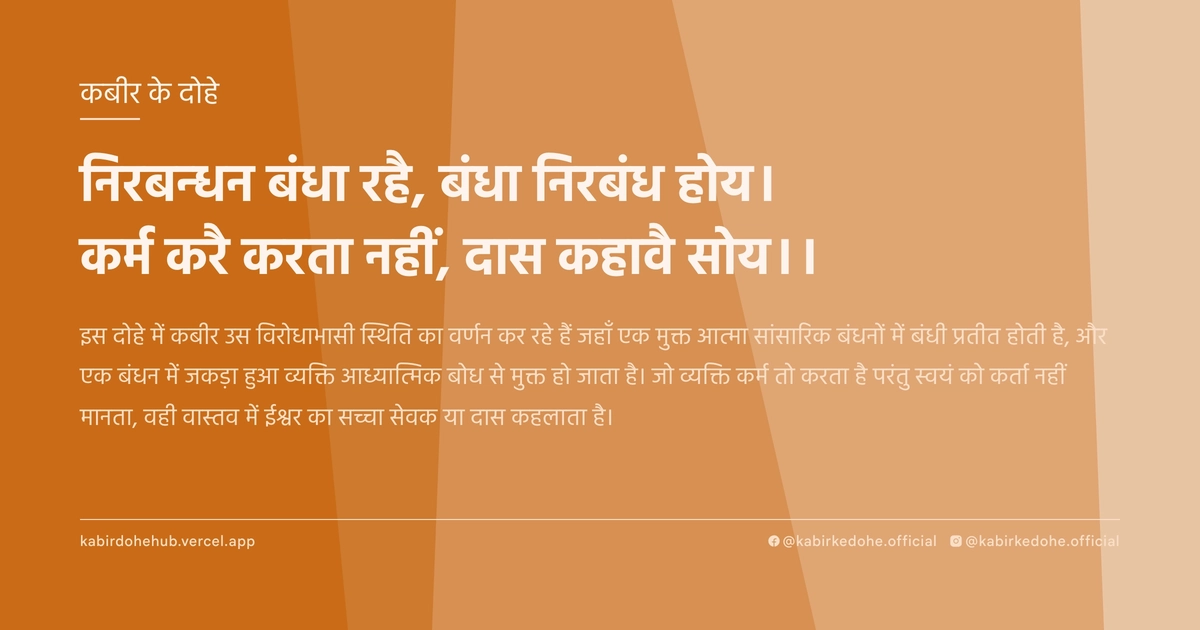
निरबन्धन बंधा रहै, बंधा निरबंध होय।
कर्म करै करता नहीं, दास कहावै सोय।।
Nirbandhan bandha rahe, bandha nirbandh hoye. Karm kare karta nahi, das kahavai soy.
इस पृष्ठ पर इस कबीर दोहे का अर्थ (meaning), हिंदी व्याख्या और अंग्रेज़ी अनुवाद, दार्शनिक विश्लेषण और व्यावहारिक जीवन सीख दी गई है। यह दोहा सहज योग (Sahaja Yoga) विषय से जुड़ा है — Kabir doha meaning and explanation in Hindi and English.
अर्थ (Meaning):
इस दोहे में कबीर उस विरोधाभासी स्थिति का वर्णन कर रहे हैं जहाँ एक मुक्त आत्मा सांसारिक बंधनों में बंधी प्रतीत होती है, और एक बंधन में जकड़ा हुआ व्यक्ति आध्यात्मिक बोध से मुक्त हो जाता है। जो व्यक्ति कर्म तो करता है परंतु स्वयं को कर्ता नहीं मानता, वही वास्तव में ईश्वर का सच्चा सेवक या दास कहलाता है।
In this couplet, Kabir describes a paradoxical state where a free soul appears bound by worldly ties, while one entangled in bondage becomes liberated through spiritual awakening. He asserts that the true devotee is one who performs their duties in the world but renounces the ego of being the 'doer,' thereby attaining a state of divine servitude.
व्याख्या (Interpretation):
शाब्दिक अर्थ यह है कि जो वास्तव में स्वतंत्र है वह दुनिया की नजरों में बंधा दिखता है, और जो बंधा है वह मुक्त हो जाता है। रूपकात्मक रूप से, यह 'अहंकार' और 'अस्तित्व' के बीच के द्वंद्व को दर्शाता है। निरबन्धन वह आत्मा है जो ब्रह्म में लीन है, फिर भी शरीर धारण कर कर्म करती है। बंधन वह माया है जिसमें अज्ञानी फँसा है। जब साधक यह जान लेता है कि कर्म प्रकृति के गुणों द्वारा संचालित हैं और वह केवल एक माध्यम है, तब वह 'कर्ता' भाव से मुक्त हो जाता है। यह निर्गुण भक्ति का सार है जहाँ व्यक्ति अपनी पहचान को मिटाकर परमात्मा की इच्छा में विलीन हो जाता है। यहाँ 'दास' शब्द गुलामी नहीं, बल्कि पूर्ण समर्पण और अहंकार विलोपन की पराकाष्ठा है, जो अद्वैत वेदांत के 'अहं ब्रह्मास्मि' के व्यावहारिक अनुप्रयोग को दर्शाता है।
Literally, the verse suggests that the truly free appear bound, and the bound become free. Metaphorically, this explores the tension between the ego and true existence. The 'unbound' is the soul merged with Brahman, yet functioning within the physical realm. 'Bondage' represents the Maya in which the ignorant are trapped. When a seeker realizes that actions are driven by the qualities of nature (Gunas) and they are merely an instrument, they are liberated from the 'doer-ship' (Kartrutva). This is the essence of Nirgun Bhakti, where the individual identity dissolves into the Divine Will. The term 'Daas' (servant) here does not imply slavery, but the pinnacle of total surrender and ego-annihilation, reflecting the practical application of Advaita Vedanta's non-duality where the distinction between the servant and the Master vanishes.
दार्शनिक विश्लेषण (Philosophical Analysis):
कबीर का यह दोहा उनके युग के धार्मिक पाखंड और कर्मकांडीय कठोरता के विरुद्ध एक गहरा प्रहार है। उस समय समाज जाति और बाहरी अनुष्ठानों के आधार पर मुक्ति का निर्धारण करता था, लेकिन कबीर ने आंतरिक रूपांतरण पर जोर दिया। वे बताते हैं कि मुक्ति किसी विशेष स्थान या बाहरी क्रिया से नहीं, बल्कि चेतना के परिवर्तन से आती है।
अद्वैत वेदांत के परिप्रेक्ष्य में, यह दोहा 'माया' और 'सत्य' के बीच के अंतर को स्पष्ट करता है। जब तक मनुष्य स्वयं को शरीर और मन का स्वामी मानता है, वह बंधन में है। जैसे ही वह यह अनुभव करता है कि वह केवल एक साक्षी (Witness) है, वह 'निरबंध' हो जाता है। यह स्थिति विरोधाभासी है क्योंकि वह संसार में रहते हुए भी उससे अछूता रहता है।
सूफी मत के 'फना' (Fana) के सिद्धांत से इसकी गहरी समानता है, जहाँ साधक अपनी व्यक्तिगत इच्छाओं को ईश्वर की इच्छा में विलीन कर देता है। जब 'मैं' मिट जाता है, तब केवल 'वह' शेष रहता है। कबीर यहाँ यह समझा रहे हैं कि कर्म करना अनिवार्य है, लेकिन कर्म के फल से जुड़ाव और कर्ता होने का गर्व ही वास्तविक बंधन है।
ऐतिहासिक रूप से, कबीर ने बुनकर के रूप में जीवन व्यतीत किया, जहाँ उन्होंने देखा कि धागे कैसे आपस में गुंथे होते हैं। उन्होंने इसी रूपक को जीवन पर लागू किया—जैसे धागा कपड़े में बंधा होता है पर अपनी प्रकृति नहीं खोता, वैसे ही आत्मा शरीर में रहकर भी मुक्त रह सकती है।
अंततः, यह विश्लेषण हमें सिखाता है कि वास्तविक स्वतंत्रता बाहरी परिस्थितियों के अभाव में नहीं, बल्कि आंतरिक वैराग्य में है। जो व्यक्ति कर्म को ईश्वर की सेवा मानकर करता है, वह कर्म बंधन से मुक्त होकर मोक्ष की ओर अग्रसर होता है।
Kabir's couplet is a profound critique of the religious hypocrisy and ritualistic rigidity of his era. At a time when society determined liberation based on caste and external rituals, Kabir emphasized internal transformation. He asserts that liberation comes not from a specific place or external act, but from a shift in consciousness.
From the perspective of Advaita Vedanta, this verse clarifies the distinction between 'Maya' (illusion) and 'Satya' (truth). As long as a human considers themselves the master of the body and mind, they remain bound. The moment they realize they are merely the Witness (Sakshi), they become 'unbound.' This state is paradoxical because they remain in the world yet are untouched by it.
There is a deep resonance here with the Sufi concept of 'Fana' (annihilation), where the seeker merges their individual will into the Divine Will. When the 'I' is erased, only 'He' remains. Kabir explains that while performing action (Karma) is inevitable, the attachment to the fruits of action and the pride of being the 'doer' are the actual bonds.
Historically, Kabir lived as a weaver, observing how threads are intertwined. He applied this metaphor to life—just as a thread is bound within a fabric yet retains its essential nature, the soul can remain free while inhabiting a physical body.
Ultimately, this analysis teaches us that true freedom is not the absence of external constraints, but the presence of internal detachment. One who performs their duties as a service to the Divine, without claiming ownership of the act, transcends the bondage of Karma and moves toward Moksha.
मूल संदेश (Core Message):
- बाहरी बंधन केवल भ्रम हैं; असली बंधन आंतरिक अहंकार है।
- कर्म करें, लेकिन कर्ता होने के गर्व का त्याग करें।
- समर्पण ही वह कुंजी है जो बंधन को मुक्ति में बदल देती है।
- जब 'मैं' मिटता है, तब केवल अनंत सत्य शेष रहता है।
- सच्चा दास वह है जो अपनी इच्छा को ईश्वरीय इच्छा में विलीन कर दे।
- External bonds are mere illusions; the real bondage is the internal ego.
- Perform your duties, but renounce the pride of being the doer.
- Surrender is the key that transforms bondage into liberation.
- When the 'I' vanishes, only the infinite truth remains.
- The true servant is one who merges their will into the Divine Will.
व्यावहारिक उदाहरण (Practical Example):
वाराणसी के एक पुराने घाट पर रामदीन नाम का एक वृद्ध नाविक रहता था। उसका पूरा जीवन पर्यटकों को नाव की सैर कराने और उनकी सेवा करने में बीता। रामदीन के पास बहुत कम संपत्ति थी और उसका जीवन संघर्षपूर्ण था, फिर भी उसके चेहरे पर एक ऐसी शांति थी जो शहर के सबसे अमीर व्यापारियों के पास भी नहीं थी।
रामदीन का एक बेटा था, जो शहर में पढ़कर एक बड़ा अधिकारी बन गया था। बेटा अक्सर अपने पिता को कहता, 'पिताजी, आप इस गरीबी और मेहनत में क्यों फंसे हैं? आपने जीवन भर दूसरों की सेवा की, पर आपको क्या मिला? आप अभी भी इस पुरानी नाव और नदी के बंधनों में बंधे हैं।'
रामदीन बस मुस्कुरा देता। वह अपनी नाव को केवल एक साधन मानता था, अपना अस्तित्व नहीं। वह नाव चलाता था, लेकिन उसके मन में यह भाव नहीं था कि 'मैं' नाव चला रहा हूँ। वह मानता था कि गंगा मैया उसे माध्यम बना रही हैं ताकि वह दूसरों की मदद कर सके।
एक दिन शहर में एक बहुत बड़ा विद्वान आया, जिसने कई शास्त्र पढ़े थे। वह विद्वान अपनी बौद्धिक उपलब्धियों के अहंकार में चूर था और हर बात पर दूसरों को नीचा दिखाता था। वह रामदीन की नाव पर सवार हुआ और उसे अपनी ज्ञान की श्रेष्ठता समझाने लगा।
विद्वान ने पूछा, 'तुम जैसे अनपढ़ लोग क्या जानते हैं मुक्ति के बारे में? क्या तुम्हें नहीं लगता कि तुम इस तुच्छ जीवन के बंधनों में कैद हो?' रामदीन ने बड़ी विनम्रता से उत्तर दिया, 'साहब, मैं तो बस एक माध्यम हूँ। नाव चलती है, लहरें आती-जाती हैं, और मैं बस देखता हूँ। मुझे नहीं पता कि मैं कहाँ बंधा हूँ, क्योंकि मुझे अब अपनी कोई अलग पहचान ही महसूस नहीं होती।'
विद्वान को लगा कि रामदीन मूर्ख है, लेकिन जब उसने रामदीन की आँखों में देखा, तो उसे एक ऐसी गहराई और स्थिरता मिली जो उसने अपनी बड़ी-बड़ी किताबों में नहीं पढ़ी थी। रामदीन के लिए नाव चलाना एक पूजा थी, कोई बोझ नहीं।
उस रात विद्वान को नींद नहीं आई। उसने महसूस किया कि वह अपनी डिग्रियों, अपनी प्रतिष्ठा और अपने 'मैं' के भारी बोझ तले दबा हुआ है, जबकि रामदीन, जो दुनिया की नजर में एक साधारण नाविक था, वास्तव में पूरी तरह स्वतंत्र था।
रामदीन ने 'कर्ता' होने का अहंकार त्याग दिया था। वह कर्म तो कर रहा था, लेकिन वह कर्म का मालिक नहीं था। यही वह 'कबीर ट्विस्ट' था जिसने विद्वान के अहंकार को झकझोर दिया।
विद्वान ने समझा कि असली बंधन बाहरी गरीबी या सामाजिक स्थिति नहीं है, बल्कि वह आंतरिक दावा है कि 'मैं यह कर रहा हूँ'। उसने रामदीन के चरणों में झुककर यह सीखा कि सेवा ही सबसे बड़ी मुक्ति है।
अंत में, विद्वान ने अपनी जीवनशैली बदली। उसने ज्ञान को अहंकार का साधन बनाने के बजाय, उसे दूसरों की निस्वार्थ सेवा में लगाया, ठीक उसी तरह जैसे रामदीन अपनी नाव चलाता था।
On an ancient ghat in Varanasi lived an elderly boatman named Ramdeen. His entire life was spent ferrying tourists and serving them. Ramdeen possessed very little wealth and his life was a struggle, yet there was a peace on his face that even the wealthiest merchants in the city lacked.
Ramdeen had a son who had studied in the city and become a high-ranking official. The son often told his father, 'Father, why are you stuck in this poverty and hard labor? You spent your whole life serving others, but what did you get? You are still bound by this old boat and the river.'
Ramdeen would simply smile. He viewed his boat merely as a tool, not as his identity. He rowed the boat, but he never harbored the feeling that 'I' am the one rowing. He believed that Mother Ganga was using him as a medium to help others.
One day, a renowned scholar arrived in the city. He had read countless scriptures but was consumed by the ego of his intellectual achievements, often belittling others. He boarded Ramdeen's boat and began explaining his intellectual superiority.
The scholar asked, 'What do illiterate people like you know about liberation? Don't you feel you are imprisoned in the bonds of this trivial life?' Ramdeen replied with great humility, 'Sir, I am just a medium. The boat moves, the waves come and go, and I simply observe. I do not know where I am bound, for I no longer feel a separate identity.'
The scholar thought Ramdeen was foolish, but when he looked into the boatman's eyes, he found a depth and stability he had never encountered in his great books. For Ramdeen, rowing the boat was a prayer, not a burden.
That night, the scholar could not sleep. He realized he was crushed under the heavy weight of his degrees, his reputation, and his 'I', while Ramdeen, who seemed ordinary to the world, was truly free.
Ramdeen had renounced the ego of the 'doer.' He performed the action, but he did not claim ownership of it. This was the 'Kabir Twist' that shook the scholar's ego.
The scholar understood that true bondage is not external poverty or social status, but the internal claim that 'I am doing this.' He bowed to Ramdeen and learned that selfless service is the greatest liberation.
Eventually, the scholar changed his way of living. He stopped using knowledge as a tool for ego and instead dedicated it to the selfless service of others, just as Ramdeen rowed his boat.
अभ्यास मार्गदर्शन (Practice Guidance):
- साक्षी भाव का अभ्यास: दिन में तीन बार 10 मिनट के लिए बैठें और अपने विचारों को ऐसे देखें जैसे आप किसी और के जीवन की फिल्म देख रहे हों। स्वयं को 'कर्ता' के बजाय 'द्रष्टा' मानें।
- निस्वार्थ सेवा (सेवा साधना): सप्ताह में एक बार ऐसा कार्य करें जिसके लिए आपको कोई प्रशंसा या प्रतिफल न मिले। कार्य करते समय मन में दोहराएं: 'यह मैं नहीं, परमात्मा मेरे माध्यम से कर रहा है।'
- आत्म-पूछताछ जर्नल: प्रतिदिन रात को लिखें कि आज किस कार्य में मुझे 'मैं' (अहंकार) महसूस हुआ और कैसे मैं उस कार्य को केवल एक कर्तव्य के रूप में देख सकता था।
- निदान चेकलिस्ट: क्या मैं कार्य के परिणाम के लिए अत्यधिक चिंतित हूँ? क्या मैं अपनी सफलता का श्रेय स्वयं को देता हूँ? क्या मैं दूसरों की मदद करने के बाद मानसिक रूप से उनसे अपेक्षा रखता हूँ? यदि हाँ, तो आप अभी भी 'कर्ता' भाव के बंधन में हैं।
- Practice of Witness Consciousness: Three times a day, sit for 10 minutes and observe your thoughts as if you are watching a movie of someone else's life. View yourself as the 'Observer' rather than the 'Doer.'
- Selfless Service (Seva Sadhana): Once a week, perform an act for which you receive no praise or reward. While acting, mentally repeat: 'It is not I, but the Divine acting through me.'
- Self-Inquiry Journal: Every night, record instances where you felt the 'I' (ego) during a task and reflect on how that action could have been viewed as a mere duty.
- Diagnostic Checklist: Am I excessively anxious about the results of my actions? Do I take sole credit for my successes? Do I expect something in return after helping others? If yes, you are still bound by the 'doer-ship' ego.
चिंतन प्रश्न (Reflection Questions):
- यदि आपकी सभी उपलब्धियां और पद आपसे छीन लिए जाएं, तो आपके पास 'मैं' के नाम पर क्या बचेगा?
- आप अपनी सफलता का श्रेय स्वयं को देते हैं, लेकिन अपनी विफलताओं के लिए परिस्थितियों को दोष देते हैं—यह विरोधाभास आपके अहंकार के बारे में क्या कहता है?
- क्या आप वास्तव में स्वतंत्र हैं, या आप अपनी सामाजिक छवि (Digital/Social Ego) के बंधनों में जकड़े हुए हैं?
- जब आप किसी की मदद करते हैं, तो क्या आप वास्तव में उस व्यक्ति को देख रहे होते हैं, या अपनी 'मदद करने वाले' की छवि को?
- क्या आप बिना किसी फल की इच्छा के केवल 'होने' की स्थिति में रह सकते हैं?
- If all your achievements and titles were stripped away, what would remain of your 'I'?
- You take credit for success but blame circumstances for failure—what does this paradox reveal about your ego?
- Are you truly free, or are you imprisoned by the bonds of your social and digital image?
- When you help someone, are you truly seeing that person, or are you seeing your own image as a 'helper'?
- Can you exist in a state of simply 'being' without any desire for a result?