
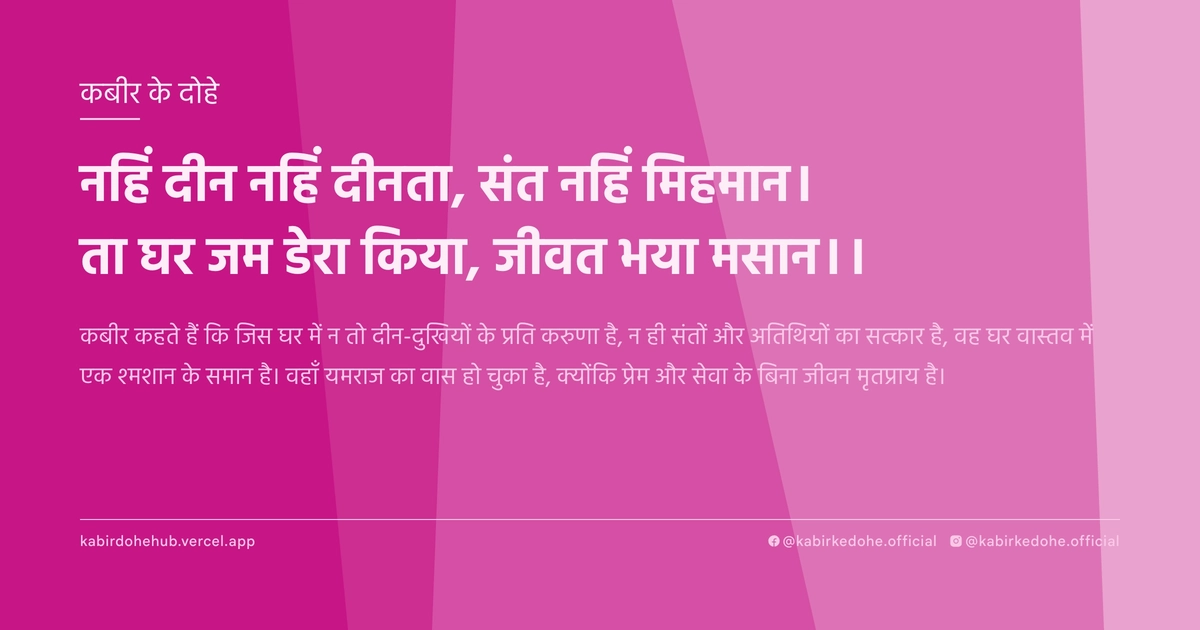
नहिं दीन नहिं दीनता, संत नहिं मिहमान।
ता घर जम डेरा किया, जीवत भया मसान।।
Nahin deen nahin deenta, sant nahin mihmaan. Ta ghar jam dera kiya, jeevat bhaya masaan.
इस पृष्ठ पर इस कबीर दोहे का अर्थ (meaning), हिंदी व्याख्या और अंग्रेज़ी अनुवाद, दार्शनिक विश्लेषण और व्यावहारिक जीवन सीख दी गई है। यह दोहा करुणा (Compassion) विषय से जुड़ा है — Kabir doha meaning and explanation in Hindi and English.
अर्थ (Meaning):
कबीर कहते हैं कि जिस घर में न तो दीन-दुखियों के प्रति करुणा है, न ही संतों और अतिथियों का सत्कार है, वह घर वास्तव में एक श्मशान के समान है। वहाँ यमराज का वास हो चुका है, क्योंकि प्रेम और सेवा के बिना जीवन मृतप्राय है।
Kabir asserts that a household devoid of compassion for the needy and lacking hospitality toward saints and guests is essentially a cremation ground. In such a place, the God of Death resides, for a life stripped of love and selfless service is a living death.
व्याख्या (Interpretation):
यह दोहा भौतिक घर की नहीं, बल्कि मानवीय हृदय की स्थिति का वर्णन करता है। 'दीनता' का अभाव हृदय के कठोर होने का संकेत है, जहाँ अहंकार ने करुणा का स्थान ले लिया है। जब कोई व्यक्ति संतों (ज्ञानियों) और अतिथियों (अनपेक्षित आगंतुकों) का तिरस्कार करता है, तो वह वास्तव में अपने भीतर के दैवीय अंश का अपमान करता है। निर्गुण भक्ति के अनुसार, ईश्वर किसी मंदिर में नहीं, बल्कि दीन-दुखियों की सेवा में बसता है। यहाँ 'जम' या यमराज केवल मृत्यु के देवता नहीं, बल्कि उस अज्ञान और अहंकार के प्रतीक हैं जो आत्मा को परमात्मा से अलग करते हैं। 'जीवत भया मसान' एक गहरा विरोधाभास है; शरीर जीवित है, लेकिन चेतना मृत है क्योंकि उसमें प्रेम की स्पंदन नहीं है। यह अद्वैत वेदांत के उस सत्य को दर्शाता है जहाँ स्वयं को दूसरों से अलग मानकर केवल अपने स्वार्थ में जीना आध्यात्मिक आत्महत्या है।
This couplet describes not a physical house, but the state of the human heart. The absence of 'deenta' (compassion) signifies a hardened heart where ego has supplanted empathy. When one rejects saints (bearers of wisdom) and guests (unexpected messengers), they are essentially insulting the divine spark within. According to Nirgun Bhakti, the Formless Divine resides not in temples, but in the service of the downtrodden. Here, 'Jam' or Yama is not merely the god of death, but a symbol of the ignorance and ego that sever the soul from the Absolute. 'Jivat bhaya masaan' (a living cremation ground) is a profound paradox; the body breathes, but the consciousness is dead because it lacks the vibration of love. This reflects the Advaita Vedanta truth that viewing oneself as separate from others and living solely for selfish gain is a form of spiritual suicide.
दार्शनिक विश्लेषण (Philosophical Analysis):
कबीर का यह विचार उनके युग के उस सामाजिक ढांचे पर प्रहार है जहाँ कर्मकांड और बाहरी दिखावे को आंतरिक शुद्धि से ऊपर रखा गया था। उन्होंने स्पष्ट किया कि तीर्थयात्रा या माला जपने का कोई मूल्य नहीं है यदि हृदय में करुणा नहीं है। यह दृष्टिकोण सूफीवाद के 'इन्सान-ए-कामिल' (पूर्ण मानव) की अवधारणा से मिलता-जुलता है, जहाँ मानवता की सेवा ही ईश्वर की वास्तविक इबादत है।
दार्शनिक स्तर पर, कबीर यहाँ 'माया' के सूक्ष्म जाल की चर्चा कर रहे हैं। माया केवल धन-संपत्ति नहीं है, बल्कि वह अहंकार है जो हमें यह विश्वास दिलाता है कि हम दूसरों से श्रेष्ठ हैं या दूसरों की आवश्यकताएं हमारे लिए गौण हैं। जब व्यक्ति केवल अपने 'अहं' की रक्षा करता है, तो वह अनजाने में अपने चारों ओर एक आध्यात्मिक श्मशान बना लेता है।
अद्वैत वेदांत के अनुसार, यदि ब्रह्म हर कण में व्याप्त है, तो एक दीन व्यक्ति की सेवा वास्तव में उसी ब्रह्म की पूजा है। कबीर इस सत्य को सरल शब्दों में प्रस्तुत करते हैं कि जो व्यक्ति दूसरे में स्वयं को नहीं देख पाता, वह आध्यात्मिक रूप से मृत है। यह 'अहं' का विलोपन ही मोक्ष का मार्ग है।
कबीर का विरोध केवल जातिवाद से नहीं, बल्कि उस मानसिक संकीर्णता से था जो मनुष्य को मनुष्य से अलग करती है। उनके लिए 'संत' वह नहीं है जिसने भगवा वस्त्र पहने हों, बल्कि वह है जिसकी आत्मा जागृत है और जो बिना किसी भेदभाव के प्रेम बांटता है।
अंततः, यह दोहा मनोवैज्ञानिक रूपांतरण की मांग करता है। यह चेतावनी देता है कि भौतिक समृद्धि के बीच भी एक व्यक्ति अत्यंत दरिद्र हो सकता है यदि उसका हृदय शून्य है। वास्तविक जीवन वह है जो दूसरों के जीवन में प्रकाश लाए, अन्यथा अस्तित्व केवल एक बोझिल प्रतीक्षा है।
Kabir's insight strikes at the social fabric of his era, where ritualism and outward displays of piety were prioritized over internal purification. He clarifies that pilgrimages or the chanting of beads hold no value if the heart is devoid of compassion. This perspective aligns with the Sufi concept of 'Insan-e-Kamil' (the Perfect Human), where service to humanity is the truest form of worship.
On a philosophical level, Kabir discusses the subtle web of 'Maya'. Maya is not merely material wealth, but the ego that convinces us we are superior to others or that the needs of others are secondary. When a person protects only their 'Aham' (ego), they unwittingly create a spiritual cremation ground around themselves.
According to Advaita Vedanta, if Brahman permeates every atom, then serving a downtrodden person is actually worshipping that very Brahman. Kabir presents this truth simply: one who cannot see themselves in another is spiritually dead. The annihilation of this ego is the only path to liberation.
Kabir's opposition was not just against casteism, but against the mental narrowness that separates human from human. For him, a 'Sant' is not one who wears saffron robes, but one whose soul is awake and who distributes love without discrimination.
Ultimately, this couplet demands a psychological transformation. It warns that even amidst material abundance, a person can be utterly impoverished if their heart is empty. True life is that which brings light to others; otherwise, existence is merely a burdensome wait for the end.
मूल संदेश (Core Message):
- अहंकार हृदय को श्मशान बना देता है।
- करुणा ही वास्तविक आध्यात्मिक जीवन की पहचान है।
- सेवा के बिना धर्म केवल एक खोखला प्रदर्शन है।
- दूसरों में ईश्वर को देखना ही सच्ची भक्ति है।
- प्रेम का अभाव ही सबसे बड़ी मृत्यु है।
- Ego transforms the heart into a cremation ground.
- Compassion is the true hallmark of spiritual life.
- Religion without service is merely a hollow performance.
- Seeing the Divine in others is the essence of true devotion.
- The absence of love is the greatest form of death.
व्यावहारिक उदाहरण (Practical Example):
वाराणसी के एक पुराने मोहल्ले में माधव नाम का एक कपड़ा व्यापारी रहता था। माधव के पास अपार धन था, लेकिन उसका हृदय पत्थर जैसा कठोर था। वह अपने घर के दरवाजे पर आने वाले किसी भी भिखारी को दुत्कार देता था और संतों को पाखंडी मानकर उनका अपमान करता था। उसके लिए सफलता का अर्थ था केवल तिजोरी भरना।
एक दिन शहर में एक अज्ञात फकीर आया। वह फकीर फटे कपड़ों में था लेकिन उसकी आँखों में एक अजीब सी शांति थी। उसने माधव के द्वार पर भिक्षा मांगी। माधव ने उसे न केवल दुत्कारा, बल्कि उस पर चिल्लाते हुए कहा, 'जा यहाँ से, मेरे पास तेरे जैसे आलसियों के लिए समय नहीं है।'
फकीर मुस्कुराया और शांत स्वर में बोला, 'सेठ जी, आपके घर की दीवारें तो बहुत ऊंची और मजबूत हैं, लेकिन अंदर झाँक कर देखिए, वहाँ केवल राख और सन्नाटा है। आप जीवित तो हैं, पर आपका घर एक श्मशान बन चुका है क्योंकि यहाँ प्रेम की कोई जगह नहीं है।'
माधव को पहले तो गुस्सा आया, लेकिन वह बात उसके मन में घर कर गई। उसने सोचा, 'क्या वास्तव में मैं मृत हूँ?' उस रात उसे नींद नहीं आई। उसने महसूस किया कि उसके पास सब कुछ होते हुए भी वह अकेला है। उसके बच्चे उससे डरते थे, उसकी पत्नी केवल औपचारिकता निभाती थी, और उसका कोई सच्चा मित्र नहीं था।
अगले दिन माधव ने अपने जीवन का सबसे कठिन निर्णय लिया। उसने अपनी दुकान के एक हिस्से को एक मुफ्त भोजन केंद्र में बदल दिया। शुरुआत में उसे बहुत डर लगा कि लोग उसका मजाक उड़ाएंगे या उसका धन कम हो जाएगा।
लेकिन जैसे ही उसने पहली बार एक भूखे बच्चे को प्रेम से खाना खिलाया, उसे अपने सीने में एक ऐसी हलचल महसूस हुई जो उसने करोड़ों रुपये कमाने पर भी नहीं की थी। उसे लगा जैसे उसके हृदय की जमी हुई बर्फ पिघल रही है।
धीरे-धीरे माधव का व्यवहार बदलने लगा। वह अब केवल दान नहीं देता था, बल्कि लोगों के दुख सुनता था। उसने उन संतों का सम्मान करना शुरू किया जिन्हें वह पहले तुच्छ समझता था।
उसने पाया कि जब उसने दूसरों के लिए अपने घर के दरवाजे खोले, तो उसके जीवन का सूनापन गायब हो गया। उसका घर अब एक श्मशान नहीं, बल्कि एक जीवंत केंद्र बन गया था जहाँ हंसी और करुणा का वास था।
माधव ने समझा कि 'जीवत भया मसान' होने का अर्थ केवल मृत्यु नहीं, बल्कि संवेदनहीनता है। उसने सीखा कि असली समृद्धि वह है जो दूसरों के आंसू पोंछने की क्षमता रखे।
अंत में, माधव ने उस फकीर को खोजा, लेकिन वह जा चुका था। माधव जान गया था कि फकीर वास्तव में उसकी अपनी सोई हुई अंतरात्मा था, जिसने उसे जगाया था।
In an old neighborhood of Varanasi lived a cloth merchant named Madhav. Madhav possessed immense wealth, but his heart was as hard as stone. He would drive away any beggar who came to his door and insulted saints, labeling them as hypocrites. For him, success meant only filling his coffers.
One day, an unknown fakir arrived in the city. The fakir wore tattered clothes, but his eyes held a strange peace. He asked for alms at Madhav's door. Madhav not only rejected him but shouted, 'Get out of here, I have no time for lazy people like you!'
The fakir smiled and said in a calm voice, 'Seth ji, the walls of your house are very high and strong, but look inside; there is only ash and silence. You are alive, but your home has become a cremation ground because there is no room for love here.'
Madhav was initially angry, but the words took root in his mind. He wondered, 'Am I truly dead?' That night, he could not sleep. He realized that despite having everything, he was utterly alone. His children feared him, his wife maintained only formalities, and he had no true friend.
The next day, Madhav made the hardest decision of his life. He converted a portion of his shop into a free community kitchen. Initially, he feared people would mock him or his wealth would diminish.
But the moment he fed a hungry child with genuine love, he felt a stir in his chest that he had never experienced while earning millions. It felt as if the frozen ice of his heart was finally melting.
Gradually, Madhav's behavior shifted. He no longer just gave charity; he listened to people's sorrows. He began to respect the saints he had previously deemed insignificant.
He discovered that when he opened the doors of his home to others, the void in his own life vanished. His home was no longer a cremation ground, but a vibrant center where laughter and compassion resided.
Madhav understood that being 'jivat bhaya masaan' does not mean physical death, but emotional numbness. He learned that true prosperity is the capacity to wipe away the tears of others.
In the end, Madhav searched for the fakir, but he was gone. Madhav realized that the fakir was actually his own dormant conscience, which had finally awakened him.
अभ्यास मार्गदर्शन (Practice Guidance):
- दैनिक करुणा अभ्यास: प्रतिदिन कम से कम एक ऐसे व्यक्ति की निस्वार्थ मदद करें जिससे आपको कोई लाभ न हो, और इस प्रक्रिया में अपने अहंकार के प्रतिरोध को महसूस करें।
- आत्म-पूछताछ जर्नल: हर रात लिखें कि आज आपने कितनी बार दूसरों के प्रति निर्णय लिया (Judgment) और कितनी बार करुणा (Compassion) दिखाई।
- अतिथि सत्कार ध्यान: जब कोई अनपेक्षित व्यक्ति आपके जीवन में आए, तो उसे एक 'ईश्वरीय संदेशवाहक' के रूप में देखें, न कि एक बाधा के रूप में।
- निदान चेकलिस्ट: क्या मैं केवल अपने करीबियों से प्यार करता हूँ? क्या मैं जरूरतमंदों को देखकर उपेक्षा करता हूँ? क्या मेरा घर भौतिक रूप से समृद्ध है पर भावनात्मक रूप से रिक्त है? यदि हाँ, तो आप 'जीवंत श्मशान' की स्थिति में हैं।
- Daily Compassion Practice: Perform one selfless act of kindness daily for someone from whom you gain nothing, and observe the resistance of your ego during the process.
- Self-Inquiry Journal: Every night, record how many times you judged others versus how many times you showed genuine compassion.
- Guest Meditation: When an unexpected person enters your life, view them as a 'divine messenger' rather than an inconvenience.
- Diagnostic Checklist: Do I love only those close to me? Do I ignore the needy? Is my home materially rich but emotionally void? If yes, you are in the state of a 'living cremation ground'.
चिंतन प्रश्न (Reflection Questions):
- मेरे जीवन में 'अतिथि' कौन हैं, और मैं उनका स्वागत किस भावना से करता हूँ?
- क्या मेरी सामाजिक प्रतिष्ठा मेरे भीतर की भावनात्मक शून्यता को छिपाने का एक मुखौटा है?
- मैं किन लोगों को 'दीन' मानता हूँ, और क्या वह धारणा मेरे अपने पूर्वाग्रहों से प्रेरित है?
- यदि आज मेरा भौतिक घर छीन लिया जाए, तो मेरे पास ऐसा क्या बचेगा जिसे दुनिया 'जीवंत' कह सके?
- मेरे भीतर का 'यमराज' (अहंकार) मुझे किन रिश्तों को नष्ट करने के लिए उकसाता है?
- Who are the 'guests' in my life, and with what emotion do I welcome them?
- Is my social reputation a mask hiding an internal emotional void?
- Whom do I categorize as 'needy,' and is that perception driven by my own biases?
- If my material home were taken away today, what would remain that the world could call 'alive'?
- Which parts of my ego (the internal Yama) urge me to destroy my relationships?