
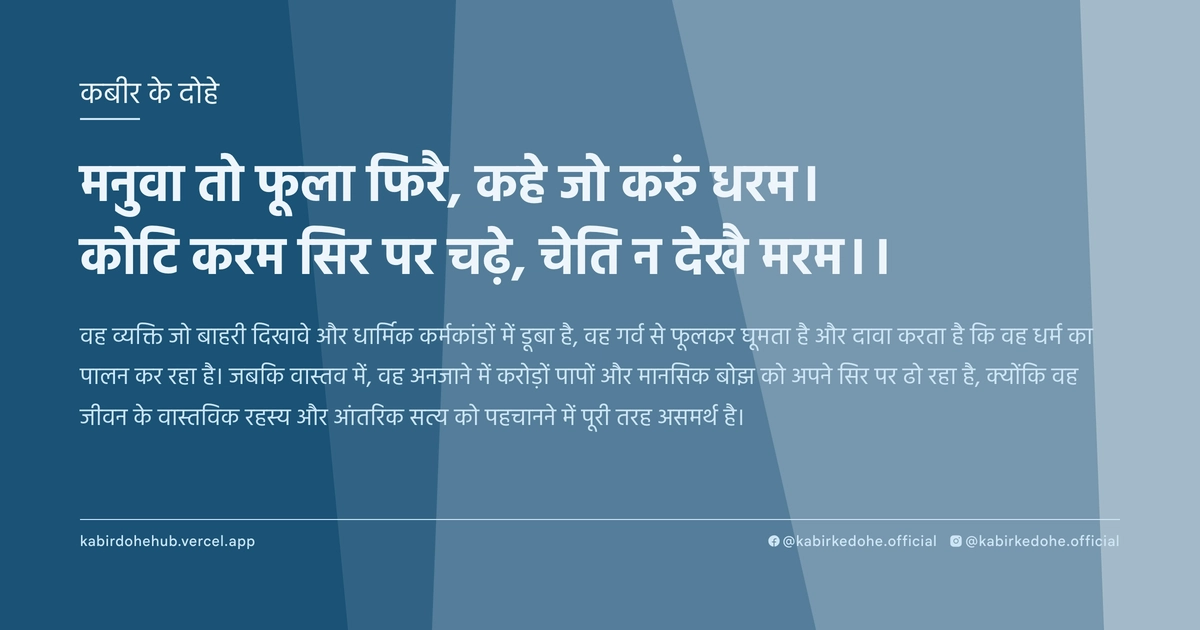
मनुवा तो फूला फिरै, कहे जो करुं धरम।
कोटि करम सिर पर चढ़े, चेति न देखै मरम।।
Manuva to phoola phirai, kahe jo karun dharam. Koti karam sir par chadhe, cheti na dekhai maram.
इस पृष्ठ पर इस कबीर दोहे का अर्थ (meaning), हिंदी व्याख्या और अंग्रेज़ी अनुवाद, दार्शनिक विश्लेषण और व्यावहारिक जीवन सीख दी गई है। यह दोहा कर्म (Karma) विषय से जुड़ा है — Kabir doha meaning and explanation in Hindi and English.
अर्थ (Meaning):
वह व्यक्ति जो बाहरी दिखावे और धार्मिक कर्मकांडों में डूबा है, वह गर्व से फूलकर घूमता है और दावा करता है कि वह धर्म का पालन कर रहा है। जबकि वास्तव में, वह अनजाने में करोड़ों पापों और मानसिक बोझ को अपने सिर पर ढो रहा है, क्योंकि वह जीवन के वास्तविक रहस्य और आंतरिक सत्य को पहचानने में पूरी तरह असमर्थ है।
The individual who is immersed in outward displays and ritualistic piety wanders with a bloated sense of pride, claiming to be practicing righteousness. In reality, they carry the weight of countless spiritual errors and karmic burdens upon their head, for they remain utterly blind to the essential secret and the inner truth of existence.
व्याख्या (Interpretation):
यहाँ 'फूला फिरना' अहंकार के उस विस्तार को दर्शाता है जो धार्मिक श्रेष्ठता के भ्रम से पैदा होता है। कबीर इस विरोधाभास को उजागर करते हैं कि जिसे व्यक्ति 'धर्म' समझ रहा है, वह वास्तव में केवल एक सामाजिक मुखौटा है। यह स्थिति 'माया' के प्रभाव को दर्शाती है, जहाँ बाहरी क्रियाएँ आंतरिक शून्यता को ढक लेती हैं। निर्गुण भक्ति के संदर्भ में, ईश्वर किसी मंदिर या कर्मकांड में नहीं, बल्कि स्वयं के भीतर है। जब तक साधक 'मरम' (रहस्य) को नहीं समझता, तब तक उसके सभी प्रयास केवल बोझ बन जाते हैं। यह आत्मा और ब्रह्म के बीच के उस पर्दे की ओर संकेत है जिसे केवल अहंकार के विसर्जन से हटाया जा सकता है।
The phrase 'phula phirae' (wandering bloated) symbolizes the expansion of the ego born from the illusion of religious superiority. Kabir highlights a profound paradox: what the individual perceives as 'dharma' is merely a social mask. This state exemplifies the grip of 'Maya', where external rituals obscure internal emptiness. In the context of Nirgun Bhakti, the Divine resides not in temples or rites, but within the self. Until the seeker grasps the 'maram' (the secret/essence), all efforts become mere karmic burdens. This points to the veil between the Atman and Brahman, which can only be lifted through the annihilation of the ego.
दार्शनिक विश्लेषण (Philosophical Analysis):
कबीर का यह दोहा उनके युग के उस सामाजिक परिवेश पर प्रहार है जहाँ धर्म केवल बाहरी प्रतीकों, जैसे कि तिलक, माला और तीर्थयात्रा तक सीमित हो गया था। वे इस बात की आलोचना करते हैं कि कैसे लोग धर्म को एक 'पहचान' के रूप में उपयोग करते हैं न कि 'मुक्ति' के मार्ग के रूप में। यह दृष्टिकोण अद्वैत वेदांत के उस सिद्धांत से मेल खाता है जहाँ अज्ञान (Avidya) के कारण मनुष्य स्वयं को ब्रह्म से अलग मानता है और बाहरी कर्मों में उलझ जाता है।
सूफी मत के 'फना' के सिद्धांत की तरह, कबीर यहाँ अहंकार के विनाश की बात कर रहे हैं। जब तक 'मैं' (अहंकार) मौजूद है, तब तक सत्य का अनुभव असंभव है। जो व्यक्ति यह दावा करता है कि वह धार्मिक है, वह वास्तव में अपने अहंकार को और अधिक पुष्ट कर रहा होता है, जो उसे सत्य से और दूर ले जाता है।
यहाँ 'कोटि करम' का अर्थ केवल पाप नहीं, बल्कि वे मानसिक संस्कार हैं जो व्यक्ति को सांसारिक मोह और द्वैत में बांधे रखते हैं। कबीर का तर्क है कि बिना आत्म-साक्षात्कार के किया गया कोई भी धार्मिक कार्य केवल एक बोझ है। वे कर्मकांडवाद (Ritualism) को एक मानसिक कारागार मानते हैं जो मनुष्य को उसकी अपनी अंतरात्मा से अलग करता है।
मनोवैज्ञानिक स्तर पर, यह 'कॉग्निटिव डिसोनेंस' की स्थिति है, जहाँ व्यक्ति अपनी बाहरी छवि और आंतरिक वास्तविकता के बीच के अंतर को देख नहीं पाता। वह अपनी धार्मिकता के गर्व में इतना अंधा है कि वह अपनी आध्यात्मिक दरिद्रता को पहचानने में विफल रहता है।
अंततः, कबीर हमें 'मरम' या रहस्य की ओर ले जाते हैं। यह रहस्य यह है कि ईश्वर कोई बाहरी सत्ता नहीं है जिसे प्रसन्न किया जाए, बल्कि एक आंतरिक चेतना है जिसे जागृत करना है। जब बाहरी आडंबर गिरते हैं, तभी वास्तविक धर्म का उदय होता है, जो प्रेम और करुणा पर आधारित है, न कि नियमों पर।
This couplet is a scathing critique of the social milieu of Kabir's era, where religion had been reduced to external symbols like tilaks, beads, and pilgrimages. He condemns the tendency to use religion as an 'identity' rather than a path to 'liberation'. This aligns with the Advaita Vedanta principle where ignorance (Avidya) causes the individual to perceive themselves as separate from Brahman, leading to an entanglement in external rites.
Mirroring the Sufi concept of 'Fana', Kabir speaks of the annihilation of the ego. As long as the 'I' persists, the experience of Truth remains impossible. The person claiming religious piety is actually reinforcing their ego, which further distances them from the Divine.
'Koti karam' (millions of deeds) refers not just to sins, but to the mental impressions (Samskaras) that bind the individual to worldly attachments and duality. Kabir argues that any religious act performed without self-realization is merely a burden. He views ritualism as a psychological prison that severs the connection between the human and their inner soul.
On a psychological level, this describes a state of cognitive dissonance, where the individual is unable to see the gap between their public persona and internal reality. They are so blinded by the pride of their perceived righteousness that they fail to recognize their own spiritual bankruptcy.
Ultimately, Kabir directs us toward the 'maram' or the secret. This secret is that God is not an external entity to be appeased, but an internal consciousness to be awakened. Only when the external facade collapses does true religion emerge—a religion based on love and compassion rather than rigid rules.
मूल संदेश (Core Message):
- बाहरी धार्मिकता अक्सर आंतरिक अंधता का मुखौटा होती है।
- अहंकार का विस्तार आध्यात्मिक पतन का संकेत है।
- सच्चा धर्म कर्मकांडों में नहीं, बल्कि करुणा में है।
- जब तक 'मैं' है, तब तक सत्य का अनुभव असंभव है।
- आंतरिक रहस्य को जानना ही वास्तविक मुक्ति है।
- External piety is often a mask for internal blindness.
- The expansion of ego is a sign of spiritual decline.
- True Dharma resides in compassion, not in rituals.
- As long as the 'I' exists, the experience of Truth is impossible.
- Realizing the internal secret is the only true liberation.
व्यावहारिक उदाहरण (Practical Example):
एक समय की बात है, वाराणसी के घाटों पर रहने वाला एक वृद्ध बुनकर था जिसका नाम माधव था। माधव अपने शहर में सबसे बड़ा धर्मात्मा माना जाता था। वह प्रतिदिन घंटों पूजा करता, कठिन व्रत रखता और हर किसी को उपदेश देता कि कैसे मोक्ष प्राप्त किया जाए। उसके चेहरे पर हमेशा एक गर्वमयी मुस्कान रहती थी, जैसे उसने ईश्वर को अपनी मुट्ठी में कर लिया हो।
माधव का अहंकार इतना बढ़ गया था कि वह उन लोगों को तुच्छ समझने लगा जो पूजा-पाठ नहीं करते थे। वह अक्सर कहता, 'देखो, मेरी भक्ति कितनी शुद्ध है, मैं धर्म के मार्ग पर चल रहा हूँ।' वह अपनी धार्मिकता के नशे में इतना चूर था कि उसने अपने घर के बाहर बैठने वाले एक अंधे भिखारी की पीड़ा को कभी नहीं देखा, जिसे वह रोज़ दुत्कार कर भगा देता था।
एक दिन, माधव एक महान संत के संपर्क में आया। संत ने माधव के अहंकार को भांप लिया। जब माधव ने अपनी लंबी तपस्याओं की सूची गिनानी शुरू की, तो संत ने शांति से पूछा, 'माधव, यदि तुम इतने बड़े धर्मात्मा हो, तो तुम्हारे मन में शांति क्यों नहीं है? तुम बाहर से तो फूल रहे हो, लेकिन भीतर से तुम बोझिल और अशांत क्यों हो?'
माधव हक्का-बक्का रह गया। उसने कभी सोचा ही नहीं था कि उसकी पूजा उसे शांति देने के बजाय उसके अहंकार को बढ़ा रही है। संत ने उसे उस अंधे भिखारी की ओर इशारा किया और कहा, 'उसकी खामोशी में जो सत्य है, वह तुम्हारी हज़ारों मालाओं में नहीं है। तुम धर्म का चोला पहनकर घूम रहे हो, लेकिन करुणा का एक कतरा भी तुम्हारे भीतर नहीं है।'
माधव को अचानक महसूस हुआ कि उसकी सारी पूजा केवल एक दिखावा थी। वह जिसे धर्म समझ रहा था, वह वास्तव में उसके अहंकार की खुराक थी। उसे समझ आया कि वह करोड़ों मानसिक बोझ (अहंकार, निर्णय, घृणा) अपने सिर पर ढो रहा था, जबकि वह खुद को मुक्त समझ रहा था।
उस रात माधव सो नहीं सका। उसे अपनी पूरी ज़िंदगी एक झूठ की तरह लगने लगी। उसने महसूस किया कि उसने ईश्वर को खोजने के चक्कर में इंसानियत को खो दिया था। उसने अपनी सारी धार्मिक श्रेष्ठता का मुखौटा उतार फेंका और पहली बार अपनी आंतरिक शून्यता का सामना किया।
अगली सुबह, माधव ने अपनी पूजा की सामग्री एक तरफ रखी और उस अंधे भिखारी के पास गया। उसने उसके पैर धोए और उसे अपने घर में सम्मानपूर्वक बिठाया। उसने महसूस किया कि जब उसने दूसरे के दुख को अपना माना, तब उसके सिर से वह भारी बोझ उतर गया जो उसे वर्षों से दबा रहा था।
माधव अब 'धर्मात्मा' कहलाने की इच्छा नहीं रखता था। वह बस एक साधारण बुनकर बन गया, जो अपने कपड़ों की बुनाई के साथ-साथ अपने भीतर प्रेम और विनम्रता की बुनाई करने लगा। उसने जान लिया कि असली 'मरम' बाहरी कर्मकांडों में नहीं, बल्कि हृदय की सरलता और निस्वार्थ सेवा में छिपा है।
Once, in the ghats of Varanasi, lived an elderly weaver named Madhav. Madhav was regarded as the most pious man in his town. He spent hours in prayer daily, observed rigorous fasts, and lectured everyone on how to attain salvation. A proud smile always graced his face, as if he had captured God in his palm.
Madhav's ego grew so immense that he began to look down upon those who did not engage in ritual worship. He would often say, 'Look at how pure my devotion is; I am walking the path of Dharma.' He was so intoxicated by his own righteousness that he never noticed the suffering of a blind beggar who sat outside his house, whom he dismissed with contempt every day.
One day, Madhav encountered a great saint. The saint immediately sensed Madhav's arrogance. When Madhav began listing his long austerities, the saint calmly asked, 'Madhav, if you are such a great devotee, why is there no peace in your mind? You appear bloated with pride on the outside, but why are you so burdened and restless within?'
Madhav was stunned. He had never considered that his prayers were fueling his ego rather than bringing him peace. The saint pointed toward the blind beggar and said, 'The truth in his silence is absent in your thousands of prayer beads. You wander wearing the cloak of religion, but not a single drop of compassion resides within you.'
Suddenly, Madhav realized that all his worship had been a facade. What he perceived as Dharma was merely fuel for his ego. He understood that he was carrying millions of mental burdens—pride, judgment, and hatred—upon his head, while falsely believing himself to be liberated.
That night, Madhav could not sleep. His entire life felt like a lie. He realized that in the pursuit of finding God, he had lost his humanity. He cast off the mask of religious superiority and, for the first time, faced his own internal emptiness.
The next morning, Madhav set aside his ritual items and approached the blind beggar. He washed the man's feet and welcomed him into his home with honor. He felt that the moment he embraced another's pain as his own, the heavy burden that had crushed him for years finally lifted.
Madhav no longer desired to be called 'pious'. He became a simple weaver again, weaving love and humility into his heart alongside the threads of his cloth. He discovered that the true 'maram' (secret) lay not in external rituals, but in the simplicity of the heart and selfless service.
अभ्यास मार्गदर्शन (Practice Guidance):
- प्रतिदिन 20 मिनट मौन रहकर यह निरीक्षण करें कि क्या आपके अच्छे कार्यों के पीछे 'श्रेष्ठ होने' की इच्छा छिपी है।
- एक 'अहंकार डायरी' लिखें: उन क्षणों को दर्ज करें जब आपने किसी को अपनी धार्मिक या नैतिक मान्यताओं के आधार पर छोटा महसूस कराया।
- व्यवहार परिवर्तन: सप्ताह में एक बार किसी ऐसे व्यक्ति की निस्वार्थ सेवा करें जिससे आप वैचारिक रूप से असहमत हैं।
- डायग्नोस्टिक चेकलिस्ट: क्या मैं अपनी उपलब्धियों का श्रेय ईश्वर/ब्रह्मांड को देता हूँ? क्या मैं दूसरों की गलतियों पर क्रोधित होता हूँ या करुणा महसूस करता हूँ? क्या मेरी शांति बाहरी प्रशंसा पर निर्भर है?
- Spend 20 minutes in silence daily, observing whether a desire to be 'superior' is hidden behind your good deeds.
- Maintain an 'Ego Journal': Record moments when you made someone feel inferior based on your religious or moral beliefs.
- Behavioral Shift: Once a week, perform selfless service for someone with whom you are ideologically opposed.
- Diagnostic Checklist: Do I attribute my achievements to the Divine/Universe? Do I feel anger or compassion toward others' mistakes? Is my peace dependent on external validation?
चिंतन प्रश्न (Reflection Questions):
- मेरी 'धार्मिक' पहचान मेरे वास्तविक व्यक्तित्व को कितना ढक रही है?
- क्या मैं वास्तव में सत्य की खोज कर रहा हूँ, या केवल अपनी श्रेष्ठता की पुष्टि चाहता हूँ?
- मेरे जीवन का वह कौन सा 'बोझ' है जिसे मैं धर्म के नाम पर ढो रहा हूँ?
- यदि मेरी सारी सामाजिक और धार्मिक पहचान छीन ली जाए, तो मेरे भीतर क्या बचेगा?
- क्या मेरी करुणा केवल उन लोगों के लिए है जो मेरे जैसे हैं?
- How much does my 'religious' identity obscure my true personality?
- Am I truly seeking Truth, or merely seeking validation of my superiority?
- What is the 'burden' in my life that I am carrying in the name of religion?
- If all my social and religious identities were stripped away, what would remain within me?
- Is my compassion reserved only for those who are like me?