
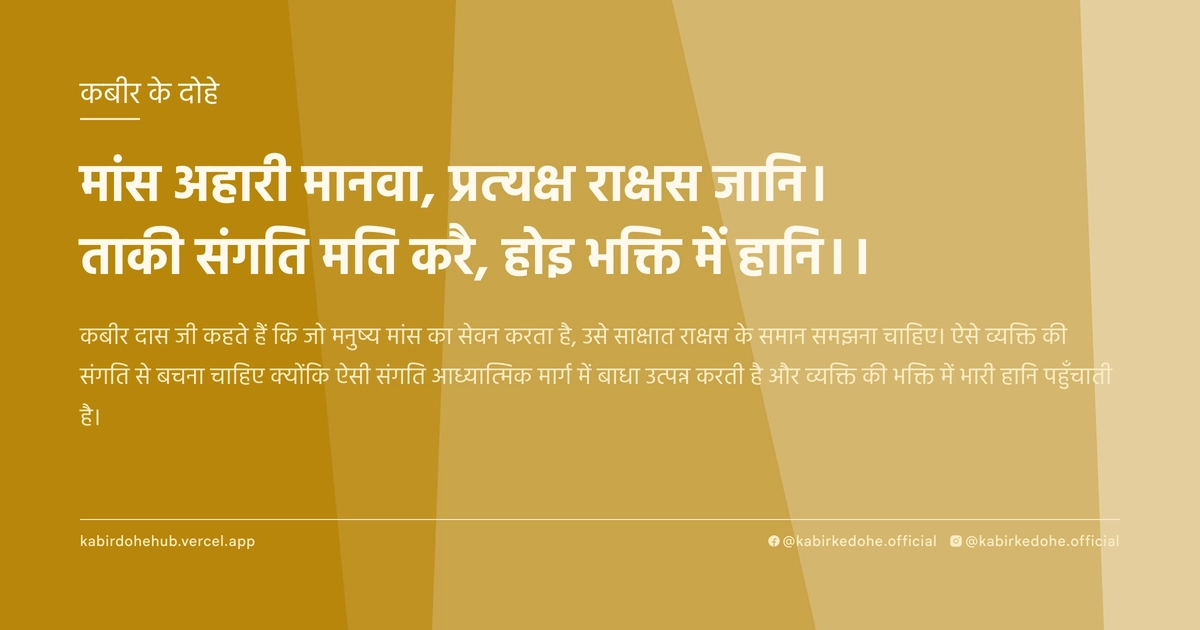
मांस अहारी मानवा, प्रत्यक्ष राक्षस जानि।
ताकी संगति मति करै, होइ भक्ति में हानि।।
Maans ahaari maanva, pratyaksh rakshas jaani. Taaki sangati mati karai, hoi bhakti mein haani.
इस पृष्ठ पर इस कबीर दोहे का अर्थ (meaning), हिंदी व्याख्या और अंग्रेज़ी अनुवाद, दार्शनिक विश्लेषण और व्यावहारिक जीवन सीख दी गई है। यह दोहा अहिंसा (Non-violence) विषय से जुड़ा है — Kabir doha meaning and explanation in Hindi and English.
अर्थ (Meaning):
कबीर दास जी कहते हैं कि जो मनुष्य मांस का सेवन करता है, उसे साक्षात राक्षस के समान समझना चाहिए। ऐसे व्यक्ति की संगति से बचना चाहिए क्योंकि ऐसी संगति आध्यात्मिक मार्ग में बाधा उत्पन्न करती है और व्यक्ति की भक्ति में भारी हानि पहुँचाती है।
Kabir asserts that a person who consumes flesh should be regarded as a living demon. He warns against the company of such individuals, stating that associating with those who lack compassion for other living beings inevitably obstructs one's spiritual progress and diminishes the purity of their devotion.
व्याख्या (Interpretation):
शाब्दिक अर्थ में यह दोहा मांसाहार के विरुद्ध है, परंतु गहरा अर्थ करुणा और अहिंसा से जुड़ा है। 'राक्षस' यहाँ केवल एक शारीरिक रूप नहीं, बल्कि उस मानसिक अवस्था का प्रतीक है जहाँ जीव अपनी तृप्ति के लिए दूसरे के जीवन का विनाश करता है। निर्गुण भक्ति में आत्मा की शुद्धता सर्वोपरि है। जब हम किसी जीव को कष्ट देते हैं, तो हम अपने भीतर के 'अहंकार' और 'क्रूरता' को पोषण देते हैं, जो माया के जाल को और मजबूत करता है। यह द्वैत की भावना है—यह मानना कि मैं श्रेष्ठ हूँ और दूसरा केवल मेरा भोजन है। जब तक यह भेद बना रहता है, तब तक आत्मा और ब्रह्म की एकता (अद्वैत) संभव नहीं है। भक्ति का अर्थ है प्रेम, और जहाँ हिंसा है, वहाँ प्रेम का वास नहीं हो सकता।
Literally, this couplet condemns meat-eating, but metaphorically, it addresses the fundamental lack of compassion. The term "demon" does not refer to a mythological creature but to a state of consciousness where one's appetite overrides the sanctity of another's life. In Nirgun Bhakti, the purity of the soul is paramount. By consuming another living being, one nourishes the ego and the illusion of separation (Maya), reinforcing the false belief that one life is superior to another. This is the pinnacle of duality. Advaita Vedanta teaches that the Atman in me is the same as the Atman in all beings; thus, violence toward another is violence toward oneself. Devotion (Bhakti) is the expansion of love, and where there is cruelty, the flow of divine grace is obstructed, leading to spiritual stagnation.
दार्शनिक विश्लेषण (Philosophical Analysis):
कबीर का यह दृष्टिकोण उनके युग के सामाजिक और धार्मिक संघर्षों से उपजा है, जहाँ कर्मकांडों और बाहरी दिखावे के बीच वास्तविक नैतिकता लुप्त हो रही थी। वे केवल आहार की बात नहीं कर रहे, बल्कि 'चेतना के स्तर' की बात कर रहे हैं। मांस का सेवन केवल शारीरिक क्रिया नहीं, बल्कि एक मनोवैज्ञानिक प्रवृत्ति है जो हिंसा को सामान्य बनाती है।
अद्वैत वेदांत के अनुसार, संपूर्ण ब्रह्मांड एक ही चेतना का विस्तार है। यदि हम इस सत्य को स्वीकार करें, तो किसी भी जीव को हानि पहुँचाना स्वयं को चोट पहुँचाने जैसा है। कबीर यहाँ सूफीवाद के 'इश्क-ए-हकीकी' (ईश्वरीय प्रेम) को जोड़ते हैं, जहाँ प्रेम केवल मनुष्य तक सीमित नहीं, बल्कि समस्त सृष्टि के लिए है।
वे ritualism (कर्मकांड) का विरोध करते हुए कहते हैं कि मंदिर-मस्जिद जाने से अधिक महत्वपूर्ण यह है कि आपका हृदय कितना करुणापूर्ण है। एक व्यक्ति जो घंटों जप करता है लेकिन मन में क्रूरता रखता है, वह आध्यात्मिक रूप से रिक्त है।
मनोवैज्ञानिक स्तर पर, हिंसा की आदत मन में 'तमस' (अंधकार और जड़ता) बढ़ाती है। यह तमस ध्यान और अंतर्मुखी यात्रा में बाधा डालता है। जब मन अशांत और हिंसक होता है, तो वह उस सूक्ष्म ध्वनि (अनहद नाद) को नहीं सुन सकता जिसे कबीर ने अनुभव किया था।
अंततः, यह दोहा अहंकार के विनाश की बात करता है। 'राक्षस' वह है जो अपनी इंद्रियों का दास है। जब मनुष्य अपनी इंद्रियों पर विजय प्राप्त कर लेता है और करुणा को अपनाता है, तभी वह वास्तविक भक्ति के मार्ग पर अग्रसर होता है।
Kabir's perspective emerges from the socio-religious turmoil of his era, where external rituals often masked a profound lack of internal ethics. He is not merely discussing diet but is addressing the 'level of consciousness.' The act of consuming flesh is viewed as a psychological inclination that normalizes violence, creating a barrier between the seeker and the Divine.
According to Advaita Vedanta, the entire universe is an extension of a single consciousness. If one truly realizes that the Atman is omnipresent, any act of violence becomes an act of self-harm. Kabir bridges this with the Sufi concept of 'Ishq-e-Haqiqi' (Divine Love), suggesting that true love must encompass all sentient beings, not just humans.
He vehemently rejects ritualism, arguing that the purity of the heart outweighs the performance of religious rites. A person who spends hours in prayer but harbors cruelty in their heart is spiritually void. The external form of worship is meaningless without the internal transformation of the soul.
Psychologically, the habit of violence increases 'Tamas' (darkness and inertia) within the mind. This state of inertia obstructs the ability to enter deep meditation or hear the 'Anahad Naad' (the unstruck sound of the universe). A violent mind is too turbulent to perceive the subtle vibrations of truth.
Ultimately, this teaching focuses on the annihilation of the ego. The 'demon' is the one enslaved by their senses and appetites. Only when a human transcends these primal urges and embraces universal compassion can they truly align with the formless God (Nirgun Brahman).
मूल संदेश (Core Message):
- हिंसा आत्मा की चेतना को अंधकारमय बनाती है।
- करुणा ही वास्तविक भक्ति का एकमात्र द्वार है।
- इंद्रिय सुख के लिए जीवन का विनाश आध्यात्मिक पतन है।
- अद्वैत का अर्थ है हर जीव में स्वयं को देखना।
- शुद्ध आहार से ही शुद्ध विचार और स्थिर मन संभव है।
- Violence clouds the consciousness and obscures the soul's light.
- Compassion is the only authentic gateway to true devotion.
- Destroying life for sensory pleasure is a path to spiritual decay.
- Non-duality means recognizing oneself in every living being.
- Pure sustenance leads to pure thoughts and a steady mind.
व्यावहारिक उदाहरण (Practical Example):
एक समय की बात है, वाराणसी के घाटों पर माधव नाम का एक कुशल मूर्तिकार रहता था। माधव अपनी कला में निपुण था, लेकिन उसका स्वभाव अत्यंत कठोर था। वह अक्सर अन्य कलाकारों का उपहास करता और अपने भोजन में मांस का अत्यधिक शौकीन था, जिसे वह अपनी शक्ति का स्रोत मानता था।
माधव का मानना था कि भक्ति केवल मंदिर में माथा टेकने और दान देने से आती है। वह अपने घर के बाहर एक बड़ा सा मंदिर बनवा चुका था, लेकिन उसके भीतर करुणा का अभाव था। वह अक्सर छोटे जानवरों को तड़पता देख मुस्कुराता था।
एक दिन उसकी मुलाकात एक वृद्ध बुनकर से हुई, जो कबीर के विचारों का अनुयायी था। बुनकर ने माधव की मूर्तियों की प्रशंसा की, लेकिन जब उसने माधव को मांस खाते देखा, तो उसने शांति से कहा, "तुम्हारी मूर्तियाँ पत्थर की हैं, पर तुम्हारा हृदय भी पत्थर हो गया है।"
माधव को यह बात चुभी। उसने पूछा, "भोजन से मेरी भक्ति का क्या संबंध?"
बुनकर ने उसे एक प्रयोग करने को कहा। उसने कहा, "एक सप्ताह तक किसी भी जीव को कष्ट न पहुँचाओ और केवल सात्विक आहार लो। फिर देखो कि तुम्हारी छेनी और हथौड़े की लय में क्या बदलाव आता है।"
शुरुआत में माधव को बहुत कठिनाई हुई। उसे लगा कि उसकी ऊर्जा कम हो रही है। लेकिन जैसे-जैसे दिन बीते, उसने महसूस किया कि उसका मन शांत हो रहा है। वह अब केवल पत्थर नहीं तराश रहा था, बल्कि उसे पत्थर के भीतर की आत्मा महसूस होने लगी थी।
एक शाम, उसने एक घायल कुत्ते को देखा। पहले वह उसे अनदेखा कर देता, लेकिन अब उसके हृदय में एक तीव्र टीस उठी। उसने उस कुत्ते की सेवा की और उसे ठीक किया। उस क्षण माधव को अनुभव हुआ कि जो शांति उसे उस घायल जीव की सेवा में मिली, वह उसे हज़ारों पूजा-पाठ में नहीं मिली थी।
उसे समझ आया कि मांस का स्वाद वास्तव में उसकी करुणा को मार रहा था। उसने महसूस किया कि जब तक वह दूसरों के दर्द को महसूस नहीं कर सकता, उसकी भक्ति केवल एक दिखावा है।
माधव ने मांस का त्याग कर दिया और अपना जीवन करुणा के प्रति समर्पित कर दिया। उसकी मूर्तियों में अब एक दिव्य चमक थी, क्योंकि वे अब केवल कौशल से नहीं, बल्कि प्रेम और अहिंसा से बनी थीं।
इस 'कबीर ट्विस्ट' ने माधव को एक अहंकारी कलाकार से एक संवेदनशील साधक में बदल दिया। उसने जाना कि वास्तविक भक्ति बाहरी आडंबरों में नहीं, बल्कि हर जीव के प्रति दया भाव रखने में है।
Once, in the bustling ghats of Varanasi, lived a skilled sculptor named Madhav. Madhav was a master of his craft, but his nature was harsh and arrogant. He often mocked fellow artists and had a deep craving for meat, believing it provided him with the strength and vigor needed for his demanding work.
Madhav believed that devotion was simply a matter of bowing before idols and donating to temples. He had even built a lavish shrine outside his home, yet his heart remained devoid of compassion. He often looked upon the suffering of small animals with indifference or even a cruel smile.
One day, he met an elderly weaver, a follower of Kabir's teachings. The weaver praised Madhav's sculptures but, upon seeing Madhav consuming meat, remarked calmly, "Your sculptures are made of stone, but it seems your heart has also become stone."
Stung by this remark, Madhav asked, "What does my food have to do with my devotion?"
The weaver proposed an experiment: "For one week, do not cause harm to any living being and consume only a pure, plant-based diet. Then, observe if the rhythm of your chisel and hammer changes."
Initially, Madhav struggled. He felt a dip in his physical energy and became irritable. However, as the days passed, a strange stillness began to settle over his mind. He found that he was no longer just carving stone; he began to feel the 'spirit' within the rock.
One evening, he encountered a wounded dog. In the past, he would have ignored it, but now, a sharp pang of empathy pierced his heart. He tended to the animal's wounds and nursed it back to health. In that moment, Madhav experienced a peace that thousands of ritualistic prayers had never provided.
He realized that the taste of meat had been masking his capacity for compassion. He understood that as long as he remained blind to the pain of others, his devotion was merely a performance for the world.
Madhav renounced meat and dedicated his life to the practice of non-violence. His sculptures began to possess a divine radiance, for they were no longer born of mere skill, but of love and empathy.
This 'Kabir Twist' transformed Madhav from an arrogant artisan into a sensitive seeker. He learned that true Bhakti does not reside in external rituals, but in the unwavering kindness shown to every living creature.
अभ्यास मार्गदर्शन (Practice Guidance):
- दैनिक करुणा अभ्यास: प्रतिदिन कम से कम एक ऐसे जीव की मदद करें जो आपसे कम शक्तिशाली हो (जैसे पक्षियों को दाना देना या किसी भूखे जानवर को भोजन देना)।
- सात्विक चिंतन: भोजन करते समय विचार करें कि इस भोजन के पीछे कितनी हिंसा या शांति जुड़ी है। अपने आहार को केवल स्वाद नहीं, बल्कि ऊर्जा के रूप में देखें।
- आत्म-निरीक्षण जर्नल: लिखें कि दिन भर में कितनी बार आपने क्रोध या क्रूरता का अनुभव किया और उस समय आपके मन में क्या विचार थे।
- निदान चेकलिस्ट: क्या मैं दूसरों की तकलीफ देखकर विचलित होता हूँ? क्या मेरा आहार मेरी मानसिक शांति बढ़ा रहा है या उत्तेजना? क्या मैं केवल अपनी सुख-सुविधाओं के लिए दूसरों का शोषण कर रहा हूँ?
- Daily Compassion Practice: Perform at least one act of kindness for a creature less powerful than you (e.g., feeding birds or providing water to stray animals).
- Sattvic Contemplation: While eating, reflect on the amount of violence or peace associated with your meal. View food not just as taste, but as a vibration of energy.
- Self-Inquiry Journaling: Document instances where you felt anger or cruelty during the day and analyze the underlying ego-trigger.
- Diagnostic Checklist: Do I feel a genuine pang of empathy when seeing others suffer? Does my diet promote mental stillness or agitation? Am I prioritizing my sensory pleasure over the life of another?
चिंतन प्रश्न (Reflection Questions):
- क्या मैं अपनी सुख-सुविधाओं के लिए अनजाने में दूसरों के शोषण को स्वीकार कर रहा हूँ?
- मेरे भीतर का 'राक्षस' कौन है—वह जो मांस खाता है, या वह जो दूसरों की भावनाओं को कुचलता है?
- यदि मैं स्वयं उस जीव के स्थान पर होता, तो क्या मैं अपनी वर्तमान पसंद को सही मानता?
- क्या मेरी धार्मिक पहचान मेरी वास्तविक करुणा पर हावी है?
- मैं अपनी इंद्रियों का स्वामी हूँ या उनका दास?
- Am I unconsciously accepting the exploitation of others for the sake of my own comfort?
- Who is the 'demon' within me—the one who consumes flesh, or the one who crushes the emotions of others?
- If I were in the position of the creature being consumed, would I still justify my current choices?
- Has my religious identity become a mask that hides a lack of genuine compassion?
- Am I the master of my senses, or merely a slave to my appetites?