
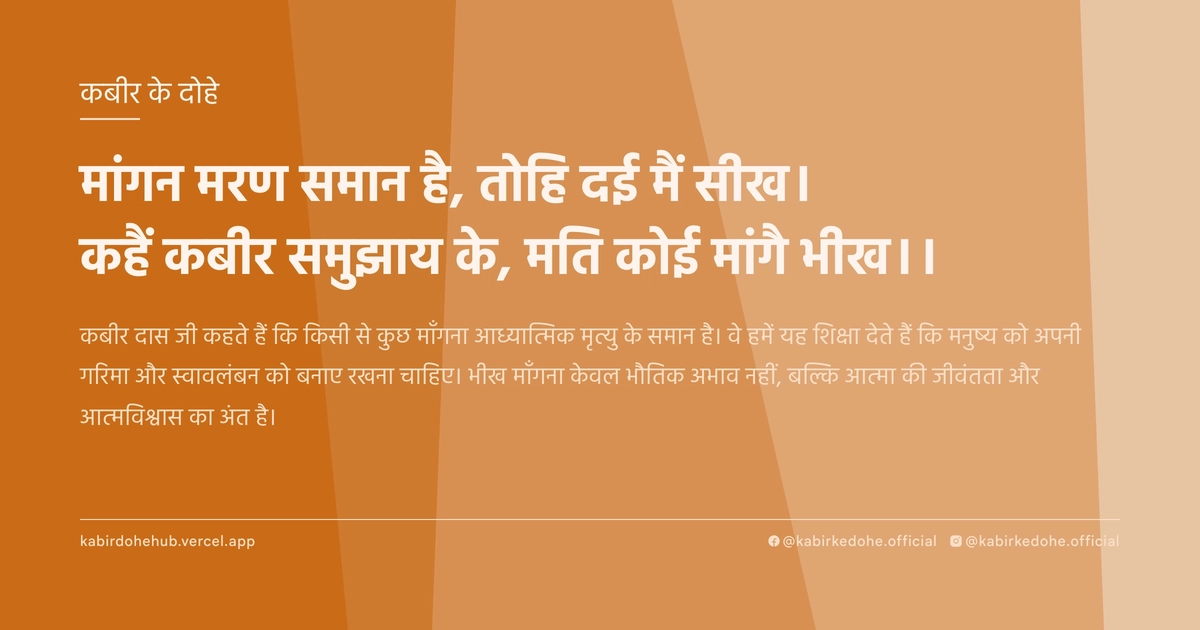
मांगन मरण समान है, तोहि दई मैं सीख।
कहैं कबीर समुझाय के, मति कोई मांगै भीख।।
Maangan maran samaan hai, tohi dai main seekh. Kahein kabir samujhay ke, mati koi maangai bheekh.
इस पृष्ठ पर इस कबीर दोहे का अर्थ (meaning), हिंदी व्याख्या और अंग्रेज़ी अनुवाद, दार्शनिक विश्लेषण और व्यावहारिक जीवन सीख दी गई है। यह दोहा विनम्रता (Humility) विषय से जुड़ा है — Kabir doha meaning and explanation in Hindi and English.
अर्थ (Meaning):
कबीर दास जी कहते हैं कि किसी से कुछ माँगना आध्यात्मिक मृत्यु के समान है। वे हमें यह शिक्षा देते हैं कि मनुष्य को अपनी गरिमा और स्वावलंबन को बनाए रखना चाहिए। भीख माँगना केवल भौतिक अभाव नहीं, बल्कि आत्मा की जीवंतता और आत्मविश्वास का अंत है।
Kabir declares that the act of begging is equivalent to spiritual death. He imparts a vital lesson: one must maintain their inherent dignity and self-reliance. To beg is not merely a physical lack of resources, but the extinction of the soul's vitality and self-confidence.
व्याख्या (Interpretation):
शाब्दिक अर्थ में, कबीर भौतिक भिक्षा के विरुद्ध चेतावनी दे रहे हैं। किंतु गहरा आध्यात्मिक अर्थ यह है कि जब हम किसी बाहरी स्रोत से शांति, प्रेम या मोक्ष की याचना करते हैं, तो हम अपनी आंतरिक पूर्णता को नकार देते हैं। यह 'मांगना' अहंकार की एक सूक्ष्म अभिव्यक्ति है जहाँ हम स्वयं को अधूरा मानते हैं। निर्गुण भक्ति के अनुसार, ईश्वर हमारे भीतर ही व्याप्त है, अतः बाहर माँगना माया के भ्रम में पड़ना है। यह द्वैतवाद है—यह मानना कि देने वाला अलग है और लेने वाला अलग। जब यह भेद मिटता है, तब आत्मा को अहसास होता है कि वह स्वयं ही पूर्ण ब्रह्म है। इस प्रकार, याचना का त्याग ही वास्तविक आत्म-साक्षात्कार की पहली सीढ़ी है।
Literally, Kabir warns against physical begging. However, the deeper spiritual implication is that when we plead for peace, love, or salvation from external sources, we deny our own internal wholeness. This 'begging' is a subtle expression of the ego, which perceives itself as incomplete. In Nirgun Bhakti, the Divine is immanent within; thus, seeking externally is to succumb to the illusion of Maya. It is a manifestation of duality—the belief that the giver and receiver are separate entities. When this distinction dissolves, the Atman realizes its identity as the complete Brahman. Therefore, the cessation of longing and pleading is the first step toward true self-realization.
दार्शनिक विश्लेषण (Philosophical Analysis):
कबीर का यह दोहा उस सामाजिक और धार्मिक परिवेश की प्रतिक्रिया है जहाँ धर्म के नाम पर याचना और परनिर्भरता को महिमामंडित किया जाता था। वे उस समय की रूढ़िवादी परंपराओं पर प्रहार करते हैं जहाँ भिक्षा को केवल एक धार्मिक अनुष्ठान माना जाता था, जबकि वास्तव में यह मनुष्य की इच्छाशक्ति को क्षीण करता था। कबीर का दर्शन यहाँ 'स्वावलंबन' को 'साधना' से जोड़ता है।
अद्वैत वेदांत के परिप्रेक्ष्य में, यदि ब्रह्म ही सर्वव्यापी है, तो अभाव की अवधारणा ही मिथ्या है। माँगना इस बात की स्वीकृति है कि मैं 'अपूर्ण' हूँ। कबीर तर्क देते हैं कि यह अपूर्णता का भाव ही बंधन का कारण है। जब साधक यह समझ जाता है कि वह स्वयं पूर्ण है, तो वह याचना के मानसिक जाल से मुक्त हो जाता है।
सूफी मत के 'फना' (अहंकार का विनाश) के सिद्धांत से इसे जोड़ें तो, माँगने वाला व्यक्ति अपनी 'मैं' (ego) को जीवित रखता है क्योंकि वह अपनी इच्छाओं की पूर्ति चाहता है। जब इच्छाएँ समाप्त होती हैं, तब केवल परमात्मा बचता है। कबीर यहाँ भौतिक और मानसिक दोनों प्रकार की याचनाओं को मृत्यु समान बताते हैं क्योंकि दोनों ही आत्मा की स्वतंत्रता को बाधित करती हैं।
ऐतिहासिक रूप से, कबीर ने जाति और वर्ग के भेदों को मिटाने का प्रयास किया। भीख माँगने की संस्कृति अक्सर सामाजिक पदानुक्रम को मजबूत करती है—एक 'दाता' और एक 'याचक'। इस शक्ति संतुलन को तोड़कर कबीर मनुष्य को उसकी आंतरिक गरिमा की याद दिलाते हैं। वे चाहते हैं कि मनुष्य अपनी जीविका और अपनी शांति दोनों के लिए स्वयं के प्रयासों और आंतरिक चेतना पर निर्भर रहे।
अंततः, यह दोहा मनोवैज्ञानिक रूपांतरण की बात करता है। यह हमें 'अभाव की मानसिकता' (Scarcity Mindset) से निकालकर 'प्रचुरता की चेतना' (Abundance Consciousness) की ओर ले जाता है। यह सिखाता है कि वास्तविक स्वतंत्रता बाहरी वस्तुओं के संचय में नहीं, बल्कि बाहरी स्रोतों पर निर्भरता के पूर्ण त्याग में निहित है।
This couplet is a reaction to the social and religious milieu of Kabir's era, where dependency and begging were often glorified under the guise of piety. He attacks the orthodox traditions that viewed alms-seeking merely as a ritual, whereas in reality, it eroded human willpower. Kabir's philosophy here bridges 'self-reliance' with 'spiritual practice'.
From the perspective of Advaita Vedanta, if Brahman is omnipresent, the very concept of 'lack' is an illusion. To beg is to acknowledge a state of incompleteness. Kabir argues that this perceived incompleteness is the root cause of bondage. Once the seeker realizes their inherent wholeness, they are liberated from the mental trap of pleading.
Connecting this to the Sufi concept of 'Fana' (annihilation of the ego), the beggar sustains the 'I' because they seek the fulfillment of personal desires. When desires vanish, only the Divine remains. Kabir equates both physical and mental begging to death because both obstruct the soul's absolute freedom.
Historically, Kabir sought to dismantle caste and class hierarchies. The culture of begging often reinforces social stratification—creating a 'giver' and a 'receiver'. By breaking this power dynamic, Kabir reminds the individual of their intrinsic dignity. He advocates for reliance on one's own effort and inner consciousness for both sustenance and peace.
Ultimately, this verse speaks of a psychological transformation. It shifts the practitioner from a 'Scarcity Mindset' to an 'Abundance Consciousness'. It teaches that true liberation lies not in the accumulation of external goods, but in the total renunciation of dependency on external sources.
मूल संदेश (Core Message):
- बाहरी याचना आत्मा की आंतरिक शक्ति का क्षरण करती है।
- अभाव का भाव एक मानसिक भ्रम है, पूर्णता भीतर है।
- स्वावलंबन ही वास्तविक आध्यात्मिक स्वतंत्रता का एकमात्र मार्ग है।
- जब आप माँगना छोड़ते हैं, तब आप स्वयं को पाना शुरू करते हैं।
- आत्म-सम्मान भौतिक सुखों से कहीं अधिक मूल्यवान और अनिवार्य है।
- ईश्वर से भी कुछ माँगने के बजाय, उसके साथ एक होने का प्रयास करें।
- External pleading erodes the inherent power of the soul.
- The feeling of lack is a mental illusion; wholeness resides within.
- Self-reliance is the only path to genuine spiritual liberation.
- When you stop asking, you begin to find yourself.
- Self-respect is far more valuable and essential than material comforts.
- Instead of asking something from the Divine, strive to become one with It.
व्यावहारिक उदाहरण (Practical Example):
एक समय की बात है, वाराणसी के घाटों पर माधव नाम का एक वृद्ध बुनकर रहता था। माधव बहुत कुशल था, लेकिन उसकी गरीबी और समाज की उपेक्षा ने उसे मानसिक रूप से तोड़ दिया था। वह अक्सर मंदिरों के बाहर खड़ा होकर लोगों से कुछ सिक्कों की याचना करता था, यह सोचकर कि उसकी किस्मत ही खराब है।
एक दिन उसकी मुलाकात एक घुमक्कड़ संत से हुई, जिन्होंने माधव को कबीर का यह दोहा सुनाया। संत ने कहा, 'माधव, जब तू हाथ फैलाता है, तो तू केवल पैसे नहीं माँगता, बल्कि तू अपनी आत्मा की शक्ति को भी दूसरों के चरणों में गिरवी रख देता है।'
माधव को यह बात चुभी, लेकिन उसने गहराई से सोचा। उसने महसूस किया कि हर बार जब वह माँगता था, उसके भीतर का स्वाभिमान मर जाता था और वह खुद को एक 'बेचारे' के रूप में देखने लगता था।
अगले दिन, माधव ने याचना करना छोड़ दिया। उसने अपने पुराने करघे को साफ किया और एक ऐसी नई शैली की बुनाई शुरू की जिसमें उसने अपने जीवन के दुखों और संघर्षों को धागों में पिरोया।
शुरुआत में उसे बहुत कठिनाई हुई, कई दिन वह भूखा रहा, लेकिन उसने किसी के आगे हाथ नहीं फैलाया। उसने अपनी मेहनत और कला पर भरोसा किया।
धीरे-धीरे, उसके द्वारा बनाए गए वस्त्रों की विशिष्टता लोगों की नजर में आई। लोग अब उसे भीख देने नहीं, बल्कि उसके हुनर की कीमत चुकाने आने लगे।
माधव ने पाया कि जब उसने 'माँगना' बंद किया, तो उसके भीतर एक नई ऊर्जा का संचार हुआ। उसकी आँखों की चमक लौट आई और उसका व्यक्तित्व बदल गया।
उसने महसूस किया कि उसकी गरीबी उसकी परिस्थिति में नहीं, बल्कि उसकी 'याचक मानसिकता' में थी।
अब माधव केवल एक बुनकर नहीं था, बल्कि वह अपने गाँव के अन्य युवाओं को स्वावलंबन का पाठ पढ़ाने लगा।
उसका जीवन इस सत्य का प्रमाण बन गया कि आत्म-सम्मान की भूख, भौतिक भूख से कहीं अधिक महत्वपूर्ण है और यही वास्तविक जीवन है।
Once, on the ghats of Varanasi, lived an elderly weaver named Madhav. Madhav was highly skilled, but poverty and social neglect had broken him mentally. He often stood outside temples, pleading for a few coins, believing his fate was simply cursed.
One day, he met a wandering monk who recited this specific Doha of Kabir. The monk told him, 'Madhav, when you stretch out your hand, you are not just asking for money; you are mortgaging the power of your soul at the feet of others.'
These words stung Madhav, but he reflected deeply. He realized that every time he begged, a piece of his self-respect died, and he began to perceive himself solely as a 'victim'.
The next day, Madhav stopped begging. He cleaned his old loom and began a new style of weaving, intertwining the sorrows and struggles of his life into the threads.
Initially, it was grueling; he went hungry for many days, but he refused to extend his hand to anyone. He placed his absolute trust in his labor and his art.
Gradually, the uniqueness of his fabrics caught the eye of the public. People stopped coming to give him charity and started coming to pay a fair price for his mastery.
Madhav discovered that once he ceased 'begging', a new energy surged within him. The spark returned to his eyes, and his entire persona transformed.
He realized that his poverty did not reside in his circumstances, but in his 'beggar's mindset'.
Madhav was no longer just a weaver; he began teaching other village youths the lesson of self-reliance.
His life became a testament to the truth that the hunger for self-respect is far more vital than physical hunger, and this is the essence of true living.
अभ्यास मार्गदर्शन (Practice Guidance):
- दैनिक चिंतन: प्रतिदिन 10 मिनट मौन बैठें और विचार करें कि आप भावनात्मक रूप से किन चीजों के लिए दूसरों पर निर्भर हैं (जैसे प्रशंसा, स्वीकृति या सुरक्षा)।
- आत्म-पूछताछ जर्नल: एक डायरी लिखें जिसमें उन क्षणों को दर्ज करें जब आपने 'अभाव' महसूस किया और उसे 'आंतरिक प्रचुरता' में बदलने का प्रयास किया।
- व्यवहारिक परिवर्तन: अगले 30 दिनों तक किसी भी छोटी या बड़ी चीज के लिए दूसरों से उम्मीद या याचना करना बंद करें; जो भी आवश्यक हो, उसे स्वयं के प्रयासों से प्राप्त करें।
- निदान चेकलिस्ट: क्या मैं दूसरों की तारीफ के बिना अधूरा महसूस करता हूँ? क्या मैं अपनी समस्याओं के लिए बाहरी परिस्थितियों को दोष देता हूँ? यदि हाँ, तो आप अभी भी 'याचक' अवस्था में हैं।
- Daily Contemplation: Sit in silence for 10 minutes daily and identify where you are emotionally dependent on others (e.g., for praise, validation, or security).
- Self-Inquiry Journal: Keep a diary recording moments where you felt a sense of 'lack' and consciously attempt to shift that feeling toward 'internal abundance'.
- Behavioral Shift: For the next 30 days, cease all expectations or pleas for help, no matter how small; strive to resolve every need through your own effort and resourcefulness.
- Diagnostic Checklist: Do I feel incomplete without external validation? Do I blame external circumstances for my failures? If yes, you are still operating in the 'beggar's state'.
चिंतन प्रश्न (Reflection Questions):
- मैं अपनी डिजिटल पहचान (सोशल मीडिया) पर दूसरों से किस तरह की 'मानसिक भिक्षा' (लाइक, कमेंट, प्रशंसा) माँग रहा हूँ?
- क्या मेरी विनम्रता वास्तव में समर्पण है, या यह एक छिपा हुआ तरीका है दूसरों से कुछ प्राप्त करने का?
- मेरे जीवन का वह कौन सा क्षेत्र है जहाँ मैं खुद को 'बेचारा' मानकर अपनी जिम्मेदारी से बच रहा हूँ?
- यदि दुनिया से सारी बाहरी सहायता हटा ली जाए, तो मेरे भीतर क्या बचेगा?
- क्या मैं वास्तव में स्वतंत्र हूँ, या मैं केवल अपनी जरूरतों के लिए अलग-अलग 'दाताओं' की तलाश करता रहता हूँ?
- मेरे भीतर का वह कौन सा डर है जो मुझे पूर्णतः स्वावलंबी होने से रोकता है?
- What form of 'mental alms' (likes, comments, validation) am I seeking through my digital identity on social media?
- Is my humility true surrender, or is it a hidden strategy to elicit something from others?
- In which area of my life do I play the 'victim' to avoid taking full responsibility for my existence?
- If all external support were stripped away from my life, what would remain within me?
- Am I truly free, or do I simply rotate between different 'providers' to satisfy my needs?
- What is the core fear within me that prevents me from becoming absolutely self-reliant?