
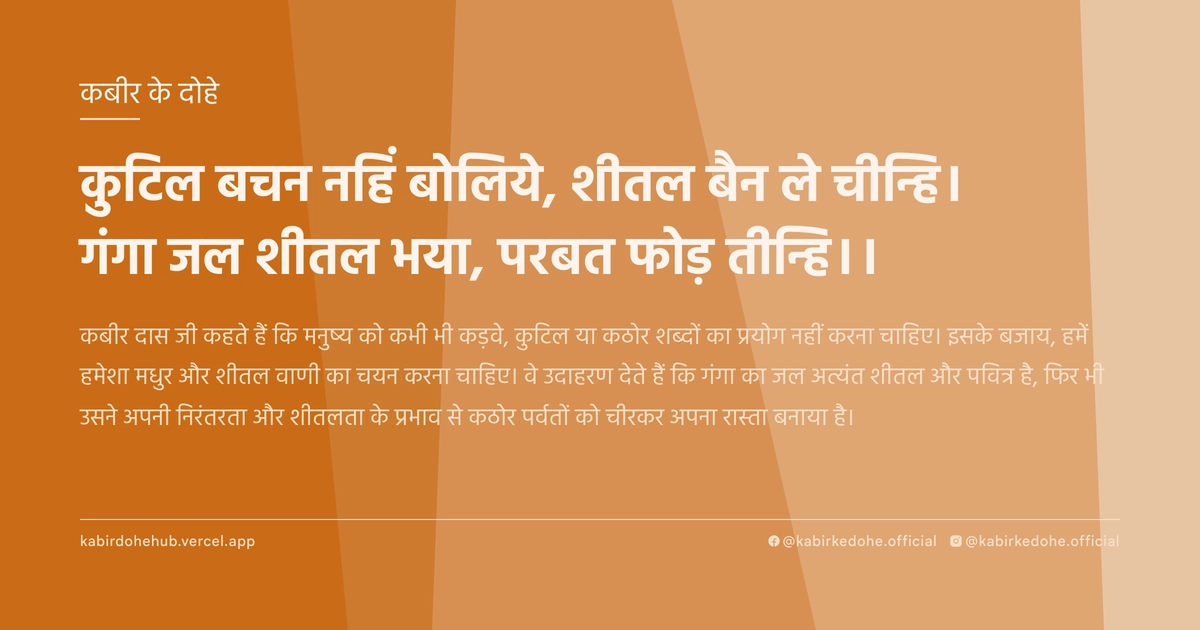
कुटिल बचन नहिं बोलिये, शीतल बैन ले चीन्हि।
गंगा जल शीतल भया, परबत फोड़ तीन्हि।।
Kutil bachan nahin boliye, sheetal bain le cheenhi. Ganga jal sheetal bhaya, parbat phod teenhi.
इस पृष्ठ पर इस कबीर दोहे का अर्थ (meaning), हिंदी व्याख्या और अंग्रेज़ी अनुवाद, दार्शनिक विश्लेषण और व्यावहारिक जीवन सीख दी गई है। यह दोहा विनम्रता (Humility) विषय से जुड़ा है — Kabir doha meaning and explanation in Hindi and English.
अर्थ (Meaning):
कबीर दास जी कहते हैं कि मनुष्य को कभी भी कड़वे, कुटिल या कठोर शब्दों का प्रयोग नहीं करना चाहिए। इसके बजाय, हमें हमेशा मधुर और शीतल वाणी का चयन करना चाहिए। वे उदाहरण देते हैं कि गंगा का जल अत्यंत शीतल और पवित्र है, फिर भी उसने अपनी निरंतरता और शीतलता के प्रभाव से कठोर पर्वतों को चीरकर अपना रास्ता बनाया है।
Kabir urges humanity to abstain from harsh, crooked, or malicious speech. Instead, one should consciously adopt a gentle and cooling tone. He illustrates this by referencing the Ganges: though its waters are soft and cool, the persistent flow of this gentleness eventually carved through the hardest of mountains to find its path.
व्याख्या (Interpretation):
इस दोहे का शाब्दिक अर्थ वाणी की मधुरता पर जोर देना है, लेकिन इसका आध्यात्मिक अर्थ बहुत गहरा है। 'कुटिल बचन' केवल शब्दों का नहीं, बल्कि अहंकार और द्वेष का प्रतीक है जो आत्मा को संकुचित करता है। 'शीतल बैन' उस प्रेम और करुणा का प्रतिनिधित्व करता है जो निरगुण भक्ति का सार है। यहाँ गंगा का उदाहरण एक महान विरोधाभास (Paradox) को दर्शाता है: कोमलता कमजोरी नहीं, बल्कि सर्वोच्च शक्ति है। जब साधक अपने भीतर के क्रोध को शांत कर 'अद्वैत' की स्थिति में पहुँचता है, तो वह बिना किसी संघर्ष के सबसे कठिन बाधाओं को पार कर लेता है। यह माया के उस भ्रम को तोड़ता है जहाँ हम मानते हैं कि कठोरता से विजय प्राप्त की जा सकती है। वास्तव में, आत्मा की शांति ही वह बल है जो पत्थर जैसे कठोर हृदय को भी पिघला सकती है।
Literally, the verse emphasizes sweetness of speech, but spiritually, it delves into the alchemy of the soul. 'Kutil bachan' (crooked words) symbolize the ego and malice that constrict the spirit, while 'sheetal bain' (cool words) represent the compassion central to Nirgun Bhakti. The metaphor of the Ganges presents a profound paradox: gentleness is not weakness, but the ultimate strength. When a seeker transcends anger and realizes the non-duality (Advaita) of existence, they overcome the most rigid obstacles without conflict. This dismantles the illusion (Maya) that dominance requires aggression. The core message is that the stillness and purity of the Atman possess a subversive power capable of eroding the hardest egoic structures, much like water carving through stone.
दार्शनिक विश्लेषण (Philosophical Analysis):
कबीर का यह दोहा उस सामाजिक और धार्मिक परिवेश में लिखा गया था जहाँ कट्टरता और कर्मकांडीय श्रेष्ठता चरम पर थी। कबीर ने देखा कि लोग बाहरी रीति-रिवाजों में उलझे थे, जबकि उनके भीतर घृणा और अहंकार भरा था। वे ritualism का विरोध करते हुए यह समझाते हैं कि वास्तविक धर्म मंदिर या मस्जिद में नहीं, बल्कि मनुष्य के व्यवहार और उसकी वाणी में निहित है।
दार्शनिक रूप से, यह विचार अद्वैत वेदांत के करीब है, जहाँ यह माना जाता है कि हम सब एक ही ब्रह्म के अंश हैं। यदि हम दूसरों के प्रति कठोर हैं, तो हम वास्तव में स्वयं के विरुद्ध हिंसा कर रहे हैं। सूफी मत के 'इश्क-ए-हकीकी' (ईश्वरीय प्रेम) की तरह, कबीर यहाँ प्रेम को ही एकमात्र मार्ग मानते हैं।
मनोवैज्ञानिक स्तर पर, कुटिल वाणी क्रोध और असुरक्षा का परिणाम होती है। जब व्यक्ति अपनी पहचान को 'अहं' (Ego) से जोड़ लेता है, तो वह रक्षात्मक और आक्रामक हो जाता है। कबीर 'अहं' के विसर्जन की बात करते हैं। जब 'मैं' मिट जाता है, तब केवल 'शीतलता' बचती है।
अक्सर लोग इस दोहे को केवल 'विनम्रता' के सामाजिक शिष्टाचार के रूप में देखते हैं, जो एक बड़ी भूल है। यह शिष्टाचार नहीं, बल्कि एक आध्यात्मिक साधना है। वाणी का रूपांतरण वास्तव में चेतना का रूपांतरण है।
अंततः, कबीर यह स्थापित करते हैं कि सत्य (Truth) को थोपा नहीं जा सकता; उसे प्रेम और धैर्य के माध्यम से प्रवाहित किया जाना चाहिए। जैसे गंगा ने पर्वतों को नष्ट नहीं किया बल्कि उन्हें पार किया, वैसे ही एक जागृत आत्मा द्वेष को प्रेम में बदल देती है।
This Doha was composed during an era of intense religious orthodoxy and ritualistic rigidity. Kabir observed that while people were obsessed with external rites, their inner landscapes were marred by hatred and arrogance. He rejects ritualism, asserting that true spirituality resides not in temples or mosques, but in the quality of one's interactions and speech.
Philosophically, this aligns with Advaita Vedanta, which posits that all beings are manifestations of a single Brahman. To be harsh toward another is, in essence, an act of violence against oneself. Similarly, mirroring the Sufi concept of 'Ishq-e-Haqiqi' (Divine Love), Kabir presents love as the only viable path to the Absolute.
Psychologically, malicious speech is a byproduct of fear and a fragile ego. When an individual identifies solely with the 'I' (Ahamkara), they become defensive and aggressive. Kabir advocates for the annihilation of this ego. Once the 'I' dissolves, only the 'coolness' of universal consciousness remains.
Common literalist interpretations mistake this for a mere lesson in social etiquette or politeness. However, this is not about manners; it is a rigorous spiritual discipline. The transformation of speech is a direct reflection of the transformation of consciousness.
Ultimately, Kabir establishes that Truth cannot be imposed through force; it must flow through love and patience. Just as the Ganges did not destroy the mountains but navigated through them, an awakened soul transforms enmity into kinship through the sheer power of presence.
मूल संदेश (Core Message):
- कठोरता अहंकार का मुखौटा है, कोमलता आत्मा का स्वभाव है।
- शब्द केवल ध्वनि नहीं, बल्कि ऊर्जा के वाहक होते हैं।
- अहंकार को मिटाकर ही वास्तविक शक्ति प्राप्त की जा सकती है।
- प्रेम और धैर्य सबसे कठिन बाधाओं को भी पार कर लेते हैं।
- वाणी की शुद्धि ही हृदय की शुद्धि का पहला सोपान है।
- Rigidity is the mask of ego; gentleness is the nature of the soul.
- Words are not mere sounds, but carriers of spiritual energy.
- True power is attained only after the annihilation of the ego.
- Love and patience navigate through the most stubborn obstacles.
- Purification of speech is the first step toward purification of the heart.
व्यावहारिक उदाहरण (Practical Example):
एक समय की बात है, बनारस के घाटों पर रहने वाले एक वृद्ध विधवा, जानकी, अपनी कठोरता के लिए जानी जाती थीं। उनकी वाणी इतनी तीखी थी कि मोहल्ले का कोई भी व्यक्ति उनसे बात करने का साहस नहीं करता था। वे हर किसी में दोष ढूँढती थीं और अपनी कड़वाहट से दूसरों को छोटा महसूस कराती थीं।
एक दिन, उनके घर के पास एक युवा बुनकर, माधव, रहने आया। माधव कबीर के पदों का अनुयायी था और अत्यंत शांत स्वभाव का था। जानकी ने उसे देखते ही उसकी वेशभूषा और काम करने के तरीके पर तीखी टिप्पणी की।
माधव ने पलटकर कोई जवाब नहीं दिया, बल्कि एक मंद मुस्कान के साथ उन्हें प्रणाम किया। अगले कुछ दिनों तक, जानकी ने माधव को हर संभव तरीके से अपमानित करने की कोशिश की, लेकिन माधव ने हर कड़वे शब्द का उत्तर केवल विनम्रता और सेवा से दिया।
जब जानकी बीमार पड़ीं और उनके पास कोई नहीं था, तब माधव ही था जिसने दिन-रात उनकी सेवा की। उसने बिना किसी शिकायत के उनके कपड़े धोए, उन्हें भोजन कराया और उनकी देखभाल की।
एक शाम, जब जानकी की तबीयत में सुधार हुआ, उन्होंने माधव से पूछा, 'मैंने तुम्हें इतना दुख दिया, फिर भी तुम मेरे प्रति इतने दयालु क्यों हो?'
माधव ने शांति से उत्तर दिया, 'माँ, मैंने केवल वह देखा जो आप वास्तव में हैं—एक दुखी आत्मा जिसे प्रेम की आवश्यकता है। आपकी कड़वाहट आपकी पीड़ा थी, मेरी शीतलता मेरा स्वभाव है।'
यह सुनकर जानकी के भीतर कुछ टूट गया। उन्हें एहसास हुआ कि उनकी कठोरता ने उन्हें अकेला कर दिया था, जबकि माधव की कोमलता ने उन्हें वह सम्मान और प्रेम दिलाया जो उन्हें वर्षों की तपस्या से भी नहीं मिला था।
जानकी का हृदय, जो वर्षों से पत्थर जैसा कठोर हो चुका था, माधव की निरंतर शीतलता से पिघल गया। उन्होंने अपनी वाणी बदल ली और धीरे-धीरे पूरे मोहल्ले में प्रेम बांटने लगीं।
यह 'कबीर ट्विस्ट' था—जहाँ एक व्यक्ति की अडिग शीतलता ने दूसरे की कुटिलता को पूरी तरह समाप्त कर दिया, यह साबित करते हुए कि प्रेम ही सबसे शक्तिशाली हथियार है।
Once in the ghats of Varanasi, there lived an elderly widow named Janaki, known for her piercing bitterness. Her words were so sharp that neighbors avoided her, fearing her caustic tongue. She spent her days finding faults in others, using her speech to belittle everyone around her.
One day, a young weaver named Madhav moved into a nearby hut. Madhav was a follower of Kabir's teachings and possessed a profoundly calm demeanor. Upon meeting him, Janaki immediately launched a scathing critique of his attire and his craft.
Madhav did not retaliate. Instead, he offered a gentle bow and a serene smile. Over the following weeks, Janaki attempted to insult him at every opportunity, yet Madhav responded to every barb with unwavering kindness and selfless service.
When Janaki fell gravely ill, she found herself utterly alone; her bitterness had driven everyone away. It was Madhav who stepped in, tending to her day and night without a single complaint. He washed her clothes, fed her, and provided the care she so desperately needed.
One evening, as she recovered, Janaki asked, 'I have caused you so much pain, yet why do you remain so kind to me?'
Madhav replied softly, 'Mother, I saw only what you truly are—a suffering soul in need of love. Your bitterness was your pain; my coolness is my nature.'
Hearing this, something within Janaki shattered. She realized that her rigidity had only built a wall of loneliness, while Madhav's gentleness had granted her a dignity and love she hadn't found in decades of religious piety.
Janaki's heart, which had become as hard as stone, finally melted under the persistent flow of Madhav's kindness. She transformed her speech and began spreading love throughout the neighborhood.
This was the 'Kabir Twist'—where one person's steadfast serenity completely eroded another's malice, proving that gentleness is the most potent force for transformation.
अभ्यास मार्गदर्शन (Practice Guidance):
- दैनिक मौन अभ्यास: प्रतिदिन 30 मिनट पूर्ण मौन रहें। जब आप बोलें, तो शब्दों को बाहर निकालने से पहले यह पूछें, 'क्या यह शब्द शीतल है?'
- आत्म-निरीक्षण जर्नल: दिन के अंत में उन क्षणों को लिखें जब आपने क्रोध में प्रतिक्रिया दी। विश्लेषण करें कि उस समय आपके भीतर कौन सा 'अहं' चोटिल हुआ था।
- सचेत प्रतिक्रिया: जब कोई आपके प्रति कठोर हो, तो तुरंत उत्तर देने के बजाय तीन गहरी सांसें लें और अपनी आंतरिक शांति (Inner Stillness) को महसूस करें।
- निदान चेकलिस्ट: क्या आप दूसरों की आलोचना करते समय संतुष्टि महसूस करते हैं? क्या आपकी वाणी दूसरों को भयभीत करती है? यदि हाँ, तो आप अभी भी 'कुटिल' अवस्था में हैं।
- Daily Silence Practice: Observe 30 minutes of absolute silence daily. Before speaking, ask yourself: 'Is this word cooling or burning?'
- Self-Inquiry Journaling: At the end of each day, record moments where you reacted with anger. Analyze which part of your 'ego' felt threatened in that moment.
- Conscious Response: When faced with harshness, instead of reacting instantly, take three deep breaths and connect with your inner stillness.
- Diagnostic Checklist: Do you feel a sense of superiority when criticizing others? Does your tone evoke fear in others? If yes, you are still operating from the 'Kutil' (crooked) state.
चिंतन प्रश्न (Reflection Questions):
- क्या मेरी 'ईमानदारी' वास्तव में सत्य है, या यह दूसरों को नीचा दिखाने का एक बहाना है?
- मेरे भीतर का वह कौन सा डर है जो मुझे विनम्र होने से रोकता है?
- जब मैं डिजिटल प्लेटफॉर्म पर दूसरों की आलोचना करता हूँ, तो मैं वास्तव में किसे नियंत्रित करने की कोशिश कर रहा हूँ?
- क्या मैं अपनी शांति को दूसरों के व्यवहार का बंधक बना चुका हूँ?
- यदि मेरी वाणी मेरा दर्पण है, तो मेरा आंतरिक चेहरा कैसा दिखता है?
- Is my 'honesty' truly about truth, or is it a convenient excuse to belittle others?
- What is the underlying fear within me that prevents me from being truly humble?
- When I criticize others on digital platforms, who am I actually trying to control?
- Have I made my inner peace a hostage to the behavior of others?
- If my speech is a mirror, what does my internal face look like?