
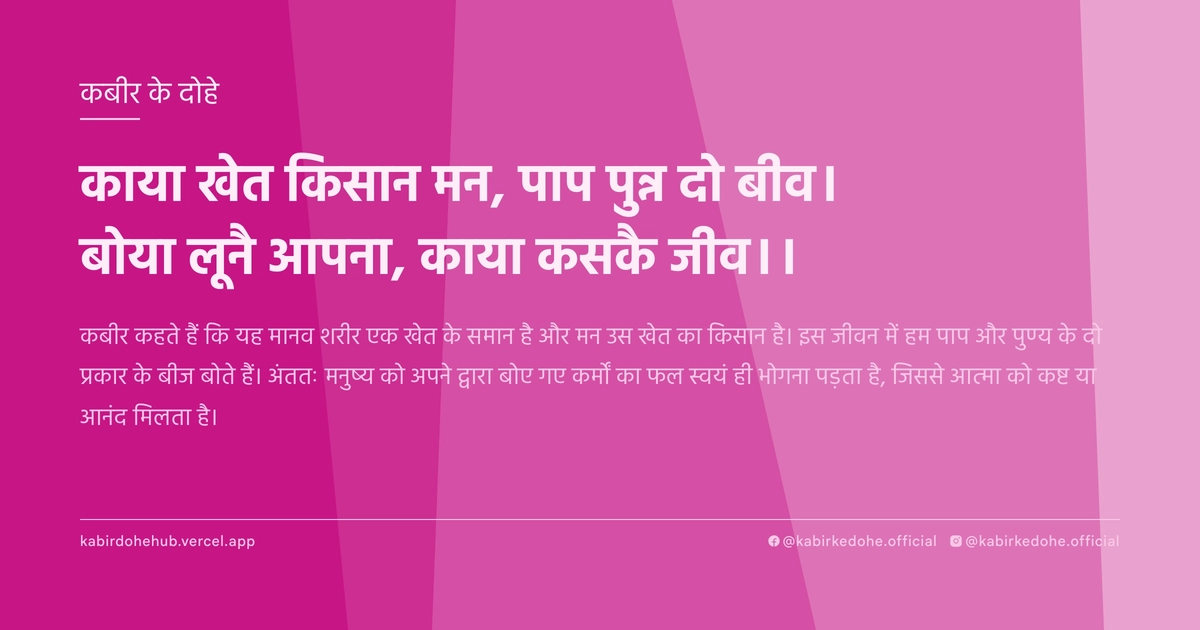
काया खेत किसान मन, पाप पुन्न दो बीव।
बोया लूनै आपना, काया कसकै जीव।।
Kaya khet kisan man, paap punn do beev. Boya lunai aapna, kaya kaskai jeev.
इस पृष्ठ पर इस कबीर दोहे का अर्थ (meaning), हिंदी व्याख्या और अंग्रेज़ी अनुवाद, दार्शनिक विश्लेषण और व्यावहारिक जीवन सीख दी गई है। यह दोहा कर्म (Karma) विषय से जुड़ा है — Kabir doha meaning and explanation in Hindi and English.
अर्थ (Meaning):
कबीर कहते हैं कि यह मानव शरीर एक खेत के समान है और मन उस खेत का किसान है। इस जीवन में हम पाप और पुण्य के दो प्रकार के बीज बोते हैं। अंततः मनुष्य को अपने द्वारा बोए गए कर्मों का फल स्वयं ही भोगना पड़ता है, जिससे आत्मा को कष्ट या आनंद मिलता है।
Kabir posits that the human body is like a field and the mind is the farmer tending to it. In this existence, we sow two types of seeds: sin and virtue. Ultimately, every individual must reap the harvest of their own actions, leading the soul to experience either agony or liberation based on these karmic seeds.
व्याख्या (Interpretation):
यहाँ 'काया' भौतिक शरीर का प्रतीक है और 'मन' उस चेतना का जो निर्णय लेती है। शाब्दिक अर्थ यह है कि कर्म अपरिहार्य हैं। आध्यात्मिक स्तर पर, यह दोहा निरगुण भक्ति के उस सिद्धांत को दर्शाता है जहाँ आत्मा (Atman) माया के प्रभाव में आकर द्वैत में फंस जाती है। जब मन केवल बाहरी दुनिया और वासनाओं के बीज बोता है, तो वह बंधन का कारण बनता है। यह अद्वैत वेदांत की उस स्थिति को दर्शाता है जहाँ अज्ञानता के कारण हम स्वयं को कर्ता मानते हैं। जब तक 'मैं' (अहंकार) किसान बना रहता है, वह कर्म चक्र में फंसा रहता है। मुक्ति तब मिलती है जब किसान (मन) यह जान ले कि वह और खेत (ब्रह्म) एक ही हैं।
Here, 'Kaya' symbolizes the physical vessel and 'Man' represents the deciding consciousness. Literally, it asserts that action is inevitable. Spiritually, this Doha reflects the Nirgun Bhakti principle where the soul, clouded by Maya, becomes trapped in duality. When the mind sows seeds of worldly desire, it creates bondage. This aligns with Advaita Vedanta's observation that ignorance leads us to believe we are the separate 'doer'. As long as the 'I' (ego) remains the farmer, it stays bound to the cycle of Karma. Liberation occurs only when the farmer realizes that the individual self and the universal field are one and the same.
दार्शनिक विश्लेषण (Philosophical Analysis):
कबीर का यह दोहा मध्यकालीन भारत के उस समय का है जब कर्मकांड और जातिगत श्रेष्ठता चरम पर थी। कबीर ने बाहरी अनुष्ठानों के बजाय आंतरिक शुद्धि पर जोर दिया। उन्होंने यह स्पष्ट किया कि न तो तीर्थयात्रा और न ही जप-तप किसी को बचा सकते हैं यदि उनके कर्म दूषित हैं। यह विचार सूफीवाद के 'नफ्स' (अहंकार) के विनाश से मिलता-जुलता है, जहाँ व्यक्ति को अपनी वासनाओं को मारकर सत्य तक पहुँचना होता है।
दार्शनिक रूप से, यह 'कार्य-कारण सिद्धांत' (Law of Cause and Effect) की व्याख्या है। कबीर यहाँ यह चेतावनी दे रहे हैं कि मनुष्य अक्सर अपने कर्मों को भूल जाता है, लेकिन प्रकृति का नियम अटल है। यह केवल नैतिक उपदेश नहीं है, बल्कि एक मनोवैज्ञानिक विश्लेषण है कि कैसे हमारे विचार (बीज) हमारे भविष्य के अनुभवों (फसल) को निर्धारित करते हैं।
अद्वैत वेदांत के परिप्रेक्ष्य में, 'पाप' और 'पुण्य' दोनों ही माया के दो छोर हैं। जब तक हम पुण्य की इच्छा रखते हैं, हम अभी भी संसार के बंधन में हैं। वास्तविक मुक्ति 'निष्काम कर्म' में है, जहाँ बीज बोने वाला स्वयं को मिटा देता है। कबीर यहाँ व्यक्ति को आत्म-साक्षात्कार के लिए प्रेरित कर रहे हैं ताकि वह इस अंतहीन चक्र से मुक्त हो सके।
यह दोहा सामाजिक समानता का भी संदेश देता है। खेत और किसान की उपमा यह बताती है कि चाहे कोई राजा हो या रंक, कर्म का नियम सबके लिए समान है। कोई भी अपनी जाति या पद के बल पर अपने कर्मों के फल से बच नहीं सकता। यह उस समय के ब्राह्मणवादी वर्चस्व पर एक सीधा प्रहार था।
अंततः, कबीर यह समझाते हैं कि शरीर नश्वर है, लेकिन कर्मों के संस्कार आत्मा के साथ चलते हैं। जब तक मन 'किसान' बनकर अहंकार में बीज बोता रहेगा, वह जन्म-मृत्यु के कष्टों से मुक्त नहीं होगा। केवल ज्ञान की अग्नि ही इन कर्म-बीजों को भस्म कर सकती है।
This Doha emerges from medieval India, a period dominated by rigid ritualism and caste hierarchies. Kabir emphasizes internal purification over external rites, asserting that neither pilgrimages nor mechanical chanting can save a soul if its actions are tainted. This mirrors the Sufi concept of annihilating the 'Nafs' (ego) to achieve union with the Divine.
Philosophically, this is an exposition of the Law of Cause and Effect. Kabir warns that while humans may forget their deeds, the cosmic law remains immutable. This is not merely a moral lecture but a psychological analysis of how our thoughts (seeds) determine our future experiences (harvest).
From the lens of Advaita Vedanta, both 'sin' and 'virtue' are two poles of Maya. As long as one desires the fruits of virtue, they remain tethered to the world. True liberation lies in 'Nishkama Karma' (desireless action), where the doer dissolves into the doing. Kabir urges the seeker toward self-realization to break this endless cycle.
The Doha also carries a potent message of social egalitarianism. The metaphor of the field and farmer suggests that the law of Karma is universal, applying equally to the king and the pauper. No one can escape their karmic debt through caste or status, directly challenging the Brahmanical hegemony of the era.
Ultimately, Kabir explains that while the body is transient, the impressions (Samskaras) of actions cling to the soul. As long as the mind acts as an ego-driven farmer, it remains trapped in the agony of birth and death. Only the fire of Gnosis (Jnana) can incinerate these karmic seeds.
मूल संदेश (Core Message):
- विचार ही बीज हैं, कर्म फसल है।
- बाहरी दिखावा आत्मा को नहीं बचाता।
- अहंकार ही कर्म बंधन का मूल कारण है।
- प्रेम और करुणा ही वास्तविक मुक्ति का मार्ग हैं।
- हम स्वयं ही अपने भाग्य के निर्माता और भोक्ता हैं।
- Thoughts are the seeds; actions are the harvest.
- External piety cannot shield a corrupted soul.
- The ego is the root cause of karmic bondage.
- Love and compassion are the only paths to liberation.
- We are the sole architects and consumers of our destiny.
व्यावहारिक उदाहरण (Practical Example):
एक समय की बात है, वाराणसी के घाटों पर माधव नाम का एक वृद्ध बुनकर रहता था। माधव अपनी कला में निपुण था, लेकिन स्वभाव से अत्यंत क्रोधी और अहंकारी था। वह अक्सर अपने सहायकों को अपमानित करता और छोटे लाभ के लिए दूसरों को धोखा देता था। वह मानता था कि उसकी पूजा-पाठ और दान उसे स्वर्ग ले जाएंगे, चाहे वह व्यवहार कैसा भी रखे।
एक दिन माधव की मुलाकात एक फकीर से हुई। फकीर ने उसे एक छोटा सा पौधा दिया और कहा, 'इसे अपने आंगन में लगाओ, लेकिन याद रखना, इसमें वही फल लगेगा जो तुम अपने शब्दों और व्यवहार से बोओगे।' माधव ने इसे एक मजाक समझा और पौधा लगा दिया।
समय बीता, और माधव का व्यवहार और अधिक कठोर होता गया। वह अपने परिवार से कट गया और उसके सहायक उसे छोड़कर चले गए। वह अब अकेला था और मानसिक तनाव से घिरा हुआ था। उसने देखा कि वह पौधा अब एक विशाल वृक्ष बन चुका था, लेकिन उसके फल कड़वे और जहरीले थे।
जब उसने फकीर से पूछा कि फल इतने कड़वे क्यों हैं, तो फकीर ने मुस्कुराकर कहा, 'माधव, तुमने इस पौधे को पानी तो दिया, लेकिन अपने मन रूपी किसान ने इसमें क्रोध और घृणा के बीज बोए थे। यह वृक्ष तुम्हारी अपनी चेतना का दर्पण है।'
माधव को अचानक एक गहरा झटका लगा। उसे समझ आया कि उसकी बाहरी पूजा केवल एक ढोंग थी। उसने महसूस किया कि उसने वर्षों तक दूसरों के दिलों में नफरत बोई थी और अब वह उसी कड़वाहट की फसल काट रहा था। उसकी 'काया' अब बीमारियों से घिरने लगी थी क्योंकि उसका मन अशांत था।
उस रात माधव फूट-फूट कर रोया। उसने तय किया कि वह अब अपने 'खेत' को बदलेगा। उसने अपने सहायकों से माफी मांगी, गरीबों की निस्वार्थ सेवा शुरू की और अपने क्रोध को मौन और करुणा में बदलना शुरू किया।
धीरे-धीरे उसके जीवन में बदलाव आने लगा। उसके घर के लोग वापस आने लगे और उसके मन की शांति उसके चेहरे पर चमक बनकर दिखने लगी। उसने पाया कि जैसे ही उसने प्रेम के बीज बोए, उसके जीवन की कड़वाहट कम होने लगी।
वर्षों बाद, जब माधव की मृत्यु का समय आया, तो वह डरा हुआ नहीं था। उसने अपने जीवन के खेत को प्रेम और सेवा से भर दिया था। उसने अनुभव किया कि अब उसकी आत्मा (जीव) उस शरीर (काया) के बंधन से मुक्त होकर शांति से विलीन हो रही है, क्योंकि उसने अब करुणा की फसल काटी थी।
Once in the ghats of Varanasi, there lived an elderly weaver named Madhav. Madhav was a master of his craft but was possessed by a volatile temper and immense ego. He frequently humiliated his assistants and cheated others for petty gains, believing that his outward religious rituals and donations would guarantee him a place in heaven, regardless of his conduct.
One day, Madhav encountered a wandering Sufi mystic. The mystic gave him a small sapling and said, 'Plant this in your courtyard, but remember, it will bear only the fruit that you sow through your words and behavior.' Madhav dismissed this as a riddle and planted the tree.
As years passed, Madhav's behavior grew even more caustic. He became estranged from his family, and his assistants abandoned him. He found himself isolated and plagued by chronic anxiety. He noticed that the sapling had grown into a massive tree, but its fruits were bitter and poisonous.
When he asked the mystic why the fruit was so bitter, the mystic smiled and replied, 'Madhav, you watered the plant, but the farmer of your mind sowed seeds of anger and hatred. This tree is a mirror of your own consciousness.'
Madhav felt a profound shock. He realized that his external piety was a mere facade. He understood that for years he had sown hatred in the hearts of others, and he was now reaping that very bitterness. His physical body (Kaya) began to fail as his mind remained in turmoil.
That night, Madhav wept bitterly. He decided to change the nature of his 'field'. He sought forgiveness from his assistants, began serving the poor selflessly, and consciously transformed his anger into silence and compassion.
Gradually, his life shifted. His family returned, and the peace of his mind manifested as a glow on his face. He discovered that as he sowed seeds of love, the bitterness of his existence began to fade.
Years later, as Madhav approached the end of his life, he felt no fear. He had filled the field of his life with love and service. He experienced that his soul (Jeev) was now dissolving peacefully from the bonds of the body (Kaya), for he had finally harvested the fruit of compassion.
अभ्यास मार्गदर्शन (Practice Guidance):
- दैनिक आत्म-निरीक्षण: प्रतिदिन सोने से पहले 15 मिनट यह विश्लेषण करें कि आज आपने अपने मन के खेत में कौन से बीज (विचार और शब्द) बोए।
- चेतन प्रतिक्रिया: जब भी क्रोध या ईर्ष्या महसूस हो, रुकें और स्वयं से पूछें, 'क्या मैं इस कड़वे फल को भविष्य में चखना चाहता हूँ?'
- करुणा का अभ्यास: दिन में कम से कम एक ऐसा कार्य करें जिसमें आपका कोई व्यक्तिगत लाभ न हो, ताकि आप 'अहंकार रूपी किसान' को मिटा सकें।
- डायग्नोस्टिक चेकलिस्ट: यदि आप छोटी बातों पर विचलित होते हैं या दूसरों की सफलता से जलते हैं, तो समझें कि आपके खेत में अभी भी नकारात्मक बीज सक्रिय हैं।
- Daily Self-Audit: Spend 15 minutes before sleep analyzing what seeds (thoughts and words) you sowed in the field of your mind today.
- Conscious Response: Whenever anger or jealousy arises, pause and ask yourself, 'Do I truly wish to taste the bitter fruit of this emotion in the future?'
- Practice of Compassion: Perform at least one selfless act daily with no expectation of reward, aiming to dissolve the 'ego-farmer' within.
- Diagnostic Checklist: If you find yourself easily agitated by trivialities or envious of others' success, recognize that negative seeds are still active in your field.
चिंतन प्रश्न (Reflection Questions):
- यदि आपका वर्तमान जीवन एक फसल है, तो आपने पिछले कुछ वर्षों में क्या बोया था?
- आपकी सार्वजनिक छवि (पवित्रता) और आपके निजी विचार (अंधेरे) के बीच कितना अंतर है?
- क्या आप वास्तव में पुण्य कर रहे हैं, या आप केवल 'स्वर्ग' के पुरस्कार के लालच में बीज बो रहे हैं?
- वह कौन सा पुराना 'कड़वा बीज' है जिसे आप आज भी अपने जीवन में ढो रहे हैं?
- यदि आज आपका शरीर (खेत) समाप्त हो जाए, तो आपके मन के किसान के पास क्या बचेगा?
- If your current life is a harvest, what exactly did you sow in the preceding years?
- What is the gap between your public persona of virtue and your private internal shadows?
- Are you performing virtuous acts out of love, or are you merely sowing seeds for the reward of 'heaven'?
- Which ancient 'bitter seed' of resentment are you still carrying in your consciousness today?
- If your body (the field) were to vanish today, what would remain of the farmer's identity?